
Navigating digital payments has become a cornerstone of modern personal finance. Among the various peer-to-peer (P2P) platforms available today, Zelle stands out as a primary choice for millions of Bank of America customers due to its seamless integration within the bank’s mobile app and online banking portal. However, one of the most common points of confusion for users is understanding the specific transaction limits imposed on their accounts. Whether you are sending rent to a roommate, splitting a dinner bill, or paying a contractor, knowing your Zelle limit is essential for managing your cash flow effectively.
Understanding Bank of America’s Zelle Transfer Structure
Bank of America does not apply a “one-size-fits-all” limit to its customers. Instead, your personal Zelle transfer limits are dynamic, determined by a variety of factors including your account type, account history, and banking relationship.
Factors Influencing Your Limit
The bank evaluates several variables before setting your specific daily and monthly thresholds. Newer accounts that have not yet established a pattern of activity will often have significantly lower limits than accounts that have been in good standing for years.
Factors include:
- Account Tenure: The length of time you have held your Bank of America account.
- Transaction History: Your consistency in maintaining positive balances and successful transaction history.
- Account Tier: Higher-tier accounts, such as Bank of America Preferred Rewards members, may qualify for more lenient transfer limits compared to standard checking accounts.
- Security Assessment: The bank’s internal fraud detection systems may temporarily adjust your limits if they detect irregular patterns or high-risk behavior.
How to Find Your Personal Limit
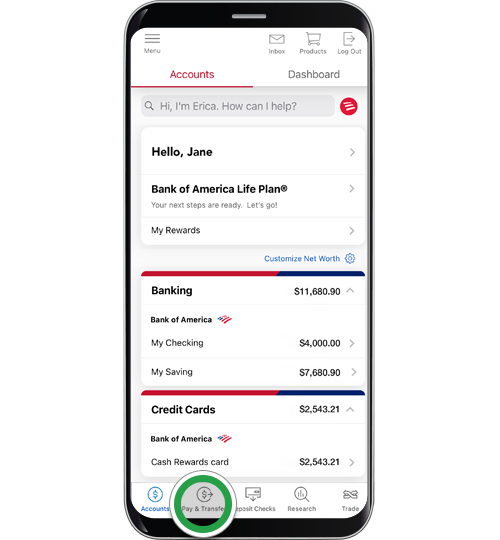
To find your specific limit, you do not need to call customer support. The most efficient way to check is directly within the Bank of America mobile app. When you navigate to the “Send Money with Zelle” section and attempt to enter an amount, the interface will often display a notification if you approach or exceed your daily limit. For more precise figures, users can access the “Help & Support” or “Security” settings within their digital dashboard, where specific transaction thresholds for various transfer services are often detailed.
Daily and Monthly Transfer Thresholds
While Bank of America does not publicly publish a universal dollar amount for every user, there are generally accepted ranges for standard consumer checking accounts. It is important to distinguish between daily limits and monthly limits, as hitting one does not necessarily mean you have reached the other.
The Standard Daily Limit
For the average Bank of America customer, daily Zelle limits typically range anywhere from $500 to $3,500. It is common for users to start with a lower limit upon opening an account, which then increases automatically as the bank builds trust in your transaction habits. If you find your limit is restricted to a lower tier, it is generally because your account profile has not yet reached the threshold for higher-volume transactions.
The Monthly Cap
In addition to daily limits, Bank of America imposes monthly caps to mitigate risk. These are usually set at a total volume of outgoing transfers over a rolling 30-day period. Even if you have a high daily limit, attempting to move large sums of money consistently over the course of a month may cause you to hit your aggregate monthly ceiling. If you are planning a large transaction—such as a substantial rent payment or a gift—it is wise to check your “remaining balance” for the month within the app to avoid a rejected transaction.
Strategic Tips for Managing Large Transactions
If you find that your current Zelle limit is insufficient for your financial needs, you do not necessarily have to settle for the status quo. There are proactive strategies to manage your transfers and potentially facilitate the movement of larger sums.
Requesting Limit Increases
While you cannot manually “request” an increase through a simple button press in the app, you can build the necessary criteria for an automatic increase. Keeping a stable balance, ensuring all contact information (email and phone numbers) is verified and updated, and utilizing the Zelle service regularly for smaller, successful transactions tells the bank’s security system that you are a reliable user.
Alternative Payment Methods
If your Zelle limit is simply too low for a specific, time-sensitive financial obligation, consider these alternatives:
- Bank-to-Bank Wire Transfers: While these often involve a fee, they are designed for large sums and do not have the same restrictions as P2P platforms.
- ACH Transfers: If you are paying a business or a landlord, a standard ACH transfer or an online bill pay feature through Bank of America may be a more appropriate tool, as these services are built for higher transaction volumes.
- Cashier’s Checks: For extremely large payments, such as a down payment or a high-value purchase, a cashier’s check remains the gold standard for security and acceptance.
The Importance of Security Awareness
When dealing with higher limits, the stakes for digital security increase. Bank of America’s limits are in place not just to manage risk for the institution, but to protect your funds from unauthorized access. Always ensure that you are only using Zelle to send money to people you know and trust. Because Zelle transfers are treated as “same as cash,” once a payment is authorized and sent, it is extremely difficult to reverse. If a scammer convinces you to send money to a fake account, the fact that your limit is high becomes a vulnerability rather than a convenience.
Future-Proofing Your Financial Transfers
As banking technology continues to evolve, the integration of P2P services within traditional retail banking will likely become even more sophisticated. Banks are constantly refining their algorithms to balance user convenience with robust fraud prevention.
For the Bank of America user, staying within the bounds of your Zelle limits requires a mix of patience and smart financial planning. If you are anticipating a need for larger transfers in the future—perhaps due to a change in your lifestyle or a shift in how you handle recurring expenses—it is best to start using the service consistently now. By maintaining a clean account history and ensuring your credentials are secure, you put yourself in the best position to enjoy higher transaction thresholds.
Ultimately, while the “what is the Zelle limit” question doesn’t have a single static answer, it is a variable metric designed to evolve with your relationship with the bank. By keeping an eye on your in-app settings and understanding the logic behind these security measures, you can navigate your personal finances with confidence, ensuring that your digital payments are as efficient as they are secure. Remember that at the end of the day, these limits are there to ensure that your money remains exactly where it belongs—in your account, protected by the layers of security that a major financial institution provides.
aViewFromTheCave is a participant in the Amazon Services LLC Associates Program, an affiliate advertising program designed to provide a means for sites to earn advertising fees by advertising and linking to Amazon.com. Amazon, the Amazon logo, AmazonSupply, and the AmazonSupply logo are trademarks of Amazon.com, Inc. or its affiliates. As an Amazon Associate we earn affiliate commissions from qualifying purchases.