
The Architect of Atlantic City: Building an Empire Through Personal Branding
At its core, Boardwalk Empire is not merely a period drama about bootlegging; it is a masterclass in the construction of a personal brand within a hyper-competitive, high-stakes marketplace. The protagonist, Enoch “Nucky” Thompson, serves as the ultimate case study in political and criminal branding. Nucky operates as the Treasurer of Atlantic County, but his real power stems from his ability to curate an image of reliability, generosity, and absolute control.

To understand Nucky Thompson is to understand the fundamentals of corporate identity. He manages his “brand” by meticulously balancing two personas: the benevolent public servant who brings prosperity to the boardwalk, and the shadow operator who dictates the flow of illicit capital. This duality is the hallmark of effective brand management. By aligning himself with the tangible success of Atlantic City—its hotels, its tourism, and its infrastructure—Nucky embeds his brand into the regional identity. He ensures that his stakeholders (the local business owners and the citizenry) view his personal success as synonymous with their own. When the brand is strong, the product—whether it is legal tourism or illegal alcohol—becomes secondary to the trust established with the consumer.
Leveraging Market Disruption: Adapting Strategy in the Prohibition Era
The passage of the Volstead Act in 1920 represented the single greatest market disruption of the early 20th century. For businesses operating in the entertainment and hospitality sectors, the sudden prohibition of alcohol created an immediate vacuum in consumer demand. Boardwalk Empire tracks the evolution of Nucky Thompson’s strategic response to this seismic shift in regulatory policy.
In business terms, Nucky identifies a “Blue Ocean” strategy. While others fear the legislative crackdown, he views the restriction as a barrier to entry that eliminates smaller, less capitalized competitors. By securing supply lines and navigating federal bureaucracy, Nucky professionalizes the bootlegging industry. He transforms a disorganized, fragmented market into a streamlined supply chain. This is a vital lesson in strategic planning: when a regulatory environment shifts, those who view the change as an operational hurdle rather than a business-ending event are the ones who capture the highest market share. Nucky’s success demonstrates that in any industry—whether it’s early 20th-century liquor or modern-day digital services—the ability to pivot quickly and secure exclusivity in a restricted market is the ultimate competitive advantage.
Stakeholder Management and the Architecture of Alliances
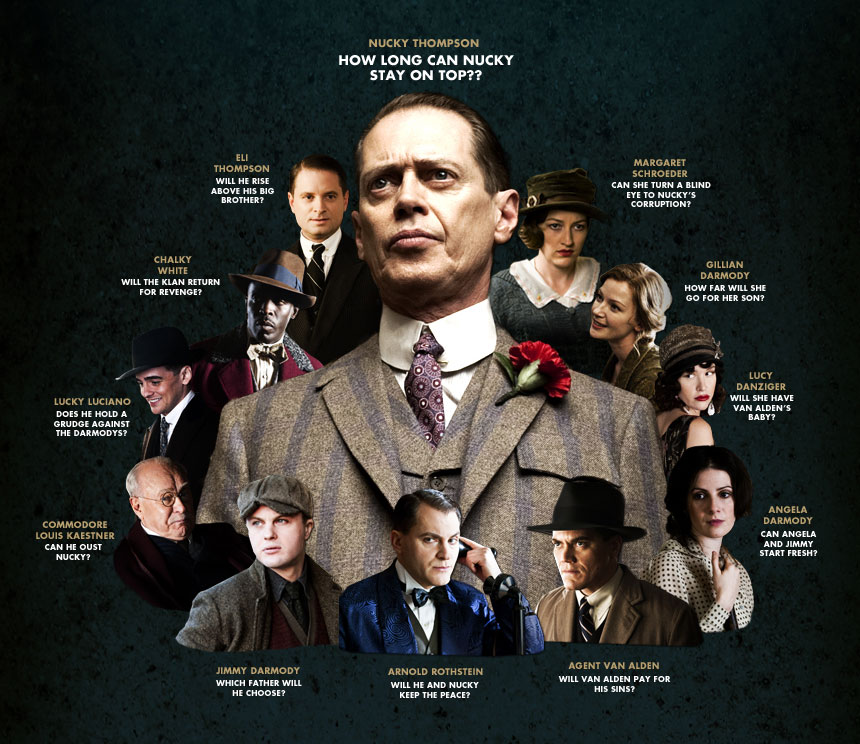
No brand, no matter how powerful, can survive in a vacuum. Boardwalk Empire meticulously details the intricate dance of stakeholder management. Nucky Thompson’s power is derived from his network of influence, which includes labor unions, federal agents, local law enforcement, and rival criminal syndicates. His brand strategy relies on the “win-win” scenario, where he provides resources (bribes, political appointments, or logistics) in exchange for loyalty and protection.
The Dynamics of Strategic Partnerships
A significant portion of the series focuses on Nucky’s relationships with historical figures like Arnold Rothstein and Lucky Luciano. These partnerships are defined by mutual benefit. Nucky brings the infrastructure (the Atlantic City port), while his partners bring the capital and distribution networks. This is a classic example of corporate consolidation. By forming these strategic alliances, Nucky effectively minimizes his overhead risks and maximizes his profit margins. He recognizes that, in a saturated market, the most efficient way to scale is to integrate the strengths of neighboring enterprises.
Crisis Management and Brand Reputation
Throughout the series, Nucky faces constant threats to his reputation. When an external scandal or an internal betrayal occurs, his primary focus is on damage control. He understands that a brand is only as strong as its perception in the marketplace. He uses public appearances, strategic philanthropy, and targeted information management to maintain his status as the “boss.” His approach to crisis management highlights a universal truth in marketing: when the narrative surrounding your brand is threatened, you do not just respond—you dominate the conversation. By controlling the information flow, Nucky ensures that his stakeholders remain confident in his leadership, even when the underlying business practices are fundamentally illicit.
Sustaining Growth and Navigating Organizational Decay
As the series progresses, the audience witnesses the natural life cycle of a major corporate entity. Nucky Thompson begins as a monolithic leader, but eventually, he faces the inevitability of competition and institutional decay. The rise of younger, more ruthless operators—the “disruptors” like Jimmy Darmody and Al Capone—illustrates the threat that any legacy business faces when it becomes too reliant on stagnant methods.
The Challenge of Legacy Branding
Nucky’s challenge in the later seasons is the classic struggle of a legacy brand attempting to remain relevant in a changing landscape. He is tethered to the old ways of doing business: back-room handshakes, local loyalty, and personal favors. Meanwhile, the younger generation represents a transition to a more cold, corporate, and violent efficiency. This conflict is a profound metaphor for the struggle between established corporate cultures and emerging lean startups. If a business stops innovating its strategy or fails to adapt to the changing values of its workforce and customer base, it will inevitably lose ground to entities that operate with fewer moral or traditional constraints.

The Cost of Market Dominance
Boardwalk Empire is ultimately a tragedy about the cost of maintaining an empire. The show illustrates that market dominance often requires an unsustainable expenditure of resources, both financial and psychological. As Nucky’s empire faces increasing pressure from federal oversight and criminal rivals, the brand begins to fracture. The cost of acquisition (bribery, logistics, and personnel) eventually begins to outweigh the revenue generated by the core business. This serves as a grim reminder for any business leader: unchecked growth, without a foundation of sustainable infrastructure and long-term ethical integrity, will eventually lead to organizational collapse. The final act of Nucky Thompson’s story confirms that while a brand can be built on influence and clever strategy, its long-term viability depends on the ability to survive the market’s inherent cycles of volatility, disruption, and eventual obsolescence.
aViewFromTheCave is a participant in the Amazon Services LLC Associates Program, an affiliate advertising program designed to provide a means for sites to earn advertising fees by advertising and linking to Amazon.com. Amazon, the Amazon logo, AmazonSupply, and the AmazonSupply logo are trademarks of Amazon.com, Inc. or its affiliates. As an Amazon Associate we earn affiliate commissions from qualifying purchases.