
For individuals who did not complete their traditional high school education, a GED program serves as the bridge to future opportunities. Standing for General Educational Development, the GED is a suite of four subject tests that, when passed, certify that the test-taker has acquired high school-level academic skills. In an increasingly competitive labor market where a high school diploma is often the minimum barrier to entry for entry-level positions, understanding how to leverage a GED program can be a transformative step toward financial stability and long-term career growth.
The Economic Value of a GED Certification
Achieving a GED is not merely an academic milestone; it is a fundamental asset in the landscape of personal finance. Statistical data consistently highlights a clear correlation between educational attainment and lifetime earning potential. By securing a GED, individuals move away from the wage stagnation often associated with non-graduates and position themselves for roles that offer consistent pay, benefits, and paths for upward mobility.
Breaking the Cycle of Underemployment
Many individuals without a high school credential find themselves trapped in a cycle of underemployment—working multiple part-time jobs that lack security or long-term potential. A GED program acts as an economic reset button. It provides the necessary verification for employers who require a standard educational baseline, thereby opening doors to industries such as manufacturing, administrative support, and retail management. These sectors often provide steady hourly wages that allow for better household budgeting and debt management.
Accessing Higher Education and Trade Schools
One of the most significant financial advantages of obtaining a GED is the subsequent eligibility for post-secondary education. Most community colleges and vocational trade schools require either a high school diploma or its equivalent for admission. By investing time in a GED program, an individual unlocks the ability to pursue specialized certifications in high-demand fields like HVAC, cybersecurity, nursing, or project management. Higher education is the primary catalyst for significant income growth; therefore, the GED serves as the vital first investment in a long-term strategy for wealth accumulation.
Financial Planning for the GED Journey
While the ultimate goal of a GED is to improve one’s financial outlook, the process of studying and testing does carry costs. Approaching this journey with the mindset of an investor—calculating return on investment (ROI) and managing resources—is essential for success.
Understanding Direct Costs and Fee Waivers
The cost of taking the GED exams varies by state, but it typically includes a fee per subject. For many, this price tag can be a deterrent. However, it is critical to investigate local funding options. Many states provide subsidized or free testing for residents. Furthermore, numerous non-profit organizations and adult education centers offer financial assistance or scholarships to cover testing fees. Treat this as a business expense: research your specific state’s testing portal to identify the most cost-effective path to certification, ensuring that you are not overpaying for services that may be provided for free or at a discount.
Resource Allocation: Time as Capital
Time is a finite resource, and preparing for the GED requires a structured investment of it. Whether you are working a side hustle or balancing family responsibilities, you must manage your study schedule as you would a business project. Efficient time management involves identifying your strongest and weakest academic areas. By focusing your “budgeted” study hours on subjects that require the most improvement, you maximize the efficiency of your preparation, reducing the likelihood of needing to retake tests—which would incur additional, unnecessary costs.
ROI: Long-Term Financial Impact and Career Growth
When evaluating the decision to enroll in a GED program, it is helpful to view the credential as a financial instrument. The cost of study materials and testing is the “principal,” while the dividend is the increased annual salary and improved job security achieved over the next several decades.
Marketability and Wage Negotiation
With a GED, an individual has a stronger bargaining position during salary negotiations. Employers recognize the GED as proof of persistence, adaptability, and fundamental competency. These traits are highly valued in the corporate world. When an employee can demonstrate that they took the initiative to complete their education independently, they establish a personal brand of reliability. This narrative can be leveraged to negotiate higher starting salaries or to transition into more lucrative roles within their current organization.
The Multiplier Effect of Skill Acquisition
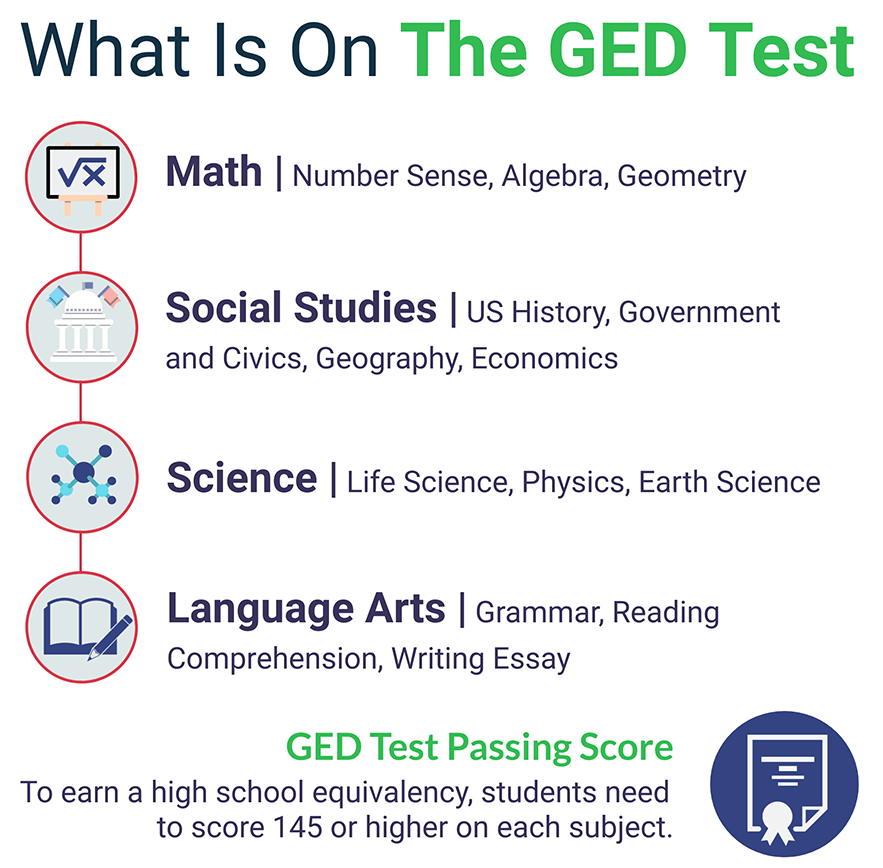
The GED program tests proficiency in Reasoning Through Language Arts, Mathematical Reasoning, Science, and Social Studies. The skills acquired during these modules—analytical thinking, complex problem-solving, and literacy—are directly transferable to almost any workplace. In a modern economy driven by information, these skills act as a multiplier for professional value. An employee who can synthesize data and communicate effectively is more likely to be promoted to leadership positions, where the compensation structure is typically far more favorable than in entry-level, task-oriented roles.
Strategic Steps Toward Completion
Successfully navigating a GED program requires a strategic framework. Rather than viewing the tests as a singular, overwhelming hurdle, break the process into manageable phases to ensure a steady progression toward your financial objectives.
Phase 1: Assessment and Baseline
Before committing funds or time, take a practice test. This is the equivalent of a “financial audit.” It identifies exactly where you stand and what needs to be addressed. By knowing your baseline, you avoid wasting resources on topics you have already mastered and can focus your energy on high-impact areas that will move the needle on your final score.
Phase 2: Utilizing Free and Low-Cost Educational Assets
The digital age has democratized education, providing a wealth of high-quality, free resources for GED preparation. Public libraries often offer tutoring, and various online platforms provide free practice modules. Treating your preparation like a “lean startup”—keeping overhead costs low by utilizing free tools while maintaining high output quality—is the most fiscally responsible way to approach the program.

Phase 3: Testing as a Milestone, Not the End
Once you pass your tests, update your resume immediately. In the professional world, the GED is a credential that belongs at the top of your qualifications. The moment you receive your certificate, it begins working for you, acting as a filter that allows you to apply for jobs that were previously gated. This transition into a higher earnings bracket is the ultimate goal of the program, marking the point at which your initial investment of time and effort begins to generate compound interest in the form of career security and financial autonomy.
The GED program is more than a diploma; it is a fundamental financial tool. By viewing it through the lens of investment, strategy, and long-term asset growth, individuals can transform their personal trajectory. It provides the necessary credentials to demand better pay, seek professional development, and build a foundation for a future defined by choice rather than necessity. As the economy continues to shift toward knowledge-based roles, the decision to pursue a GED is one of the most effective ways to secure your place in the workforce and maximize your earning potential.
aViewFromTheCave is a participant in the Amazon Services LLC Associates Program, an affiliate advertising program designed to provide a means for sites to earn advertising fees by advertising and linking to Amazon.com. Amazon, the Amazon logo, AmazonSupply, and the AmazonSupply logo are trademarks of Amazon.com, Inc. or its affiliates. As an Amazon Associate we earn affiliate commissions from qualifying purchases.