
The narrative surrounding Bronny James serves as one of the most compelling case studies in modern personal branding. When an individual’s identity is inextricably linked to a global icon, the challenge of carving out a distinct professional reputation becomes a complex exercise in strategic positioning. For Bronny, the journey from a high-school prospect to a professional athlete is not merely a sports story; it is a masterclass in managing public perception, navigating the pressures of inherited legacy, and the calculated steps required to transition from a “famous offspring” to an independent brand entity.

The Architecture of an Inherited Brand
Personal branding is often categorized by its origin: those who build from the ground up, and those who inherit a brand equity that precedes their own accomplishments. Bronny James operates within the latter, a unique position that carries both immense structural advantages and significant atmospheric pressure.
The Shadow of the Legacy
In the world of corporate and personal identity, the “Founder Effect” is a well-documented phenomenon. When a successor enters a space dominated by the founder’s ethos, the audience’s expectations are anchored to the past. For Bronny, the “LeBron” brand represents a gold standard of consistency, physical dominance, and longevity. The challenge from a branding perspective is that the public inevitably compares the rising individual not to their peers, but to the industry benchmark. This creates an immediate cognitive bias where the subject is judged on a sliding scale of excellence.
Balancing Authenticity with Visibility
The core of personal branding lies in authenticity—the ability to convey a consistent message that resonates with a target audience. Bronny’s brand strategy has had to balance the inevitable reality of his background with a desire to appear grounded and relatable. By leveraging digital platforms to showcase his gaming interests and his temperament, he successfully humanized a figure that could have easily been caricatured as an untouchable celebrity. This pivot—moving away from just being “LeBron’s son” toward being a multi-dimensional young professional—is a strategic necessity to foster an individual fan base that feels invested in his journey rather than just his proximity to greatness.
Navigating the Volatility of Public Perception
In the digital age, a personal brand is as fragile as the algorithms that distribute it. The scrutiny Bronny has faced is a byproduct of high-visibility branding in an era of hyper-connectivity. Every professional milestone is dissected by a public that feels they have “ownership” of the narrative.
The Impact of Narrative Control
When public opinion fluctuates, the brand is susceptible to damage unless the individual exerts strict narrative control. Throughout his development, Bronny has demonstrated a degree of composure that is rare for someone in the spotlight. By refusing to engage in inflammatory discourse and maintaining a focused, albeit quiet, public persona, he has effectively managed the “noise” that often sabotages the brands of young athletes. This strategy mirrors successful corporate crisis management: minimize volatility by limiting reactionary output and focusing on long-term performance markers.
The Role of Strategic Silence
There is significant power in strategic silence. In an industry where everyone is clamoring for attention, the decision to remain reserved allows the brand to avoid being defined by transient controversies. By maintaining a focus on his athletic development, Bronny has allowed his actions to serve as the primary marketing material. This creates a “premium” effect; because the personal insights are rare, they become more valuable and generate higher levels of engagement when they finally arrive.
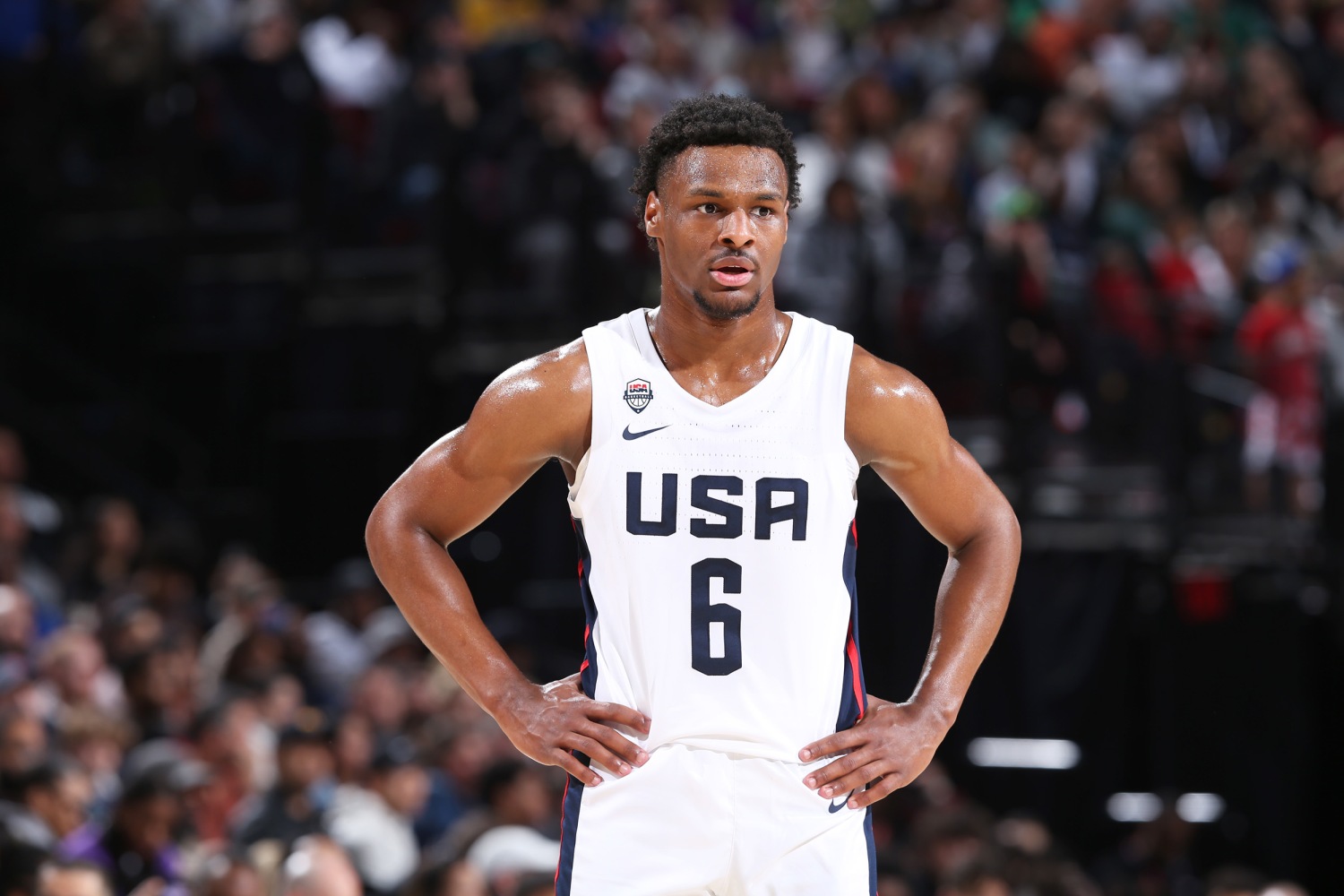
The Strategic Evolution of a Professional Identity
Transitioning from a collegiate athlete to a professional requires a complete overhaul of one’s personal brand architecture. This phase is less about personality and more about performance-based credibility.
Performance as the Primary Branding Tool
In the professional arena, performance is the only currency that retains long-term value. For Bronny, the transition into the NBA was a branding pivot point from “prospect” to “competitor.” The strategy shifted from being a high-value commercial asset—a status granted by his lineage—to a functional asset whose value is derived from his contribution to the team. This is a difficult transition for any brand: moving from “potential” to “utility.”
Brand Alignment and Sponsorship Dynamics
Corporate sponsors are notoriously risk-averse. They align themselves with brands that represent reliability and future growth. Bronny’s partnerships have been highly curated, focusing on long-term brands that align with a youthful, high-performance aesthetic. By avoiding over-saturation in the sponsorship market, he has maintained an air of exclusivity. This approach to brand management ensures that his value remains tied to his trajectory as an athlete rather than his willingness to accept any available partnership.
Sustaining Relevance Beyond the Surname
The ultimate goal of any personal brand that begins in the shadow of a giant is to achieve independence. This is the “Separation Phase” of brand development, where the individual’s accomplishments eventually eclipse the context of their origin.
Building an Independent Ecosystem
To build a sustainable long-term brand, one must foster an environment that is independent of their origins. Bronny’s exploration of e-sports and lifestyle content represents an effort to diversify his equity. By entering spaces where his name carries weight but his personality dictates success, he is effectively hedging against the unpredictability of his primary career. This is a classic business strategy: product diversification. By owning niche segments of the cultural conversation, he creates multiple points of entry for fans and partners alike.
The Longevity Strategy: Consistency Over Intensity
Most personal brands flame out because they seek to maintain maximum intensity at all times. The professional approach, however, prioritizes consistency. Bronny’s path demonstrates an understanding that the brand is a marathon, not a sprint. By accepting the reality of the public’s constant gaze and choosing to remain steady, he ensures that the “Bronny James” brand is not defined by a single season, a single game, or a single viral moment.

Conclusion: The Business of Identity
The story of “what happened to Bronny” is, at its heart, the story of a young professional learning to navigate the most difficult marketplace in the world: the public eye. His brand has navigated the scrutiny of media, the weight of expectations, and the necessity of finding an independent voice.
Ultimately, his success is not measured solely in points or statistics, but in his ability to manage the narrative surrounding his own existence. By utilizing strategic silence, curating partnerships, and focusing on long-term growth over short-term visibility, he is crafting a blueprint for personal branding that is defined not by where he came from, but by the deliberate steps he takes to assert his own identity. In a world where many attempt to force their way into the spotlight, the most successful brands are those that allow their work to define their reach, slowly and methodically building a foundation that can withstand the pressures of public scrutiny and the inevitable comparisons to the past. Bronny’s journey stands as a testament to the fact that identity is not something one is born with; it is something one constructs through years of disciplined, public-facing choices.
aViewFromTheCave is a participant in the Amazon Services LLC Associates Program, an affiliate advertising program designed to provide a means for sites to earn advertising fees by advertising and linking to Amazon.com. Amazon, the Amazon logo, AmazonSupply, and the AmazonSupply logo are trademarks of Amazon.com, Inc. or its affiliates. As an Amazon Associate we earn affiliate commissions from qualifying purchases.