
The release of Dark Souls marked a watershed moment in software development and interactive entertainment. When developers analyze the success of FromSoftware’s magnum opus, the conversation often shifts toward the mechanics of its gameplay. However, from a technical and software engineering perspective, Dark Souls functions as a masterclass in modular systems design, state-machine complexity, and engine-level optimization. To understand the genre, one must look past the “Souls-like” marketing label and examine the underlying code structures that define modern action-role-playing software.
The Architectural Pillars of the Action-RPG
At its core, Dark Souls operates on a rigid, event-driven architecture that prioritizes frame-perfect state transitions. Unlike traditional open-world RPGs that rely on bloated narrative scripts and sprawling quest-tracker databases, Dark Souls utilizes a streamlined, performance-heavy approach to entity management.
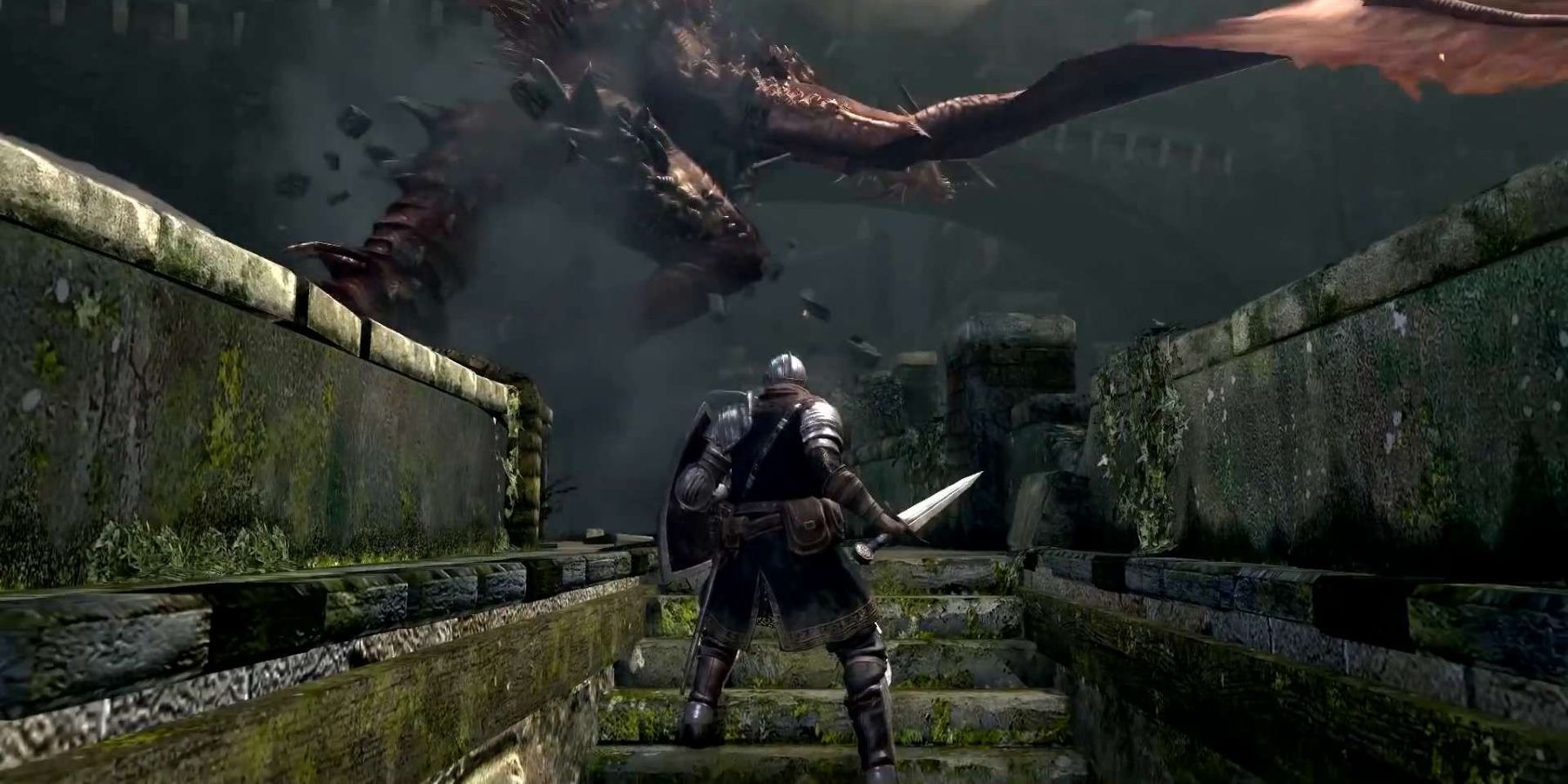
The Finite State Machine (FSM) Approach
The combat mechanics in Dark Souls are fundamentally built upon complex Finite State Machines. Every player action—be it a light attack, a roll, or a flask chug—is governed by a specific state that dictates animation frames, hitbox detection, and input buffering. For software developers, this is the hallmark of the genre. By enforcing a strict state hierarchy, the software ensures that input latency is minimized and that animations cannot be canceled, creating the “deliberate” combat feel that defines the product’s user experience.
When analyzing the software architecture, the FSM approach minimizes the risk of animation glitches, a common failure point in less optimized RPG software. The system forces the player into a “commitment” state, which is a design decision that fundamentally dictates the game’s difficulty curve and, by extension, its genre identity.
Hitbox Synchronization and Latency Management
A critical technical component of Dark Souls is its collision detection system. The software utilizes highly specific, localized hitboxes rather than generalized bounding boxes. This creates a technical requirement for precise synchronization between the server-side state (in multiplayer) and the client-side visual representation. The “genre” of the game is defined by the technical success of this synchronization; if the hit detection were less precise, the software would be categorized as a generic hack-and-slash rather than a precision-based action-RPG.
Engine Optimization and Memory Management
From a software engineering standpoint, Dark Souls is a study in efficient memory allocation within restricted environments. The “interconnected world” design is not merely a level design choice; it is a manifestation of clever technical streaming.
Seamless World Loading and Asset Caching
The game utilizes a technique often described as “world stitching.” Instead of loading disparate zones, the engine manages memory by keeping adjacent sectors in the cache while streaming distant areas in the background. This minimizes load screens and creates the illusion of a single, continuous space. For developers looking to build similar software, the lesson here is in resource management: the genre’s immersion is directly tied to the engine’s ability to maintain a stable frame rate while loading high-fidelity assets during active exploration.

Asset Streaming and Performance Stability
Maintaining a consistent frame rate—or “frame pacing”—is the final hurdle in the software’s performance optimization. Dark Souls achieves its technical reputation by prioritizing player inputs over environmental complexity. During high-load scenarios, such as boss fights with multiple particle effects, the software selectively prioritizes the execution thread for the player and enemy state machines over background environmental rendering. This prioritization is what prevents the game from suffering the common software bugs found in less optimized titles.
The Data-Driven Design of Gameplay Loops
While the term “genre” often refers to aesthetic themes, in software development, it refers to the data architecture that dictates progression. Dark Souls functions as a complex database of dependencies.
The Dependency Graph of World State
The game’s progression system is a massive, complex dependency graph. Every interaction—opening a gate, defeating a boss, or triggering an NPC dialogue—is recorded as a boolean flag within the save-state file. This is the “Software DNA” of the genre. By utilizing a decentralized event-tracking system, the game allows for non-linear exploration. The software does not track “quests” in the traditional sense; it tracks environmental states and player inventory items. This architectural choice is what allows for the “emergent gameplay” that enthusiasts often praise.
Inventory Management as a Systemic Constraint
From a backend perspective, the item and stat system is a highly normalized database. Each piece of equipment acts as a modular component that modifies the player’s character state object. By keeping these components distinct from the core movement system, the developers ensure that gear updates do not break the underlying physics engine. This modularity is a critical software development pattern that allows for the extensive balancing and patching of character builds without needing to re-engineer the entire codebase.
Designing the “Souls-like” Software Template
As the industry adopts the “Souls-like” label as a standard, the focus has shifted toward building software that replicates this specific architecture. For developers, the “genre” is now a set of reusable technical patterns.
The Importance of Input Buffering Systems
The most identifiable trait of this genre is input buffering. In software terms, this is a middleware layer that sits between the controller interrupt and the FSM. It captures the player’s next intended action during the final frames of the current animation. This is a deliberate software implementation meant to bridge the gap between human error and digital response. Without this specific buffer implementation, the software would feel unresponsive and clumsy.

Modular Difficulty Scaling via Variable Parameters
Finally, the difficulty of Dark Souls is effectively a series of adjustable parameters within the game’s config files. Enemy health pools, attack damage, and animation speeds are all variables that can be modified globally or per instance. This modularity allows for the “New Game Plus” functionality, where the software merely references higher-tier variable sets rather than requiring custom-built encounter logic. This demonstrates the power of variable-driven design in reducing redundant code in large-scale RPG projects.
The question of “what genre is Dark Souls” is ultimately a technical inquiry. It is an action-RPG defined by its rigid state management, efficient asset streaming, and normalized data architecture. By analyzing the software under the hood, we move past surface-level observations and into the reality of how these digital products are constructed, optimized, and delivered to the end user. As software developers and tech enthusiasts, we recognize that the genre is not just about the difficulty; it is about the precision of the code that allows such a complex, interconnected experience to run seamlessly on consumer hardware.
aViewFromTheCave is a participant in the Amazon Services LLC Associates Program, an affiliate advertising program designed to provide a means for sites to earn advertising fees by advertising and linking to Amazon.com. Amazon, the Amazon logo, AmazonSupply, and the AmazonSupply logo are trademarks of Amazon.com, Inc. or its affiliates. As an Amazon Associate we earn affiliate commissions from qualifying purchases.