
Driving without insurance is not merely a minor oversight or a bureaucratic inconvenience; it is a significant financial gamble that can dismantle your personal wealth, destroy your credit score, and lead to long-term legal complications. In the realm of personal finance, your vehicle is likely one of your most expensive depreciating assets, and your insurance policy is the primary financial hedge protecting that asset—and your future earnings—from catastrophic loss. When you choose to drive uninsured, you are effectively self-insuring against risks that are mathematically impossible for the average individual to absorb.
The Immediate Financial Consequences of Non-Compliance
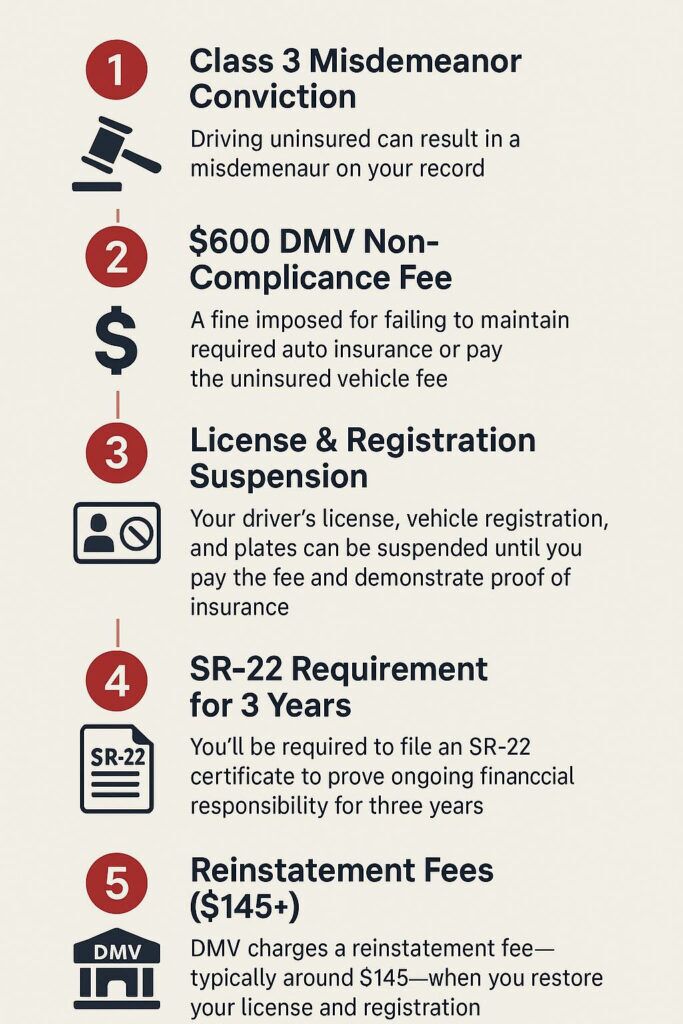
The moment you are pulled over without proof of insurance, the financial impact begins. Law enforcement officers are increasingly equipped with digital databases that allow them to verify coverage status in real-time. If you are found to be uninsured, the penalties extend far beyond a simple “fix-it” ticket.
Mandatory Fines and Court Fees
In most jurisdictions, the penalty for a first-time offense starts with a steep administrative fine. These fines can range from a few hundred dollars to over a thousand, depending on the state or municipality. Furthermore, if you are required to appear in traffic court to contest the citation or provide proof of late-acquired insurance, you will often be responsible for additional court costs and processing fees. These expenses are out-of-pocket, non-deductible losses that impact your monthly budget immediately.
Impoundment and Towing Expenses
If an officer determines that your vehicle cannot be driven legally, they have the authority to impound it. The costs associated with impoundment are rarely limited to the towing fee. You will typically be charged a daily storage fee for every day the vehicle remains in the impound lot. By the time you navigate the bureaucratic hurdles required to retrieve your vehicle—which often involves proving that you have finally purchased a valid insurance policy—you could be looking at an expense of several thousand dollars. This is a significant drain on your emergency fund, illustrating why insurance premiums are a far more economical choice than paying for the consequences of non-compliance.
Long-Term Impact on Your Financial Profile
Beyond the immediate cash outflow, driving without insurance can create a “financial footprint” that haunts your wallet for years. Insurance companies utilize complex actuarial algorithms to determine your risk profile, and once you have been flagged for driving without coverage, you effectively move into a high-risk category.
The “High-Risk” Insurance Premium Hike
Insurance carriers share data through industry databases. When you eventually attempt to purchase insurance after a lapse, your quotes will be significantly higher than those of a driver with a clean, continuous history. You may be forced into “non-standard” insurance markets, where premiums are inflated to compensate for the perceived risk that you might let your policy lapse again. This represents a long-term “tax” on your finances that you will pay every single month for three to five years, potentially costing you thousands of dollars in cumulative excess premiums.
License Suspension and Lost Income
In many jurisdictions, repeated violations or a failure to pay fines associated with uninsured driving lead to the suspension or revocation of your driver’s license. For the average worker, a suspended license is a threat to their livelihood. If your job requires a commute or travel, the loss of your driving privileges could lead to job loss or the need for expensive alternative transportation. The opportunity cost of not being able to drive yourself to work—or the added expense of ride-sharing services—can drastically reduce your net monthly income and disrupt your ability to meet other financial obligations, such as rent or mortgage payments.
Liability: The Silent Wealth Destroyer
The most dangerous aspect of driving without insurance is not the fine from the state, but the potential for personal liability in the event of an accident. When you cause an accident, you are legally responsible for the damages you inflict on others, including medical bills for injured parties and the cost of property damage.
The Risk of Asset Seizure
Without an insurance company to act as a buffer, you are personally liable for these costs. If you cause a significant accident involving injuries, the medical bills alone can reach tens or hundreds of thousands of dollars. When you lack coverage, plaintiffs’ attorneys will pursue your personal assets. This can lead to the garnishment of your wages, liens placed against your home, and the liquidation of your savings and investment accounts.
Essentially, by driving without insurance, you are putting your entire net worth at risk. You are gambling that you will never cause an accident, but the math of probability suggests that over a long enough timeline, risk is inevitable. Protect your balance sheet by viewing insurance as a non-negotiable line item in your personal financial plan.
Credit Score Degradation
Financial judgments resulting from lawsuits—which are a direct outcome of driving uninsured and causing an accident—can have a devastating impact on your credit score. A low credit score increases the interest rates you pay on all future loans, from mortgages to personal financing. The long-term cost of borrowing money at higher interest rates due to a compromised credit file can reach tens of thousands of dollars over the course of a decade. When viewed through this lens, the monthly cost of an insurance premium is an incredibly small price to pay for the protection of your creditworthiness.
Protecting Your Financial Future
To avoid these pitfalls, it is essential to manage your insurance as a pillar of your personal finance strategy. If you are struggling with the cost of premiums, there are proactive ways to manage these expenses without resorting to the dangerous path of dropping coverage.
Strategic Premium Management
First, review your policy deductibles. Increasing your deductible—the amount you pay out-of-pocket before insurance kicks in—can significantly lower your monthly premium. While this requires that you maintain a healthy emergency fund to cover the deductible if an accident occurs, it keeps you legally compliant and protected against catastrophic financial ruin.
Second, bundle your policies. If you have homeowners or renters insurance, keeping your auto policy with the same carrier often grants you a “multi-line” discount. Additionally, look for telematics programs or safe-driver discounts. Many insurance companies now offer apps that track your driving behavior; demonstrating safe habits can lead to substantial reductions in your monthly cost.
The Necessity of Financial Planning
Ultimately, driving without insurance is a failure of financial planning. It treats a essential requirement for operating in modern society as an optional luxury. Financial stability is built on the foundation of risk mitigation; you pay a small, predictable amount (the premium) to avoid a large, unpredictable amount (the loss). By staying insured, you are not just following the law—you are engaging in sound financial management that secures your future against the volatility of the road.
If you find that insurance costs are truly unsustainable, the most responsible financial move is not to cancel the policy, but to audit your broader budget. Prioritize the protection of your assets above non-essential spending. The legal and financial penalties of driving uninsured are designed to be punitive, and they are structured to ensure that you end up paying far more in the long run than you ever saved by skipping your premium. Protect your assets, keep your records clean, and ensure your financial future by staying covered at all times.
aViewFromTheCave is a participant in the Amazon Services LLC Associates Program, an affiliate advertising program designed to provide a means for sites to earn advertising fees by advertising and linking to Amazon.com. Amazon, the Amazon logo, AmazonSupply, and the AmazonSupply logo are trademarks of Amazon.com, Inc. or its affiliates. As an Amazon Associate we earn affiliate commissions from qualifying purchases.