
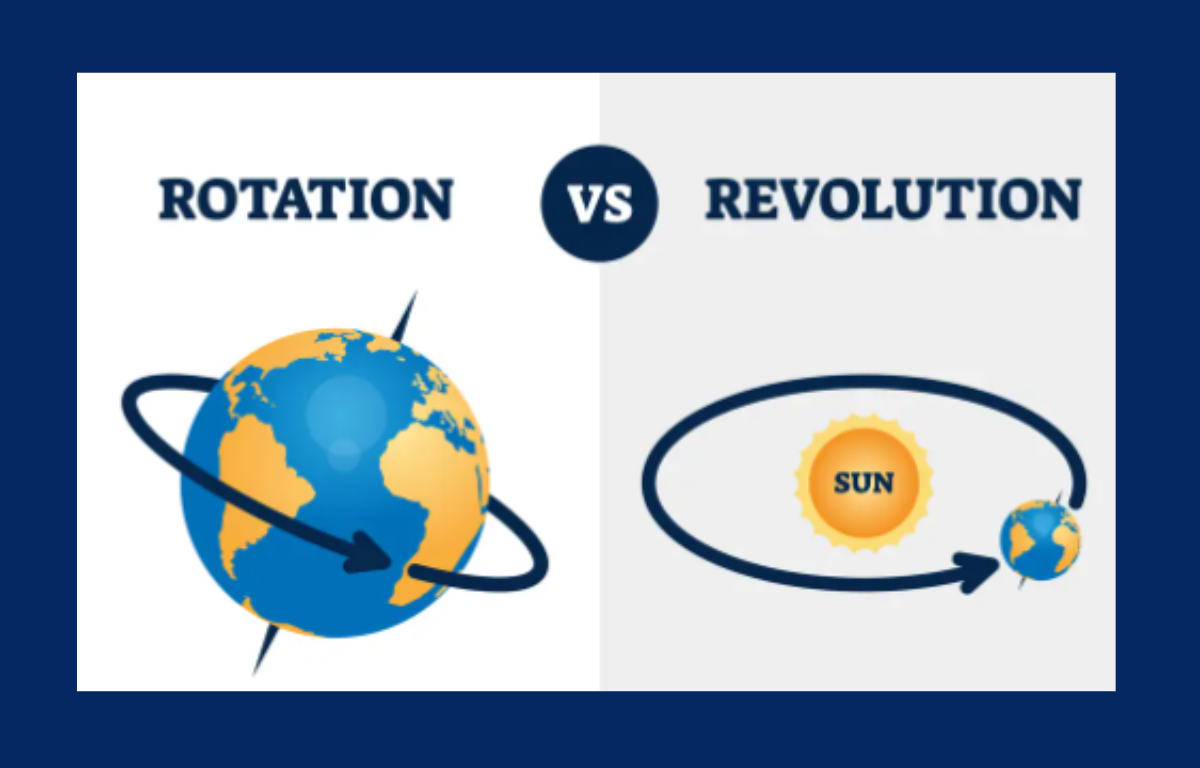
In the fast-paced ecosystem of modern technology, clarity is the currency of innovation. Just as physics distinguishes between rotation and revolution to map the mechanics of the cosmos, the tech industry—from software development lifecycles to hardware iteration—relies on these two distinct motions to drive progress. Understanding the difference between a rotational shift and a revolutionary leap is critical for stakeholders, developers, and tech enthusiasts looking to navigate the landscape of digital transformation.
The Mechanics of Rotation: Iterative Optimization
In the context of technology, “rotation” refers to the iterative, cyclical nature of product improvement. Much like a wheel spinning on a fixed axis, rotation represents the maintenance and incremental polishing of existing technologies. It is the movement of a platform staying in place while improving its operational efficiency.

Versioning and The Patch Cycle
Rotation is most visible in the software-as-a-service (SaaS) and mobile application sectors. When an app receives a version update—moving from 2.1 to 2.2—it is a rotational movement. These updates typically include bug fixes, security patches, and minor UI adjustments. The “axis” here is the core product architecture; the product remains fundamentally the same, but it spins more smoothly, securely, and reliably with each rotation.
The Value of Refinement
While rotational movements lack the fanfare of a new product launch, they are the bedrock of tech stability. An application that refuses to “rotate”—meaning it ignores technical debt and fails to refine its existing codebase—eventually suffers from performance degradation. Rotational updates are the primary mechanism for maintaining digital security, ensuring that as cyber threats evolve, the existing shield adapts without requiring a complete overhaul of the underlying system.
The Dynamics of Revolution: Paradigm-Shifting Innovation
If rotation is the preservation of the axis, revolution is the abandonment of the old orbit to forge a new path entirely. In tech, a revolution is not a minor update; it is a displacement of the status quo. It occurs when a new technology emerges that renders previous methods obsolete, effectively resetting the industry’s gravitational center.
Breaking the Paradigm
A revolutionary shift happens when the foundational technology changes. Consider the transition from physical on-premise servers to cloud infrastructure. This was not a mere iterative rotation of better hardware; it was a revolution that redefined the economics of computing. When a startup introduces an AI-driven automation tool that eliminates manual data entry, they are not rotating existing software; they are initiating a revolution that challenges the necessity of traditional input methods.
The High Stakes of Market Disruption
Revolutionary movements are inherently riskier than rotational updates. Because they often require users to unlearn old habits and move to new architectures, the barrier to adoption is significantly higher. However, the payoff is disproportionately larger. Companies that successfully launch a revolution—like the shift from feature phones to smartphones—capture massive market share because they provide a solution that solves problems in ways the “rotational” competition never could.
Navigating the Tech Lifecycle: Balancing Both Motions
The most successful tech companies do not choose between rotation and revolution; they master the rhythm of both. A common pitfall in the tech sector is “revolutionary burnout,” where a company attempts to reinvent its core product too frequently, neglecting the vital rotational maintenance that keeps users satisfied. Conversely, companies that only focus on rotation often fall victim to disruption from leaner, more revolutionary competitors.
Managing Technical Debt through Rotation
Maintaining a high-velocity rotational strategy is essential for managing technical debt. As software grows, it naturally accumulates complexity. By dedicating resources to rotational tasks—refactoring code, updating dependencies, and optimizing load times—developers ensure that when the time comes for a “revolutionary” jump, the underlying infrastructure is robust enough to support the transition.
The Innovation Portfolio
To thrive, organizations must maintain an “innovation portfolio.” This means dedicating a percentage of the engineering budget to rotational work (keeping the lights on and the current product competitive) while ring-fencing a distinct budget for revolutionary R&D. This dual-track approach allows a brand to remain relevant in the eyes of existing customers while simultaneously building the “next big thing” that will eventually displace their own current offerings.
How to Identify the Shift: Is Your Tech Rotating or Revolving?
For stakeholders, investors, and consumers, distinguishing between a rotational update and a revolutionary shift is the key to making informed decisions. Misidentifying the two can lead to bad investments or wasted development cycles.
Indicators of Rotation
- Feature Parity: The update primarily aims to match features of competitors.
- Incremental Efficiency: Gains are measured in percentage points (e.g., 10% faster load times).
- Backward Compatibility: The product continues to work seamlessly with old datasets or legacy hardware.
- Maintenance Focus: The release notes are dominated by “fixes” rather than “new capabilities.”
Indicators of Revolution
- Structural Redefinition: The update renders the previous workflow irrelevant.
- New Ecosystem Requirements: It requires new hardware, new skill sets, or a complete migration of data.
- Exponential Impact: Improvements are not measured by percentage points but by the total change in outcome (e.g., tasks that took hours now take seconds).
- Market Skepticism: Revolutionary ideas are often met with confusion or doubt because they break established industry logic.

Conclusion: Orchestrating Digital Evolution
The relationship between rotation and revolution is symbiotic. Rotation builds the trust and stability required for a brand to survive in the short term, while revolution builds the long-term future. A company that only rotates eventually finds itself spinning in place, doomed to be left behind by more agile innovators. A company that only revolves risks burning through its resources without ever establishing a profitable, stable customer base.
By understanding these two motions, tech leaders can make smarter strategic bets. They can look at their product roadmaps and ask: “Are we just spinning the wheels, or are we building a new orbit?” In the digital age, those who can master the balance—using rotational maintenance to fuel revolutionary breakthroughs—are the ones who ultimately define the trajectory of the future. The next time you download a software update or hear about a tech launch, look past the marketing. Ask yourself if you are witnessing the gentle glide of a rotation or the kinetic energy of a revolution. Your ability to tell the difference will define your success in the ever-evolving landscape of technology.
aViewFromTheCave is a participant in the Amazon Services LLC Associates Program, an affiliate advertising program designed to provide a means for sites to earn advertising fees by advertising and linking to Amazon.com. Amazon, the Amazon logo, AmazonSupply, and the AmazonSupply logo are trademarks of Amazon.com, Inc. or its affiliates. As an Amazon Associate we earn affiliate commissions from qualifying purchases.