
Academic achievement is often distilled into a single, three-digit number: the cumulative Grade Point Average (GPA). For students entering the workforce or applying to graduate school, this figure acts as a primary barometer of academic discipline and intellectual consistency. While the modern educational landscape is increasingly focusing on holistic admissions and skill-based hiring, the cumulative GPA remains a foundational metric in personal finance planning regarding scholarships, educational ROI, and long-term career trajectory. Understanding how to calculate, interpret, and leverage this metric is essential for those treating their education as a high-stakes investment.
Decoding the Cumulative GPA Calculation
At its core, a cumulative GPA is the weighted average of all grades earned throughout an entire academic career at a specific institution. Unlike a semester GPA, which reflects only a single term’s performance, the cumulative GPA accounts for the aggregate of every course attempted.
The Mechanism of Grade Points
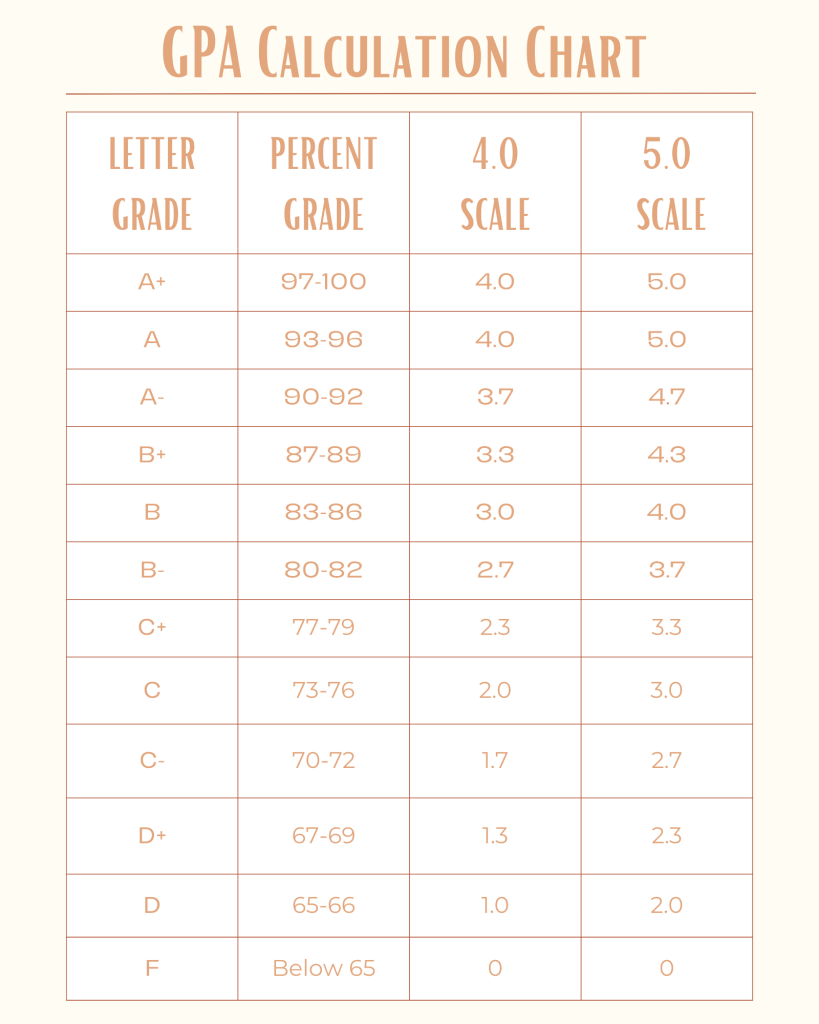
Most educational institutions utilize a 4.0 scale. To calculate the cumulative GPA, one must first convert letter grades into grade points. Typically, an ‘A’ corresponds to 4.0, a ‘B’ to 3.0, a ‘C’ to 2.0, and a ‘D’ to 1.0. However, the true weight of a grade is dictated by the credit hours associated with the course. A four-credit course carries double the weight of a two-credit course. To find the grade points for a single class, multiply the grade value by the number of credit hours.
The Weighted Aggregate
The formula for cumulative GPA is the sum of all grade points earned divided by the total number of credit hours attempted. This mathematical structure reveals why early academic choices carry significant weight. Because the cumulative GPA is a running total, a low grade earned in the freshman year is mathematically just as significant as a grade earned in the final semester, assuming identical credit counts. This creates a “sunk cost” dynamic where early academic underperformance requires a much higher volume of “A” grades in later semesters to move the needle of the cumulative average upward.
The Financial Implications of Academic Performance
In the realm of personal finance, the cumulative GPA is not merely an academic statistic; it is a financial instrument. It serves as a gateway to capital through scholarships, grants, and federal aid, all of which directly impact the return on investment (ROI) of one’s education.
Scholarship Eligibility and Merit-Based Aid
Many institutional and private scholarships have a “GPA floor.” Falling below a 3.0 or 3.5 can disqualify a student from thousands of dollars in recurring aid. From a budgetary perspective, maintaining a high cumulative GPA is an act of wealth preservation. If a student loses a merit-based scholarship due to a dip in GPA, they are effectively absorbing an immediate increase in the cost of their degree. Calculating the “cost per credit hour” with and without scholarship aid illustrates that a high GPA is a tangible financial asset that lowers the total debt burden of the degree.

Graduate School ROI
For those pursuing advanced degrees, the cumulative GPA is a primary screening tool for graduate programs. Admission into high-tier MBA, medical, or law programs is competitive, and these degrees are significant financial investments. A lower GPA can limit options to programs with lower salary potential or higher tuition costs. By maintaining a high GPA, a student keeps the door open to prestigious programs that offer better networking opportunities and higher expected lifetime earnings, directly influencing long-term net worth.
Strategic GPA Management for Career Advancement
The professional world views the cumulative GPA as a proxy for two traits: grit and conscientiousness. While the importance of GPA often wanes as an individual gains work experience, it remains a critical factor for entry-level hiring and internships in high-competition industries like finance, consulting, and engineering.
Understanding Industry Benchmarks
Different sectors treat GPA differently. In investment banking or management consulting, firms often use a 3.5 or 3.7 GPA as an automated filter for their applicant tracking systems. In these industries, the cumulative GPA is a binary gatekeeper; if you do not meet the minimum, your resume may never reach a human recruiter. Understanding these industry-specific benchmarks early allows students to allocate their time and effort toward high-impact courses, ensuring their transcript remains attractive to their target employers.
The “Trend” Factor in Hiring
Recruiters and admissions committees are not just looking at the final number; they are looking for the story behind it. A cumulative GPA that shows a consistent upward trajectory—moving from a lower GPA in the first year to a higher one by the senior year—is often viewed more favorably than a flat, mediocre performance. This “trend” demonstrates personal growth, better time management, and a developing maturity. From a career strategy standpoint, this suggests that even if a student begins their academic journey with a stumble, the cumulative nature of the GPA allows for recovery and the eventual establishment of a competitive profile.
Balancing Academic Metrics with Practical Reality
While the cumulative GPA is a vital metric, it is important to contextualize it within a broader strategy for professional success. Over-optimizing for GPA at the expense of skill acquisition can be a strategic error.
The Diminishing Returns of GPA Perfection
There is a point of diminishing returns when chasing a perfect 4.0. If achieving that final 0.1 increase in cumulative GPA requires sacrificing internships, extracurricular leadership, or networking opportunities, the ROI of that time expenditure may be negative. Employers often prefer a candidate with a 3.5 GPA and three relevant internships over a candidate with a 4.0 GPA and no practical work experience. Personal branding relies on a narrative of competence, and a transcript is only one chapter of that narrative.
Navigating Pass/Fail and Withdrawing
Students often face choices regarding whether to withdraw from a difficult course or take it on a pass/fail basis. These decisions directly impact the cumulative GPA calculation. A withdrawal usually results in a ‘W’ on a transcript, which does not impact the GPA, while a failing grade permanently damages the aggregate. Strategically managing one’s transcript—by knowing when to cut losses in a failing class—is a form of risk management. Protecting the cumulative GPA against unnecessary volatility is a standard practice for students who view their academic transcript as a lifelong financial and professional document.
Ultimately, the cumulative GPA is a reflection of a student’s ability to navigate systems, meet deadlines, and master complex material over time. It is a metric that demands consistent performance and long-term planning. By treating it as both an academic challenge and a financial asset, students can better position themselves for the rigorous demands of the post-graduate professional world. The goal is to reach a balance where the GPA is strong enough to open the necessary doors, while leaving sufficient capacity to build the experiences and skills that will actually sustain a successful career.
aViewFromTheCave is a participant in the Amazon Services LLC Associates Program, an affiliate advertising program designed to provide a means for sites to earn advertising fees by advertising and linking to Amazon.com. Amazon, the Amazon logo, AmazonSupply, and the AmazonSupply logo are trademarks of Amazon.com, Inc. or its affiliates. As an Amazon Associate we earn affiliate commissions from qualifying purchases.