
Backpacking is more than just a nomadic lifestyle choice; it is a sophisticated exercise in lean financial management. Often romanticized through the lens of adventure, the practice of backpacking is, at its core, a discipline of personal finance. It requires the traveler to operate as a one-person business entity, where capital preservation, operational expenses, and liquidity management determine how long the “venture” can remain active. To understand backpacking from a financial perspective is to master the art of travel arbitrage—maximizing the utility of every dollar spent while navigating high-variance environments.

The Economics of Budget Travel
At the heart of the backpacking movement is the optimization of the travel budget. Unlike traditional tourism, which relies on the consumption of pre-packaged, high-margin services, backpacking relies on direct, unbundled service acquisition. By bypassing middlemen—such as travel agencies, resort conglomerates, and premium tour operators—the backpacker retains control over their cash flow.
Cost-Basis Reduction
The primary objective of a backpacker is to lower the cost-basis of their daily existence. This is achieved through a multi-pronged approach to living expenses. Housing costs, typically the largest expense in any personal budget, are reduced by trading private occupancy for shared space in hostels, or through non-monetary exchanges such as Workaway or WWOOFing, where labor is exchanged for room and board. This effectively removes fixed overheads, allowing the traveler to allocate capital toward long-term transit rather than short-term consumption.
The Opportunity Cost of Time
Backpackers often operate with a non-traditional understanding of the “cost of time.” In a standard financial model, time is money—earned through labor. In the backpacker’s framework, time is the primary asset used to hedge against high prices. By choosing slower transit methods, such as buses or trains over flights, the traveler pays with time to save liquidity. This trade-off is essential for long-term sustainability; the slower the rate of capital burn, the longer the individual can remain independent from traditional employment markets.
Managing Financial Risk in Dynamic Environments
Operating a personal budget across international borders introduces significant fiscal risks. Currency volatility, transaction fees, and the physical security of assets are constant variables that can jeopardize a journey. Successful backpackers treat these variables as operational risks that must be mitigated through robust financial infrastructure.
Currency Arbitrage and Fees
The hidden costs of international travel are often embedded in foreign exchange (FX) spreads and ATM fees. A backpacker who ignores these costs can lose 5–10% of their total budget simply to banking overheads. The professional approach involves using neo-banking solutions and multi-currency accounts that offer mid-market exchange rates and minimal transaction fees. By decoupling their primary savings from the local currency of the region they are visiting, backpackers protect their purchasing power against inflation and localized economic instability.
Asset Protection and Security
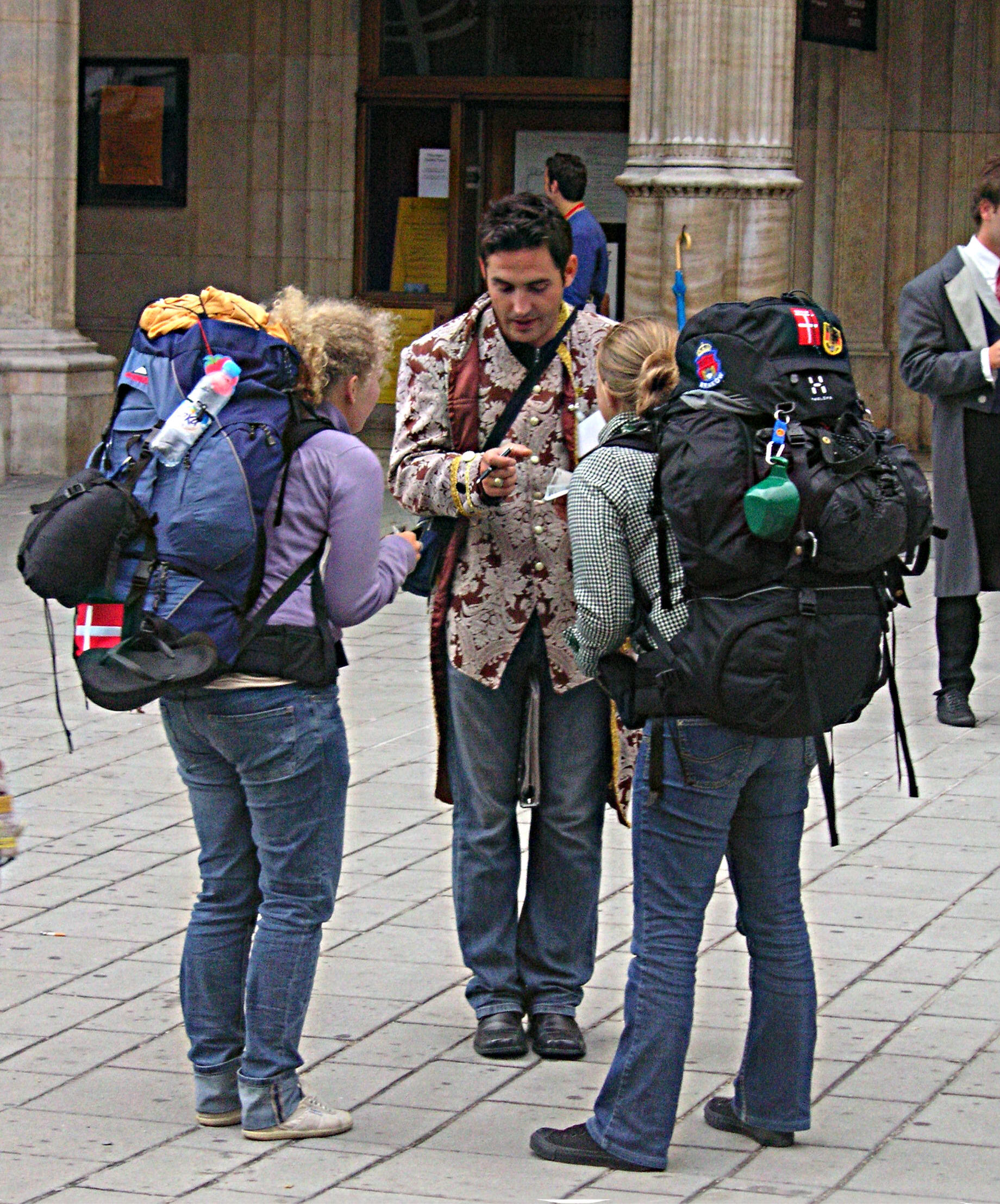
When your entire inventory is contained within a 40-liter bag, the physical security of your assets is a financial priority. Loss of essential documents or digital hardware—such as passports, laptops, or banking credentials—constitutes a “total loss” event that can terminate a trip. Consequently, backpackers employ “asset diversification” strategies, keeping physical cash reserves in multiple locations, utilizing cloud-based storage for critical documents, and maintaining digital security protocols to prevent identity theft. Treating one’s belongings as high-stakes assets ensures that the financial burden of theft is mitigated, or ideally, eliminated.
Scaling the Budget: Long-Term Financial Sustainability
A common misconception is that backpacking is a finite endeavor that ends when the savings account hits zero. However, modern backpackers are increasingly adopting strategies to create “infinite travel” loops. This involves integrating remote income streams into the travel lifestyle, effectively turning the journey into a location-independent business operation.
Remote Revenue Streams
The emergence of the digital nomad ecosystem has transformed backpacking from a leisure activity into a lifestyle of remote professional output. Whether through freelancing, remote consulting, or digital content creation, the goal is to establish a revenue stream that matches or exceeds the daily burn rate. When a backpacker achieves “cash-flow neutrality”—where income earned on the road covers all living and travel expenses—the financial constraints of the journey evaporate.
The Low-Burn-Rate Advantage
The beauty of the backpacker’s financial model lies in its scalability. Because the “overhead” of living is kept intentionally low, the backpacker requires less revenue than the average person to maintain a standard of living. This creates a psychological and financial safety net. A person earning $2,000 a month in an expensive domestic urban center may feel financially insecure, while a backpacker living in Southeast Asia or South America on the same amount can achieve high levels of comfort and quality of life. This is the ultimate “lifestyle design” arbitrage—moving one’s labor to a high-value currency market while maintaining expenses in a low-cost geography.
Budgeting Tools and Tracking Systems
To remain on track, the modern backpacker relies on data. The most successful long-term travelers treat their finances with the same rigor as an accounting firm. This involves meticulous tracking of expenditures to identify cost leaks and optimize future spending.
Expense Tracking as Strategy
Using dedicated finance apps to categorize spending, backpackers perform regular audits of their financial performance. If accommodation costs exceed a specific percentage of the total budget, they pivot to cheaper regions or shift their booking strategy to direct negotiations with hostel owners. This continuous monitoring allows for agile decision-making, ensuring that the traveler remains within the parameters of their financial plan.

Planning for Contingencies
Any sound financial plan includes a reserve fund. For the backpacker, this is the “emergency exit” budget. This money is ring-fenced and strictly off-limits for daily operations. It serves as an insurance policy against unexpected medical emergencies, sudden changes in geopolitical conditions, or the need for an immediate flight home. Without this buffer, the traveler is essentially gambling with their future security. By treating this reserve fund as a non-negotiable expense, the backpacker ensures that even in a worst-case scenario, their financial integrity remains intact.
In conclusion, backpacking is a rigorous, highly disciplined approach to life that tests one’s ability to manage resources in the face of uncertainty. It teaches the traveler how to differentiate between essential needs and luxury desires, how to mitigate financial risk in volatile environments, and how to utilize geographic arbitrage to achieve freedom. By approaching the world through the lens of a lean financial manager, the traveler does not just visit different locations—they navigate their own financial future, proving that true independence is a matter of knowing exactly what you are spending and, more importantly, why you are spending it.
aViewFromTheCave is a participant in the Amazon Services LLC Associates Program, an affiliate advertising program designed to provide a means for sites to earn advertising fees by advertising and linking to Amazon.com. Amazon, the Amazon logo, AmazonSupply, and the AmazonSupply logo are trademarks of Amazon.com, Inc. or its affiliates. As an Amazon Associate we earn affiliate commissions from qualifying purchases.