
Predicting the state of technology a century from now is an exercise in extrapolation. If we look back a hundred years to 1924, we see a world transitioning from the horse and buggy to the early mass adoption of the automobile and radio. Today, we stand on a similarly seismic precipice. By 2124, the digital and physical realms will have merged so completely that the term “technology” itself may become redundant, as the tools we use will be as integrated into our existence as the air we breathe.
The Era of Ambient Intelligence and Neural Integration
In 100 years, the keyboard, the screen, and the smartphone will be historical curiosities. The future of human-computer interaction lies in the transition from external devices to seamless, invisible interfaces.
The End of the Graphical User Interface
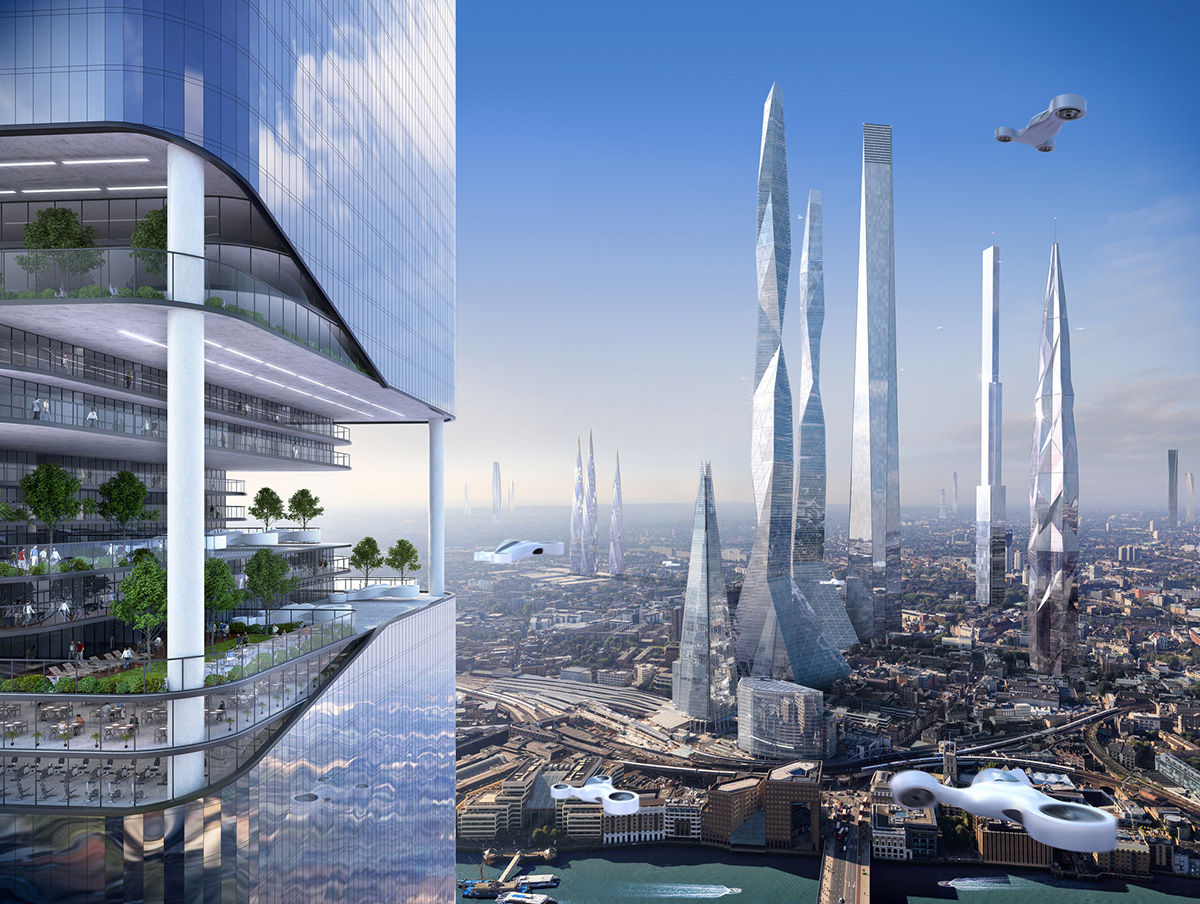
For decades, we have communicated with machines through abstract representations—icons, menus, and text. In a century, these abstractions will vanish. Ambient intelligence will allow the environment to understand intent through multimodal inputs: subtle eye movements, micro-gestures, and predictive intent analysis. Your living space will not be “smart” in the way current home automation functions; it will be an extension of your consciousness. Sensors woven into clothing and embedded in the infrastructure will anticipate needs before they are articulated.
Brain-Computer Interfaces (BCI)
The most significant shift will be the mainstream adoption of high-bandwidth neural interfaces. By 2124, the “downloading” of information or the direct mental manipulation of digital assets will be standard. We are currently in the infancy of invasive BCIs, but over the next century, non-invasive, high-fidelity neural links will likely reach maturity. This will collapse the latency between thought and action, allowing humans to interact with global data repositories with the speed of thought. The concept of “learning” will be redefined from the biological encoding of information to the efficient management of externalized knowledge streams.
The Maturity of Synthetic Intelligence and Autonomous Systems
While current debates focus on whether AI will displace specific jobs, the conversation in 2124 will center on the symbiotic relationship between synthetic entities and human creative output.
Beyond Generative AI
Today’s AI mimics, summarizes, and generates based on massive training sets. By the 22nd century, Artificial General Intelligence (AGI) and beyond will possess distinct, verifiable models of causality rather than simple pattern recognition. These systems will function as autonomous agents capable of managing complex systems—global logistics, terraforming, or metabolic healthcare—without human intervention. The “software” of 2124 will be self-correcting and self-evolving, essentially building its own infrastructure to meet the goals set by human civilization.
The Automation of Discovery
Science is currently limited by the speed of human hypothesis testing. In 100 years, scientific discovery will be accelerated by automated research cycles. AI systems will design, execute, and iterate upon millions of experiments in virtual simulation environments before validating them in the physical world. This will lead to breakthroughs in materials science, room-temperature superconductors, and advanced propulsion systems that currently exist only in theoretical physics papers.
The Revolution in Biotech and Digital Health

The next century will mark the end of medicine as a reactive practice. The intersection of biotechnology and computing will shift the focus from treating illness to the constant, real-time optimization of human biology.
Digital Twins and Predictive Health
Every individual in 2124 will possess a high-fidelity “digital twin”—a dynamic, data-rich model of their own biology. This twin will be updated in real-time by internal nanobots and external sensor arrays. If a cellular anomaly occurs, the system will detect the shift in metabolic pathways long before physical symptoms appear. Treatment will not involve invasive surgery or general pharmaceuticals; instead, it will involve highly targeted, automated interventions—perhaps even the localized reprogramming of cellular function—to restore balance.
Genetic Editing and Biological Customization
The democratization of CRISPR-like technologies will have advanced to a point where biological upgrades are common. We are not just talking about eradicating hereditary diseases, but the active curation of physical and cognitive traits. While ethical debates will undoubtedly continue to rage, the capability to optimize for longevity, cognitive endurance, and resistance to environmental stress will be a defining feature of the next century. Our digital infrastructure will manage these biological parameters, ensuring that the “software” of our bodies remains optimized for the environment we inhabit.
Infrastructure and the Digital Architecture of the Future
How we build our cities and our digital networks will be governed by the necessity for sustainability and hyper-efficiency. The physical world will be augmented by a persistent, high-fidelity digital layer.
The Persistent Metaverse
The “Metaverse” of today is a nascent concept, hindered by bulky headsets and fragmented platforms. By 2124, the metaverse will be an persistent, ubiquitous layer of reality. Using advanced photonics and holographic projection, digital objects will appear indistinguishable from physical ones. Whether working in a virtual office with global colleagues or attending a concert on the moon, the sense of presence will be absolute. This will render the traditional office building obsolete, as physical location loses its relevance to productivity and social engagement.
Energy-Neutral Digital Scaling
The current energy costs of compute power are significant. Over the next 100 years, the computing architecture will move toward neuromorphic chips—processors that mimic the energy efficiency of the human brain. Coupled with advancements in fusion energy and space-based solar arrays, the computational ceiling will essentially disappear. We will enter an era of “infinite compute,” where the limiting factor is no longer energy or processing power, but the creative vision of the architects designing these systems.
The Ethical Imperative in a Technocratic Future
As technology becomes invisible, autonomous, and biological, the role of human oversight will shift. The primary challenge of the 22nd century will not be technical—it will be philosophical.
Algorithmic Governance
When AI manages the grid, the economy, and the healthcare system, the “code” becomes the law. Ensuring that these systems align with human values is not a one-time programming task; it is a constant, iterative process of governance. The digital security of 2124 will not focus on preventing data breaches, but on preventing the drift of autonomous agents away from their core ethical directives.
The Redefinition of Humanity
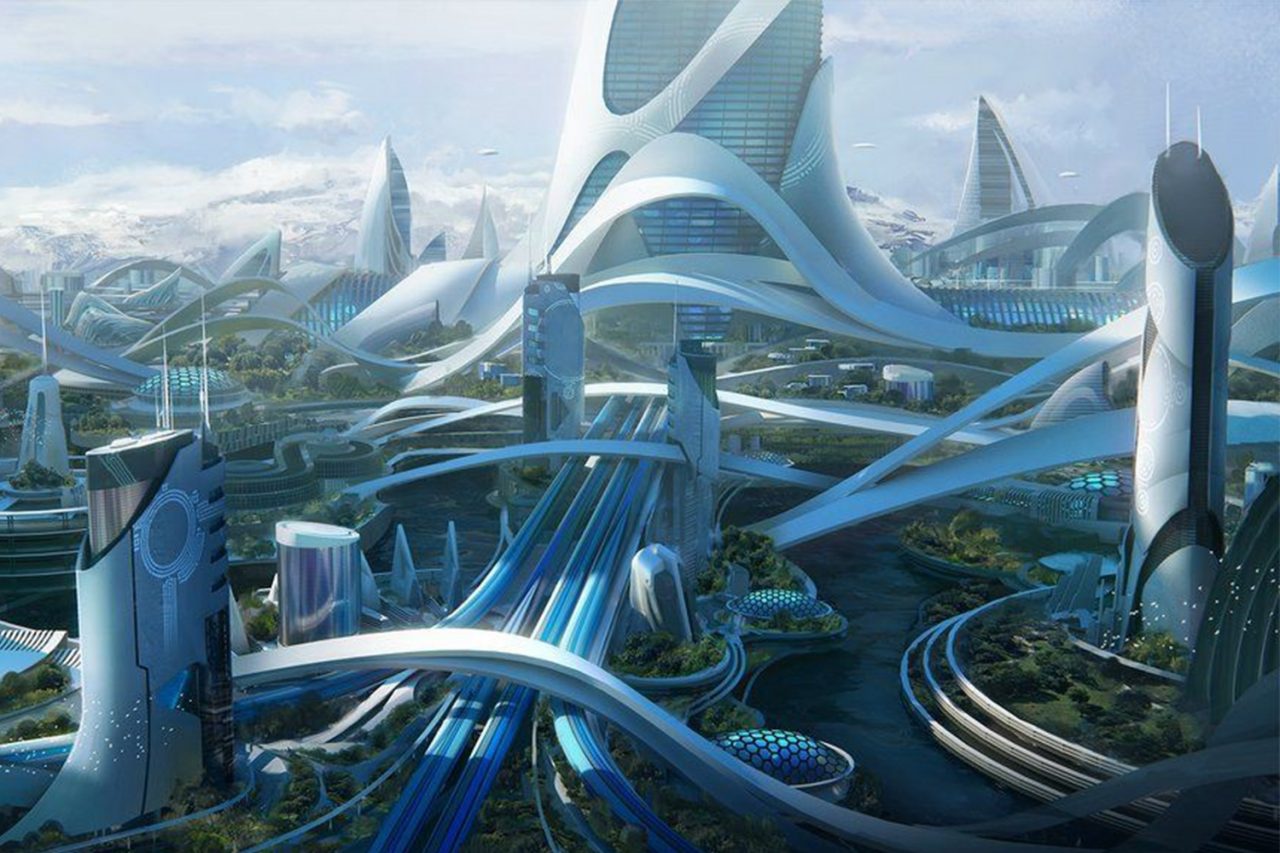
As we offload memory to the cloud, augment our cognition with neural links, and optimize our biology, the question of what it means to be human will become central. Will we be a species of augmented individuals, or will we have evolved into a collective intelligence? The technology of 2124 will offer us the ability to transcend the limitations of the body and the mind, but the responsibility to decide what parts of our “humanity” are worth preserving remains the ultimate challenge.
Looking forward 100 years, we see a world where the boundary between the creator and the tool has dissolved. The future will not be a world of cold machines, but a world where the intelligence of the machine and the intuition of the human have formed a singular, powerful, and ever-expanding capacity for progress. We are moving toward a reality where technology is no longer something we use, but something we inhabit.
aViewFromTheCave is a participant in the Amazon Services LLC Associates Program, an affiliate advertising program designed to provide a means for sites to earn advertising fees by advertising and linking to Amazon.com. Amazon, the Amazon logo, AmazonSupply, and the AmazonSupply logo are trademarks of Amazon.com, Inc. or its affiliates. As an Amazon Associate we earn affiliate commissions from qualifying purchases.