
The Antebellum Era, a period spanning the end of the War of 1812 to the beginning of the American Civil War in 1861, represents one of the most transformative financial and structural epochs in United States history. While often viewed through a social or political lens, the Antebellum period was fundamentally a time of massive economic shifts, industrial speculation, and the solidification of the American capitalistic framework. For those interested in the history of money, the evolution of markets, and the roots of modern business finance, this era serves as a foundational case study in how a young nation transitions from agrarian dependency to an emerging industrial power.

The Financial Engines of Growth: Markets and Speculation
The financial landscape of the Antebellum era was characterized by the transition from localized barter economies to a nascent national market system. This shift was fueled by unprecedented investment in infrastructure and the rapid expansion of credit, which laid the groundwork for modern American capitalism.
The Infrastructure Boom and Investment Risk
The “Market Revolution” was not merely a shift in goods production; it was a financial movement driven by massive capital allocation into infrastructure. The construction of the Erie Canal, completed in 1825, serves as the quintessential example of early American corporate and state-led financing. By drastically reducing the cost of shipping goods from the Great Lakes to the Atlantic, the canal created a speculative frenzy. Investors—both domestic and international—poured capital into subsequent projects, including railroads and turnpikes. This era taught early American financiers the precarious balance between public works and private profitability, a lesson that would repeat in various forms throughout the next two centuries of stock market cycles.
The Role of Banking and Credit Expansion
The Antebellum financial system was highly volatile, defined by the absence of a central bank after the expiration of the Second Bank of the United States. In this void, state-chartered banks proliferated, issuing their own banknotes. This decentralized monetary system created a chaotic but liquid environment for entrepreneurs. The abundance of credit allowed for rapid business expansion, but it also fueled speculative bubbles. The Panic of 1837 remains the most potent illustration of these risks. Triggered by land speculation, a contraction in credit, and a drop in cotton prices, the ensuing depression lasted nearly seven years. It reinforced the inherent volatility of credit-driven economies and led to early debates regarding the government’s role in regulating financial institutions and money supply.
The Business of Commodities: Cotton and Global Finance
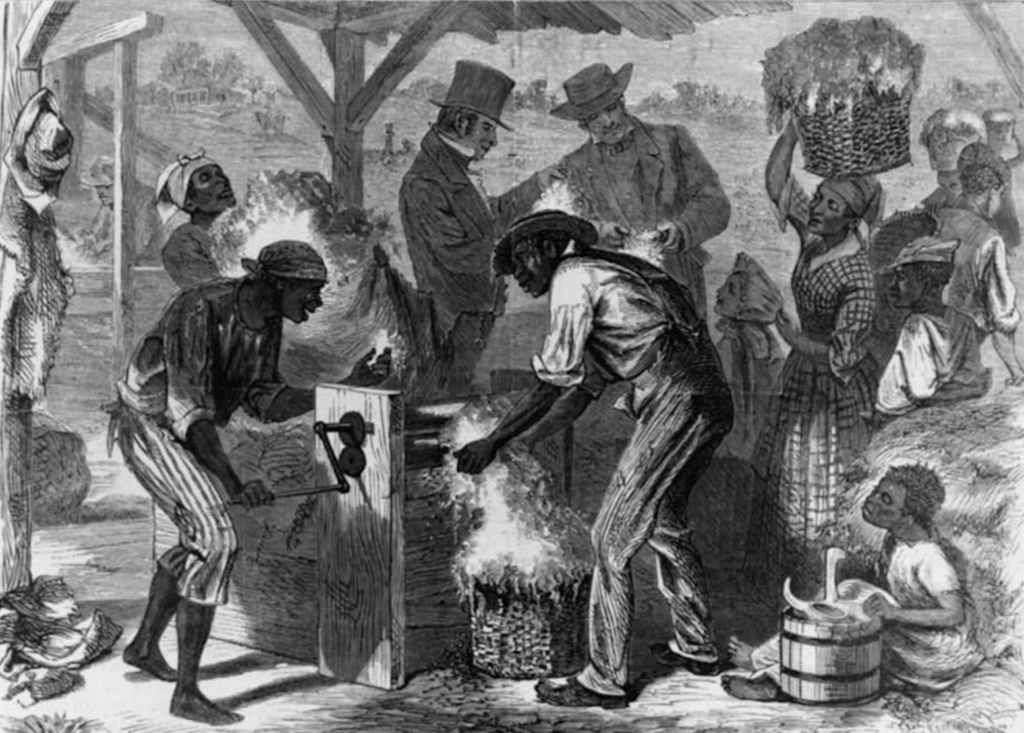
While the Northern states were aggressively pursuing industrialization, the Southern economy was tethered to a highly profitable, capital-intensive, and volatile commodity market. Cotton was the “white gold” of the era, and the financial structures surrounding it integrated the American economy into the global trade network in ways that had profound long-term impacts.
The Valuation of Human Capital as Asset
Perhaps the darkest aspect of Antebellum finance was the commodification of human labor. From a cold, analytical, and strictly economic perspective, the financialization of enslaved labor was the primary engine of Southern wealth. Enslaved people were not only laborers but were used as collateral for bank loans, insurance policies, and mortgages. This integration of human beings into the banking system allowed for massive leverage, enabling plantation owners to expand their operations and purchase more land. Understanding this aspect of the era is essential for historians of finance, as it illustrates how institutions can formalize immoral practices to secure capital flow and asset accumulation.
Global Market Integration and Financial Dependency
The Southern economy was not isolated; it was the engine of the international textile industry. The financial centers of New York and London were deeply intertwined with the profitability of the cotton trade. Northern merchants, shipping companies, and insurance firms acted as intermediaries, earning significant capital through the financing, shipping, and processing of Southern commodities. This created a paradoxical interdependence: the industrial North relied on the financial stability of the plantation economy to fuel its own growth, while the South relied on Northern and European credit to maintain its operations. When the trade was disrupted or commodity prices crashed, the contagion spread quickly through the global financial system, highlighting how early 19th-century trade led to the first iterations of systemic economic risk.
Industrialization and the Birth of Modern Corporate Structure
As the Antebellum era progressed, the North underwent a radical restructuring of its business environment. The transition from small, family-owned artisan workshops to the factory system marked the birth of modern American business strategy, manufacturing efficiency, and labor management.
Technological Adoption and Capital Expenditure
The adoption of the “American System of Manufacturing”—characterized by the use of interchangeable parts—was a turning point for business finance. This move required significant upfront capital expenditure for machinery and factory infrastructure. Unlike the earlier artisanal model, which relied on the skill of the individual, the factory system relied on the productivity of the machine and the coordination of labor. Business owners had to become adept at long-term financial planning, depreciation management, and the acquisition of capital from formal markets, moving away from simple cash-on-hand operations toward a more sophisticated model of corporate finance.
Corporate Identity and Regulatory Frameworks
The Antebellum period saw the rise of the modern corporation. Before this era, charters were difficult to obtain and often limited to specific public works. During the mid-19th century, states began moving toward general incorporation laws, which made it easier for businesses to organize, raise capital through stock sales, and limit individual liability. This legal evolution was the spark that enabled the massive expansion of the American private sector. Business strategy began to shift from regional trade to national competition. Companies began investing in branding, advertising, and distribution networks, creating the prototypes for the modern corporate identities we see today. The competition to control supply chains and dominate nascent markets forced entrepreneurs to prioritize efficiency and scale, setting the template for the industrial giants that would dominate the late 19th and early 20th centuries.

The Legacy of Antebellum Finance
When assessing the Antebellum era, it is clear that the period was the laboratory for the modern American economy. It was a time when the nation learned the power of credit, the dangers of unchecked speculation, and the immense potential of industrial-scale production.
For the modern reader, the Antebellum era serves as a reminder of the cyclical nature of economic development. The tensions between state and federal oversight, the risks associated with infrastructure speculation, and the integration of the American economy into global markets are not modern phenomena; they are threads that were woven during the 1820s, 30s, and 40s. The financial instruments, the legal structures of the corporation, and the focus on global trade networks all find their roots in this period.
Furthermore, the era highlights the uncomfortable truth that financial prosperity is often deeply connected to the ethical standards of the time. The transition from a merchant-based society to a finance-and-industry-based society required a complete overhaul of how capital was sourced, valued, and leveraged. Whether through the lens of land speculation, the expansion of the banking system, or the rise of the factory, the Antebellum era stands as a testament to the fact that economic growth is never neutral. It is the result of specific choices, regulatory environments, and the aggressive pursuit of capital. By analyzing these past financial behaviors, one gains a clearer understanding of the mechanics that drive modern investment, corporate strategy, and the inherent, enduring volatility of the American market.
aViewFromTheCave is a participant in the Amazon Services LLC Associates Program, an affiliate advertising program designed to provide a means for sites to earn advertising fees by advertising and linking to Amazon.com. Amazon, the Amazon logo, AmazonSupply, and the AmazonSupply logo are trademarks of Amazon.com, Inc. or its affiliates. As an Amazon Associate we earn affiliate commissions from qualifying purchases.