
The Visual Identity of an Icon: Analyzing Botticelli’s Brand Legacy
Sandro Botticelli, born Alessandro di Mariano di Vanni Filipepi, stands as one of the most recognizable figures in the history of art. However, if we examine his career through the lens of modern brand strategy, Botticelli was more than just a painter; he was a master of visual identity. His ability to create a consistent, evocative, and highly differentiated aesthetic allowed his work to transcend the standard commissions of the Florentine Renaissance and establish a “brand” that has remained culturally relevant for over 500 years.

In the world of design and corporate identity, Botticelli is a case study in how a specific visual language—defined by elegant lines, ethereal figures, and deliberate symbolism—can solidify a legacy. Unlike his contemporaries who focused heavily on the rigid laws of perspective or the anatomical precision of muscle groups, Botticelli focused on “brand voice.” His works communicate a mood that is instantly recognizable, a key requirement for any entity seeking to establish a lasting position in a saturated market.
Strategic Aesthetics: Creating a Signature Style
A brand’s success often hinges on its ability to be identified at a glance. Botticelli achieved this through the development of a signature aesthetic that served as his competitive advantage in the Medici-funded art market of the 15th century.
The Linear Advantage
Botticelli’s most defining technical trait was his mastery of linea. While his peers, such as Leonardo da Vinci, were developing sfumato (the blurring of edges to create realistic depth), Botticelli doubled down on clear, graceful, and rhythmic outlines. In design terms, this was his “logo style.” By prioritizing the silhouette and the curve of a figure, he ensured his work possessed a clean, graphic quality that stood out against the heavy, shadowed paintings of the era. This clarity of form is why his work remains so reproducible and recognizable on everything from modern apparel to high-end luxury marketing campaigns.
Emotional Branding and Archetypes
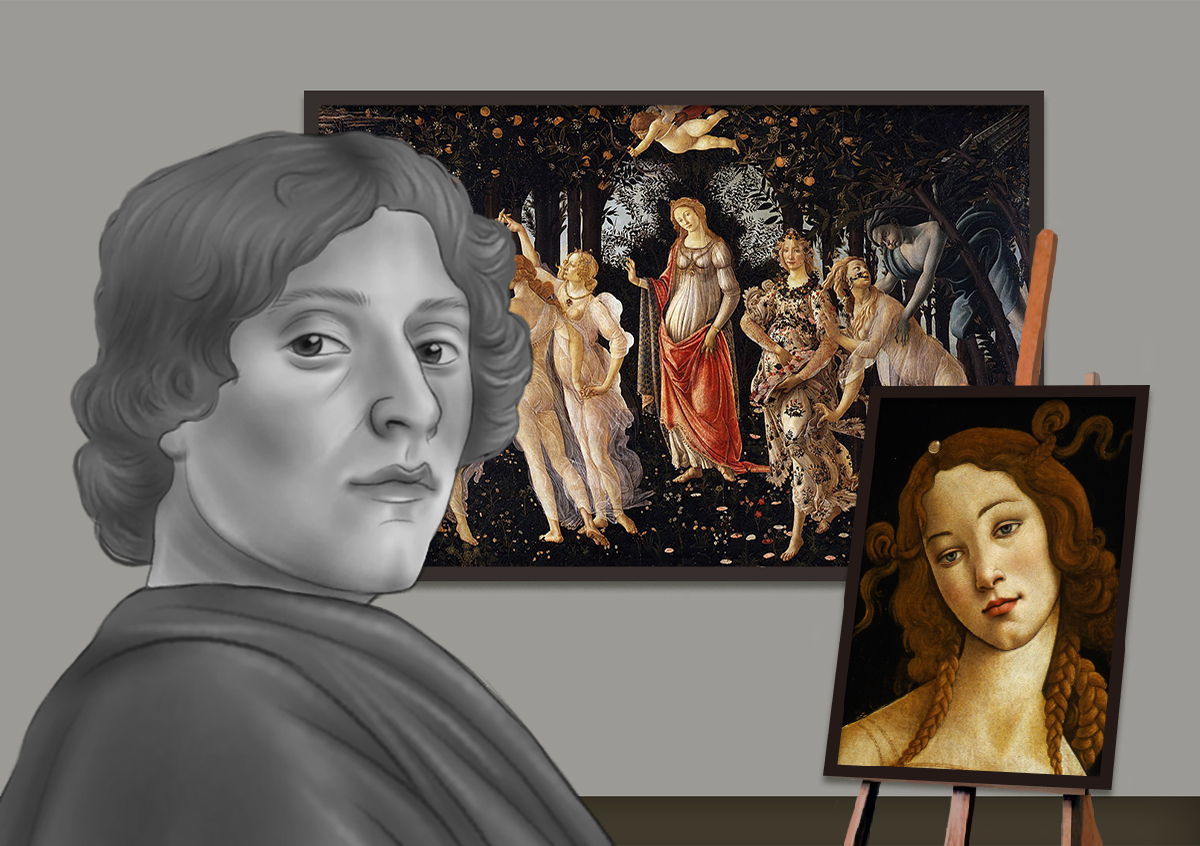
Botticelli’s subjects were not merely religious icons; they were vessels for specific emotional states. When he painted Venus or the figures in Primavera, he wasn’t just executing a commission; he was defining an archetype. This is the cornerstone of modern persona development. By imbuing his figures with a sense of melancholic beauty and lyrical movement, he tapped into a psychological resonance that modern brands strive to achieve through “emotional connection.” He sold an ideal—a vision of beauty and grace—that allowed his patrons to align themselves with an intellectual and aesthetic elite.
The Medici Partnership: Strategic Positioning and Patronage
No brand succeeds in a vacuum. Botticelli’s rise to prominence was inextricably linked to his strategic alignment with the Medici family, the most powerful “corporate sponsors” of Renaissance Florence.

The Power of Exclusive Alliances
Botticelli understood that association is everything. By becoming the favored painter of the Medici circle, he effectively secured a monopoly on a specific tier of elite artistic production. This is akin to a high-end designer becoming the exclusive partner for a luxury conglomerate. His work for the Medici provided him with the freedom to experiment with complex, humanist, and Neoplatonic themes that were far ahead of their time. This partnership did not just provide funding; it provided legitimacy. It positioned him as the definitive artist for the intelligentsia, separating him from the artisanal craftspeople of his time.
Market Differentiation through Intellectual Sophistication
While other artists focused on religious narratives that catered to the masses, Botticelli’s work for the Medici was often steeped in complex allegories. This was a strategic move to differentiate his “product” for a high-value audience. By embedding layers of philosophy into his paintings, he transformed his art into a status symbol. To own a Botticelli was to possess the cultural capital to understand his work. In marketing terms, he had created an “insider brand” that utilized sophisticated visual storytelling to cultivate deep loyalty among the most influential consumers of the day.
Adaptability and the Pivot: A Lesson in Resilience
A crucial element of any brand strategy is the ability to adapt to changing market conditions. Botticelli’s career provides a fascinating study in how even the most successful brands must navigate shifts in public sentiment and economic climate.
The Savonarola Influence
In his later years, the rise of the radical friar Girolamo Savonarola led to a moralizing cultural shift in Florence, resulting in the infamous “Bonfire of the Vanities.” Many artists suffered as their patrons retreated, but Botticelli underwent a significant stylistic pivot. His work became more somber, intense, and overtly religious. While critics often dismiss this period as a decline, from a strategic perspective, it demonstrates an acute awareness of the changing “cultural marketplace.” He adjusted his creative output to align with the new, stricter values of the society around him, ensuring his relevance in a period that was hostile to his previous, more secular, pagan-inspired themes.
Sustaining Relevance Across Centuries
Why does Botticelli remain a dominant brand long after his death? The answer lies in his mastery of “evergreen content.” His imagery—particularly the central figure of The Birth of Venus—has become a universal visual shorthand for beauty. This level of brand equity is rare. By creating works that were not tied to a singular, time-bound trend but were instead rooted in human archetypes, he ensured that his brand could be reinterpreted by every generation. Modern design firms frequently draw upon his color palettes and compositions because they communicate a sense of “timelessness.” His brand didn’t die; it evolved into a foundational aesthetic standard.
The Modern Synthesis: Why Botticelli Matters to Design
In contemporary design and brand strategy, the lessons of Botticelli are as applicable as they were in the 1480s. Whether you are building a personal brand, a corporate identity, or a creative portfolio, the principles remain consistent.
- Prioritize Distinctiveness: Your “line” is your trademark. In a world of visual noise, identify the one stylistic element that makes your work immediately identifiable. Whether it is your typography, your color palette, or your tone of voice, ensure it has the clarity that Botticelli’s lines possessed.
- Build Meaningful Alliances: Strategy is about context. Align your brand with partners, platforms, or communities that elevate your position and provide the right type of exposure.
- Master the Pivot: Never fear a change in the market. The ability to listen to your audience and adjust your output—without losing your fundamental identity—is the key to longevity.
- Cultivate Archetypes: Move beyond the literal. To make a lasting impact, your brand must stand for something larger than itself. Connect your work to human experiences, philosophies, or emotions that resonate on a deeper, subconscious level.
Sandro Botticelli was known for his paintings, but he remains relevant because of his genius as an architect of image. He understood that a brand is not just what you create; it is the impression you leave in the minds of your audience. By mastering the balance between technical precision, strategic patronage, and emotional storytelling, he established a brand legacy that continues to command respect and admiration in the global cultural market. For any modern professional, studying Botticelli is not just an art history exercise; it is an masterclass in how to build an identity that survives the passage of time.
aViewFromTheCave is a participant in the Amazon Services LLC Associates Program, an affiliate advertising program designed to provide a means for sites to earn advertising fees by advertising and linking to Amazon.com. Amazon, the Amazon logo, AmazonSupply, and the AmazonSupply logo are trademarks of Amazon.com, Inc. or its affiliates. As an Amazon Associate we earn affiliate commissions from qualifying purchases.