
In the relentless march of technological advancement, the units we use to measure data have constantly evolved. From kilobytes and megabytes that once seemed astronomically large, we’ve surged past terabytes and petabytes. Now, we stand on the precipice of the yottabyte era, a scale of data so vast it stretches the imagination. But as our digital lives expand and our capacity to generate information grows exponentially, the inevitable question arises: What comes after yottabyte? This isn’t just a question about storage capacity; it’s a profound exploration of the future of technology, brand evolution, and the economic landscapes it will shape.
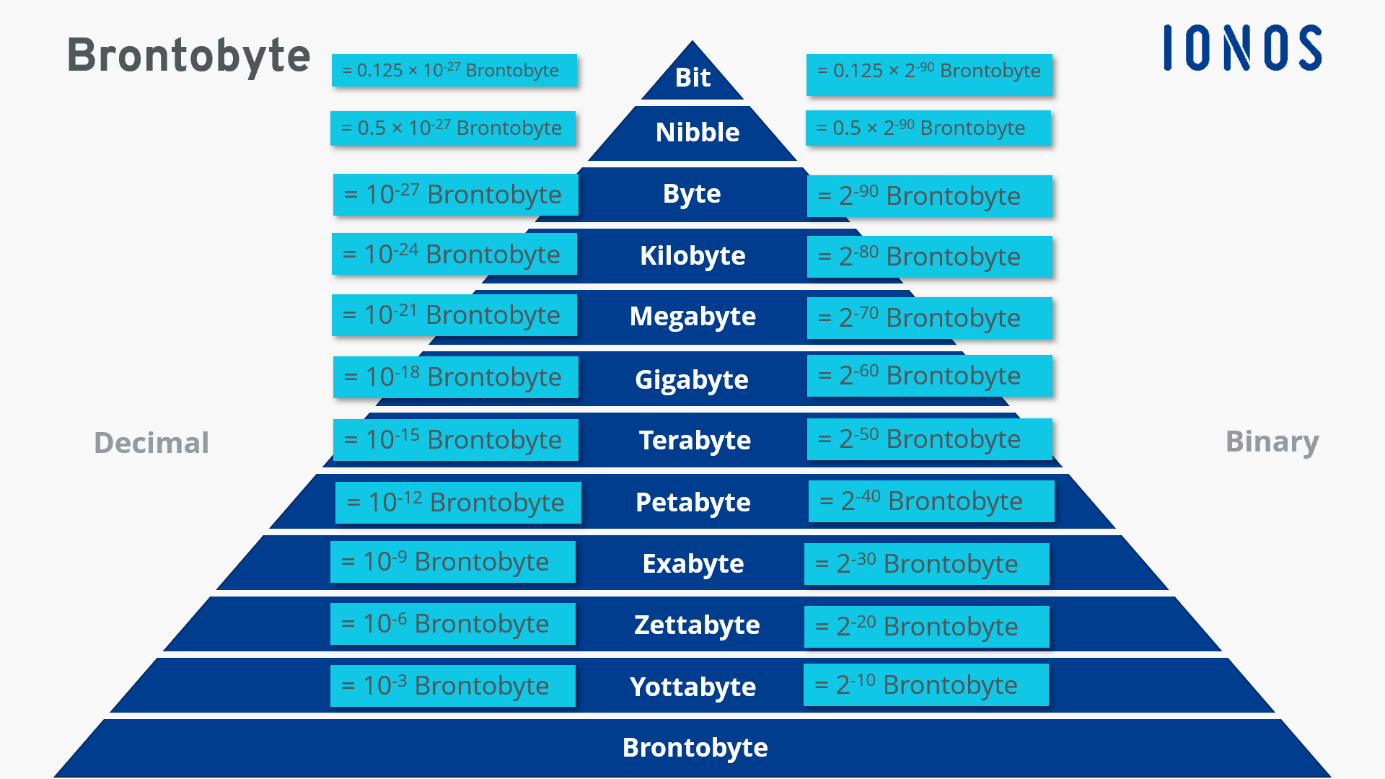
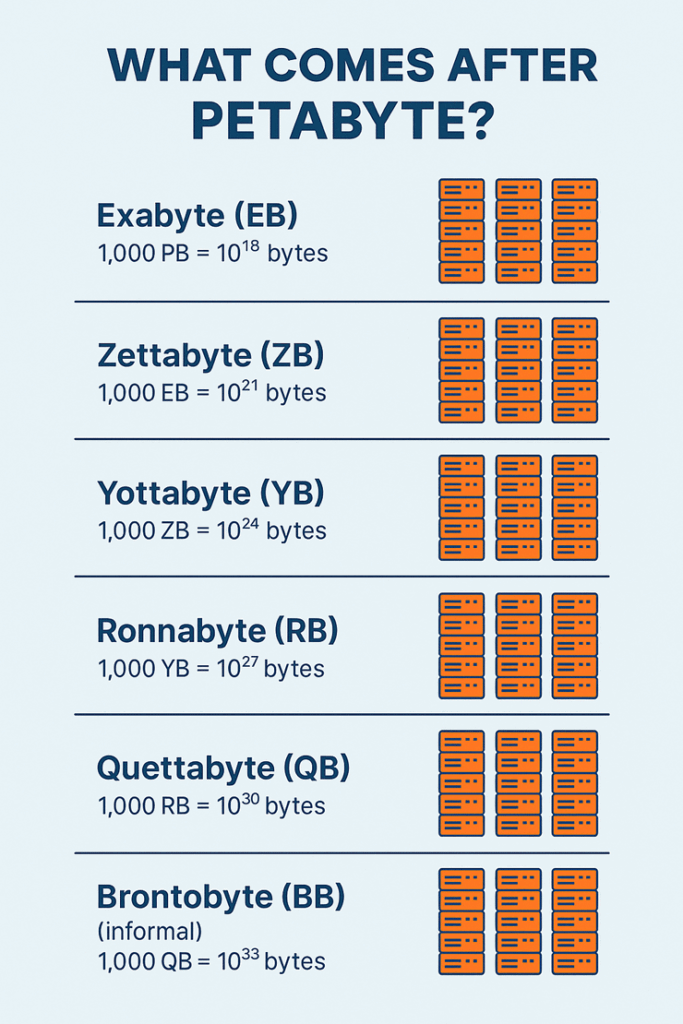
The concept of “yottabyte” itself is a testament to human ingenuity and our insatiable appetite for data. One yottabyte is equivalent to 1000 zettabytes, a zettabyte being a trillion terabytes. To put this into perspective, the entire digital universe today is estimated to be in the zettabytes. The yottabyte era signifies a future where the amount of data we create, store, and process will dwarf anything we’ve experienced. This surge is fueled by a confluence of factors: the proliferation of IoT devices, the explosion of high-resolution content, the advancement of AI and machine learning requiring massive datasets, and the ever-increasing interconnectedness of our world.
But as we grapple with the implications of yottabytes, the tech industry is already looking beyond. While the precise name for the next unit might still be debated or remain theoretical, the concepts and drivers that will necessitate such a unit are very much in focus. Understanding what comes after yottabyte is crucial for businesses looking to innovate, brands aiming to connect, and individuals seeking to navigate the evolving digital economy. It’s a journey that touches upon the very fabric of our digital existence, influencing how we build and perceive value in the coming decades.
The Exponential Engine: Drivers of Data Beyond Yottabyte
The sheer scale of data creation is not a static phenomenon. It’s an exponential engine powered by a dynamic interplay of technological advancements and evolving human behavior. To understand what lies beyond the yottabyte, we must first dissect the forces propelling us there.
The Internet of Everything and the Data Deluge
The Internet of Things (IoT) is no longer a futuristic concept; it’s a present reality that is rapidly expanding. Billions of connected devices – from smart home appliances and wearable fitness trackers to industrial sensors and autonomous vehicles – are constantly collecting and transmitting data. Each sensor, each interaction, generates a stream of information. As these networks grow denser and more sophisticated, the volume of data they produce will amplify exponentially. Imagine a city where every traffic light, every public utility, every vehicle, and every citizen is connected and sharing real-time data. This creates an unprecedented level of granular information that needs to be managed, analyzed, and acted upon.
The implications for businesses are profound. Industries like manufacturing, logistics, and healthcare can leverage this data for predictive maintenance, optimized supply chains, and personalized patient care. However, the sheer volume of data generated by these interconnected systems will quickly push beyond current storage and processing capabilities, necessitating solutions that can handle what comes after yottabyte.
The Unquenchable Thirst for Rich Media and Immersive Experiences
The way we consume and create content has shifted dramatically. High-definition video, virtual reality (VR), augmented reality (AR), and soon, mixed reality (MR) experiences are becoming commonplace. These rich media formats are data-intensive. A single 4K video can consume gigabytes of storage, and immersive VR environments can generate terabytes of data for rendering and interaction. As these technologies become more accessible and integrated into our daily lives – from entertainment and gaming to education and remote collaboration – the demand for storing and streaming these massive files will skyrocket.
The metaverse, a persistent, interconnected set of virtual worlds, promises an even greater leap in data generation. Every avatar, every interaction, every virtual object within the metaverse will contribute to a data ecosystem that will make today’s data volumes seem trivial. Brands will need to create and manage vast digital assets for these virtual spaces, further fueling the need for beyond-yottabyte storage and processing.
AI and Machine Learning: The Data-Hungry Giants
Artificial intelligence (AI) and machine learning (ML) are arguably the most significant drivers of data growth. These technologies thrive on data – the more data they have, the more accurate and sophisticated they become. Training complex AI models, such as those powering advanced natural language processing or sophisticated image recognition, requires massive datasets. These datasets are not just for initial training; AI models require continuous learning and fine-tuning with new data to remain relevant and effective.
As AI permeates every industry, from personalized recommendations and autonomous driving to scientific research and financial forecasting, the demand for data to train and fuel these AI systems will become insatiable. This means not only storing vast amounts of raw data but also the ability to process, label, and analyze it at an unprecedented scale. The development of more advanced AI, capable of more complex reasoning and problem-solving, will necessitate even larger and more diverse datasets, pushing us further into uncharted data territories.
The Technical Horizon: Innovations Beyond Current Paradigms
The challenge of managing and processing data at scales beyond yottabytes demands a fundamental rethinking of our technological infrastructure. Current solutions, while impressive, will eventually hit their limits. The future will likely be shaped by a combination of evolutionary advancements and revolutionary breakthroughs.
The Evolution of Storage: From Bits to Beyond
While the term “yottabyte” refers to a specific order of magnitude, the underlying storage technologies will also need to evolve. We can anticipate advancements in:
- Density and Efficiency: Researchers are exploring new materials and architectures to increase storage density. This could involve breakthroughs in molecular storage, DNA-based data storage, or advanced optical storage methods that pack more bits into smaller physical spaces. The goal is to store more data with less energy and a smaller physical footprint.
- Speed and Accessibility: As data grows, so does the need for rapid access. Future storage solutions will need to not only store immense volumes but also make that data accessible with lightning speed. This might involve advancements in solid-state drives (SSDs) with new materials or entirely new paradigms of data access that move beyond traditional sequential or random access.
- Sustainability: The energy consumption associated with storing and processing exabytes of data is a significant concern. Future storage technologies will need to prioritize energy efficiency and sustainability, perhaps through novel cooling techniques, lower-power hardware, or distributed storage models that optimize resource utilization.
The Rise of Distributed and Decentralized Architectures
Centralized data storage and processing, while effective for current scales, may prove inefficient for exabyte-level data. We are likely to see a greater reliance on:
- Edge Computing: Moving data processing closer to the source where it’s generated. This reduces latency, conserves bandwidth, and allows for real-time analysis of data from IoT devices and other sources. Instead of sending all data back to a central server, insights are generated at the “edge” of the network.
- Distributed Ledger Technologies (DLTs) and Blockchain: While often associated with cryptocurrencies, the underlying principles of distributed and immutable data management can be applied to secure and verifiable data storage at scale. This could be crucial for maintaining data integrity and trust in a world awash with information.
- Decentralized Cloud Solutions: Moving away from large, monolithic cloud providers to more distributed networks of storage and computing resources. This could offer greater resilience, security, and potentially lower costs for managing massive datasets.
The Quantum Leap: Quantum Computing and its Data Implications
Quantum computing, while still in its nascent stages, holds the potential to revolutionize data processing. Its ability to perform complex calculations that are intractable for classical computers could unlock new possibilities for:
- Advanced Data Analysis: Quantum algorithms could enable faster and more sophisticated analysis of massive datasets, leading to breakthroughs in scientific discovery, drug development, and complex simulations.
- Secure Communication and Encryption: Quantum cryptography could offer new levels of data security, making existing encryption methods obsolete and requiring new approaches to protect sensitive information in the post-quantum era.
- AI and Machine Learning Optimization: Quantum computers could accelerate the training of AI models and enable the development of entirely new types of AI, further driving the demand for vast computational resources and data.
Brand and Business in the Era of Exabytes and Beyond
The sheer explosion of data beyond yottabyte will fundamentally reshape how brands interact with their customers and how businesses operate. It’s not just about having more information; it’s about how that information is leveraged to create value, build trust, and foster meaningful connections.
Hyper-Personalization and Predictive Engagement
With access to unprecedented amounts of consumer data, brands will be able to move beyond simple personalization to hyper-personalization. This means understanding individual customer preferences, behaviors, and even predicted needs with remarkable accuracy.
- Proactive Customer Service: Imagine a brand anticipating a customer’s need before they even realize it themselves, offering a solution or service proactively. This level of engagement requires sophisticated AI analysis of massive data streams.
- Tailored Product Development: Data insights can inform the design and development of products and services that are precisely tailored to niche market segments or even individual preferences.
- Ethical Data Utilization: As data volumes grow, so does the responsibility. Brands will need to navigate complex ethical considerations regarding data privacy, consent, and algorithmic bias. Building trust through transparent and ethical data practices will be paramount for brand reputation.
The Rise of the Data-Driven Brand Identity
A brand’s identity will increasingly be intertwined with its ability to effectively manage and leverage data.
- Data as a Core Asset: For many businesses, data will become as valuable an asset as intellectual property or physical infrastructure. Strategic data governance and utilization will be a key differentiator.
- Invisible Branding: In a world of hyper-personalization, branding may become more subtle and integrated. The brand experience will be defined by seamless, intuitive interactions that anticipate user needs, rather than overt marketing messages.
- Reputation Management in the Age of Information Overload: With more data available, the ability to manage and shape a brand’s reputation becomes more complex and critical. Authentic storytelling and transparent communication will be key to cutting through the noise.
New Business Models and Economic Opportunities
The exabyte-plus era will spawn entirely new business models and economic opportunities.
- Data Monetization and Value Creation: Companies that can effectively collect, analyze, and derive insights from massive datasets will find new ways to monetize this information, either directly or indirectly, by enhancing existing products and services.
- The Economy of Insights: The demand for individuals and companies skilled in data science, AI, and data analytics will continue to soar. A new economy will emerge focused on generating and acting upon insights derived from massive data.
- Decentralized Data Marketplaces: We might see the rise of decentralized platforms where individuals and organizations can securely and transparently share or sell anonymised data, creating new avenues for income and innovation.
- The Metaverse Economy: As mentioned earlier, the development of virtual worlds will create a significant new economic frontier, with opportunities for brands to build virtual stores, offer digital goods, and engage with consumers in entirely new ways.
Navigating the Future: Preparing for the Data Horizon
The journey beyond yottabyte is not a distant dream; it’s a rapidly approaching reality that demands our attention and preparation. Whether you’re a technologist, a business leader, a brand strategist, or an individual navigating the digital landscape, understanding the trajectory of data growth is essential for future success.
The question of “what comes after yottabyte” is less about finding a new etymological label and more about understanding the profound shifts it signifies. It’s about recognizing the exponential forces driving data creation, embracing the technological innovations that will enable us to harness it, and adapting our brands and businesses to thrive in an era of unprecedented information. By anticipating these changes, we can not only navigate the future but actively shape it, ensuring that the ever-expanding universe of data serves as a catalyst for progress, innovation, and a more connected, intelligent, and prosperous world. The next frontier of data is not just about scale; it’s about opportunity, responsibility, and the boundless potential of human ingenuity.
aViewFromTheCave is a participant in the Amazon Services LLC Associates Program, an affiliate advertising program designed to provide a means for sites to earn advertising fees by advertising and linking to Amazon.com. Amazon, the Amazon logo, AmazonSupply, and the AmazonSupply logo are trademarks of Amazon.com, Inc. or its affiliates. As an Amazon Associate we earn affiliate commissions from qualifying purchases.