
The pursuit of a career in psychology is often driven by a genuine desire to improve human welfare and mental health. However, like any professional path, it is subject to the pragmatic realities of financial planning, student loan management, and long-term wealth accumulation. Understanding the salary landscape for psychologists is the first step toward building a sustainable financial future. Whether you are a student evaluating the return on investment (ROI) of a doctoral degree or a practicing clinician looking to optimize your income, understanding the economic factors influencing your earnings is essential.

Factors That Influence Psychologist Compensation
Compensation in psychology is rarely a flat rate. It is an intricate ecosystem influenced by geography, specialization, and the specific sector in which a professional operates. To understand the financial trajectory of a psychologist, one must first deconstruct the variables that dictate take-home pay.
Geographic Disparities and Cost of Living
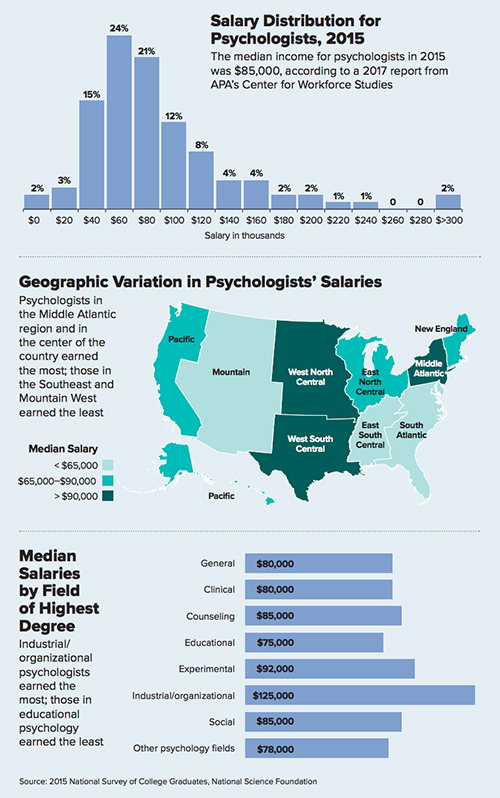
Geography remains one of the most significant predictors of salary. Metropolitan areas with higher costs of living—such as San Francisco, New York City, or Boston—typically offer higher nominal salaries to account for housing, taxation, and general expenses. However, a higher salary in a high-cost area does not always equate to higher disposable income. Financial planning for psychologists must involve a “purchasing power analysis,” comparing the salary against the regional Consumer Price Index (CPI) to determine real-world wealth accumulation potential.
Sector Variance: Public vs. Private Practice
The setting in which a psychologist works creates a divide in earning potential:
- Academic and Institutional Settings: Roles in universities, research hospitals, and government agencies often provide stable salaries, generous benefits, and pension plans. While the base salary may be lower than private sector alternatives, the total compensation package—including retirement matching and insurance—can be substantial.
- Private Practice: This represents the highest ceiling for income but comes with significant overhead. A private practitioner is effectively a small business owner. After accounting for malpractice insurance, office rent, electronic health record (EHR) subscriptions, and marketing, the “net” income is what truly matters. Those who master the business side of practice often earn significantly more than their salaried counterparts, but they must also manage their own taxes and retirement contributions.
Specializations and Their Economic Impact
Not all fields of psychology are valued equally by the market. Specialized training often correlates with higher billing rates and specialized job markets.
Clinical vs. Industrial-Organizational Psychology
Industrial-Organizational (I-O) psychology is frequently cited as the highest-paying niche in the field. Because I-O psychologists work to improve employee performance, organizational structure, and workplace culture, they are often integrated into corporate executive suites. Their work has a direct, measurable impact on a company’s bottom line, which allows them to command higher consulting fees and salaries.
Conversely, clinical and counseling psychologists working in mental health service delivery face a different set of market dynamics. While essential, these roles are often constrained by insurance reimbursement rates and public funding, which can create a ceiling on salary growth unless the practitioner diversifies their revenue streams.

Neuropsychology and Forensic Psychology
Neuropsychologists, who conduct complex diagnostic assessments, often see higher compensation due to the highly specialized nature of their training and the clinical necessity of their work. Similarly, forensic psychologists—who interface with the legal system—often bill at premium rates for expert testimony, evaluation, and consultation services. These roles require intensive post-doctoral training, which should be viewed as a capital investment that eventually pays dividends through higher hourly billables.
Strategic Financial Management for Psychologists
A high salary is meaningless without effective wealth management. Psychologists are often highly educated but may lack formal training in business finance. To ensure long-term stability, professionals in this field should adopt a strategy focused on debt management, tax optimization, and asset allocation.
Tackling Student Loan Debt
The path to becoming a licensed psychologist is lengthy, often requiring seven to ten years of post-secondary education. This frequently results in significant student loan debt. Financial wellness for the early-career psychologist starts with a rigorous debt-repayment strategy.
- Public Service Loan Forgiveness (PSLF): For those working in non-profits or government roles, understanding the nuances of PSLF is crucial. Navigating this program correctly can save hundreds of thousands of dollars over the lifetime of a career.
- Refinancing vs. Federal Programs: Weighing the benefits of income-driven repayment plans against the lower interest rates of private refinancing is a common dilemma. Calculating the crossover point where refinancing becomes more efficient is a core component of early-stage financial planning.
Diversifying Income Streams
The most successful psychologists often move beyond the “one-hour, one-client” model. Because clinical time is finite, relying solely on hourly wages limits income to the number of hours one can physically work. To scale financially, many professionals pivot toward:
- Consulting and Coaching: Providing expert advice to corporations or individuals outside the traditional insurance-based model allows for higher, non-regulated rates.
- Digital Products and Content: Creating online courses, specialized webinars, or books allows for passive income generation. This decouples the psychologist’s income from their direct time, a key strategy in long-term wealth building.
- Supervision and Training: As one moves into the mid-career stage, supervising interns or offering continuing education credits (CEUs) to peers creates a sustainable revenue stream that leverages one’s experience.
Navigating Retirement and Long-Term Wealth
The clinical nature of psychology—which involves high emotional labor—can lead to burnout. Financial planning, therefore, must account for the possibility of a shorter-than-average career span or a mid-career transition.
Tax-Advantaged Investing
For the private practitioner, the lack of an employer-provided 401(k) is a significant hurdle. However, this can be mitigated by utilizing vehicles such as a SEP-IRA (Simplified Employee Pension) or a Solo 401(k). These accounts allow self-employed psychologists to shield a significant portion of their income from taxes while simultaneously building a robust nest egg. Engaging with a financial advisor who understands the specific tax complexities of small-business mental health practices is often the best investment a psychologist can make.
The Value of Time and Emotional Capital
Ultimately, the “salary” of a psychologist must be viewed in the context of professional longevity. High-earning positions that demand excessive overtime may lead to burnout, forcing a premature exit from the field. A sustainable financial plan must prioritize the preservation of the professional’s “emotional capital.” Investing in high-quality administrative support, efficient practice management software, and regular supervision are not just business expenses; they are protective measures for the professional’s most important asset: their ability to provide quality care.
By shifting the focus from simply asking “how much will I make?” to “how can I architect a career that yields sustainable wealth and personal fulfillment,” psychologists can take control of their financial destinies. The field of psychology offers a unique blend of intellectual rigor and human impact. When paired with sound financial strategy, it provides a stable and prosperous career path that rewards both the mind and the bank account. Through careful specialization, strategic practice management, and disciplined investing, the modern psychologist can build a life that is as financially rewarding as it is personally meaningful.
aViewFromTheCave is a participant in the Amazon Services LLC Associates Program, an affiliate advertising program designed to provide a means for sites to earn advertising fees by advertising and linking to Amazon.com. Amazon, the Amazon logo, AmazonSupply, and the AmazonSupply logo are trademarks of Amazon.com, Inc. or its affiliates. As an Amazon Associate we earn affiliate commissions from qualifying purchases.