
At the most fundamental level, every piece of technology we interact with—from the smartphone in your pocket to the sprawling data centers powering the global cloud—is a sophisticated exercise in managing subatomic particles. While the question “what charge is a proton, neutron, and electron” might sound like a middle-school science review, the answer serves as the bedrock of the entire technology sector. In the world of tech, understanding these charges is not just about physics; it is about understanding how we manipulate the universe to process data, store energy, and build the future of artificial intelligence.

The Physics of Hardware: How Subatomic Charges Power Our Gadgets
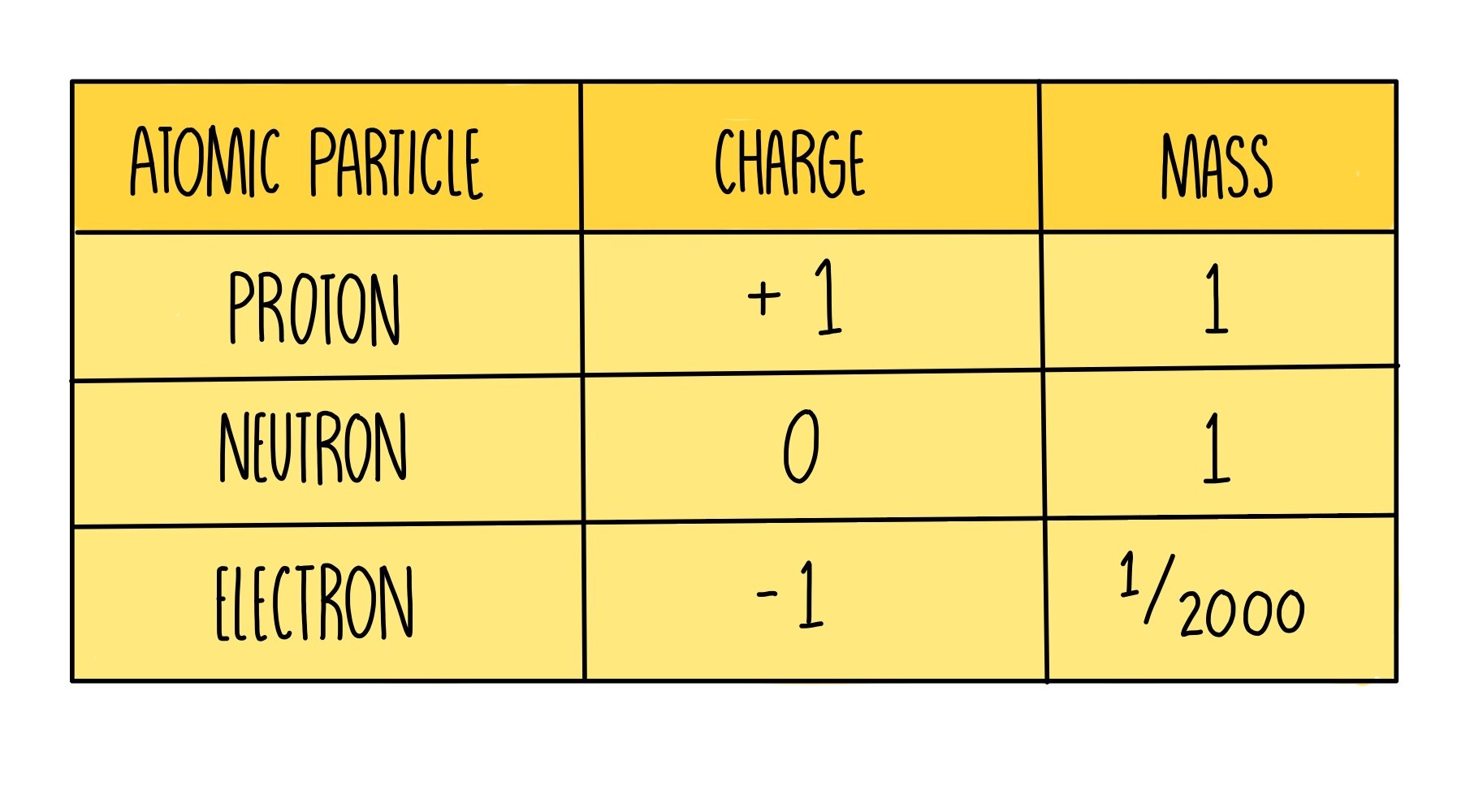
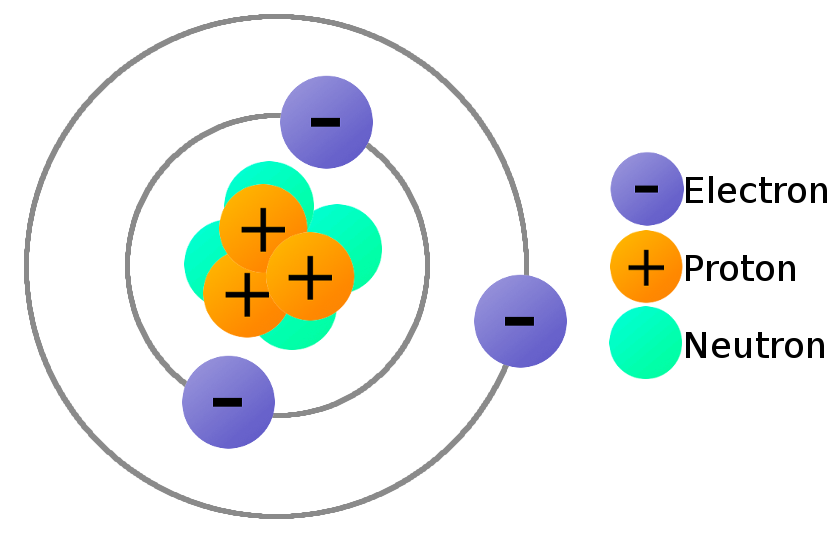
To understand modern hardware, we must first define the players in the atomic theater. An atom consists of a nucleus containing protons and neutrons, orbited by electrons. The proton carries a positive electrical charge (+1), the electron carries a negative electrical charge (-1), and the neutron is electrically neutral (0). In the tech industry, these aren’t just facts; they are the tools of the trade.
Electrons: The Kinetic Force of Modern Circuits
The electron is the protagonist of the digital age. Because electrons are light and reside outside the nucleus, they can be easily moved. In tech, “electricity” is simply the flow of these negatively charged particles through a conductor. When you plug in a laptop or power up a server, you are facilitating a massive migration of electrons. The ability to start, stop, and redirect this negative charge with precision is what allows a processor to execute instructions. Without the negative charge of the electron and its propensity to move toward a positive potential, the hardware industry would not exist.
Protons and Neutrons: The Stability of the Silicon Lattice
If the electron is the worker, the proton and neutron are the infrastructure. Protons define the identity of the element. In the tech world, silicon is the king of elements because its atomic structure—determined by its 14 protons—allows it to act as a semiconductor. The neutrons in the nucleus provide the necessary binding energy to keep the atom stable. In the manufacturing of semiconductors, engineers use a process called “doping,” where they strategically add different atoms to the silicon lattice to change its electrical properties. This manipulation of atomic balance is what creates the P-type (positive) and N-type (negative) materials necessary for modern electronics.
From Electrons to Logic Gates: The Binary Language of Charge
The transition from raw physics to high-level software begins with the control of charge. Every application you use, from a simple calculator to a complex AI tool, is essentially a high-level representation of billions of charges being toggled on and off.
Transistors and the Control of Electron Flow
The transistor is the most important invention in the history of technology. It acts as a microscopic switch that can either allow or block the flow of electrons. When a transistor allows charge to pass, it represents a “1” in binary code; when it blocks the charge, it represents a “0.” By leveraging the fact that electrons are negatively charged and repelled by other negative charges, engineers can create “gates.”
As we move toward 3nm and 2nm process nodes, the challenge for tech giants like TSMC and Intel is managing these charges at an almost impossible scale. At these dimensions, we face “electron leakage,” where the negative charge jumps across barriers intended to stop it. Solving this is the primary focus of modern materials science in tech.
The Transition from Classical to Quantum Computing
While classical tech relies on the presence or absence of a charge (bits), the emerging field of quantum computing looks at the intrinsic properties of subatomic particles like electrons and protons in a different way. Quantum bits, or qubits, utilize “spin”—a fundamental property related to the particle’s charge and mass. By manipulating the spin of an electron or the nucleus of an atom (the protons and neutrons), quantum computers can perform calculations in parallel that would take a classical supercomputer thousands of years. This represents the next frontier in the tech niche: moving from managing flow to managing the fundamental quantum states of charged particles.
Energy Storage and Sustainability: The Role of Ions and Electrons
The portability of modern technology—gadgets, wearables, and electric vehicles—is entirely dependent on our ability to store electrical charge. This is where the chemistry of protons and electrons moves from the processor to the battery.
Lithium-Ion Technology and Mobile Connectivity
A battery is a device that stores chemical energy and converts it into electrical energy through the movement of charged particles. In a lithium-ion battery, lithium ions (which are atoms that have lost an electron, giving them a net positive charge due to their protons) move between the anode and the cathode.
During discharge, the battery releases electrons (negative charge) through the external circuit to power your device, while the positive ions move internally to balance the charge. The tech industry’s obsession with “battery life” is, in essence, a quest for materials that can hold more ions and facilitate the flow of electrons more efficiently without degrading the atomic structure of the battery components.
Future Tech: Solid-State Batteries and Charge Efficiency
The next big trend in tech gadgets and green energy is the solid-state battery. Current tech uses liquid electrolytes to move charges, which can be volatile. Solid-state technology aims to use a solid material to facilitate the movement of ions. This would allow for faster charging (moving electrons and ions more quickly) and higher energy density. For the tech consumer, this means smartphones that charge in seconds and laptops that last for weeks, all by optimizing the way we handle the fundamental charges of protons and electrons.
Digital Security and the Atomic Level: Protecting the Flow
As we become more dependent on the movement of charged particles for our daily lives, the security of those charges becomes paramount. Digital security isn’t just about passwords; it’s about protecting the integrity of the physical charge states that represent our data.
Electromagnetic Interference (EMI) and Shielding
Every time an electron moves, it creates a magnetic field. In high-density tech environments, such as data centers or high-speed hardware, these fields can interfere with each other. This is known as Electromagnetic Interference (EMI). If a stray charge from one wire flips the state of a transistor in another, it can cause data corruption or system failure. Tech engineers spend billions on “shielding”—using conductive materials to soak up these stray charges and redirect them safely to the ground, ensuring that the “negative charge” of the electron stays exactly where it is supposed to be.
The Physical Layer of Cybersecurity
Advanced cyber-attacks can sometimes involve “side-channel analysis.” This is a technique where hackers monitor the power consumption (the flow of electrons) of a processor to figure out what cryptographic keys are being used. Because different operations require different amounts of charge movement, the very physics of the proton-electron interaction can be a vulnerability. Modern secure hardware is designed to “mask” these charge signatures, making the power consumption uniform and invisible to external observers. This highlights that in the tech niche, security begins at the atomic level.
Conclusion: Why the Atomic Scale Matters for the Future
To answer “what charge is a proton, neutron and electron” is to define the alphabet of the modern world. The proton’s positive charge and the electron’s negative charge create the tension and flow that power our digital existence, while the neutron provides the stability that allows matter to exist in a form we can manipulate.
As we look toward the future—AI that requires massive computational power, global networks that demand instantaneous data transfer, and the urgent need for sustainable energy—we see that all progress returns to these three particles. The tech industry is no longer just about writing code or designing sleek cases; it is about the mastery of the subatomic. By understanding and manipulating the fundamental charges of the universe, we continue to push the boundaries of what is possible, turning the simple physics of the atom into the complex magic of the digital age.
aViewFromTheCave is a participant in the Amazon Services LLC Associates Program, an affiliate advertising program designed to provide a means for sites to earn advertising fees by advertising and linking to Amazon.com. Amazon, the Amazon logo, AmazonSupply, and the AmazonSupply logo are trademarks of Amazon.com, Inc. or its affiliates. As an Amazon Associate we earn affiliate commissions from qualifying purchases.