
For many casual collectors and individuals stumbling upon old change, the 1952 wheat penny represents a tangible piece of mid-century history. While it is rarely a ticket to instant wealth, understanding its value requires a nuanced look at numismatics, condition grading, and the subtle variations that distinguish a common circulation coin from a significant numismatic find.
Understanding the Wheat Penny Series
The 1952 penny is part of the Lincoln Wheat cent series, which ran from 1909 to 1958. Designed by Victor David Brenner, the obverse features the iconic profile of Abraham Lincoln, while the reverse displays two stalks of wheat framing the words “ONE CENT” and “UNITED STATES OF AMERICA.”
Because these coins were minted in the hundreds of millions, the base value is dictated by the cost of the raw copper, as well as the sheer volume of surviving examples. However, the difference between a coin worth three cents and one worth three hundred dollars lies entirely in the details of the minting process and the preservation of the coin’s surface.
Mint Marks and Mintage Figures
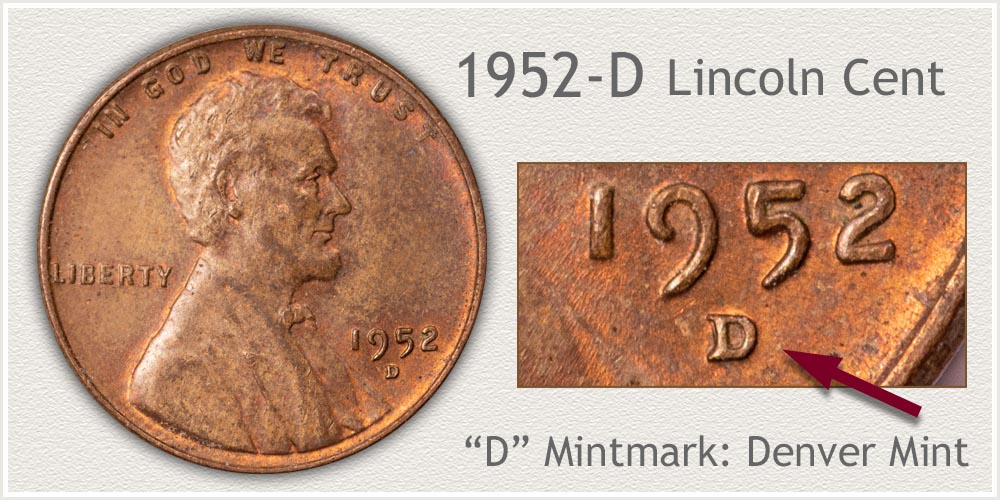
To determine the potential value of your 1952 penny, the first step is to locate the mint mark. During 1952, the United States Mint produced these coins at three locations:
- Philadelphia (No Mint Mark): With a mintage of 186,710,000, these are the most common.
- Denver (D Mint Mark): With a mintage of 746,011,500, these are even more abundant.
- San Francisco (S Mint Mark): With a mintage of 137,800,000, these are generally the most sought-after due to lower production numbers compared to the Denver facility.
The mint mark is located on the obverse side, just below the date. If there is no letter, it was minted in Philadelphia. Finding a “D” or “S” doesn’t automatically mean the coin is valuable, but it is the primary filter used by collectors when assembling sets.
The Role of Condition and Grading
In the world of coin collecting, “condition is king.” A 1952 penny that spent decades circulating in pockets, registers, and jars will almost always be worth only a nominal amount above its copper melt value. The surface of such coins is often darkened, scratched, or worn smooth, erasing the fine details of Lincoln’s hair or the individual lines of the wheat stalks.
The Scale of Preservation
Professional coin grading services, such as PCGS (Professional Coin Grading Service) or NGC (Numismatic Guaranty Company), use the Sheldon Scale to grade coins from 1 to 70.
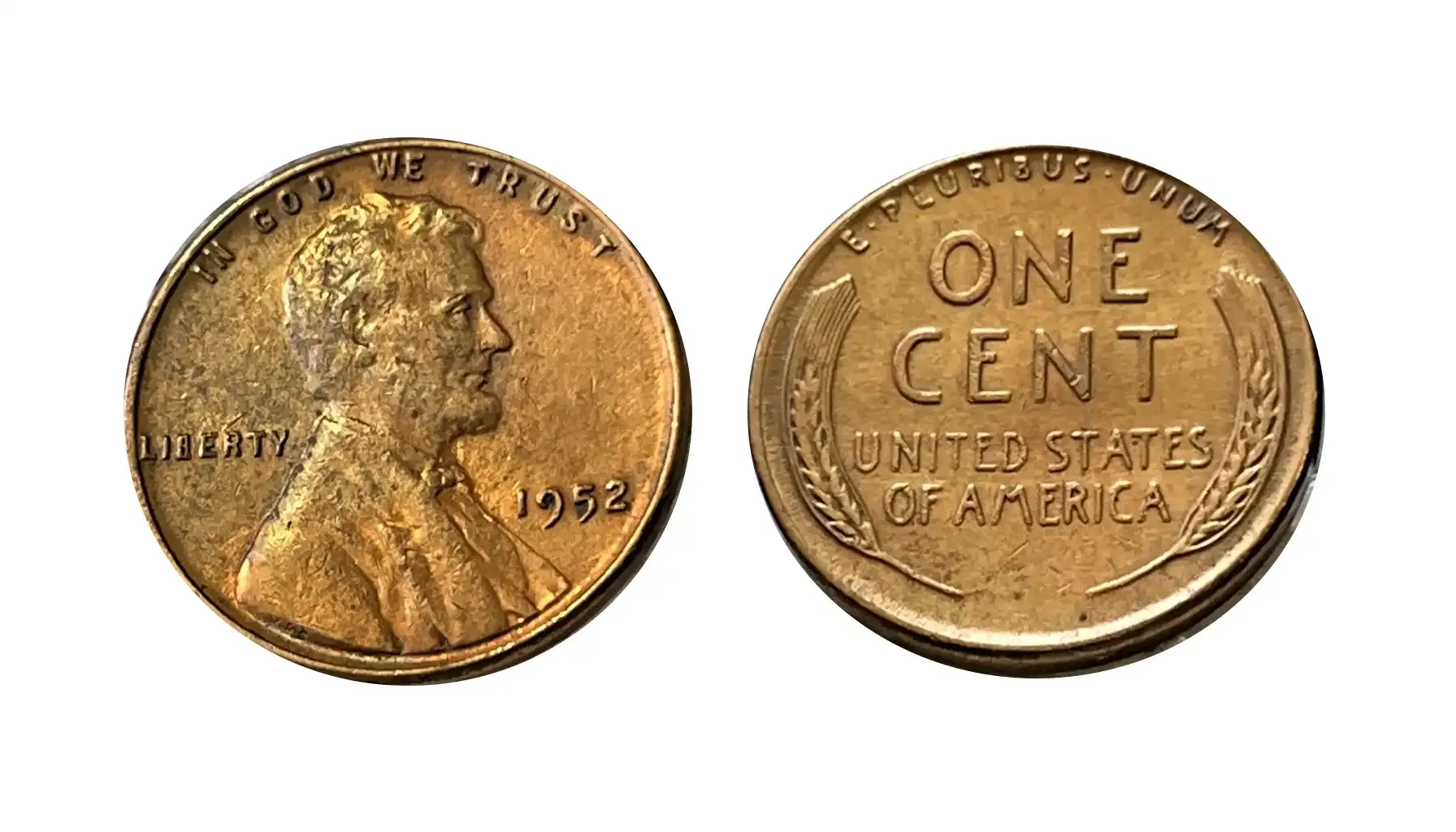
- Circulated (Good to Fine): These coins exhibit visible wear. If the wheat stalks are flattened and the date is barely legible, the coin holds little value beyond the copper content.
- About Uncirculated (AU): A coin in this state shows only the slightest touch of wear on the highest points of Lincoln’s cheek or the wheat stalks. These can fetch a small premium, often ranging from $1 to $5 depending on the buyer.
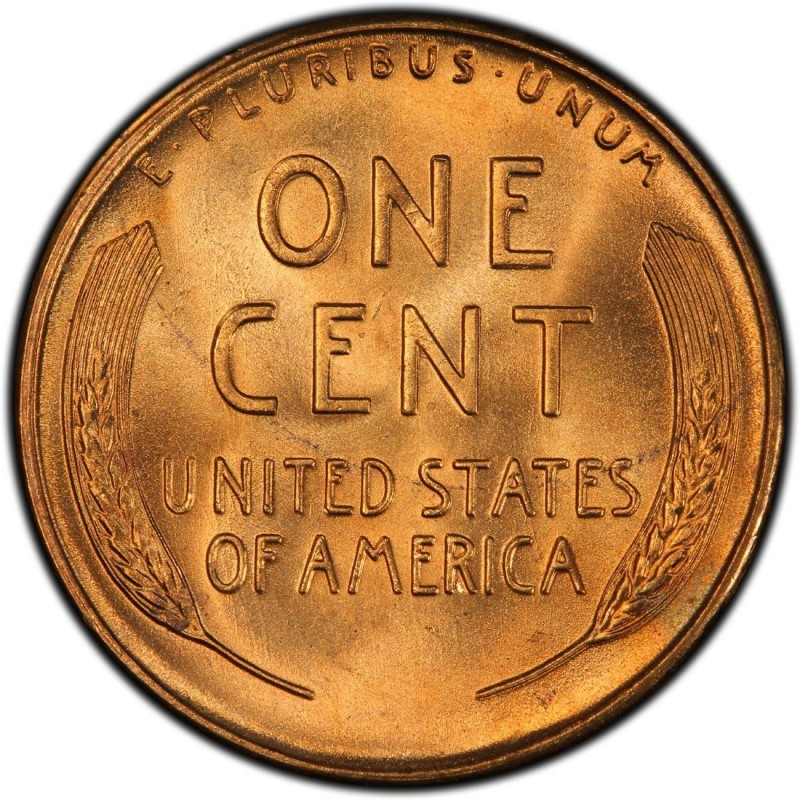
- Mint State (MS): This is where the real value lies. An “MS” coin has never entered circulation. It retains its original, reddish-orange luster. A 1952 penny graded at MS-65 or higher can jump significantly in price, often selling for $20 to $50 or more. Gem-quality specimens graded MS-67 or higher are rare and can command hundreds of dollars at auction.
The “Red” vs. “Brown” Designation
When grading copper coins, collectors pay close attention to the color. Grading companies assign a color designation:
- RD (Red): The coin retains its original, bright copper-orange color. These are the most valuable.
- RB (Red-Brown): The coin has some original color but shows signs of toning or oxidation.
- BN (Brown): The coin has turned completely brown due to natural chemical reactions over time.
A 1952 penny that is certified as “MS-66 RD” will be worth exponentially more than a “BN” coin of the same grade, as the preservation of the original mint luster is considered a hallmark of a high-quality investment piece.
Identifying Varieties and Errors
Beyond the standard issues, collectors hunt for “error coins.” An error occurs when the minting equipment malfunctions or the planchet (the blank metal disc) is compromised. While a standard 1952 wheat penny is a common item, a legitimate error coin can be a highlight of a collection.
Common vs. Rare Errors
- Off-Center Strikes: These occur when the planchet is not correctly positioned in the press. The more of the design that is missing, the more valuable the coin.
- Double Dies: This happens if the die that strikes the coin shifts during the process, resulting in a ghosted or doubled image on the lettering or the date. While there are no major, widely-recognized “star” doubling varieties for the 1952 year like there are for 1955, collectors should always inspect for subtle doubling under a magnifying glass.
- Clipped Planchets: These are coins where a piece of the metal disc was missing before the coin was struck, resulting in a “bite” taken out of the edge of the penny.
It is important to note that many items people perceive as “errors” are actually post-mint damage. Scratches, exposure to harsh chemicals, or intentional alterations are not errors and do not add value; in fact, they usually decrease the value of the coin significantly.
Is It Worth Investing?
For the average person looking at their loose change, a 1952 penny is best viewed as a hobbyist piece rather than a primary investment vehicle. If your goal is to build wealth, the volatile nature of numismatics requires significant expertise and a long-term horizon.
The Reality of Profitability
If you have a handful of 1952 pennies found in an old collection, your best strategy is to group them by mint mark and examine them for luster. If they appear dark and worn, they are essentially “pocket change” collectibles. If you find one that is bright, shiny, and looks as if it were minted yesterday, it is worth consulting a professional grading service or a reputable local coin dealer.
Do not attempt to clean your coins. This is the most common mistake made by novices. Cleaning a coin—even with mild soap or a polishing cloth—strips the natural surface and luster, immediately destroying its collector value. A professional collector would rather have a dirty, untouched coin than one that has been “cleaned.”
Building a Collection
Ultimately, the value of a 1952 penny is subjective. For the historian, it represents a snapshot of the post-war American economy. For the investor, it is a lesson in patience, condition, and rarity. If you possess a 1952 penny, cherish it for the history it carries. If you believe you have discovered a high-grade “Mint State” example, take the time to have it properly evaluated. In the realm of financial assets, knowledge is the most important currency you can spend; research your specific coin, understand the grading process, and you will quickly discern whether your 1952 penny is a modest souvenir or a hidden treasure.
aViewFromTheCave is a participant in the Amazon Services LLC Associates Program, an affiliate advertising program designed to provide a means for sites to earn advertising fees by advertising and linking to Amazon.com. Amazon, the Amazon logo, AmazonSupply, and the AmazonSupply logo are trademarks of Amazon.com, Inc. or its affiliates. As an Amazon Associate we earn affiliate commissions from qualifying purchases.