
For many, the discovery of an old copper coin in a jar of loose change or tucked away in an inherited collection sparks an immediate question: is this a hidden treasure? The 1920 Wheat Penny, a staple of the Lincoln cent series, is a fascinating piece of American numismatic history. While most 1920 pennies are not going to fund a retirement account, understanding the factors that dictate their value is a fundamental skill for anyone interested in coin collecting as an investment or a hobby.
The Historical Significance of the 1920 Lincoln Cent
The Lincoln Wheat Penny, which features the iconic profile of Abraham Lincoln on the obverse and two stalks of wheat on the reverse, was produced from 1909 to 1958. By 1920, the United States was transitioning into the “Roaring Twenties,” a decade of economic expansion and cultural transformation. The production of the 1920 cent took place across three major minting facilities: Philadelphia (no mint mark), Denver (D mint mark), and San Francisco (S mint mark).
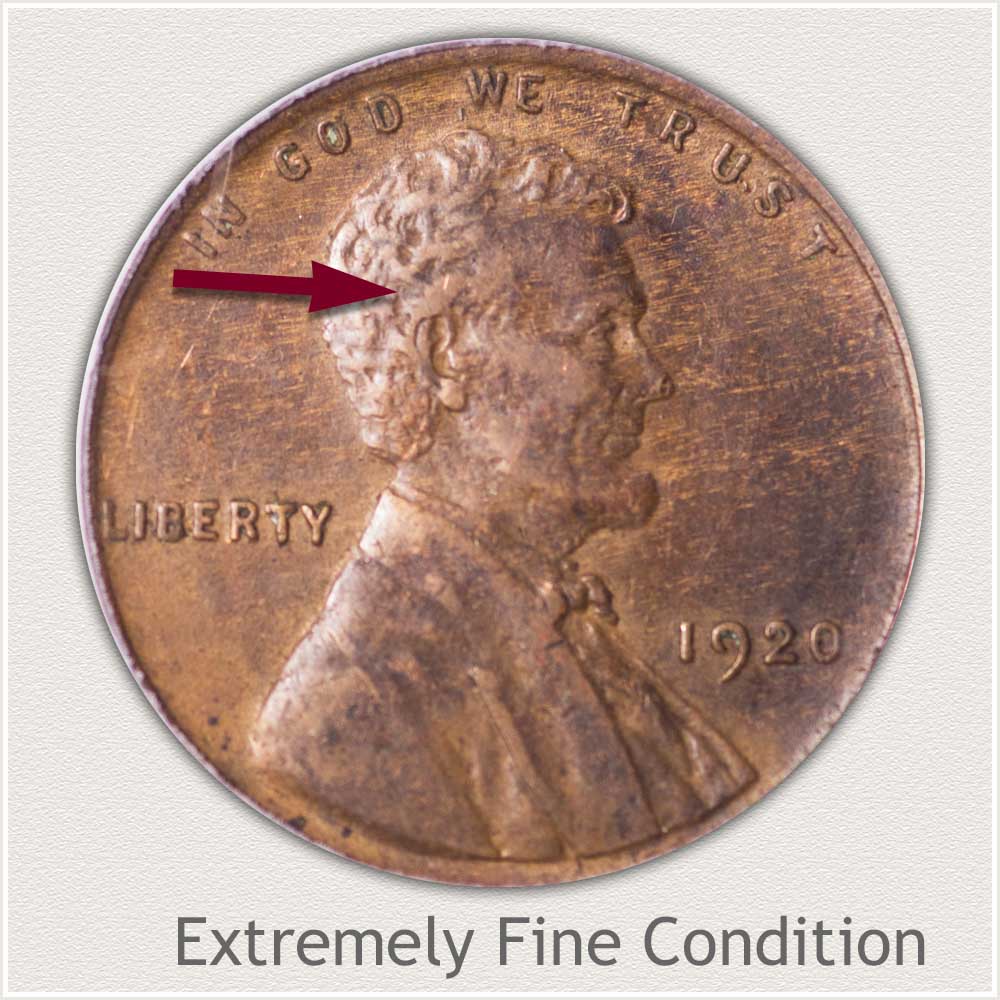
Understanding the mintage numbers is the first step in assessing potential value. In 1920, the Philadelphia Mint produced over 310 million pennies. Because of this massive volume, 1920 Philadelphia pennies are relatively common. Conversely, the San Francisco Mint produced roughly 46 million, and the Denver Mint produced approximately 49 million. Scarcity often drives value in the world of numismatics, meaning the 1920-D and 1920-S varieties generally hold more appeal for collectors than their Philadelphia-minted counterparts.
Understanding the Factors That Influence Value
To determine the value of a specific coin, collectors must look beyond the date. The “value” of a coin is rarely a static figure; it is a calculation based on a combination of grade, mint mark, and market demand.
The Role of Coin Grading
The most critical factor in determining the value of any numismatic item is the grade. Coin grading is the process of evaluating a coin’s condition based on the amount of wear it has sustained. The Sheldon Scale, which ranges from 1 (Poor) to 70 (Perfect Mint State), is the industry standard.
A “circulated” 1920 penny—one that has been used in commerce—will show varying degrees of wear. The most prominent feature of a Lincoln penny is the high point of the relief, such as Lincoln’s cheekbone and the stalks of wheat on the reverse. If those details are worn smooth, the coin is in a lower grade (Good or Very Good) and typically holds only a nominal value, often ranging from $0.25 to $2.00, depending on the buyer.
However, a coin in “Mint State” (MS)—one that has never entered circulation and retains its original copper luster—is a different story entirely. Collectors pay significant premiums for coins that show no signs of rubbing or wear. An MS-65 or higher 1920 penny can jump in value from a few dollars to several hundred, particularly if it has been professionally certified by a third-party grading service like PCGS or NGC.
Copper Composition and Preservation
The 1920 Wheat Penny is composed of 95% copper and 5% tin and zinc. Copper is highly reactive to the environment; it oxidizes, turns brown, and can develop green verdigris if stored improperly. In the world of coin collecting, the “color” of a copper coin is a major value indicator.
Grading services categorize copper coins into three color designations:
- Red (RD): The coin retains its original, bright mint-red luster. This is the most valuable designation.
- Red-Brown (RB): A mix of original luster and the natural toning of aging copper.
- Brown (BN): The coin has turned completely dark brown.
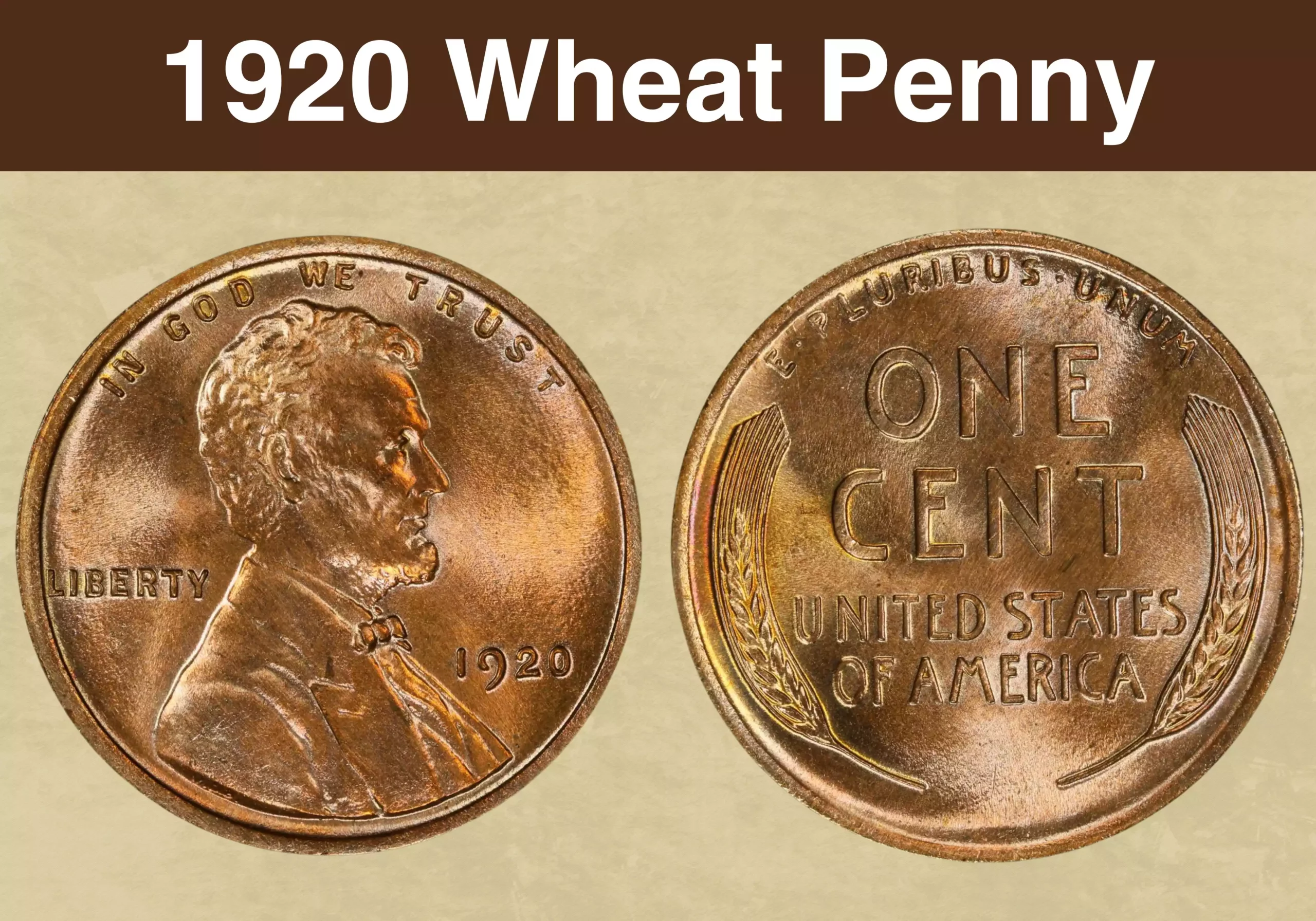
A coin that is graded as “Brown” will always command a lower price than an identical coin graded as “Red.” Proper storage, such as using archival-safe flips or coin tubes, is essential for maintaining the value of these assets.
Distinguishing Between Varieties and Errors
While the base 1920 penny has a standard value, collectors are constantly on the lookout for anomalies. Errors and varieties can transform a common coin into a high-value collector’s item.
Common Mint Mark Varieties
As mentioned, the mint mark is found just below the date. A 1920 penny with a “D” or “S” mark carries a higher base value simply because fewer were minted. When identifying your coin, use a magnifying glass to check for these marks. A 1920-S in excellent condition is significantly more valuable than a 1920-P in the same grade.
Looking for Mint Errors
Mint errors occur during the striking process. While 1920 was not known for massive, dramatic errors like some later years, certain phenomena can increase value:
- Off-Center Strikes: If the planchet (the blank metal disk) was not properly positioned in the press, the image may be struck off-center.
- Clipped Planchets: A small portion of the coin may be missing if the blank was punched incorrectly from the metal strip.
- Doubled Dies: While rare for 1920, any visible doubling of the lettering or the date can turn a mundane coin into a significant find.
Always be wary of “altered” coins. Some unscrupulous individuals may add a mint mark to a common Philadelphia penny to make it appear like a rarer Denver or San Francisco variety. If you believe you have found a valuable error, professional authentication is highly recommended to ensure you are not dealing with a counterfeit or an altered coin.
The Investment Perspective: Is It Worth Holding?
For the personal finance enthusiast, the question often boils down to: is a 1920 Wheat Penny a good investment? The answer depends on your objectives.
If you are looking for liquid assets with rapid returns, raw, circulated wheat pennies are likely not the path to take. They are essentially “gateway” coins—great for introducing someone to the hobby but not necessarily a portfolio-grade investment. However, if you are looking to assemble a collection over time, high-grade Wheat Pennies represent a tangible store of value.

Collecting as a Hedge
Physical assets like precious metals and historical coins have long been used as a hedge against inflation. While a penny is not silver or gold, it is a piece of American industrial history. Its value is supported by a large community of collectors who are always looking to “fill the holes” in their albums.
To maximize the potential of your collection:
- Educate Yourself: Invest in a copy of the Red Book (A Guide Book of United States Coins). It provides realistic, updated pricing estimates for various grades.
- Focus on Quality over Quantity: Rather than having a coffee can full of “Good” condition 1920 pennies, focus on acquiring a few “Choice Uncirculated” examples. Quality is always easier to liquidate than bulk low-grade material.
- Network with Dealers: Build a relationship with a reputable local coin dealer. They can provide professional appraisals and help you understand the nuances of the current market.
Ultimately, the 1920 Wheat Penny is more than just a cent—it is a physical bridge to a century ago. Whether it ends up being a modest addition to a piggy bank or the cornerstone of a serious collection, knowing the difference between a common coin and a true treasure is the hallmark of a savvy collector. Always treat these coins with care, keep them away from harsh cleaners, and enjoy the pursuit of history contained within these small, copper discs.
aViewFromTheCave is a participant in the Amazon Services LLC Associates Program, an affiliate advertising program designed to provide a means for sites to earn advertising fees by advertising and linking to Amazon.com. Amazon, the Amazon logo, AmazonSupply, and the AmazonSupply logo are trademarks of Amazon.com, Inc. or its affiliates. As an Amazon Associate we earn affiliate commissions from qualifying purchases.