
Understanding how a numerical score like 67 translates into a letter grade is a foundational aspect of academic and professional assessment. While it may seem like a simple digit, the “value” of a 67 is highly subjective, depending entirely on the grading scale, the institution, and the context of the evaluation. For students, educators, and professionals alike, decoding this score is essential for gauging progress and setting future goals.
The Standard Grading Scale: Where 67 Lands
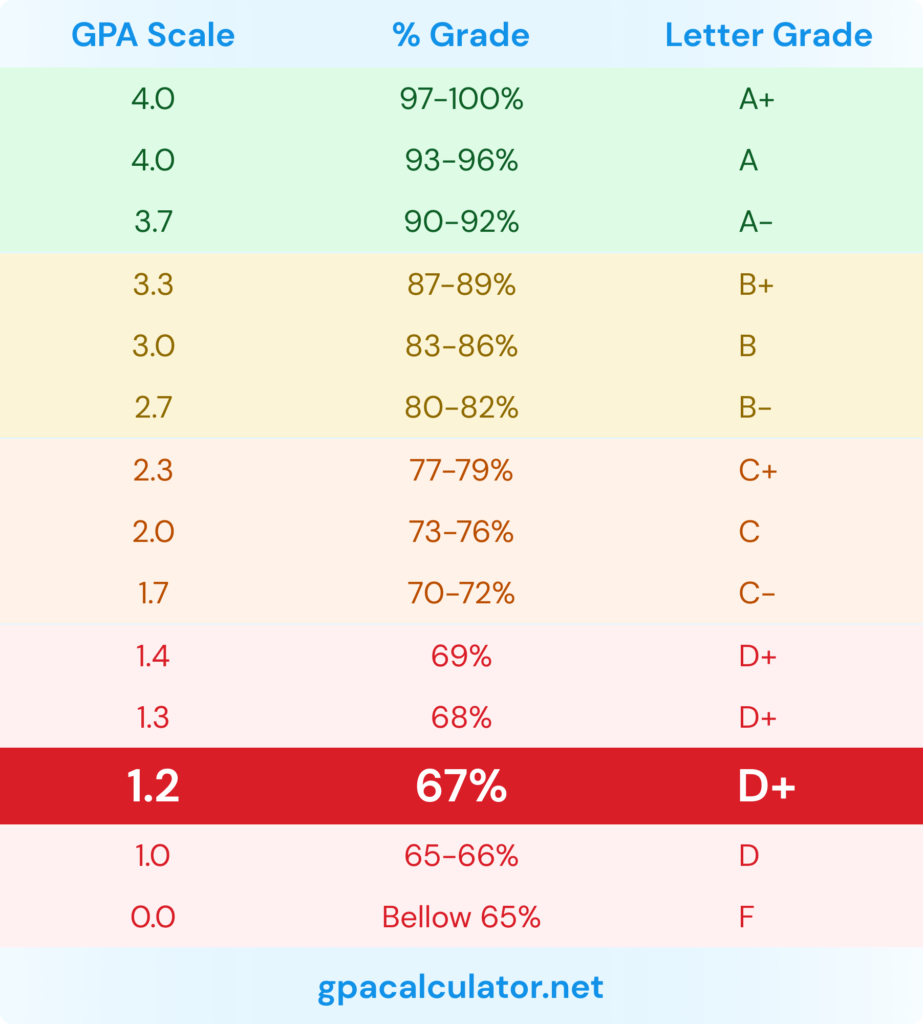
In most traditional educational systems, a 67 is often categorized as a “D” or, in more lenient systems, a low “C.” The ambiguity of this score stems from the lack of a universal standard; different schools, universities, and certification bodies utilize unique rubrics.
The D-Grade Perspective
In a standard 10-point grading scale—where 90–100 is an A, 80–89 is a B, 70–79 is a C, and 60–69 is a D—a 67 falls squarely into the “D” range. In this context, a 67 signifies that the individual has demonstrated a minimal understanding of the course material. While it is technically a passing grade in many high schools and undergraduate programs, it is often viewed as a red flag for students intending to pursue competitive graduate studies or professional certifications.
The Low-C Exception
Some institutions employ a weighted scale or utilize grading curves. In a highly rigorous academic environment, a raw score of 67 might be adjusted upward to a “C” if the class average is significantly lower. In these specific scenarios, a 67 is viewed as a functional, albeit mediocre, performance that suggests the student is grasping the core concepts but lacks mastery.
Factors Influencing Grade Interpretation
The meaning of a 67 is not static. It is influenced by the weight of the assignment, the difficulty of the curriculum, and the institution’s grading philosophy.
Cumulative vs. Individual Assignment
If a 67 represents a single assignment, it may not be cause for alarm. It could indicate a specific weakness in one area of study that can be mitigated by performing better on subsequent exams or projects. However, if a 67 represents a final course grade, it suggests a systemic issue with the student’s mastery of the subject matter.
Institutional Rigor
The reputation of an institution changes how a 67 is perceived. At a prestigious university known for “grade deflation,” a 67 might be an acceptable score in a notoriously difficult STEM course. In contrast, in a liberal arts college with high average GPAs, a 67 could be significantly detrimental to a student’s academic standing.
The “Passing” Threshold
In many vocational or specialized training programs, the passing threshold is often set higher—sometimes at a 70 or 75. In these instances, a 67 is effectively a failure. It is vital for individuals to consult their syllabus or handbook to determine if their institution views a 67 as a credit-earning score or a failing mark that requires retaking the course.

Professional Implications of a 67
When translating academic performance into professional contexts, the significance of a 67 often shifts toward how it reflects an individual’s work ethic, attention to detail, and ability to meet standards.
Transcript Evaluation
Recruiters and hiring managers rarely look at individual course grades unless the applicant is a recent graduate. However, if a transcript is saturated with scores in the 60s and 70s, it may raise questions about the candidate’s ability to consistently perform at a high level. A 67 signals that while the individual is capable of completing the work, they may lack the deep analytical skills or domain expertise expected in high-stakes roles.
Certifications and Licensing
For professional certifications—such as nursing boards, CPA exams, or engineering licensures—a 67 is often a binary result: pass or fail. In these high-stakes scenarios, the numeric value is irrelevant if it falls below the board’s minimum threshold. The focus shifts from “what letter grade does this represent” to “is this sufficient to authorize practice.”
Strategies for Improvement After a 67
Receiving a 67 should not be viewed as an end point, but rather as an indicator that the current learning strategy or work process requires adjustment.
Analyzing the Root Cause
To improve future performance, one must deconstruct the 67. Was it a result of poor time management? A lack of foundational knowledge? Misunderstanding the expectations of the assignment? By analyzing past performance, an individual can identify whether they need to invest in more study time, seek tutoring, or refine their study techniques.
Re-evaluating the Learning Approach
If a 67 is a recurring theme, it may be time to pivot. This might involve:
- Active Recall: Moving away from passive reading and toward practice tests and flashcards.
- Seeking Feedback: Engaging directly with professors or supervisors to understand specifically where points were lost.
- Time Allocation: Reviewing the priority of tasks to ensure that more energy is being directed toward the most heavily weighted components of the curriculum.
The Growth Mindset
A 67 is a data point, not a definition of intelligence or capability. Many successful professionals have navigated academic setbacks, using them as catalysts for growth. The transition from a “D” or “C-” performance to high-level mastery is rarely instantaneous; it is a cumulative process of refinement, grit, and the willingness to learn from perceived failures.

Conclusion: Navigating the Middle Ground
A 67 represents a “middle-of-the-road” performance that challenges the individual to decide what they want their academic or professional output to look like. While it is rarely a score that leads to honors or accolades, it is equally rarely a permanent barrier to success. By understanding the grading scale, analyzing the context of the score, and implementing strategic improvements, a 67 can serve as a stepping stone toward higher standards and more robust academic or career achievements.
In the final analysis, the grade itself is merely a metric. The true value lies in the individual’s ability to use that metric to drive self-improvement and secure a more successful path forward. Whether you are aiming for a master’s program or a leadership role in your industry, recognizing the implications of your current grading trajectory is the first step toward reclaiming your academic and professional momentum.
aViewFromTheCave is a participant in the Amazon Services LLC Associates Program, an affiliate advertising program designed to provide a means for sites to earn advertising fees by advertising and linking to Amazon.com. Amazon, the Amazon logo, AmazonSupply, and the AmazonSupply logo are trademarks of Amazon.com, Inc. or its affiliates. As an Amazon Associate we earn affiliate commissions from qualifying purchases.