
When a business entity finds itself in a position where its liabilities far exceed its assets and it can no longer meet its financial obligations, the specter of bankruptcy often looms. Among the various legal avenues available in the United States, Chapter 11 bankruptcy is perhaps the most misunderstood. Often conflated with a total collapse, Chapter 11 is, in reality, a sophisticated legal mechanism designed to facilitate the reorganization of a company’s debts and operations, allowing it to emerge as a leaner, more viable enterprise.
Understanding the mechanics of Chapter 11 requires a deep dive into the intersection of business finance, creditor rights, and corporate restructuring strategy. It is a process governed by the U.S. Bankruptcy Code, designed not to liquidate a company, but to offer it a “breathing spell” while it attempts to recalibrate its balance sheet.

The Automatic Stay and Immediate Operational Shifts
The moment a company files a voluntary petition for Chapter 11 bankruptcy, an “automatic stay” takes effect. This is the cornerstone of the bankruptcy process. For business leadership, the automatic stay acts as an immediate legal shield, halting all collection efforts, lawsuits, foreclosures, and asset seizures by creditors.
Preservation of Cash Flow
Before the filing, a distressed company is often besieged by creditors demanding immediate payment, which leads to the rapid depletion of liquid assets. The automatic stay freezes this cycle. It prevents creditors from taking aggressive actions that would otherwise dismantle the company’s ability to conduct day-to-day business. This protection is critical, as it provides the management team with the time necessary to evaluate the business’s fundamental issues—whether those are excessive debt service obligations, unsustainable lease contracts, or underperforming business units.
Debtor-in-Possession Status
In the vast majority of Chapter 11 cases, the existing management team remains in place. This is referred to as “Debtor-in-Possession” (DIP) status. Unlike Chapter 7, which involves the appointment of a trustee to liquidate assets, Chapter 11 empowers the current leadership to manage the restructuring process. However, this power comes with stringent oversight. Every major financial decision, from selling assets to entering into new contracts, must be vetted by the U.S. Trustee and, in many cases, approved by the bankruptcy court. The directors and officers owe a fiduciary duty not just to the shareholders, but to the creditors whose capital is currently at stake.
Negotiating with Creditors and Developing a Plan of Reorganization
The ultimate goal of Chapter 11 is the approval of a “Plan of Reorganization.” This plan serves as a roadmap for how the company intends to return to profitability and satisfy its obligations to creditors over time. This phase is characterized by intense, complex financial negotiations between the company, its secured lenders, unsecured creditors, and sometimes equity holders.
The Classification of Claims
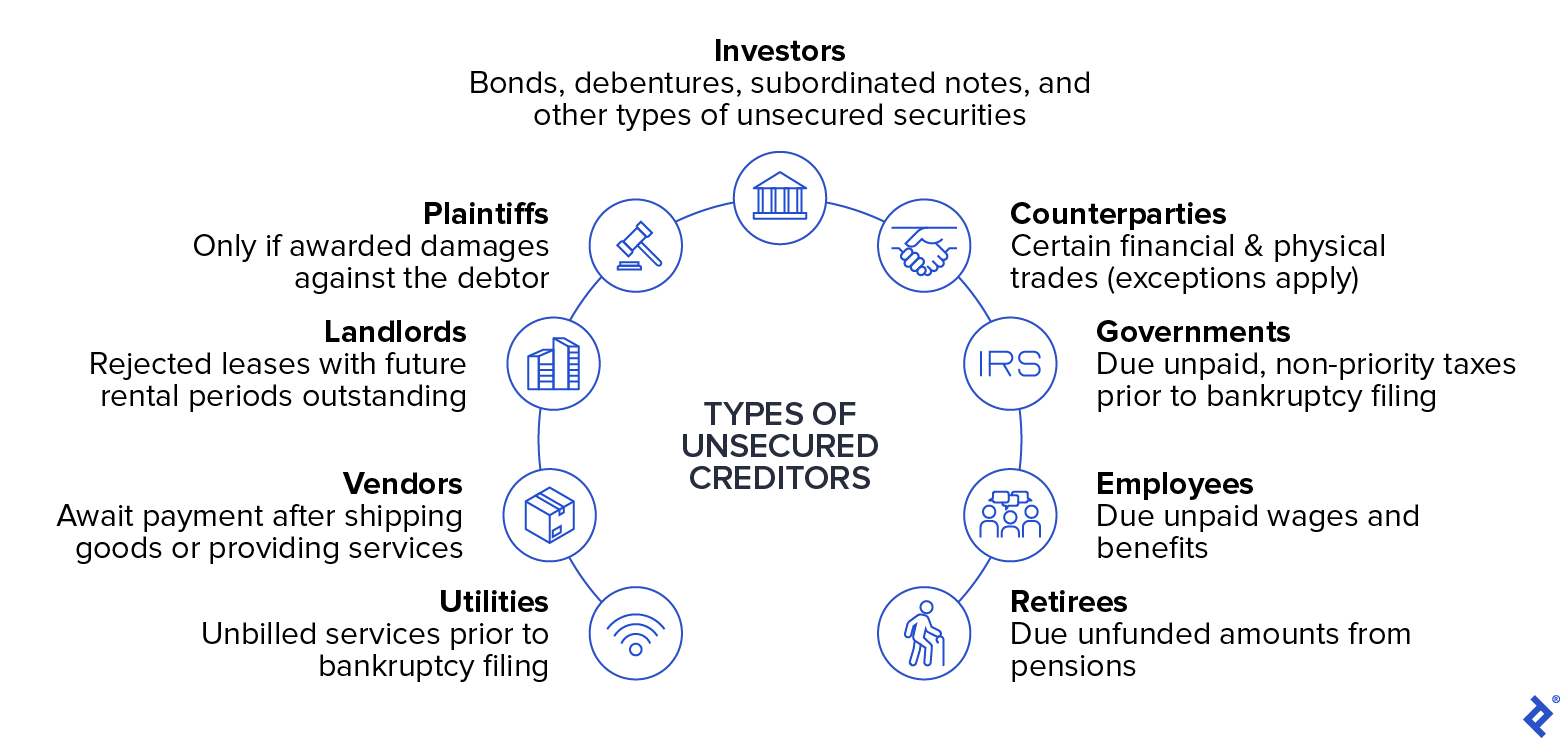
Not all creditors are treated equally during the reorganization process. The law requires claims to be categorized based on their legal priority. “Secured creditors”—those holding loans backed by specific assets like real estate or equipment—are at the top of the hierarchy. “Unsecured creditors”—such as trade vendors, suppliers, and bondholders—fall further down the list. The plan must clearly outline how each of these classes will be treated, typically proposing a “haircut” (a reduction in debt) or an extension of payment terms in exchange for equity in the reorganized company.
The Cramdown Provision
One of the most powerful tools in a debtor’s arsenal is the “cramdown.” If a class of creditors votes against the reorganization plan, the bankruptcy court can still approve it if the court finds that the plan is “fair and equitable” and does not discriminate unfairly against the dissenting creditors. This provision prevents a minority of holdout creditors from derailing a restructuring that the majority of stakeholders support, ensuring that the company has a viable path forward.

Financial Restructuring and Operational Efficiency
Filing for bankruptcy is rarely just about debt; it is usually an admission that the underlying business model requires a significant pivot. The court-protected environment allows management to shed “dead weight” that would be impossible to eliminate under normal operating conditions.
Rejection of Executory Contracts
One of the most effective strategies employed in Chapter 11 is the rejection of “executory contracts.” This allows a company to walk away from unfavorable agreements, such as long-term, high-rent office leases, expensive supplier contracts, or burdensome service agreements. By rejecting these contracts, the company can immediately lower its fixed costs and align its expenses with its current, more realistic revenue projections.
Sourcing DIP Financing
Even in bankruptcy, a company needs capital to maintain operations—paying employees, purchasing inventory, and funding the restructuring process itself. Because traditional lenders are often wary of lending to a bankrupt entity, the company seeks “DIP financing.” This is a specialized form of credit that enjoys “super-priority” status. Because these loans are virtually guaranteed to be repaid before any pre-bankruptcy debts are satisfied, existing or new lenders are often willing to provide the necessary liquidity to keep the company’s lights on during the transition.
Emerging from Bankruptcy: The Final Hurdles
Once a reorganization plan is finalized and the necessary votes from creditors are secured, the company must undergo a confirmation hearing. If the judge is satisfied that the plan is feasible, transparent, and compliant with the bankruptcy code, the court enters an order of confirmation.
Post-Confirmation Management
The confirmation of the plan is the beginning of a new chapter—literally and figuratively. The company emerges as a reorganized entity, usually with significantly lower debt levels and a restructured capital stack. Often, the equity holders are wiped out, and the ownership of the new company is transferred to the former creditors. This is a common outcome in large-scale Chapter 11 filings; the lenders essentially become the new shareholders.
Sustaining the Turnaround
Post-emergence, the company faces the challenge of rebuilding its reputation. Vendors may require cash-on-delivery (COD) terms, and customers may be wary of the company’s long-term stability. Furthermore, the company must adhere strictly to the terms of the plan of reorganization, which often includes rigorous reporting requirements to the court. If the company fails to meet these obligations, it could be forced into a liquidation scenario under Chapter 7.
The Strategic Reality of Chapter 11
In the realm of business finance, Chapter 11 is not a sign of failure—it is a tool for strategic survival. Companies ranging from retail giants to major airlines have successfully navigated this process, emerging as competitive players. The stigma once associated with bankruptcy has largely been replaced by the view that it is a necessary, albeit painful, surgical procedure to save an ailing business.
For investors, creditors, and business owners, the lesson is clear: Chapter 11 is a highly structured, court-supervised environment that prioritizes the continuity of business over the immediate dissolution of assets. It serves as a reminder that in the volatile world of finance, the ability to reorganize and adapt is often the only difference between permanent closure and a sustainable future. The process requires a delicate balance of legal maneuvering, aggressive cost-cutting, and transparent communication, all designed to ensure that the enterprise can once again generate value for its stakeholders. By utilizing the framework of the U.S. Bankruptcy Code, companies can prune their balance sheets, discard toxic contracts, and re-emerge better equipped to face the challenges of an evolving market.
aViewFromTheCave is a participant in the Amazon Services LLC Associates Program, an affiliate advertising program designed to provide a means for sites to earn advertising fees by advertising and linking to Amazon.com. Amazon, the Amazon logo, AmazonSupply, and the AmazonSupply logo are trademarks of Amazon.com, Inc. or its affiliates. As an Amazon Associate we earn affiliate commissions from qualifying purchases.