
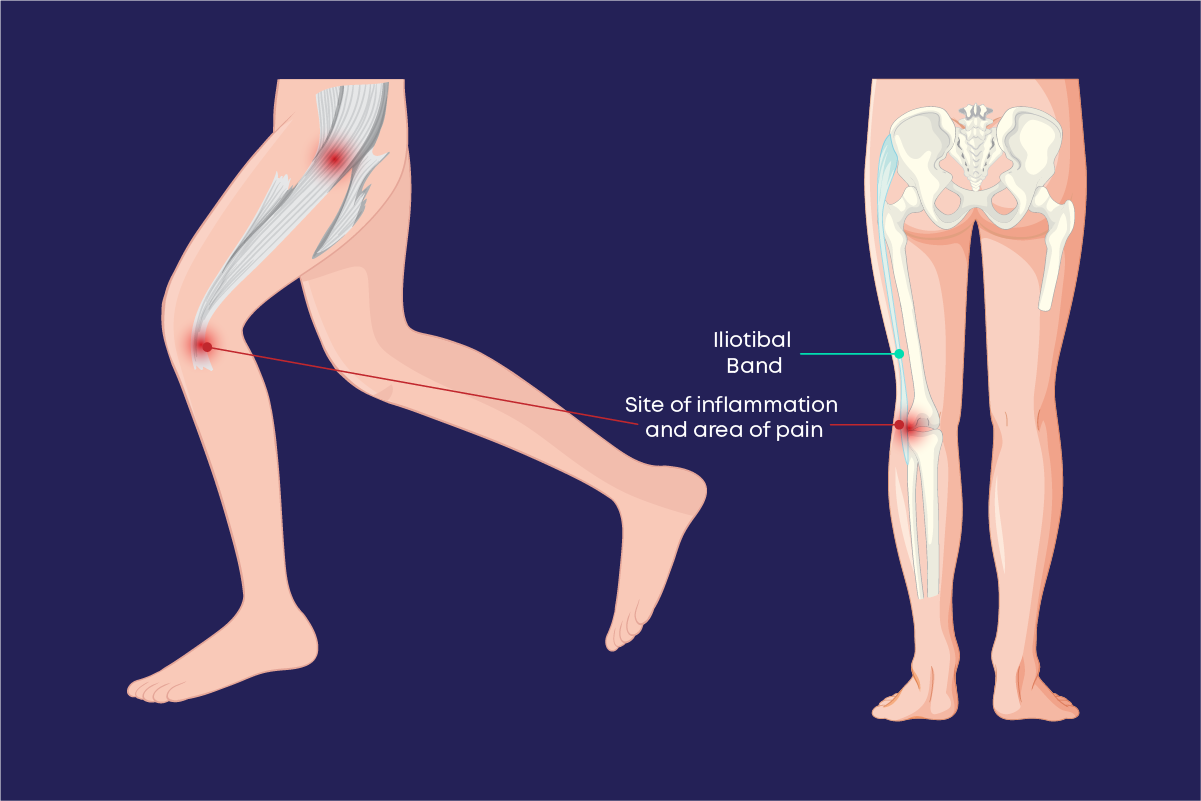
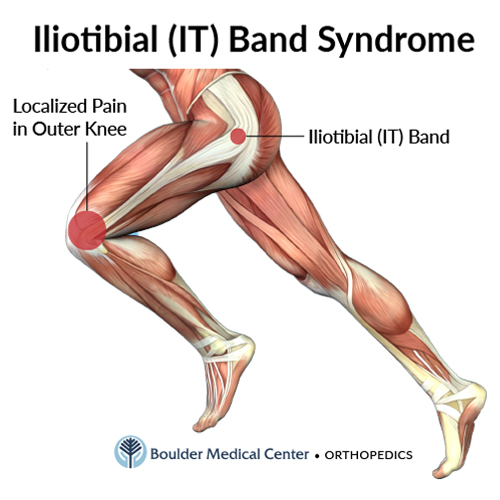
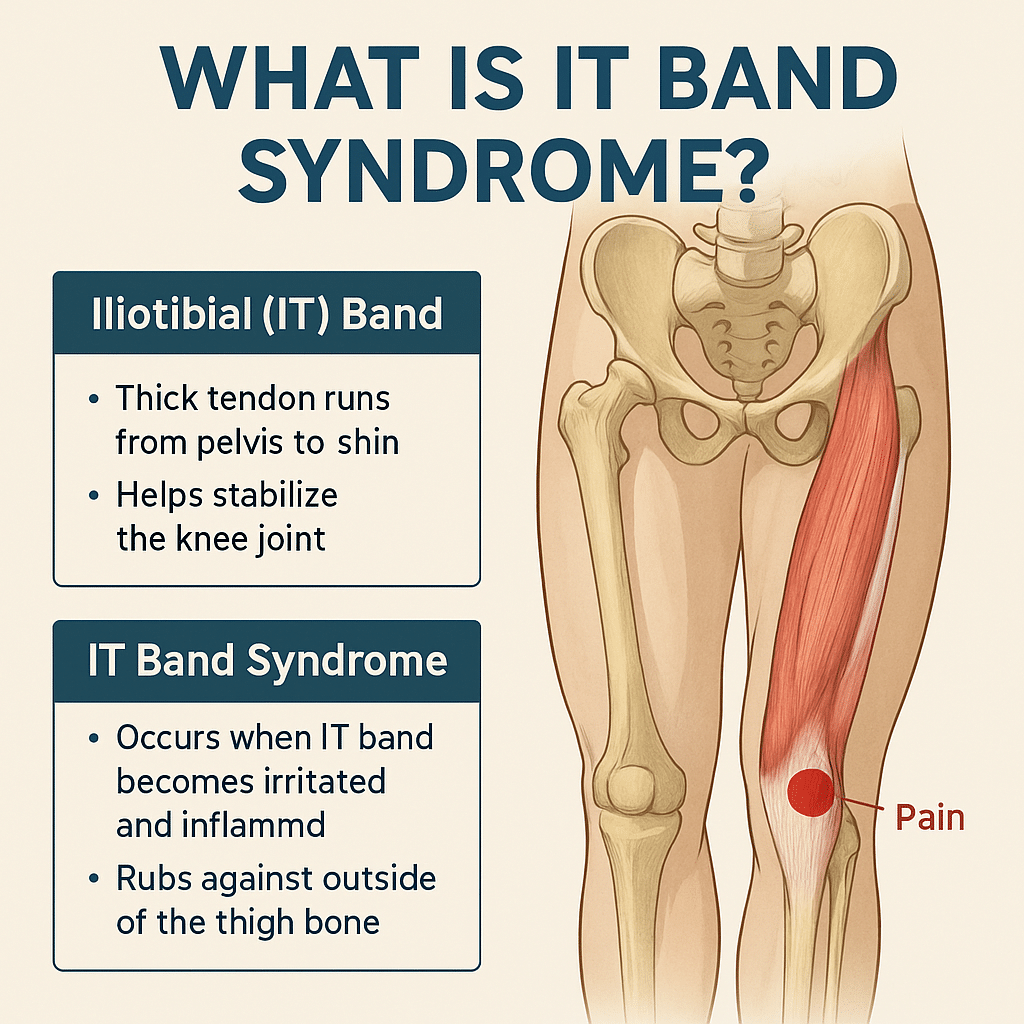
The iliotibial (IT) band is a thick, fibrous band of connective tissue that runs along the outside of your thigh, from your hip to just below your knee. When this band becomes tight, it can lead to pain and discomfort, often manifesting as IT band syndrome. While this condition is common among runners and cyclists, it can affect anyone who engages in repetitive leg movements or experiences certain biomechanical issues. Understanding the root causes of IT band tightness is the first step towards effective prevention and management.
This article will delve into the primary culprits behind a tight IT band, drawing parallels with the core principles of technology, branding, and financial management. We’ll explore how concepts of efficiency, consistent reinforcement, and resource allocation can illuminate the biomechanical and lifestyle factors that contribute to this common ailment.
The Biomechanical Engine: Understanding the IT Band’s Role and How It Tightens
At its core, the IT band functions as a stabilizer. It helps to keep your knee stable during movement, particularly during single-leg stances like walking or running. It works in tandem with muscles like the gluteus medius and gluteus maximus, as well as the vastus lateralis (outer thigh muscle), to control hip abduction and external rotation. When these supporting muscles are weak or imbalanced, the IT band is forced to do more of the heavy lifting, leading to overuse and eventual tightness.
Think of the IT band as a critical piece of infrastructure in your body’s “operating system.” Just like in technology, where inefficient code or outdated hardware can lead to system slowdowns and errors, biomechanical inefficiencies can strain specific components, like the IT band.
1. Overuse and Repetitive Motion: The Software Loop of Strain
The most common culprit behind a tight IT band is overuse. Activities that involve repetitive bending and straightening of the knee, such as running, cycling, hiking, and even prolonged sitting, can place continuous stress on the IT band.
- The “Buggy Code” of Training Errors: In the realm of technology, a buggy loop in software can cause a program to run endlessly, consuming resources and potentially crashing the system. Similarly, an athlete who rapidly increases their training intensity, duration, or frequency without adequate rest and adaptation can create a “buggy loop” of stress on their IT band. This could be a runner suddenly jumping from running 5 miles a week to 20 miles, or a cyclist adding significant elevation gain to their routes without gradually building up.
- “Hard Drive Overload” from Insufficient Recovery: When your body doesn’t get enough time to recover between strenuous activities, it’s akin to overloading your computer’s hard drive with too many processes running simultaneously. Muscles don’t have time to repair micro-tears, and tissues become inflamed and tight. This lack of recovery is a primary driver of chronic IT band tightness.
- The “Update Needed” for Cross-Training: Relying on a single type of activity without incorporating other forms of exercise can lead to muscular imbalances. For instance, a dedicated runner might develop strong quadriceps but weak glutes. This imbalance forces the IT band to compensate, becoming overloaded. Cross-training, like swimming or strength training, acts as a crucial “update” to your body’s fitness regimen, ensuring all components are working harmoniously.
2. Muscle Imbalances: The “Underperforming Components” of Your Body’s Hardware
As mentioned, the IT band doesn’t work in isolation. It relies on the strength and coordinated action of surrounding muscles. Imbalances in these muscles are a significant contributor to IT band tightness.
- Weak Gluteal Muscles (Gluteus Medius and Maximus): These are the primary hip abductors and external rotators, and they are critical for stabilizing the pelvis and controlling the femur’s movement. When these muscles are weak, the IT band is forced to take on a greater load to prevent excessive inward rolling of the knee (valgus collapse). Think of this as having weak “control units” in your system that rely on a more robust “data cable” (the IT band) to maintain stability, eventually causing the cable to fray.
- The “Brand Neglect” of Strength: Similar to how a brand can lose its impact if its core values or product offerings are neglected, neglecting the strength of your glutes can lead to a cascade of biomechanical issues. They are the foundation for efficient lower body movement.
- Tight Hip Flexors: Tight hip flexors, often a consequence of prolonged sitting, can tilt the pelvis anteriorly. This can alter the biomechanics of the entire leg, including how the IT band is stressed. This is like having a “software conflict” where one program (tight hip flexors) interferes with the normal operation of another (pelvic alignment and IT band function).
- Weak Core Muscles: A strong core provides stability for the entire body. If your core is weak, your pelvis and hips are less stable, placing extra strain on the IT band to compensate. This is analogous to a poorly designed user interface that requires more manual input and effort to achieve basic functions, leading to user fatigue and errors.
3. Biomechanical Factors and Foot Mechanics: The “System Architecture” Issues
The way your body is built and how you move can also predispose you to IT band tightness.
- Leg Length Discrepancy: A noticeable difference in leg length can lead to an uneven distribution of weight and stress on the hips and knees, directly impacting the IT band. This is a fundamental “hardware limitation” that requires specific compensatory strategies.
- Foot Pronation (Overpronation): When your foot rolls inward excessively as you walk or run, it can cause the tibia (shin bone) to rotate inward. This rotation can lead to an internal rotation of the femur, placing undue stress on the IT band. This is like having a “default setting” in your system that isn’t optimal, requiring constant adjustments.
- “Marketing Misinformation” in Shoe Choices: Choosing the wrong type of running or athletic shoes can exacerbate pronation issues. Shoes that don’t provide adequate support or stability can contribute to this problem, much like misleading marketing can lead consumers to purchase products that don’t meet their needs.
- Hip Abductor Weakness: As discussed earlier, this is a crucial factor. The hip abductors, primarily the gluteus medius, are responsible for preventing the pelvis from dropping when you stand on one leg. Weakness here means the IT band works harder to stabilize the hip.
Beyond the Physical: Lifestyle and Environmental Contributors
While biomechanics play a significant role, certain lifestyle and environmental factors can also contribute to or exacerbate IT band tightness.
1. Inadequate Warm-up and Cool-down: The “System Initialization and Shutdown” Protocol
- Skipping the Initialization: Just as a computer needs to initialize its systems before heavy processing, your body needs a warm-up to prepare muscles and connective tissues for activity. A cold IT band is less pliable and more prone to strain. This is a failure in the “startup sequence.”
- Forgetting the Shutdown: A proper cool-down, including stretching, helps muscles recover and regain their resting length. Neglecting this “shutdown protocol” can leave muscles in a shortened, tight state, contributing to chronic issues.
2. Poor Posture and Sedentary Habits: The “Low-Power Mode” Trap
- “Screen Time” Syndrome: Prolonged sitting, often in front of computers, leads to tight hip flexors and weak glutes. This creates a vicious cycle that puts constant stress on the IT band. It’s like leaving your computer in a perpetual “low-power mode” that gradually degrades its performance and flexibility.
- The “Corporate Identity” of Slouching: Poor posture, whether at a desk or standing, can disrupt the natural alignment of your body, placing uneven stress on your musculoskeletal system. This is akin to a brand whose “corporate identity” is unkempt and inconsistent, negatively impacting its overall perception and function.
3. Inappropriate Equipment and Surfaces: The “Unoptimized Environment”
- The “Outdated Software” of Footwear: Wearing worn-out or inappropriate shoes for your activity can significantly impact your biomechanics and contribute to IT band tightness. Think of it as using outdated software that causes compatibility issues and performance degradation.
- The “Unpredictable Network” of Running Surfaces: Consistently running on hard, uneven surfaces can increase the impact forces on your joints and IT band. While varied surfaces can be beneficial, extreme or inconsistent conditions can create an “unpredictable network” that stresses your body.
Strategies for Prevention and Management: Optimizing Your “System”
Addressing IT band tightness involves a multi-faceted approach that combines strengthening, stretching, and mindful training practices.
1. Strengthening and Stability: Building a Robust “Backend Infrastructure”
- Targeting the Glutes: Exercises like glute bridges, clamshells, and single-leg squats are crucial for strengthening the gluteus medius and maximus.
- Core Engagement: Planks, bird-dogs, and other core-strengthening exercises improve overall stability.
- Hip Abductor Work: Standing leg raises and side-lying leg lifts specifically target the muscles that support the IT band.
2. Flexibility and Mobility: Ensuring Smooth “Data Flow”
- IT Band Stretches: While the IT band itself doesn’t stretch like a muscle, stretching the muscles that attach to it and the surrounding fascia can alleviate tightness. This includes quad stretches, hamstring stretches, and glute stretches.
- Foam Rolling: Foam rolling the IT band, quadriceps, and glutes can help release tension and improve blood flow. This is like “defragmenting” your system, ensuring smooth operation.
- Dynamic Warm-ups: Incorporating leg swings, hip circles, and other dynamic movements before exercise prepares the body for activity.
3. Gradual Progression and Recovery: Implementing a “Scalable Development Plan”
- The “Agile Methodology” of Training: Gradually increasing training volume and intensity, rather than making sudden leaps, is key. Listen to your body and allow for adequate rest and recovery.
- Prioritizing Sleep: Sleep is when your body repairs itself. Ensuring sufficient, quality sleep is paramount for muscle recovery and preventing overuse injuries.
By understanding the underlying causes of IT band tightness – from the biomechanical “engine” of your body to the lifestyle “software” that influences it – you can implement effective strategies to prevent pain and maintain optimal lower body function. Just as a well-managed technological system, a strong brand, or sound financial planning leads to long-term success, a proactive approach to your physical health will ensure you can continue to move freely and painlessly.
aViewFromTheCave is a participant in the Amazon Services LLC Associates Program, an affiliate advertising program designed to provide a means for sites to earn advertising fees by advertising and linking to Amazon.com. Amazon, the Amazon logo, AmazonSupply, and the AmazonSupply logo are trademarks of Amazon.com, Inc. or its affiliates. As an Amazon Associate we earn affiliate commissions from qualifying purchases.