
Stains are the silent adversaries of professional presentation. In the world of personal branding, your appearance acts as a non-verbal communication tool, signaling competence, attention to detail, and self-respect. When a rogue drop of mustard strikes a silk tie, a crisp white dress shirt, or a tailored blazer during a high-stakes business lunch, it is not merely a laundry issue—it is a brand integrity issue. Understanding the chemistry of removal is essential for any professional who recognizes that their wardrobe is an extension of their corporate identity.
The Chemistry of the Mustard Stain
Mustard is deceptively complex. Unlike simple water-based spills, yellow mustard derives its vibrant pigment from turmeric, a natural dye known for its intense staining properties. Furthermore, mustard contains oil, vinegar, and various spices that penetrate fabric fibers deeply. When a stain occurs, you are dealing with a combination of pigment and lipid-based adhesion.
Understanding Fiber Porosity
The material of your clothing dictates the urgency and the method of extraction. Natural fibers like cotton and linen are highly porous, acting like a sponge that wicks the mustard oil deep into the microscopic gaps between fibers. Synthetic fibers like polyester are hydrophobic, meaning they are more resistant to water-based stains but notoriously attract and hold onto oily residues. Wool and silk, the pillars of luxury professional attire, are protein-based fibers that can be permanently damaged by harsh chemical reactions or excessive agitation.
The Role of Pigmentation
Turmeric, the primary culprit in mustard stains, is a reactive dye. It binds to fibers in a way that makes it notoriously resistant to standard detergents. If a stain is left to oxidize—meaning the clothing is exposed to heat or air for too long—the mustard effectively “sets,” becoming a permanent fixture of the fabric. Therefore, the strategic response must be immediate, calculated, and focused on chemical neutralization before the color bonds to the textile.
Tactical Removal: Step-by-Step Protocols
To maintain your personal brand, you must treat stain removal with the same precision as you would a business project. The methodology remains consistent: isolate, treat, and stabilize.
Immediate Containment
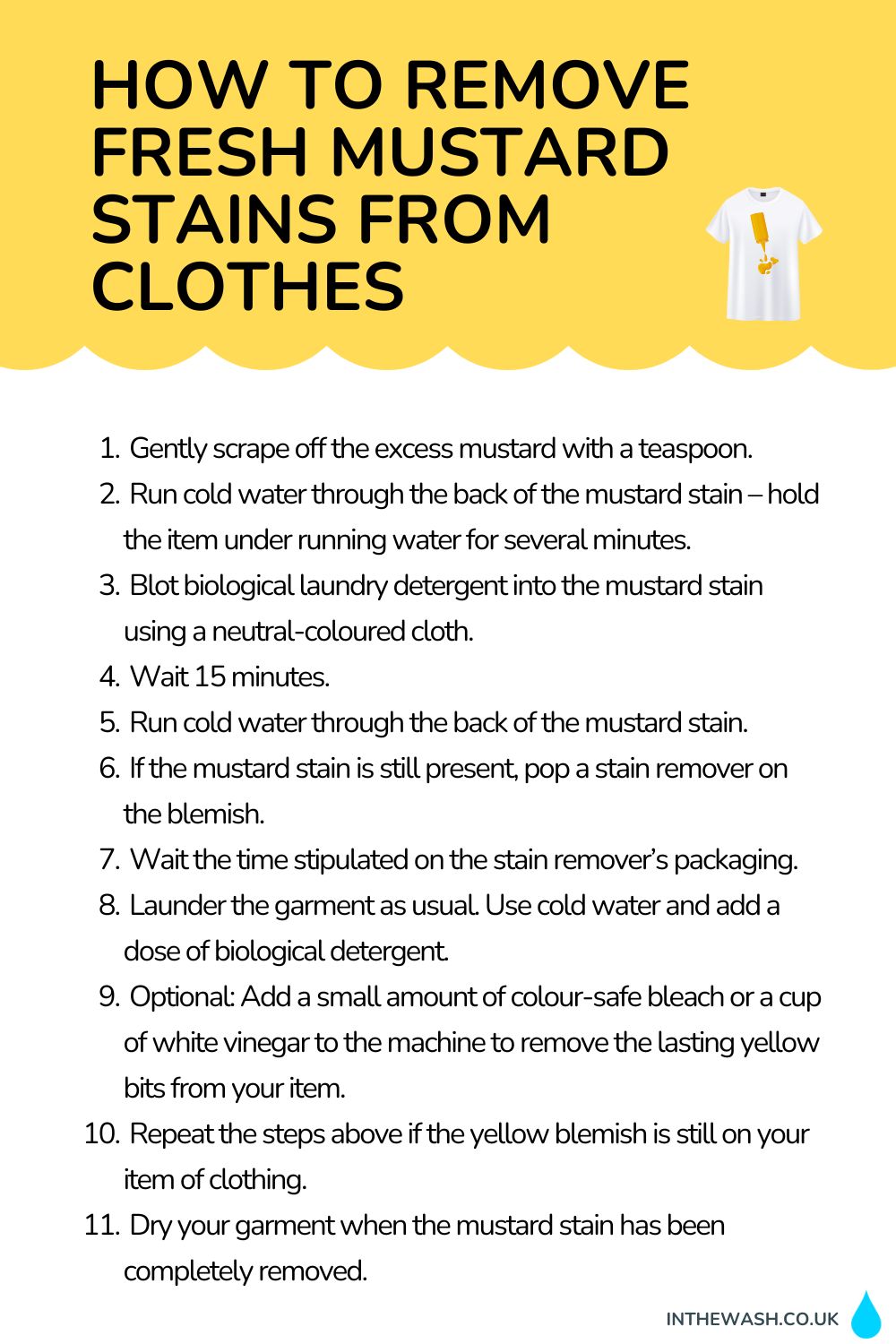
The moment a stain occurs, your objective is to mitigate the spread and prevent the oil from penetrating further into the weave. Never rub a fresh mustard stain. Rubbing acts as a mechanical force that pushes the pigment deeper into the fabric’s core. Instead, use a dull edge—such as a credit card or a plastic knife—to gently lift the excess mustard off the surface. Once the bulk is removed, lightly dab the area with a clean, dry white cloth or paper towel to absorb the oils.
Chemical Neutralization
Once the bulk of the mustard is removed, you need an agent that breaks down the molecular bonds of the turmeric. A mixture of clear liquid dish soap and white vinegar is the gold standard for most fabrics. The dish soap is designed to emulsify grease, which handles the oily component of the mustard, while the mild acidity of the white vinegar acts to lift the turmeric pigment.
- Create a solution of one tablespoon of liquid dish soap and one tablespoon of white vinegar in two cups of cool water.
- Use a clean white cloth to sponge the solution onto the stain.
- Allow the solution to dwell for ten minutes.
- Rinse with cool water.

Always test this solution on an inconspicuous seam first, especially with delicate fabrics like silk or wool. If the fabric shows signs of discoloration or texture change, consult a professional dry cleaner immediately.
Strategic Maintenance and Wardrobe Longevity
A successful brand strategy relies on consistency. If your clothing looks worn, stained, or poorly maintained, it undermines the professional narrative you are trying to convey. Regular garment care is a financial investment in your professional longevity.
The Professional’s Preventative Checklist
Prevention is the most cost-effective stain management strategy. In a fast-paced environment where business is often conducted over meals, simple behaviors can save your professional attire:
- Napkin Placement: Place your napkin across your lap immediately upon seating. This creates a barrier against errant drops.
- Color Strategy: When selecting outfits for high-stakes business lunches, consider patterns or darker colors that are more forgiving to accidental spills, reserving pristine white shirts for settings where eating is not the primary activity.
- Emergency Kits: Keep a high-quality stain removal pen or a travel-sized kit in your briefcase or desk drawer. However, understand that these pens are often temporary fixes designed to carry you through the remainder of the day; professional cleaning is usually required to fully remove the residual oils.
When to Outsource to Experts
There is a threshold where DIY efforts become detrimental. If you are wearing high-end materials like cashmere, silk, or structured wool blazers, the risk of “fixing” the stain outweighs the benefit. The professional dry cleaner’s infrastructure—which includes high-heat steam, professional-grade chemical solvents, and specialized spotting equipment—is designed to preserve the integrity of high-value garments. As part of your personal brand management, establish a relationship with a reputable local dry cleaner. They are an essential service partner in maintaining your professional image.
The Intersection of Image and Attention to Detail
The way you handle a spill says as much about your brand as your presentation skills. When an accident occurs, maintaining composure is key. Panicking or drawing excessive attention to the mishap creates an uncomfortable atmosphere for your colleagues or clients. A professional addresses the issue discreetly and moves on.
The Psychology of Presence
When you arrive at a meeting, people form an immediate impression based on your grooming and the condition of your attire. An impeccably dressed professional signals discipline. Conversely, a noticeable mustard stain on a suit jacket can become a distraction that pulls focus away from your message. By mastering the art of stain removal, you ensure that the narrative remains focused on your expertise rather than your minor accidents.

Sustaining Value through Care
High-quality clothing is a financial asset. A well-tailored suit or a high-quality blouse represents a significant capital expenditure. By learning to treat stains correctly, you extend the life of these garments, ensuring you get the maximum return on your investment. Proper care rituals, such as immediate stain treatment followed by professional cleaning, are the habits of individuals who value long-term quality over short-term consumption.
In conclusion, a mustard stain is a tactical challenge that tests both your composure and your knowledge of material care. By employing a systematic approach—immediate containment, chemical neutralization, and knowing when to rely on professional services—you safeguard your professional identity and ensure that your presentation remains as sharp as your intellect. Your clothing is the armor of your personal brand; treat it with the strategy and respect it deserves, and it will continue to serve your professional objectives for years to come.
aViewFromTheCave is a participant in the Amazon Services LLC Associates Program, an affiliate advertising program designed to provide a means for sites to earn advertising fees by advertising and linking to Amazon.com. Amazon, the Amazon logo, AmazonSupply, and the AmazonSupply logo are trademarks of Amazon.com, Inc. or its affiliates. As an Amazon Associate we earn affiliate commissions from qualifying purchases.