
The Earth’s spin is a fundamental aspect of our existence, dictating everything from our daily cycles of day and night to the intricate patterns of weather and ocean currents. We often take this constant motion for granted, a silent, ceaseless engine powering our planet. But have you ever stopped to wonder: what caused the Earth to spin in the first place? While the answer isn’t as straightforward as a single event, it’s deeply rooted in the chaotic and energetic birth of our solar system. This cosmic ballet, orchestrated by the laws of physics and the raw materials of the universe, set our planet on its rotational journey.
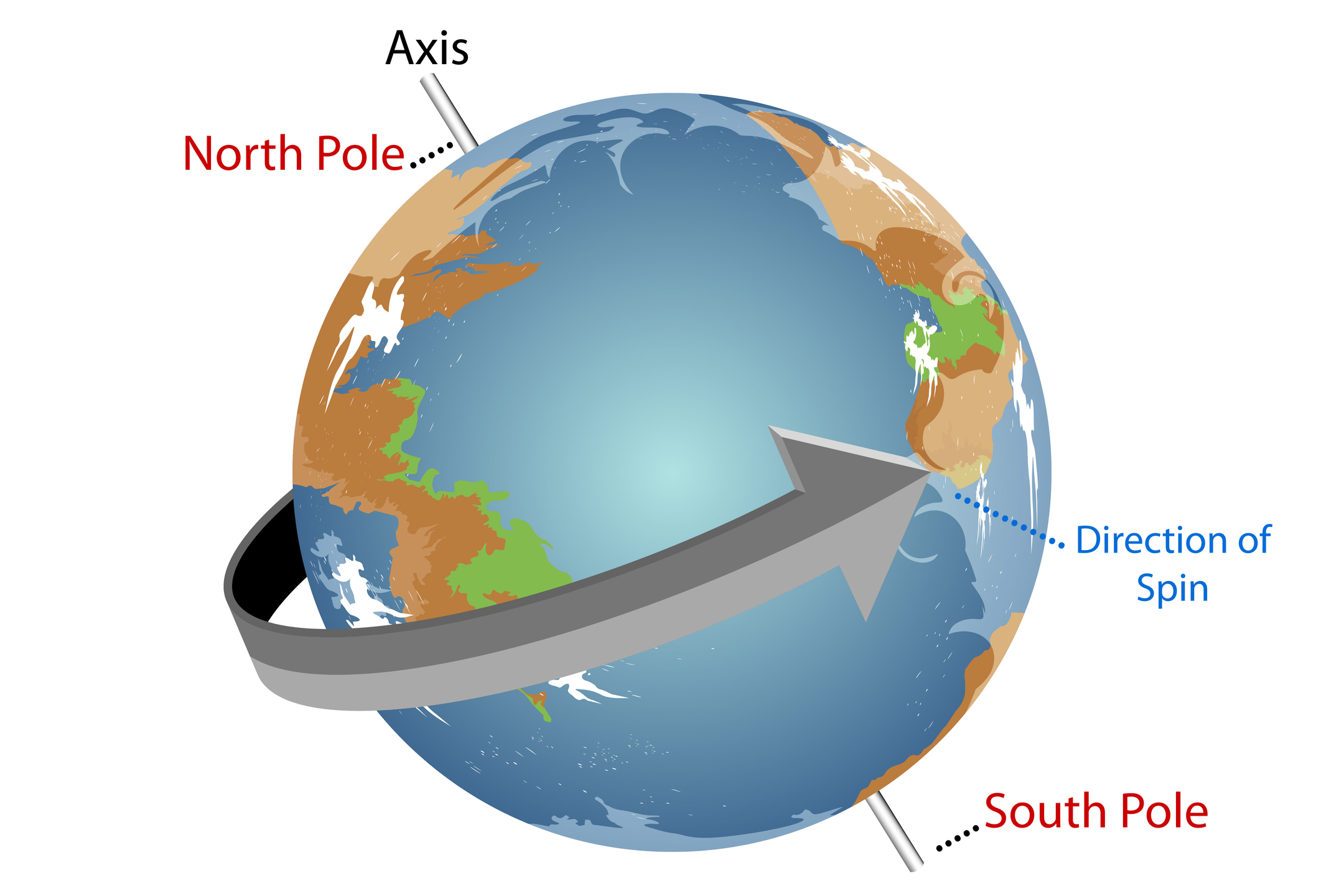
To truly understand the origins of Earth’s spin, we need to rewind billions of years, to a time when our solar system was a swirling cloud of gas and dust – a nebula. The forces at play during this formative period were immense, and the very fabric of spacetime was being shaped by gravity. This primordial swirling didn’t just create stars; it laid the groundwork for the orbits and rotations of the planets that would eventually coalesce from this celestial debris.
The Genesis of Rotation: From Nebula to Planet
The story of Earth’s spin begins with a phenomenon known as the conservation of angular momentum. Imagine a figure skater pulling their arms in to spin faster. The same principle applies on a cosmic scale.
The Primordial Nebula and Angular Momentum
Our solar system, like countless others, was born from a giant, slowly rotating cloud of interstellar gas and dust. This cloud, known as a solar nebula, contained the raw materials – hydrogen, helium, and heavier elements forged in the hearts of ancient stars – that would eventually form our Sun and all the planets.
Even the slightest initial rotation in this massive nebula, when it began to collapse under its own gravity, would have been amplified as it contracted. Think of it like a gigantic, nearly imperceptible swirl that, as it shrank, gathered speed. This gradual collapse was triggered by events like the shockwave from a nearby supernova, which compressed the nebula, initiating the gravitational implosion.
As the nebula contracted, its particles began to move closer together. Due to the conservation of angular momentum, the rate of rotation increased. This is a fundamental law of physics: in a closed system, the total angular momentum remains constant. Angular momentum is essentially a measure of an object’s tendency to keep rotating. It depends on the object’s mass, its distribution of mass (how spread out or concentrated it is), and its rotational velocity. As the nebula’s radius decreased, its rotational velocity had to increase to maintain the same total angular momentum.
The Protoplanetary Disk: A Flattened Swirl
The accelerating rotation caused the nebula to flatten into a vast, spinning disk. This disk, called a protoplanetary disk, surrounded a central, intensely hot and dense region that would eventually become our Sun. Within this disk, gravity continued its work, pulling dust and gas particles together.
As these particles collided and clumped, they formed larger and larger bodies, from dust bunnies to pebbles, then rocks, and eventually planetesimals – the building blocks of planets. These planetesimals were already imbued with the rotational motion of the disk from which they formed. They were not only orbiting the young Sun but were also spinning themselves.
The Accretion Process: Building a Spinning Earth
The formation of Earth was not a gentle process. It was a violent and chaotic period of accretion, where planetesimals repeatedly collided and merged. These collisions played a crucial role in not only building the Earth’s mass but also in influencing its spin.
Collisions and Conservation of Spin
As these smaller bodies merged to form our planet, the angular momentum of each individual object was transferred to the growing Earth. Imagine a collection of spinning tops all merging into one larger top. The final spin of the larger top would be a composite of the spins of the smaller ones, influenced by the angles and momentum of each collision.
The direction and speed of these accretionary impacts significantly influenced Earth’s final rotational state. Most of the collisions would have been somewhat aligned with the general direction of rotation of the protoplanetary disk. This means that the majority of the incoming material was already contributing to Earth’s spin in a particular direction, reinforcing its rotation.
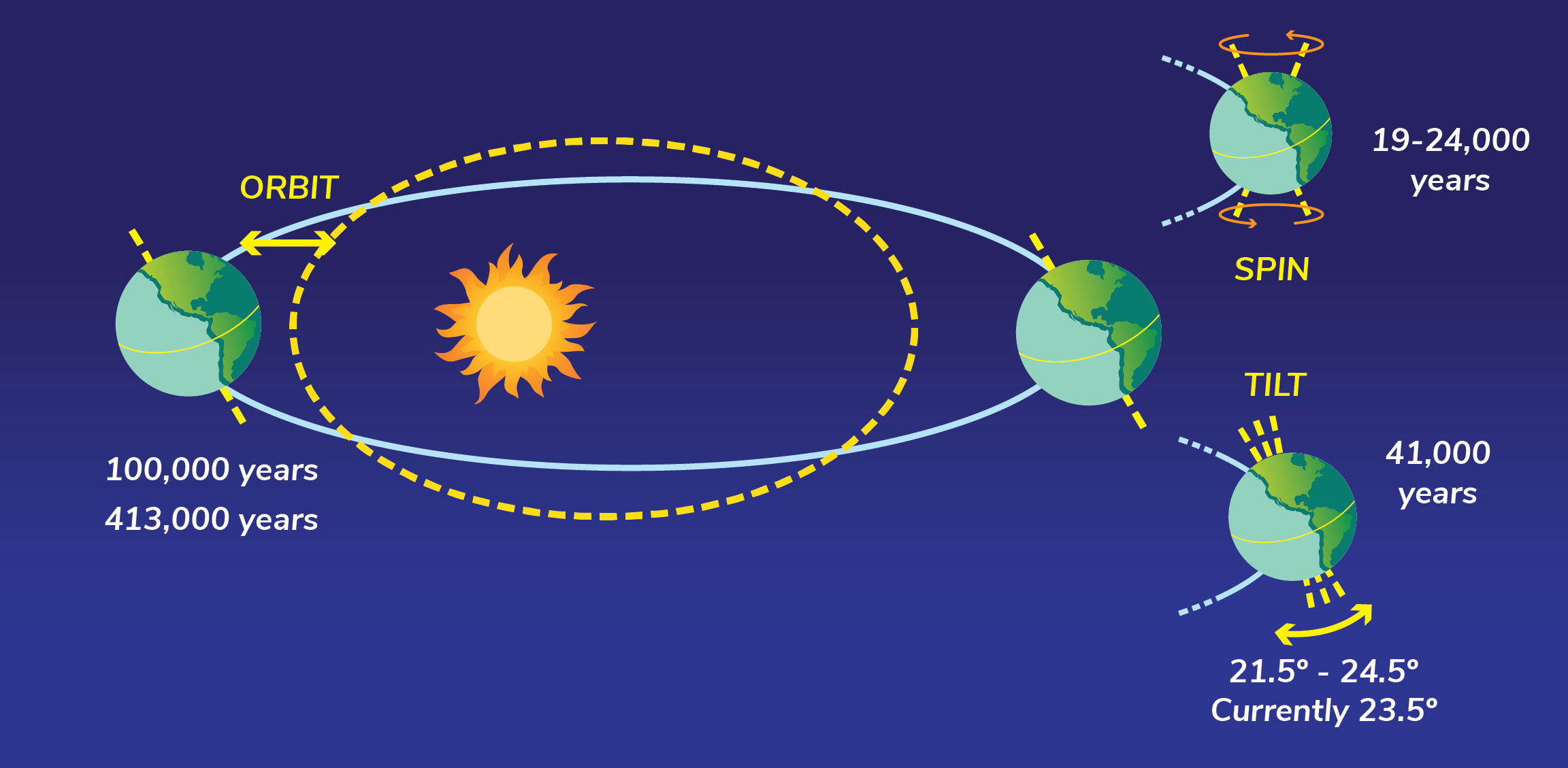
However, not all collisions were perfectly aligned. Some impacts would have occurred at angles, imparting a slight tilt to Earth’s axis, which is responsible for our seasons. Other, more oblique impacts could have even slightly slowed down or sped up Earth’s rotation, or altered its spin axis.
The Giant Impact Hypothesis: A Defining Moment
While the gradual accretion of numerous planetesimals contributed to Earth’s spin, a particularly significant event, the Giant Impact Hypothesis, is widely believed to have had a profound effect. This theory posits that a Mars-sized protoplanet, often referred to as Theia, collided with the early Earth.
The immense energy released by this colossal impact would have vaporized large portions of both celestial bodies, sending debris into orbit around Earth. This debris eventually coalesced to form our Moon. The impact itself would have been a tremendous jolt, significantly influencing Earth’s rotation. Depending on the angle and force of the impact, it could have:
- Increased Earth’s spin rate: If Theia struck at a glancing blow in a way that pushed Earth into a faster rotation.
- Tilted Earth’s axis: This is a widely accepted consequence of the Giant Impact, explaining our axial tilt of approximately 23.5 degrees.
- Potentially even reversed Earth’s spin direction: Although less likely, a sufficiently massive and uniquely angled impact could have drastically altered or even reversed Earth’s rotation.
The current direction and speed of Earth’s spin are likely the result of this cumulative process, with the Giant Impact hypothesis playing a pivotal, albeit potentially dramatic, role.
The Ongoing Evolution of Earth’s Spin
Once Earth reached its current size and settled into its rotation, the forces acting upon it didn’t cease. While the fundamental spin is a legacy of its formation, several factors have subtly influenced its rotation over billions of years.
Tidal Forces: Slowing Our Spin
The most significant ongoing influence on Earth’s spin comes from the Moon and, to a lesser extent, the Sun. These celestial bodies exert tidal forces on Earth. The Moon’s gravitational pull is stronger on the side of Earth facing it and weaker on the opposite side. This creates bulges of water and rock on both sides of the planet.
As Earth rotates, these tidal bulges are constantly being dragged along. This creates friction, which acts as a brake, gradually slowing down Earth’s rotation. Over geological timescales, this effect is quite noticeable. Billions of years ago, a day on Earth was significantly shorter, perhaps only 8 to 10 hours long! The Moon’s gradual recession from Earth, a consequence of this tidal interaction, is also linked to this process.
Other Influences: The Subtle Drifts
While tidal forces are the dominant factor, other, more subtle influences can also affect Earth’s spin, though their impact is far less pronounced:
- Changes in Earth’s Mass Distribution: The movement of tectonic plates, the melting and freezing of ice sheets, and even the redistribution of water due to climate change can subtly alter Earth’s moment of inertia, leading to minuscule changes in its rotation rate. For instance, the melting of polar ice caps can cause a slight increase in rotational speed.
- Atmospheric and Oceanic Currents: The massive movement of air and water on Earth’s surface also plays a role, albeit a minor one, in influencing its spin through friction.
- Core-Mantle Interactions: The dynamic processes within Earth’s molten core can also have a very subtle impact on the planet’s rotation.
These factors are measured with incredible precision using advanced satellite technology and atomic clocks. While they don’t explain the initial cause of Earth’s spin, they account for the very slight variations we observe in its rotation today.
Conclusion: A Legacy of Cosmic Chaos and Cosmic Order
So, what caused the Earth to spin? The answer is not a single, definitive event but rather a cascading series of cosmic processes that began with the birth of our solar system. The initial rotation of the primordial nebula, amplified by gravitational collapse, imbued the raw materials of our planet with angular momentum. The violent process of accretion, where planetesimals merged to form Earth, transferred and consolidated this spin. And the colossal Giant Impact Hypothesis likely played a crucial, defining role in shaping our planet’s rotational speed and axial tilt.
While the initial impetus for Earth’s spin came from the raw energy and mechanics of its formation, the ongoing dance between Earth, the Moon, and the Sun continues to subtly shape its rotation. From the grand cosmic ballet of nebular collapse to the subtle tug of lunar tides, the spin of our planet is a testament to the dynamic and ever-evolving nature of the universe. It’s a constant reminder that our existence is intrinsically linked to the powerful forces that shaped our solar system billions of years ago, a story written in stardust and etched in the very motion of our world. Understanding this fundamental aspect of our planet’s existence allows us to better appreciate the delicate balance and extraordinary history that underpins our everyday lives.
aViewFromTheCave is a participant in the Amazon Services LLC Associates Program, an affiliate advertising program designed to provide a means for sites to earn advertising fees by advertising and linking to Amazon.com. Amazon, the Amazon logo, AmazonSupply, and the AmazonSupply logo are trademarks of Amazon.com, Inc. or its affiliates. As an Amazon Associate we earn affiliate commissions from qualifying purchases.