
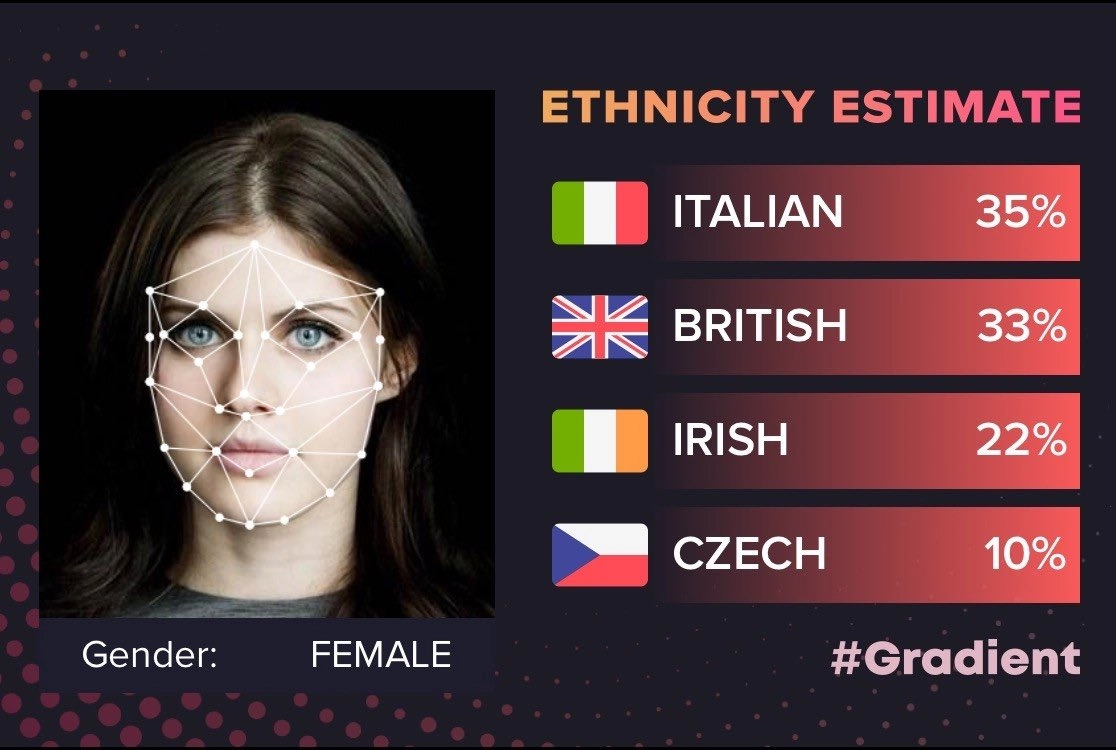
The intersection of artificial intelligence and human identity has birthed a fascinating, albeit controversial, niche in the tech world: automated ethnicity estimation. Apps and web-based tools that promise to analyze facial geometry to determine “what ethnicity you look like” have surged in popularity, moving from niche novelty acts to sophisticated deep-learning applications. By leveraging convolutional neural networks (CNNs) and massive biometric datasets, these platforms claim to map facial features against global genetic markers. However, understanding the technology beneath the hood requires a deep dive into computer vision, machine learning limitations, and the ethics of digital categorization.
The Engineering Behind Facial Phenotyping
At the core of “ethnicity estimation” software lies advanced pattern recognition. These tools do not possess a biological understanding of heritage; instead, they function as high-speed statistical classifiers.
The Role of Computer Vision and CNNs
The backbone of this technology is the Convolutional Neural Network. These AI architectures are designed to process pixel data by breaking images down into hierarchical layers. The initial layers identify basic edges and textures, while deeper layers recognize complex structures such as the distance between the eyes, the bridge of the nose, the width of the jawline, and skin texture patterns. When a user uploads a photo, the AI converts the image into a high-dimensional vector. This vector is compared against a latent space trained on millions of labeled images. If the user’s facial geometry shares commonalities with the “average” features found in a specific labeled training set, the software assigns a probability score for that ethnicity.
Data Sets and Training Bias
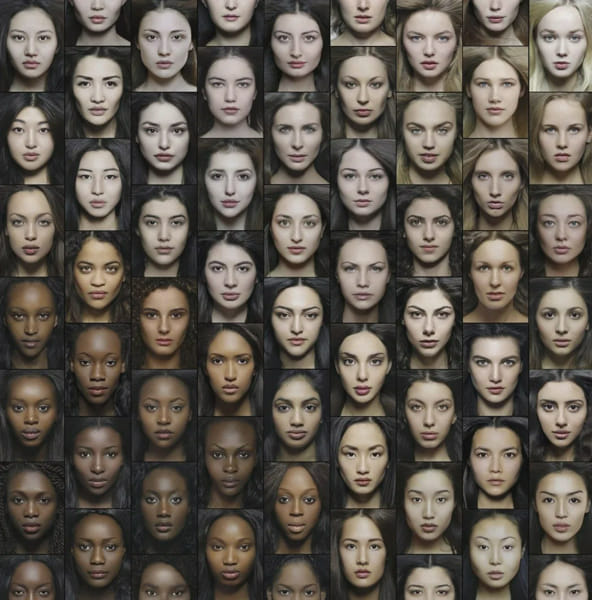
The accuracy of these tools is strictly bounded by the diversity of their training data. If an algorithm is trained primarily on datasets from specific geographic regions, it will struggle to accurately categorize individuals from underrepresented populations. This often leads to “algorithmic bias,” where the software defaults to the most statistically probable group based on a narrow set of visual archetypes. Users often find that these tools rely on stereotypical markers rather than the nuanced reality of human genetics, which is why a single person might receive five different ethnicity results from five different AI apps.
The Limitations of AI-Driven Ancestry
While users often search for these tools out of curiosity or a desire to confirm family lore, it is vital to distinguish between physical “looks” and biological ancestry.
Phenotype vs. Genotype
Technically, these apps are analyzing your phenotype—the observable physical properties of an organism. They are not conducting a DNA test. Because human history is defined by migration, conquest, and trade, genetic markers and physical appearances are frequently decoupled. A person can have 50% ancestry from one region and 50% from another, yet appear to display the traits of only one group. Relying on AI to tell you “what you look like” provides a map of visual perception, not a genealogical record.
The Fallacy of Discrete Categories
Software developers face a difficult challenge: human ethnicity is a spectrum, not a series of discrete, binary buckets. Many AI tools are built on a categorical classification model, which forces the software to choose a label. This ignores the reality of multi-ethnic backgrounds and the subtle gradients of human appearance. The “black box” nature of these neural networks means that the AI often relies on “feature proxies”—such as lighting conditions or camera angles—that have nothing to do with ethnicity but significantly alter the output.
Digital Security and Data Privacy Considerations

The rapid proliferation of “what ethnicity do I look like” applications brings significant digital security concerns to the forefront. These apps are not merely entertainment; they are biometric data collectors.
The Value of Biometric Data
Facial recognition data is perhaps the most sensitive category of personal information. When you upload a selfie to an AI tool, you are providing the platform with a high-resolution map of your face. For smaller, less transparent developers, this data is often the primary product. Users must be wary of where these images are stored, who has access to them, and whether they are being fed back into public datasets to train third-party facial recognition models.
Terms of Service and Perpetual Usage
A common pitfall for users is failing to read the privacy policy of free-to-use analysis apps. Many services include clauses that grant them perpetual, global, and royalty-free rights to use, modify, and distribute the images uploaded to their platform. By participating in these “ethnicity checks,” users may unwittingly be contributing their biometric signatures to commercial databases used by surveillance technology firms or targeted advertising agencies. Before hitting the “Analyze” button, it is essential to determine if the provider uses encryption, ensures data deletion after processing, and prohibits the sale of user images.
The Future of AI and Human Identity
As we look toward the evolution of machine learning, the role of AI in analyzing human appearance is shifting from simple categorization to more complex, generative tasks.
Moving Toward Multimodal Analysis
Current tools are largely limited to image-to-text analysis. The next iteration of these models, incorporating multimodal AI, may combine visual data with linguistic cues, geographical input, and even cultural context to provide more accurate results. However, this raises further questions regarding the ethical implications of creating AI that can “label” humans with increasing accuracy. The tech industry is currently debating the necessity of guardrails that prevent AI from being used for discriminatory practices, such as automated profiling in job applications or security screening.
Transparency and “Explainable AI” (XAI)
The push for “Explainable AI” is particularly relevant here. Rather than simply telling a user “You are 40% Mediterranean,” an XAI-driven tool should theoretically be able to highlight which facial features triggered that conclusion. This transparency would allow users to see that the AI is identifying specific features rather than relying on biases. For consumers, the future of these tools will depend on moving away from “magical” results toward a model that provides data-backed evidence for its conclusions.
Evaluating the Utility of Ethnicity Apps
Ultimately, the utility of “what ethnicity do I look like” apps remains firmly in the realm of entertainment. They serve as an intriguing look at how far computer vision has progressed, but they fall short of being a reliable source of information for genealogy or identity.
When choosing to engage with these technologies, users should adopt a “privacy-first” approach. Prioritize apps developed by reputable tech companies that provide clear documentation on how their algorithms work and how they protect user data. Avoid platforms that offer “results” without explaining the methodology behind them.
The allure of using a smartphone to unlock the secrets of our appearance is undeniable. It represents a marriage of human vanity and cutting-edge software that is uniquely representative of our current digital age. As developers continue to refine these algorithms, the results will likely become more nuanced, but the distinction between machine-generated estimation and biological reality will remain. For now, enjoy these tools for the technological marvels they are, but treat the outputs as subjective digital guesses rather than objective truths. In the landscape of AI development, the most important takeaway is that while software can learn to “see” a face, it still lacks the capacity to truly “know” the person behind it.
aViewFromTheCave is a participant in the Amazon Services LLC Associates Program, an affiliate advertising program designed to provide a means for sites to earn advertising fees by advertising and linking to Amazon.com. Amazon, the Amazon logo, AmazonSupply, and the AmazonSupply logo are trademarks of Amazon.com, Inc. or its affiliates. As an Amazon Associate we earn affiliate commissions from qualifying purchases.