
The concept of separation within a marriage is a complex landscape, often navigated with heavy hearts and a desire to align personal circumstances with spiritual convictions. When examining the biblical perspective on separation, it is essential to approach the scriptures not as a rigid rulebook for every unique scenario, but as a framework of principles designed to protect the sanctity of covenant while recognizing the realities of human brokenness and the necessity of safety.
The Foundation of Covenant and the Reality of Conflict
At the core of the biblical view of marriage is the concept of a covenant—a sacred, lifelong commitment established before God. This is rooted in the creation narrative where marriage is described as two becoming one flesh (Genesis 2:24). This principle is echoed by Jesus in Matthew 19:6, where he states, “So they are no longer two, but one flesh. Therefore what God has joined together, let no one separate.”

Understanding the Covenantal Ideal
The biblical ideal for marriage is permanence and unity. The scriptures consistently uphold the value of reconciliation, patience, and forgiveness. In a healthy or even a struggling, functional marriage, separation is not encouraged. The goal is always the restoration of the relationship, fueled by the same grace that God extends to humanity.
Recognizing Human Brokenness
While the ideal is clear, the Bible does not ignore the presence of sin, abuse, and hard-heartedness. Scripture acknowledges that marriages exist in a fallen world. When discussing separation, it is critical to distinguish between a temporary, strategic step taken to address serious dysfunction and an abandonment of the covenantal promise. The Bible provides space for wisdom, discernment, and the protection of the vulnerable, even when the broader mandate is to maintain the union.
Paul’s Guidance in 1 Corinthians 7
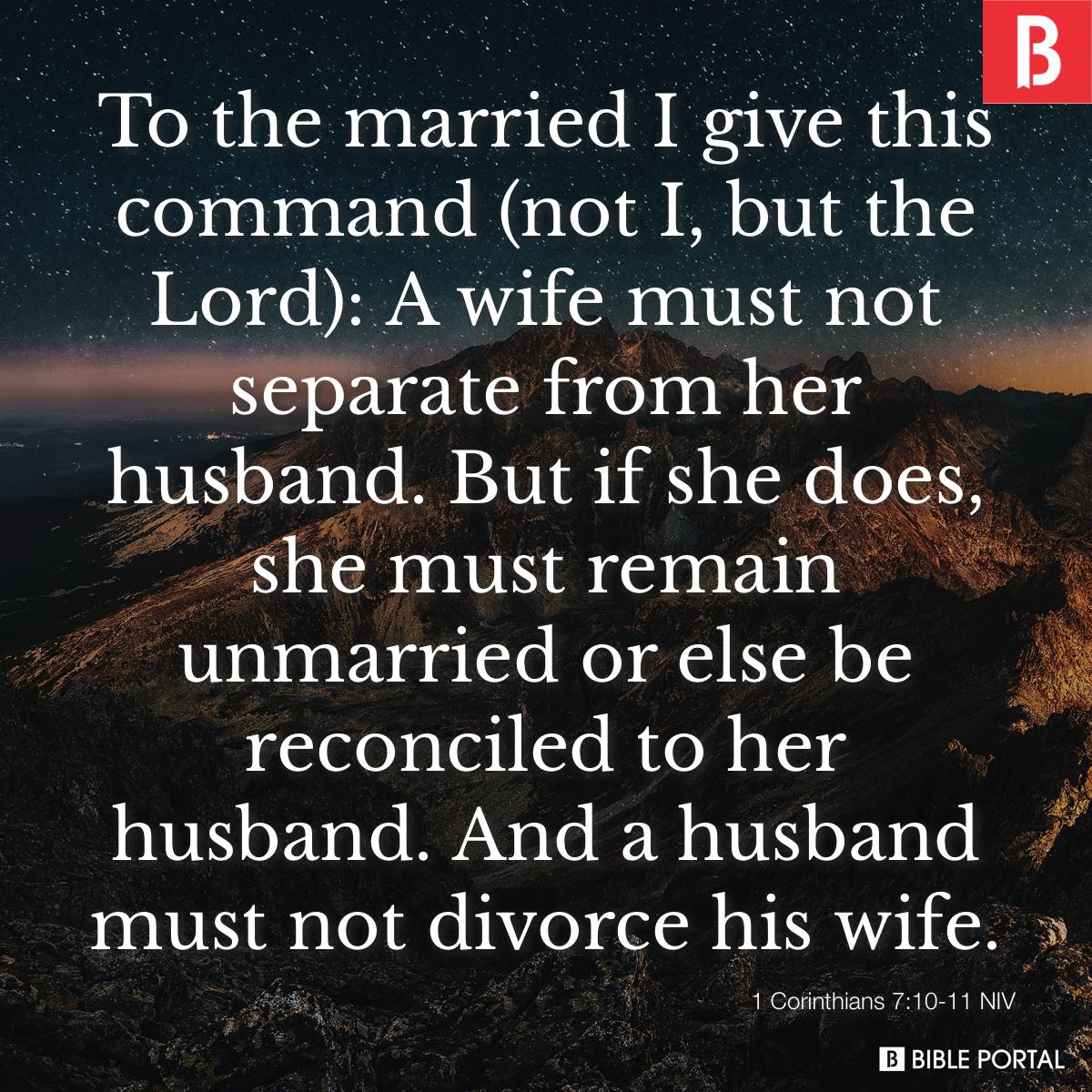
The most explicit passage regarding separation within a marriage is found in 1 Corinthians 7:10–11. Here, the Apostle Paul provides instruction to believers who find themselves in circumstances that feel untenable.
The Instruction on Remaining
Paul writes, “To the married I give this command (not I, but the Lord): A wife must not separate from her husband. But if she does, she must remain unmarried or else be reconciled to her husband.”
This passage serves as a boundary marker. It acknowledges that separation may occur—perhaps due to intense conflict, irreconcilable differences, or a need for space—but it places strict parameters around that separation. It is not presented as a stepping stone toward divorce or a total dissolution of the marriage, but rather as a period of withdrawal. The focus remains on the possibility of reconciliation, suggesting that the commitment to the marriage bond survives the physical separation.
The Case of the Believer and Unbeliever
In verses 12–15, Paul addresses a different scenario: where one spouse is a believer and the other is not. He advises the believer not to initiate separation if the unbelieving spouse is willing to live with them. However, he concludes in verse 15, “But if the unbeliever leaves, let it be so. The brother or the sister is not bound in such circumstances; God has called us to live in peace.”
This distinction is crucial. It differentiates between a believer choosing to leave and being abandoned by an unbeliever. The emphasis on being “called to live in peace” provides a framework for understanding that there are limits to the duty of the believer to force the maintenance of a household under all conditions, particularly when the other party willfully exits the union.
Distinguishing Between Separation and Abandonment
A vital aspect of this discussion is distinguishing between a temporary separation intended to preserve safety or facilitate healing and the concept of abandonment, which effectively dissolves the practical reality of the marriage.
The Criterion of Safety
While not explicitly detailed as a theological doctrine, the biblical principle of protecting the vulnerable—women, children, and those treated unjustly—is woven throughout scripture. When a marriage involves physical, emotional, or sexual abuse, the “one flesh” union is already being violated through violence or severe mistreatment.
In such contexts, separation is often viewed by modern biblical counselors and theologians not as a violation of the marriage covenant, but as an act of necessary self-preservation. Leaving a dangerous environment is not an abandonment of the marriage vows; it is an escape from sin and a removal of oneself from a situation where the covenant is being actively destroyed by the behavior of the other person.
The Role of Church and Community
The Bible places significant value on the counsel of the broader faith community. Proverbs 15:22 reminds us, “Plans fail for lack of counsel, but with many advisers they succeed.” When a marriage reaches a point where separation is being contemplated, it is almost never advisable to make that decision in isolation.
Mature spiritual mentors, pastoral counselors, and trained professionals play a vital role. They can help spouses distinguish between the difficult work of reconciliation—which might involve setting boundaries or seeking therapy—and the legitimate need to separate due to destructive behavior. The community serves to hold the couple accountable to the covenant while providing the necessary support to navigate the immense pain of a broken home.
Moving Toward Restoration or Resolution
If a couple enters a season of separation, the biblical aim is rarely static. The separation is meant to be a transition period, not a permanent state of limbo.
The Pursuit of Reconciliation
True biblical reconciliation involves repentance, forgiveness, and the addressing of the issues that caused the separation. This is a difficult, often long-term process. It requires both parties—or the party capable of doing so—to look inward, identify their part in the breakdown of the relationship, and seek divine help for transformation. When one party is willing and the other is not, the focus shifts to individual healing and maintaining a heart posture that remains open to reconciliation without enabling destructive patterns.
The Weight of Permanent Dissolution
If reconciliation proves impossible, the Bible offers counsel on how to navigate the aftermath. The emphasis remains on dignity, integrity, and minimizing further harm. Even in cases where separation leads to divorce, the biblical instruction encourages believers to maintain a testimony of grace. It is a reality that, in this life, not every marriage is saved, despite the prayers and efforts of those involved. In such cases, the guidance shifts toward walking through the hardship with wisdom, prayer, and a reliance on God’s grace to sustain the individual through the transition into a new season of life.

Conclusion: Trusting in God’s Grace
The Bible does not offer a simplistic answer to the question of separation, because marriage itself is a profound, messy, and deeply spiritual enterprise. It balances the high call of the covenant with the grace required for those living in a world affected by sin.
Ultimately, navigating separation requires a combination of biblical knowledge, wise counsel, and a prayerful heart. Whether the goal is to repair a wounded relationship or to navigate the safety and resolution of an impossible situation, the scriptures point toward a God who understands the pain of broken promises and is present in the midst of the struggle. For those currently facing this path, the call is to seek clarity through prayer and wise guidance, ensuring that every step taken is aligned with the pursuit of peace, the protection of the vulnerable, and a reliance on the enduring love of God.
aViewFromTheCave is a participant in the Amazon Services LLC Associates Program, an affiliate advertising program designed to provide a means for sites to earn advertising fees by advertising and linking to Amazon.com. Amazon, the Amazon logo, AmazonSupply, and the AmazonSupply logo are trademarks of Amazon.com, Inc. or its affiliates. As an Amazon Associate we earn affiliate commissions from qualifying purchases.