
When analyzing the historical narrative of the Great Flood through the lens of modern personal finance and business strategy, one discovers a profound manual on contingency planning, resource allocation, and long-term asset protection. While the biblical account is primarily theological, its pragmatic application to the world of money—specifically risk management—is undeniable. In an era of volatile markets, inflationary pressures, and digital disruption, the principles found in the narrative of Noah offer a blueprint for protecting one’s financial future against systemic “floods.”
The Economics of Contingency Planning
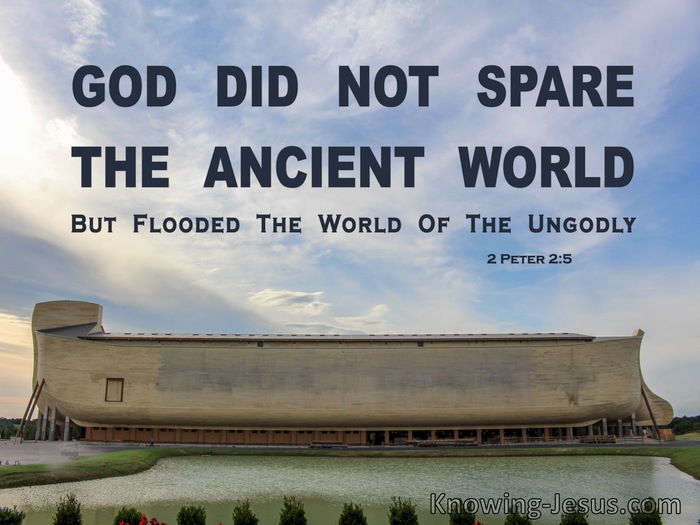
At the heart of the flood narrative lies a massive project that required significant capital, labor, and time investment long before the crisis arrived. In modern financial terms, Noah was engaged in the ultimate form of insurance and contingency planning.
Assessing Systemic Risk
Noah’s preparation was predicated on the ability to recognize shifting environmental indicators. In the financial sector, this is known as “reading the market.” Investors who ignore systemic risks—such as the over-leveraging of assets, impending regulatory shifts, or the devaluation of fiat currency—often find themselves underwater when the cycle turns. The biblical lesson here is clear: those who wait for the rain to start before building their ark rarely have the time or resources to construct a robust defense.
Capital Allocation for Stability
Building the ark required a massive commitment of resources. In personal finance, this equates to liquidity management. If one is 100% invested in high-risk, speculative assets, they lack the “ark” necessary to survive a market crash. The biblical framework suggests that true security requires diverting a portion of one’s current wealth away from immediate consumption and into defensive structures that can withstand prolonged periods of economic turbulence.
Diversification and Asset Preservation
One of the most overlooked aspects of the flood narrative is the inventory management involved. Noah wasn’t just instructed to build a structure; he was told to curate a specific portfolio of assets that would ensure the continuity of life post-disaster.
Curating a Resilient Portfolio
Noah didn’t just save gold or silver; he saved living, productive assets that could replenish the earth once the waters receded. Investors often fall into the trap of holding only paper assets—stocks, bonds, or digital tokens—that are highly sensitive to market fluctuations. A truly diversified portfolio includes “productive assets” that maintain intrinsic value regardless of the economic climate. This might include real estate, physical commodities, or skill-based income streams that function even when the digital infrastructure of the global economy faces disruption.
Mitigating Single-Point Failure
The ark was designed to be self-contained. It did not rely on external supply chains, which were destroyed by the very event they were trying to avoid. In the modern world, this translates to the danger of dependency. Investors who rely entirely on a single brokerage, a single currency, or a single industry are susceptible to “single-point failure.” True wealth preservation requires a level of autonomy where your portfolio can function independently of the broader, struggling system.
The Cost of Preparedness vs. The Cost of Loss
A central theme in the biblical narrative is the contrast between the skepticism of the outside world and the focused preparation of the few. In the realm of money, this represents the psychological barrier to long-term financial planning.
Investing Against the Herd
Noah was undoubtedly ridiculed for investing his time and resources into an ark when the sky was blue. In finance, this is known as “contrarian investing.” When everyone else is chasing high-growth, speculative bubbles, the individual who chooses to prioritize liquidity and defensive positioning often appears irrational. However, the Bible’s subtext emphasizes that the cost of being “wrong” by over-preparing is negligible compared to the cost of being “wrong” by under-preparing. Losing a small portion of potential growth during a bull market is a reasonable “premium” to pay for the insurance of surviving a total collapse.
The Discipline of Consistent Execution
The construction of the ark was a multi-year project, not a weekend venture. Similarly, building financial resilience requires the discipline of consistent execution. It is not about timing the market to perfection but about building a structure that can survive the duration of the storm. Many investors fail because they lack the temperament to maintain their defensive strategy when the immediate threat is not visible. Biblical resilience teaches that preparation is a lifestyle, not a response to a specific ticker-tape update.
Post-Disaster Recovery and Wealth Reconstruction
The narrative does not end when the rain stops; it ends with the renewal of the world. This is perhaps the most important lesson for the modern investor: your goal is not just to survive the crash, but to be positioned for the recovery.
Positioning for the “New World”
When the waters receded, Noah and his family were the only ones left with the capital and the assets to rebuild civilization. In the financial world, those who maintain liquidity during a crash are the ones who can acquire devalued assets at a massive discount when the market bottoms out. By having an “ark” of liquid capital, you are not just safe from the storm—you are empowered to profit from the aftermath. The people who lost everything during the flood had no mechanism to participate in the reconstruction.
Legacy Planning and Generational Wealth
The flood was a reset button. Noah was tasked with preserving life for future generations. Financial planning should be viewed through a similar lens. It is not merely about individual survival; it is about establishing a foundation that can survive generational shifts. Whether it is through trusts, diversified asset classes, or education, the objective is to ensure that the “seed” of wealth is preserved so that the subsequent generations do not have to start from zero.

Conclusion: Lessons for the Modern Financial Steward
The biblical account of the flood serves as a masterclass in risk mitigation. By prioritizing the construction of a robust financial structure, diversifying away from single-point dependencies, and maintaining the discipline to prepare before the crisis is visible, an investor can achieve a state of relative economic immunity.
The “floods” of the modern era—recessions, currency devaluations, and geopolitical instability—are inevitable. The market, much like the biblical flood, is a force of nature that resets wealth and exposes the vulnerabilities in poorly constructed portfolios. Those who ignore the warning signs and fail to build their arks are left to the mercy of the current. Conversely, those who treat their financial security with the gravity of a life-preservation project will find themselves in the enviable position of not only surviving the storm but thriving in the recovery that follows.
Ultimately, wealth preservation is an act of foresight. It requires the ability to look past the current sunshine and recognize the necessity of structural integrity. Whether one is reading ancient texts or analyzing modern market data, the message remains identical: build your infrastructure today, because the integrity of your ark will determine the future of your legacy.
aViewFromTheCave is a participant in the Amazon Services LLC Associates Program, an affiliate advertising program designed to provide a means for sites to earn advertising fees by advertising and linking to Amazon.com. Amazon, the Amazon logo, AmazonSupply, and the AmazonSupply logo are trademarks of Amazon.com, Inc. or its affiliates. As an Amazon Associate we earn affiliate commissions from qualifying purchases.