
In the fast-paced, highly competitive landscape of modern business and brand strategy, the concept of “correction” is often viewed through the lens of failure. Executives, entrepreneurs, and marketing directors frequently recoil from the idea of being corrected, perceiving it as a threat to their authority or a sign that their strategy is failing. However, when we look at timeless wisdom—specifically the principles found in the Bible—correction is reframed not as a penalty, but as a sophisticated tool for optimization, growth, and long-term brand sustainability. Understanding these principles allows leaders to cultivate an environment where strategic pivots are celebrated rather than feared.

The Strategic Value of Open Feedback Loops
In professional branding, the most successful companies are those that prioritize “agile correction.” This concept mirrors the biblical insistence on being receptive to reproof. Proverbs 12:1 suggests that whoever loves discipline loves knowledge, but whoever hates correction is stupid. In a business context, this “stupidity” is synonymous with stubbornness—refusing to look at market data or customer feedback because it contradicts one’s original vision.
Embracing the Pivot
Brand strategy is rarely a linear path. When a marketing campaign fails to achieve its KPIs, or a product-market fit is misaligned, the impulse is often to double down on the initial investment. Biblical wisdom encourages the opposite: a readiness to “reprove, rebuke, and exhort” (2 Timothy 4:2). In the corporate world, this translates to the implementation of rigorous review cycles. By normalizing the correction process, brands can pivot their strategy before the cost of error becomes irreparable.
The Cultural ROI of Humility
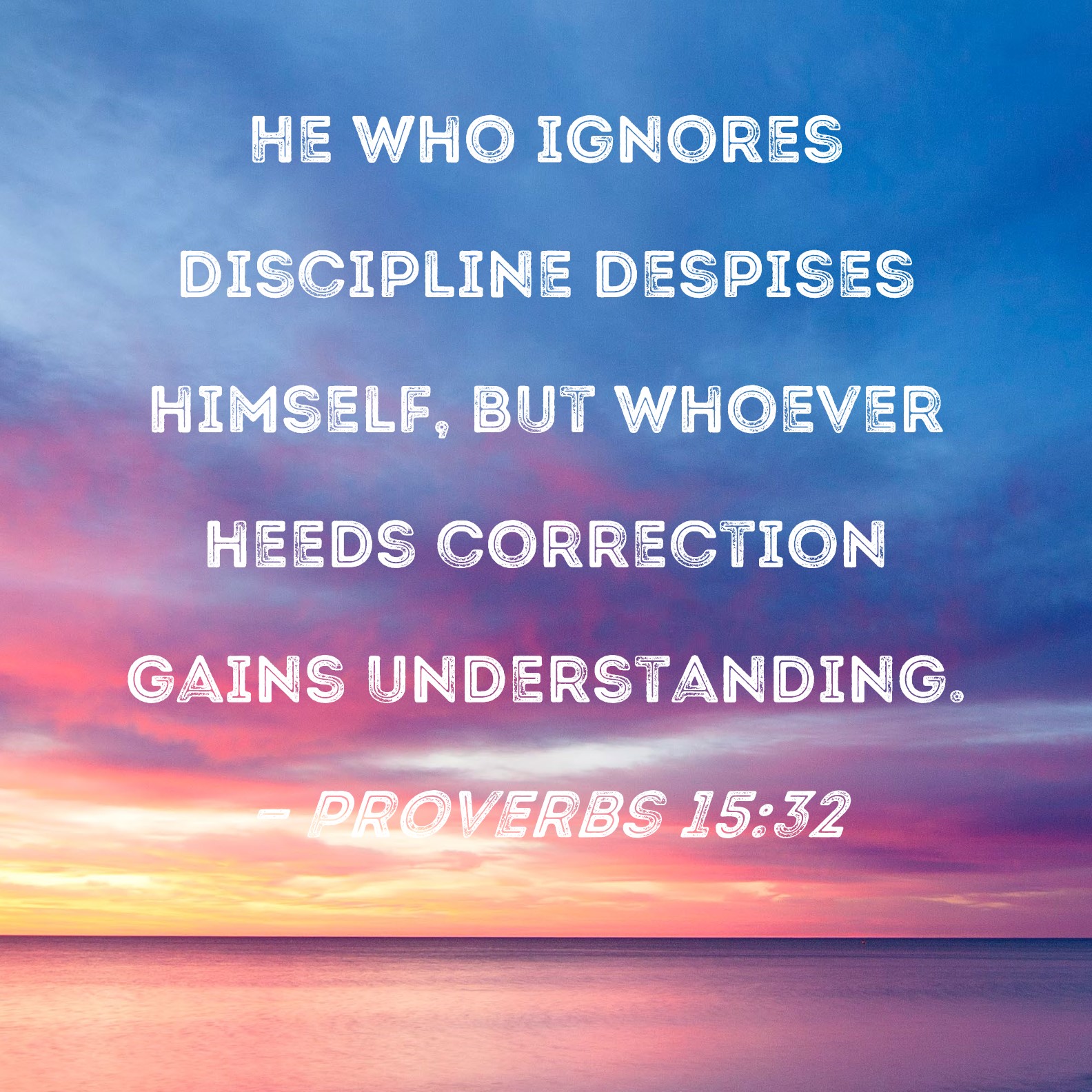
Leadership in the 21st century requires the humility to be corrected by one’s subordinates. When a CEO fosters a culture where the hierarchy does not insulate them from honest feedback, the organization benefits from diverse perspectives. Proverbs 15:32 notes that he who ignores discipline despises himself, but whoever heeds correction gains understanding. For a brand, “gaining understanding” is the ultimate competitive advantage. It allows for more precise customer segmentation, more empathetic messaging, and a more robust crisis management strategy.
Constructive Criticism as Quality Control
In software development and product design, the “code review” is the industry standard for correction. It is the practice of having peers examine work to identify bugs and inefficiencies. Biblical teachings on iron sharpening iron (Proverbs 27:17) provide the foundation for this professional standard. Correction, when applied correctly, is not about judgment; it is about refining the product to reach its intended potential.
Removing Internal Bias
We are often blind to our own strategic shortcomings. A brand’s mission statement might make sense in the boardroom but fail to resonate with the target audience. Without an external correction mechanism, these “blind spots” grow into systemic failures. The biblical principle of seeking a “multitude of counselors” (Proverbs 11:14) is an essential strategy for modern brand managers. By inviting third-party auditors, customer advisory boards, or even critical stakeholders into the development process, companies can identify flaws in their value proposition early.
Maintaining Brand Integrity
Correction serves as a filter for brand identity. If a brand attempts to be everything to everyone, it risks diluting its market position. Correction forces a brand back to its core pillars. Just as a gardener prunes a vine to ensure it bears more fruit (John 15:2), a brand must be willing to “prune” non-essential initiatives that do not contribute to its primary objectives. This is not a loss of revenue; it is an optimization of brand equity.
The Psychology of Growth-Oriented Feedback
Correction is only effective when the recipient has a growth mindset. In organizational psychology, we often talk about “psychological safety,” a concept that aligns perfectly with the biblical approach to correction. The goal of correction should never be shame; it should be restoration and improvement. Hebrews 12:11 notes that “no discipline seems pleasant at the time, but painful. Later on, however, it produces a harvest of righteousness and peace for those who have been trained by it.”
Reframing Failure as Data
For a brand, the “harvest” described in biblical texts is market share and customer loyalty. When a marketing strategy requires correction, the team should view the failed attempt as high-value data. The pain of the error is the price paid for the lesson. Companies that treat their marketing analytics as a form of divine correction—objective, cold, and factual—are the ones that adapt most quickly to market fluctuations.
Developing Resilient Leadership
Resilience is a byproduct of being corrected. Leaders who have weathered the storm of strategic correction are more equipped to lead during periods of market instability. They understand that their identity is not tied to a single campaign’s performance, allowing them to remain objective in high-stakes environments. This emotional maturity is the hallmark of a resilient brand that can survive recessions, PR crises, and evolving consumer preferences.
Avoiding the Traps of Pride and Echo Chambers
Perhaps the most significant obstacle to effective correction in corporate culture is pride. Proverbs 16:18 warns that “pride goes before destruction, and a haughty spirit before a fall.” In the business world, this is the classic “sunk cost fallacy.” Companies often continue pouring capital into failing ventures because their ego prevents them from admitting that their initial strategy was flawed.
The Danger of the Echo Chamber
Modern digital ecosystems are designed to feed us information that confirms our existing biases. Algorithms reinforce our strategic echo chambers, making it increasingly difficult to encounter the type of “dissonant” information that leads to growth. To counteract this, leaders must actively seek out “dissenting voices.” Just as biblical figures were often challenged by prophets or mentors, modern brands need internal “red teams” whose sole responsibility is to find flaws in the current strategy.
Institutionalizing Accountability
Accountability is the formal structure of correction. It is not enough to simply be “open” to feedback; it must be built into the corporate governance. Whether it is through board oversight, independent audits, or customer satisfaction metrics that are publicly reported, brands that institutionalize accountability signal to the market that they are self-correcting entities. This builds trust. When a company owns its mistakes and corrects them, consumers perceive that brand as authentic and reliable, far more than they would a brand that projects an image of infallibility.

Conclusion: The Path to Strategic Maturity
The intersection of biblical wisdom and modern brand strategy is found in the pursuit of truth. Correction, at its core, is the alignment of reality with intent. When a brand identifies a gap between its promises and its delivery, it must be willing to undergo the process of correction to close that gap.
By viewing correction as an essential component of strategic development rather than a personal or professional attack, leaders can foster organizations that are agile, humble, and deeply committed to their mission. The “harvest” of such a mindset is not just financial profit, but a brand that possesses the integrity and maturity to survive in an ever-changing landscape. As the ancient proverb suggests, the path of life is found in heeding correction. For the modern brand, this is not just a moral imperative; it is the most sophisticated business strategy available.
aViewFromTheCave is a participant in the Amazon Services LLC Associates Program, an affiliate advertising program designed to provide a means for sites to earn advertising fees by advertising and linking to Amazon.com. Amazon, the Amazon logo, AmazonSupply, and the AmazonSupply logo are trademarks of Amazon.com, Inc. or its affiliates. As an Amazon Associate we earn affiliate commissions from qualifying purchases.