
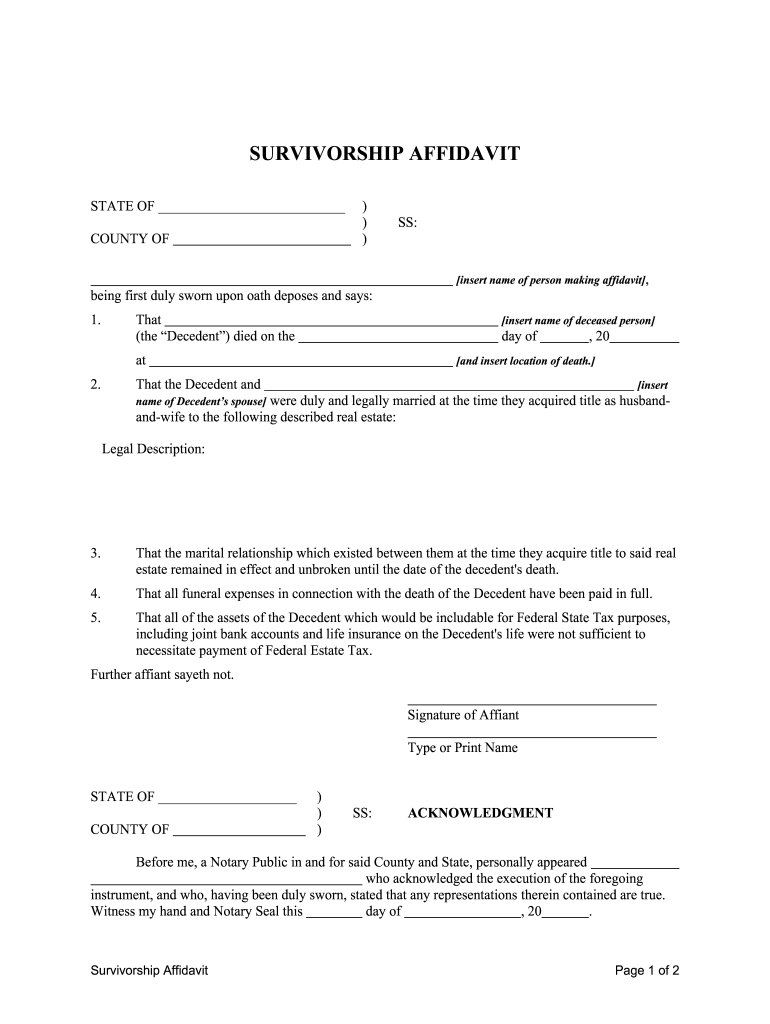
When reviewing legal documents, such as affidavits, deeds, or sworn statements, you may encounter the abbreviation “SS” positioned prominently near the top of the page, typically alongside the name of a state and county. This term—”SS”—is not a typo, nor is it a remnant of obscure bureaucratic jargon. It is a formal Latin-derived notation that serves a specific, albeit traditional, purpose in the structure of legal instruments.
Understanding the provenance and function of this abbreviation is essential for anyone dealing with contracts, property law, or notary services. While it may seem archaic, it remains a hallmark of precision and jurisdiction in formal documentation.
The Etymology and Historical Significance of SS
To demystify the “SS” in your document, we must look toward its linguistic roots. The abbreviation is widely accepted to stand for scilicet, a Latin word that functions as an adverb meaning “namely,” “that is to say,” or “to wit.”
The Evolution from Latin to Legal Standard
In the context of legal drafting, scilicet was historically used to clarify, specify, or provide a necessary detail to an preceding statement. When placed after the location—for example, “State of New York, County of Westchester, SS”—it serves as an expansion of the location’s relevance. It essentially translates the document’s header to mean: “The state of New York, the county of Westchester, specifically.”
This practice was imported into English common law from older civil law traditions. Centuries ago, legal scribes used scilicet to narrow the geographical scope of a document to ensure that the venue was clearly defined for the purpose of jurisdiction. Over time, the legal community contracted this into the double “S” seen today.
Why We Still Use It Today
Modern legal drafting often favors plain language, yet “SS” persists in notarial certificates and formal affidavits. This persistence is due to the force of precedent and the standardization of legal forms. Because “SS” has been utilized for centuries to denote the venue where a document is executed or where a notary is commissioned, it has become a standard marker that verifies the document’s formal legal standing. Its presence signifies that the document is prepared to meet the formal requirements of the law in that specific jurisdiction.
The Role of Venue and Jurisdiction in Documentation
The presence of “SS” is inextricably linked to the concept of “venue.” In legal terminology, the venue is the geographical location where a case or legal action is occurring. It is a critical component of legal validity because it establishes which laws apply and which courts have authority over the matter.
Clarifying the Venue
When an individual signs a document, the “venue” header (the state and county line) establishes where that signature was witnessed or where the document was finalized. By adding “SS” after the county, the document is essentially making a sworn declaration about its point of origin.
For instance, if you are signing a deed for property located in one state but you are physically located in another at the time of signing, the “SS” header helps identify the specific jurisdiction where the notary act took place. This is vital for maintaining an audit trail for legal authorities should the validity of the document be challenged in the future.

The Connection to Notarial Acts
Notaries public are state-appointed officials. Their authority is strictly limited by the borders of the state in which they are commissioned. When a notary completes a certificate—often referred to as a “jurat”—the venue block must accurately reflect the state and county where they are physically standing when they perform the notarization. The “SS” acts as a bridge between the broad identifier (State) and the narrow identifier (County), confirming that the notary is operating within the scope of their commission. Without this, the document might be considered defective or unenforceable in certain strict jurisdictions.
Understanding the Components of a Legal Header
A typical venue header follows a rigid structure. By dissecting this structure, one can see exactly how the “SS” fits into the document’s anatomy.
The Structure of the Venue Block
- State: The highest level of jurisdiction (e.g., State of California).
- County: The specific administrative division (e.g., County of Los Angeles).
- The SS (Scilicet): The bridge providing the specificity required for the legal act.
This structure provides a clean, standardized format that courts and title companies expect. When a document is filed with a clerk or presented as evidence, the consistency of this header ensures that the document is easily identifiable and properly indexed according to the local jurisdiction.
Common Misconceptions
A common error among laypeople is attempting to assign alternative meanings to “SS.” Some have speculated it stands for “Sworn Statement” or “Signed Signed,” but these are purely anecdotal and incorrect. In the realm of professional legal practice, “SS” is strictly associated with scilicet. Understanding this distinction prevents confusion during the document review process and reinforces the necessity of relying on historical legal terminology rather than colloquial guesses.
Practical Considerations for Document Preparation
If you are drafting your own legal documents or managing a collection of personal records, you may wonder whether you are required to include the “SS” in your venue headers.
Is it Mandatory?
In many states, the inclusion of “SS” is considered “boilerplate” or traditional, rather than strictly mandatory. If a notary omits the “SS” but includes the state and county, the document is rarely invalidated solely on that basis. However, legal forms provided by states and bar associations almost universally include it. Because legal documents rely heavily on adherence to convention, it is highly recommended to keep the “SS” in place. Removing it may lead to unnecessary scrutiny by title examiners, bank clerks, or court officials who are accustomed to seeing the standard format.
Best Practices for Accuracy
- Consistency: Ensure the venue on your document matches the location where the signature and notarization actually occur.
- Verification: If you are using pre-printed forms, do not modify the header unless you are certain that the state-specific statutes allow for a deviation from the provided format.
- Professional Review: If you are dealing with high-stakes documentation, such as trust agreements, power of attorney documents, or real estate transfer deeds, rely on the template provided by a legal professional. These professionals use standard formats precisely to avoid the “red flags” that might arise if a document looks unusual or deviates from local norms.

Conclusion
The abbreviation “SS” represents the intersection of history and modern legal procedure. While it is derived from a Latin word that most contemporary readers will never use in casual conversation, its role in the legal ecosystem is solidified by tradition and the need for geographical precision. By designating the exact venue of a document, “SS” provides the clarity required by judicial systems to establish jurisdiction, validate notarial acts, and maintain the integrity of the public record.
When you see “SS” on a document, you are seeing the result of centuries of legal evolution, designed to ensure that when a document is signed, there is no ambiguity regarding where and under what authority that event took place. While it may appear as a cryptic relic, it is actually a vital functional component of the paperwork that governs personal and corporate law.
aViewFromTheCave is a participant in the Amazon Services LLC Associates Program, an affiliate advertising program designed to provide a means for sites to earn advertising fees by advertising and linking to Amazon.com. Amazon, the Amazon logo, AmazonSupply, and the AmazonSupply logo are trademarks of Amazon.com, Inc. or its affiliates. As an Amazon Associate we earn affiliate commissions from qualifying purchases.