
Understanding your yearly salary is the cornerstone of effective personal financial management. While many professionals focus on the “sticker price” offered during a job interview, the reality of your annual income is often more complex. Whether you are paid by the hour, receive a bi-weekly paycheck, or earn a commission-based income, knowing how to accurately project your annual earnings is essential for budgeting, tax planning, and long-term wealth building.
In the world of personal finance, your yearly salary serves as the primary data point for almost every major life decision, from qualifying for a mortgage to determining how much you can afford to contribute to a retirement account. This guide provides a professional deep dive into the methodologies, nuances, and strategic implications of calculating your total annual compensation.

Understanding the Core Mathematical Frameworks
To calculate your yearly salary accurately, you must first identify your pay structure. Most workers fall into one of two categories: salaried or hourly. While salaried employees have a predetermined annual rate, hourly employees must account for fluctuations in hours worked, overtime, and seasonal changes.
Converting Hourly Wages to Annual Income
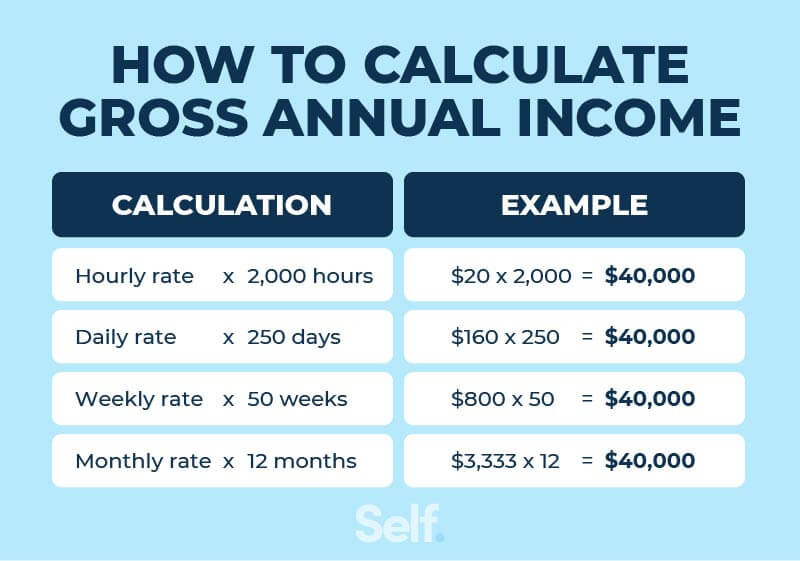
The most common standard for calculating an hourly worker’s annual salary is the “2,080-hour rule.” This figure is derived from working 40 hours per week for 52 weeks a year. If you earn $30 per hour, your base annual salary would be $62,400 ($30 x 2,080).
However, this calculation assumes you work every single week without unpaid time off. If your position does not offer paid vacation or sick leave, you must subtract those unpaid hours from the 2,080 total. For example, taking two weeks of unpaid leave reduces your working hours to 2,000, bringing that $62,400 figure down to $60,000.
Calculating from Weekly, Bi-weekly, or Semi-monthly Pay
Many professionals prefer to calculate their salary based on their recurring paychecks. It is crucial here to distinguish between “bi-weekly” and “semi-monthly” pay schedules.
- Bi-weekly: You are paid every two weeks, resulting in 26 paychecks per year. This often results in two “magic months” where you receive three paychecks instead of two.
- Semi-monthly: You are paid twice a month (usually on the 1st and 15th), resulting in 24 paychecks per year.
To find your annual salary from a gross bi-weekly paycheck of $2,500, you would multiply $2,500 by 26 to reach $65,000. If that same $2,500 was paid semi-monthly, the annual total would be $60,000. This $5,000 discrepancy highlights why understanding your pay cycle is vital for accurate annual projections.
The Impact of Paid vs. Unpaid Time Off
When evaluating a total compensation package, the “value” of paid time off (PTO) should not be overlooked. While PTO doesn’t increase the cash in your bank account, it maintains your salary during periods of rest. Conversely, if you are a freelancer or a contract worker without PTO, your “hourly rate” needs to be significantly higher to compensate for the weeks you are not earning. Financial experts often suggest that contractors should add a 20-30% premium to their desired “salaried” hourly rate to account for the lack of paid leave and benefits.
Navigating the Divide Between Gross and Net Earnings
One of the most frequent mistakes in personal finance is budgeting based on a gross annual salary. Your gross salary is the amount your employer pays before any deductions. Your net income, or “take-home pay,” is what actually lands in your bank account. Understanding the gap between these two figures is essential for realistic financial planning.
Federal and State Income Tax Obligations
Taxation is the largest variable in the salary equation. The United States uses a progressive tax system, meaning your income is taxed at different rates as it moves through various “brackets.” When calculating your yearly net salary, you must account for Federal income tax, and in most cases, State and Local taxes.
For instance, an individual earning $100,000 in Texas (a state with no income tax) will have a significantly higher net salary than someone earning $100,000 in New York City, where state and local taxes can take an additional 6-10% of gross pay.
FICA: Social Security and Medicare
Regardless of your state, almost all employees are subject to FICA (Federal Insurance Contributions Act) taxes. This consists of a 6.2% contribution to Social Security and a 1.45% contribution to Medicare. Employers match these amounts, but for the employee, this represents a non-negotiable 7.65% reduction in gross annual pay (up to the Social Security wage base limit). When calculating your yearly “spendable” income, this 7.65% must be subtracted immediately.
Mandatory and Voluntary Deductions
Beyond taxes, your yearly salary is affected by benefit elections. Common deductions include:
- Health Insurance Premiums: Often the largest non-tax deduction.
- Retirement Contributions: 401(k) or 403(b) contributions are deducted pre-tax, which lowers your current taxable income but also reduces your immediate take-home pay.
- Flexible Spending Accounts (FSA) or Health Savings Accounts (HSA): These are tax-advantaged ways to pay for healthcare, but they further reduce your monthly cash flow.
Accounting for Variable Compensation and Employee Benefits
For many professionals, the base salary is only one part of the story. To truly understand your annual income, you must quantify variable pay and the monetary value of employer-provided perks.
Bonuses, Commissions, and Profit Sharing
Variable compensation can make salary calculation difficult because it isn’t always guaranteed. However, for those in sales or executive roles, bonuses and commissions can represent 20% to 50% of total annual earnings.
When calculating this, it is safest to use a “conservative” and an “aggressive” estimate. If your historical bonus has averaged $10,000 over three years, use that as your baseline. Remember that bonuses are often withheld at a flat supplemental tax rate (usually 22% federally), which can lead to a smaller-than-expected check even if the gross amount is high.
The Hidden Value of Employer Contributions
A “Total Compensation Statement” often reveals that an employee’s value to the company is 1.25 to 1.4 times their base salary. This is due to employer contributions.
- 401(k) Matching: If your employer matches 6% of your salary, that is essentially a 6% raise that is realized in your net worth, if not your monthly checking account.
- Health Insurance Subsidies: If an employer pays $12,000 a year toward your premium, that is $1,000 a month in value you don’t have to pay out of pocket.
Overtime Pay and Shift Differentials
For hourly employees, overtime (time-and-a-half) can drastically inflate a yearly salary. If you consistently work five hours of overtime per week at a base rate of $20/hour, you are earning an extra $150 per week ($30 x 5). Over a year, this adds $7,800 to your annual income. While it is risky to rely on overtime for fixed expenses like rent, it should be accounted for when reviewing your total annual financial intake.
Utilizing Annual Salary Data for Long-term Financial Planning
Once you have calculated both your gross and net yearly salary, the next step is applying that data to your financial strategy. Your annual income figure is more than just a number; it is a tool for leverage.
Budgeting Based on Disposable Income
A common rule of thumb in personal finance is the 50/30/20 rule: 50% of your net income goes to needs, 30% to wants, and 20% to savings and debt repayment. You cannot apply this rule effectively without an accurate calculation of your annual net salary. By knowing your yearly total, you can account for “lumpy” expenses—like car insurance or annual subscriptions—that a monthly budget might miss.
Debt-to-Income Ratios and Loan Eligibility
When you apply for a mortgage or a car loan, lenders look at your Gross Annual Income. They calculate your Debt-to-Income (DTI) ratio by comparing your monthly debt payments to your gross monthly income. A DTI ratio below 36% is generally considered healthy. Knowing your exact annual salary allows you to calculate your DTI before you ever step into a bank, giving you a clear picture of your borrowing power.
Leveraging Your Annual Figure for Salary Negotiations
Market research is built on annual salary data. To negotiate effectively, you need to know where your current annual compensation sits relative to the market. By breaking down your salary into its components—base, bonus, and benefits—you can enter negotiations with a “Total Rewards” mindset. If a company cannot meet your annual base salary requirements, you might negotiate for a higher annual bonus or additional retirement matching to reach your desired yearly “Total Compensation” target.
Modern Tools for Accurate Income Projection
In the digital age, you don’t need to rely solely on manual spreadsheets to track your earnings. Various tools can help streamline the process and provide higher accuracy.
Using Online Salary Calculators
There are numerous professional-grade salary calculators available that allow you to input your location, filing status, and deductions. These tools are updated annually to reflect the latest tax code changes, making them much more accurate than a back-of-the-envelope calculation. They are particularly useful for seeing how a move to a different state or a raise might affect your actual take-home pay.

Building a Personal Income Spreadsheet
For the most granular control, maintaining a personal spreadsheet is the gold standard. By tracking every paycheck throughout the year, you can account for fluctuations in overtime, one-time bonuses, and changes in tax withholdings. This historical data becomes incredibly valuable during tax season and when planning for the following year’s financial goals.
Calculating your yearly salary is a foundational skill in personal finance. By looking beyond the gross number and understanding the interplay between taxes, deductions, and variable pay, you gain the clarity needed to make informed, confident financial decisions. Whether you are aiming to increase your savings rate or preparing for a major life purchase, your journey starts with a precise understanding of your annual income.
aViewFromTheCave is a participant in the Amazon Services LLC Associates Program, an affiliate advertising program designed to provide a means for sites to earn advertising fees by advertising and linking to Amazon.com. Amazon, the Amazon logo, AmazonSupply, and the AmazonSupply logo are trademarks of Amazon.com, Inc. or its affiliates. As an Amazon Associate we earn affiliate commissions from qualifying purchases.