
In the increasingly complex world of institutional finance, the acronym OCIO—standing for Outsourced Chief Investment Officer—has transitioned from a niche industry term to a fundamental pillar of modern investment strategy. As organizations manage larger endowments, foundations, pension funds, and family wealth, the burden of managing complex portfolios has outgrown the capabilities of traditional, fragmented investment committees. The OCIO model represents a sophisticated evolution in asset management, shifting the responsibility of tactical and strategic execution from internal committees to a dedicated, external professional firm.
The Evolution and Definition of the OCIO Model
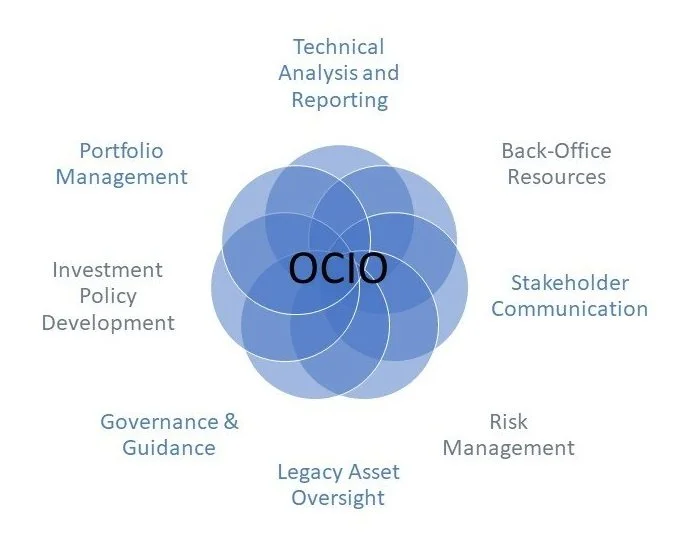
At its core, an Outsourced Chief Investment Officer provides a comprehensive investment solution. Rather than simply acting as an advisor who makes recommendations for an internal committee to approve, an OCIO is granted discretionary authority. This means they are empowered to make and implement investment decisions on behalf of the institution or individual.
From Advisory to Discretionary Management
Historically, institutions relied on the “Consultant-Advisor” model. In this structure, a committee met periodically to review reports, analyze market conditions, and eventually vote on recommendations provided by an external consultant. This process was often slow, hindered by the administrative friction of consensus-building, and reactive rather than proactive.
The OCIO model flips this dynamic. By handing over fiduciary responsibility to the OCIO provider, the client organization transforms its relationship from a tactical participant to an oversight body. The OCIO acts as the steward of the portfolio, managing asset allocation, selecting underlying managers, and adjusting market exposures in real-time.
The Value Proposition of Fiduciary Delegation
The primary driver behind the adoption of the OCIO model is the pursuit of institutional-grade investment efficiency. Organizations often lack the internal infrastructure—such as robust back-office operations, dedicated research teams, and the ability to execute complex alternative investment strategies—to compete in a global market. By outsourcing the CIO function, a mid-sized endowment or family office gains access to the same intellectual capital, proprietary research, and economies of scale typically reserved for the world’s largest sovereign wealth funds.
Why Institutions Opt for the OCIO Framework
The decision to adopt an OCIO structure is rarely made in isolation. It is typically the result of a cost-benefit analysis regarding operational risk, performance consistency, and the evolving nature of institutional demands.
Solving the Operational Burden
Managing a modern, diversified portfolio requires a level of operational intensity that often exceeds the capacity of an internal volunteer committee. This includes complex tasks such as rebalancing portfolios across multiple asset classes, negotiating fees with private equity and hedge fund managers, performing deep-dive due diligence on non-traditional investments, and maintaining rigorous risk management reporting.
When an organization employs an OCIO, they are effectively purchasing a turnkey operations department. This shifts the administrative burden away from the organization’s staff or board members, allowing them to refocus their time and energy on their primary mission—whether that is funding medical research, supporting educational initiatives, or managing multi-generational family interests.

Mitigating Cognitive Biases and Decision Fatigue
Internal investment committees are often susceptible to behavioral biases. Decisions may be driven by recent market headlines, internal political pressure, or the “herd mentality” that permeates volunteer boards. An OCIO acts as a dispassionate, objective partner. Because their reputation and mandate are tied directly to portfolio outcomes, their decisions are rooted in long-term strategic policy rather than short-term committee sentiment.
Furthermore, the OCIO provides the agility to move quickly when market opportunities arise. In an era where market volatility is a constant, the ability to pivot within hours rather than waiting for the next quarterly board meeting can significantly enhance risk-adjusted returns.
Strategic Implementation and Investment Strategy
The OCIO does not operate in a vacuum. A successful relationship is predicated on the establishment of a clear Investment Policy Statement (IPS) and ongoing communication between the provider and the client.
Aligning Strategy with Mission
The first step in the OCIO process is a deep diagnostic of the client’s financial goals, liquidity needs, and risk tolerance. For a university endowment, this might mean focusing on long-term growth to support a rising student population. For a private foundation, it might mean preserving capital while ensuring sufficient cash flow to meet annual grant-making requirements. The OCIO crafts an investment policy that serves as the “North Star,” ensuring that all tactical decisions remain aligned with these institutional goals.
Access to the “Alpha” Frontier
One of the most compelling arguments for hiring an OCIO is access. Many of the highest-performing investment managers—particularly in the realms of private equity, private credit, and venture capital—are often closed to smaller, individual investors or institutions. OCIO firms, due to the aggregate size of the assets they manage across their client base, often secure “anchor” or “limited partner” status in elite investment vehicles.
Beyond access, the OCIO performs the granular work of manager due diligence. This goes beyond reading a quarterly letter; it involves auditing the manager’s operational controls, analyzing their historical performance attribution, and stress-testing their strategies against various market scenarios. By centralizing this research, the OCIO ensures that the portfolio is populated by top-tier managers who have been thoroughly vetted.
The Future of OCIO in the Financial Landscape
As the investment landscape becomes increasingly digitized and complex, the OCIO model is poised for continued growth. The democratization of institutional investing means that the benefits once afforded only to institutional titans are now available to a broader range of entities.
Integration of Technology and Data
The modern OCIO firm relies heavily on proprietary fintech platforms to monitor global market exposure. These tools provide real-time visibility into liquidity, currency hedging, and factor risk. As machine learning and AI become more integrated into financial analysis, OCIO providers are leveraging these technologies to identify market inefficiencies faster than ever before. For the client, this means more transparent reporting, clearer attribution of performance, and better-informed long-term planning.
Customization and Personalization
The future of the industry lies in the shift toward “hyper-customization.” No two institutions have identical cash flow needs or ethical mandates. Modern OCIO platforms are increasingly capable of tailoring portfolios to meet specific ESG (Environmental, Social, and Governance) criteria, tax-optimization goals, or liquidity mandates without sacrificing the broad diversification that the model is known for. This level of customization ensures that the OCIO remains a partner in the truest sense, rather than a provider of a “one-size-fits-all” product.

Concluding Thoughts on the Outsourced CIO
Ultimately, “OCIO” stands for a partnership model that prioritizes institutional discipline over administrative convenience. By offloading the technical complexities of portfolio management to experts with a fiduciary mandate, organizations can achieve a level of investment sophistication that was previously unattainable. As the financial world grows more volatile and complex, the OCIO model offers a structured, professional, and efficient pathway to achieving long-term financial objectives. It is a strategic move that acknowledges a fundamental reality: in a world of infinite investment choices, the greatest value is found in the ability to select, manage, and monitor a portfolio with professional precision and unwavering focus.
aViewFromTheCave is a participant in the Amazon Services LLC Associates Program, an affiliate advertising program designed to provide a means for sites to earn advertising fees by advertising and linking to Amazon.com. Amazon, the Amazon logo, AmazonSupply, and the AmazonSupply logo are trademarks of Amazon.com, Inc. or its affiliates. As an Amazon Associate we earn affiliate commissions from qualifying purchases.