
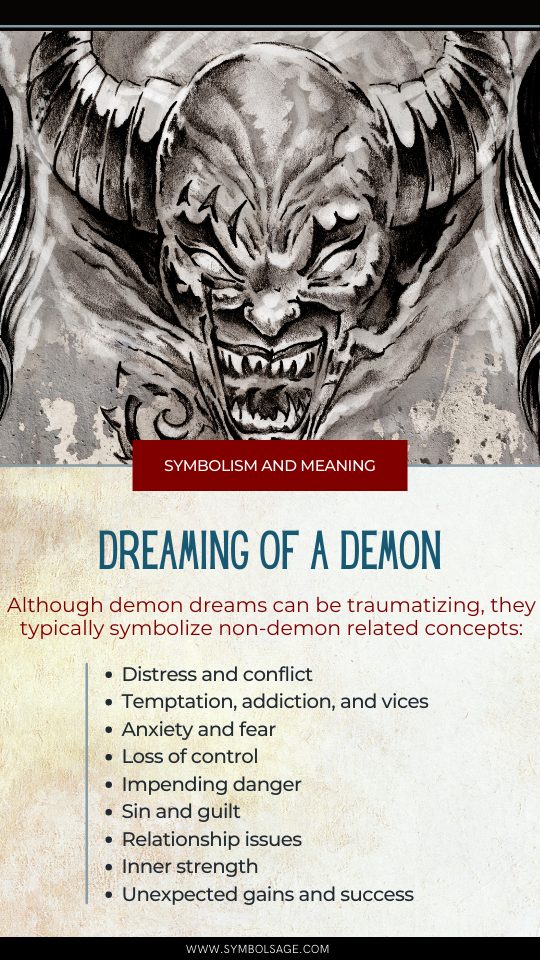
In the realm of personal branding and professional psychology, the symbols that populate our subconscious often serve as metaphors for the internal conflicts we face in our careers. While dreams of the devil are frequently interpreted through the lens of theology or folklore, in a contemporary business context, these images represent the ultimate “brand shadow.” Understanding these visions is less about mysticism and more about identifying the psychological barriers that prevent you from scaling your influence, executing your strategy, or maintaining your integrity in a cutthroat marketplace. When the devil appears in your dream, your mind is likely flagging a misalignment between your public persona and your private values.
The Psychology of the Shadow Brand
In personal branding, we speak often of the “ideal self”—the curated, polished version of our professional identity that we project to clients, stakeholders, and social media followers. However, every strong brand has a shadow: the parts of your ambition, competitive nature, or desire for control that you consciously suppress.
The Manifestation of Suppressed Ambition
Dreaming of a demonic figure often signals that your “hustle” has crossed a line. It is a psychological mirror reflecting the shadow side of high-performance culture. If you are aggressive in your market acquisition or ruthless in your networking, your subconscious may characterize these traits as external enemies. By labeling these behaviors as “the devil,” your mind is warning you that your current trajectory might be compromising your long-term brand equity.
Confronting the Archetype of Deception
The devil is historically the ultimate deceiver. In the context of corporate identity, this archetype appears when you feel like an imposter or when your marketing messages have drifted too far from the truth of your product. If you are currently engaging in “brand washing” or overselling a service that doesn’t deliver, the appearance of such a symbol in your dreams is a classic manifestation of cognitive dissonance. It is a sign that your brain is trying to reconcile your external marketing claims with your internal reality.
Navigating Competitive Fear and Market Hostility
If you are currently engaged in a high-stakes market battle or a tense negotiation, your subconscious may turn to aggressive, symbolic imagery. The devil, in this capacity, represents the existential threat of your competitors.
Identifying the Externalization of Stress
When you work in industries defined by extreme volatility, your stress levels dictate your nocturnal narrative. Dreaming of a malevolent figure is frequently an externalization of market pressures. You feel as though you are losing control or that a faceless force is working against your brand’s progress. By dissecting this dream, you can pinpoint the specific competitive threats that are causing you the most anxiety. Are you afraid of a specific competitor’s new tech stack? Are you worried that a pivot in your business model will lead to ruin? Identifying the “devil” in your dream often helps you identify the “competitor” in your waking life that needs a more concrete strategic response.

The Fear of Losing Control
The devil archetype is fundamentally about power dynamics. In professional settings, this manifests as a fear of losing autonomy. If your brand is being absorbed by a larger entity, or if you are losing your edge in a saturated market, your brain may interpret this loss of agency as a demonic presence. Instead of viewing this as a spiritual event, view it as a management crisis. What systems in your organization have become unmanageable? What processes are failing? Addressing these operational leaks will often cause the “monsters” in your dreams to dissipate, as your subconscious recognizes that you have regained control over your brand’s destiny.
Realigning Your Professional Ethics and Strategy
Perhaps the most constructive way to view a dream of the devil is as an audit of your business ethics. In the digital age, where personal branding is synonymous with authenticity, even a minor breach of integrity can be catastrophic.
The Mirror of Integrity
When you see the devil in your dreams, ask yourself: “Where am I cutting corners?” This isn’t just about legality; it’s about the soul of your business. Are you prioritizing short-term revenue over long-term customer relationships? Are you utilizing growth hacking tactics that border on manipulation? Your dream is likely surfacing a latent sense of guilt or unease regarding these choices. When your brand strategy is fundamentally aligned with your core values, your nights are typically peaceful. Disturbance in your dreams is a high-level KPI indicating that you are compromising your principles for the sake of quarterly growth.
Correcting the Course
Use the intensity of the dream as a catalyst for a brand pivot. If the figure in your dream felt like a tempter—someone offering you a shortcut to success—it is a clear sign that you are being tempted by a strategy that lacks sustainability. This is your cue to re-evaluate your business plan. Ask yourself, “If my competitors knew exactly how I was building this brand, would I be embarrassed?” If the answer is yes, you have found the source of your dream. The devil is not an external spirit; it is the manifestation of the “easy way out” that you know you shouldn’t take.
Translating Nightmares into Strategic Growth
To stop dreaming of symbols that represent dread and conflict, you must turn your attention toward constructive, conscious branding. The process of integrating your “shadow” into your brand identity is the hallmark of a mature leader.
Integrating the Shadow into Your Brand Voice
Rather than fighting the parts of your personality that seem “dark” or aggressive, channel them into your brand positioning. Every successful brand needs a “villain”—or at the very least, a disruptive edge. Perhaps your “devil” is actually your untapped competitiveness, your need to challenge the status quo, or your refusal to play by the established rules of your industry. When you own these traits consciously and integrate them into your brand’s mission, they stop appearing in your dreams as threats and start appearing in your business as powerful market differentiators.

From Fear to Authority
As you shift from a state of fear to a state of strategic authority, the nature of your dreams will change. A leader who is confident in their product, their ethics, and their market position rarely dreams of malevolent archetypes. They dream of growth, of new horizons, and of the next iteration of their business. If you are experiencing recurring dreams, use them as a diagnostic tool for your professional life. Are you operating from a place of anxiety, or a place of vision? By aligning your brand with your authentic identity, you effectively banish the “devils” of doubt and dissonance, leaving you free to focus on what truly matters: building a legacy that can withstand the test of time and market scrutiny.
The interpretation of such a dream within the framework of branding and business strategy allows you to turn a confusing, potentially frightening experience into a actionable set of insights. Your subconscious is a highly efficient processor of your waking experiences; it is constantly analyzing your strategic alignment and your environmental stressors. When it presents you with a symbol as powerful as the devil, do not ignore it. Investigate it as you would investigate a dip in your conversion rates or a negative feedback loop in your PR campaign. The answer lies not in a dream dictionary, but in the honest appraisal of your business, your brand, and the ethics you use to sustain them.
aViewFromTheCave is a participant in the Amazon Services LLC Associates Program, an affiliate advertising program designed to provide a means for sites to earn advertising fees by advertising and linking to Amazon.com. Amazon, the Amazon logo, AmazonSupply, and the AmazonSupply logo are trademarks of Amazon.com, Inc. or its affiliates. As an Amazon Associate we earn affiliate commissions from qualifying purchases.