
In the landscape of computer programming, few concepts are as fundamental as the variable. At its simplest, a variable is a named storage location in a computer’s memory used to hold data that can be accessed or manipulated during the execution of a program. However, merely declaring a variable is often not enough to ensure the reliability of your code. This is where the concept of initialization comes into play. To initialize a variable means to assign it an initial, known value at the time of its creation. Without this critical step, a program may behave unpredictably, leading to the dreaded “undefined behavior” that haunts developers at every level of experience.

The Mechanics of Declaration versus Initialization
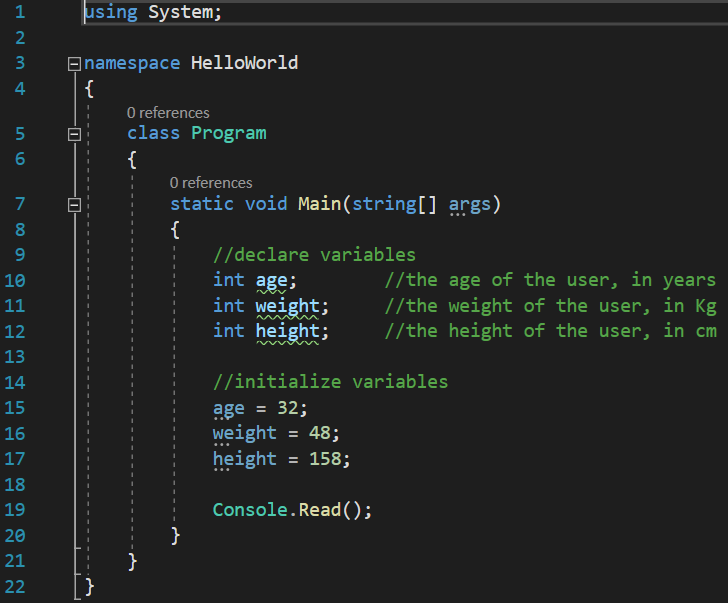
To understand initialization, one must first distinguish it from declaration. In most programming languages, these two actions can occur simultaneously or separately, depending on the language syntax and the developer’s intent.
The Declaration Phase
When you declare a variable, you are essentially telling the compiler or interpreter: “I am going to need a space in memory, and I would like to refer to this space by a specific name.” At this stage, the computer allocates the necessary memory, but it does not necessarily clear out whatever was sitting in that memory address previously. If you are working in a language like C or C++, the variable might contain “garbage values”—the leftover bits and pieces of whatever process last utilized that specific memory block.
The Initialization Step
Initialization is the act of putting a specific, controlled value into that declared memory space. For example, if you declare an integer variable named count and initialize it to zero, you are ensuring that the very first time the program looks at count, it finds 0 instead of a random, high-entropy integer. By initializing, you transition the variable from an unknown, dangerous state to a known, stable state.
The Risks of Uninitialized Variables
Ignoring the initialization process is a frequent source of bugs, particularly in systems-level programming languages. These bugs can be notoriously difficult to track down because they often do not cause a program to crash immediately; instead, they cause the program to perform incorrect calculations based on invalid data.
Logical Errors and Silent Failures
Consider a loop that calculates a running total. If the variable intended to hold the sum is not initialized to zero, it will start with whatever value happened to be in that memory slot. If that slot contains a value like 32,768, your final sum will be off by that exact amount. The program will not throw an error—it will execute perfectly fine from the compiler’s perspective—but the output will be logically incorrect. These types of “silent failures” are the most dangerous in software development because they can propagate through a system for long periods before being detected.
Security Vulnerabilities
Beyond logic errors, uninitialized variables can represent a significant security risk. In environments where memory is shared or reused, an uninitialized variable might inadvertently expose sensitive data from another part of the program—or even another program entirely—that previously occupied that memory space. This can lead to information leakage, where a user sees data they were never intended to access, simply because a variable was not properly sanitized or initialized before its first read operation.
Language-Specific Approaches to Initialization
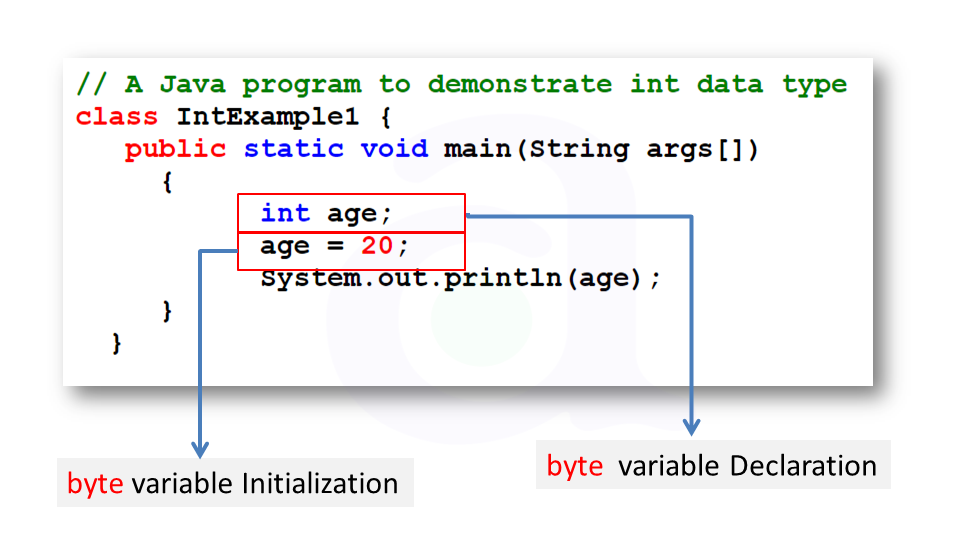
Different programming languages handle variable initialization in vastly different ways, reflecting their underlying design philosophies regarding memory management and safety.
Managed Languages and Default Initialization
Modern, high-level languages like Java, C#, or Python often automate the initialization process. In Java, for instance, class-level member variables are automatically initialized to default values (such as 0 for numbers, false for booleans, or null for objects) if the developer does not explicitly provide one. Python, while dynamically typed, requires an assignment to a name before it can be used, effectively forcing initialization upon first usage. This “safe-by-default” approach significantly reduces the surface area for bugs, though it can occasionally mask issues where a developer assumes a variable is ready for use when it has not yet received its meaningful, intended data.
Manual Initialization in Low-Level Systems
Conversely, languages like C and C++ prioritize performance and manual control. They generally do not perform automatic initialization for local variables because the cost of writing to memory—even a few bytes—can be significant in extreme high-performance contexts. In these languages, the responsibility falls squarely on the developer. Modern static analysis tools and compiler warnings have become highly effective at flagging variables that are used before they are initialized, yet the fundamental requirement to manage this state remains a hallmark of the C and C++ developer experience.
Best Practices for Consistent State Management
Mastering variable initialization is about more than just avoiding bugs; it is about writing clean, readable, and maintainable code. Here are several best practices to ensure your variables are always in a predictable state.
Initialize at the Point of Declaration
The golden rule of variable initialization is to initialize whenever possible at the moment of declaration. By pairing the two actions, you eliminate the “window of opportunity” where a variable exists but lacks a value.
- Instead of:
int score; score = 0; - Use:
int score = 0;
This pattern makes the code more compact and ensures that the variable’s purpose and its starting value are visible to anyone reading the code for the first time.
Minimize Variable Scope
The scope of a variable is the region of the program where it is accessible. A common technique to prevent initialization errors is to keep that scope as narrow as possible. By declaring a variable only when it is actually needed, rather than at the top of a long function, you reduce the time that variable spends in an “uninitialized” state. If a variable is only needed inside a specific if block or for loop, declare it there. This practice naturally encourages initialization, as the variable’s declaration often necessitates its first value assignment.
Use Constants When Data Does Not Change
If a piece of data is intended to be used throughout your program but is not meant to change after its initial assignment, define it as a constant (e.g., const in C++, final in Java, or readonly in C#). Constants force the compiler to ensure that an initial value is provided immediately. This not only prevents accidental reassignment but also removes any ambiguity regarding whether the variable has been initialized.
Conclusion
The concept of initializing a variable serves as a gatekeeper for software reliability. It is the bridge between a mere declaration—a request for space—and the actual functional utility of that space. Whether you are working in a high-level managed environment that handles these details for you or in a systems language where you must manually manage every bit of memory, understanding the “why” behind initialization is vital.
By adopting disciplined habits such as initializing at the point of declaration, limiting variable scope, and leveraging compiler warnings, developers can write code that is not only more robust but also significantly easier to debug. In the end, initialization is about predictability. When a program starts with a known, stable state, it becomes a reliable engine, ready to process the complexities of the tasks we assign to it. Do not leave the state of your memory to chance; ensure that every variable is prepared for the work ahead before the work begins.
aViewFromTheCave is a participant in the Amazon Services LLC Associates Program, an affiliate advertising program designed to provide a means for sites to earn advertising fees by advertising and linking to Amazon.com. Amazon, the Amazon logo, AmazonSupply, and the AmazonSupply logo are trademarks of Amazon.com, Inc. or its affiliates. As an Amazon Associate we earn affiliate commissions from qualifying purchases.