
In the fast-paced world of business and personal branding, the concept of a “mistake” is often treated as a fatal error—a glitch in the system that threatens one’s reputation, bottom line, and market viability. Whether you are a solo entrepreneur building a personal brand or a corporate executive steering a multinational firm, the pressure to maintain a facade of perfection is relentless. However, when we look at the foundational principles of strategy and growth—often mirroring timeless wisdom found in spiritual texts—we find a counterintuitive truth: mistakes are not just inevitable; they are essential assets in the branding lifecycle.

The Strategic Value of the “Product Pivot”
In the realm of brand strategy, what many perceive as a mistake is often merely a poorly executed hypothesis. When a company launches a product that fails to resonate or a marketing campaign that falls flat, the traditional corporate instinct is to bury the evidence. Yet, spiritual wisdom suggests that true wisdom is found in the confession of errors and the subsequent pivot.
From Failure to Iteration
Every successful brand, from Apple to Airbnb, is built upon a graveyard of initial failures. In branding, these are not moral failings; they are data points. When a leader admits, “We were wrong about the target demographic,” they are not signaling weakness. Instead, they are practicing a form of radical transparency that fosters trust. Trust is the ultimate currency in modern marketing. Consumers are increasingly skeptical of brands that claim infallibility. By reframing a mistake as a lesson, you position your brand as human, authentic, and growth-oriented.
The Necessity of Humility in Leadership
The most enduring brands are those that exhibit the humility to recognize when they have strayed from their mission. Just as ancient texts emphasize the need for a “returning” or a turning away from the wrong path, a brand must possess the agility to course-correct. When you anchor your brand strategy in the idea that perfection is an impossible standard, you liberate your team to experiment. Innovation is impossible in a culture where mistakes are met with punishment. By creating a space where errors are openly discussed as learning opportunities, you build a resilient corporate culture that is capable of rapid evolution.
Grace as a Branding Tool: Turning Crisis into Connection
There is an old, profound principle that suggests, “Where sin increased, grace increased all the more.” In a contemporary business context, this translates to the concept of radical accountability. When a brand makes a mistake—whether it is a PR blunder, a faulty software update, or a customer service failure—the recovery is often more important than the error itself.
The Recovery Paradox
When a brand handles a crisis with grace, honesty, and a commitment to restitution, the brand’s reputation often emerges stronger than it was before the error occurred. This is the “Recovery Paradox.” It is the phenomenon where a customer who experiences a problem, which is then handled swiftly and graciously, becomes more loyal to the brand than a customer who never experienced a problem at all.

Transparency as a Competitive Advantage
In an era of digital surveillance, trying to hide a mistake is a losing battle. The truth always surfaces. Leaders who proactively acknowledge their missteps, explain the steps they are taking to rectify them, and offer sincere apologies, strip their critics of ammunition. Grace in business is not about ignoring the mistake; it is about taking full responsibility for it. This level of transparency is rare, and because it is rare, it acts as a powerful differentiator. It creates a human connection that algorithms and polished corporate jargon can never replicate.
The Stewardship of Influence: Learning from Past Missteps
The idea of “stewardship” in spiritual literature refers to the responsible oversight of resources. In the context of personal branding, your influence—your audience, your reputation, your platform—is your greatest resource. Mistaking your own ego for the brand’s mission is one of the most common errors leaders make, and it is usually the one that leads to the most spectacular falls.
Avoiding the Ego Trap
A brand that is built on the personality of a founder is particularly vulnerable to the pitfalls of pride. When a personal brand becomes synonymous with the infallibility of the leader, every mistake becomes an existential threat. To mitigate this, successful personal brands focus on the value they provide to the audience, rather than the greatness of the individual. When you shift the focus from “Look at me” to “Look at what I can do for you,” mistakes become easier to manage. You become a guide, not a guru. A guide can be wrong, but a guru must always be right.
Establishing Institutional Memory
Mistakes are only “sins” against the brand if they are repeated. True stewardship requires that you capture the lessons from every error and integrate them into your brand’s internal manual. This is the professional equivalent of the spiritual discipline of reflection. By maintaining a log of “what didn’t work and why,” you ensure that your brand is not just growing, but maturing. You are building an intellectual moat around your business, preventing future missteps by learning from the ones of the past.
The Long View: Building a Brand of Integrity
Ultimately, what does God say about mistakes? He suggests that while we are imperfect, our intentions and our ability to learn define our character. In business, this translates to a long-term commitment to integrity over short-term gain.
Integrity Over Optics
Many brands make the mistake of focusing on optics—how they appear in the moment—rather than integrity—who they are in the long run. If your brand strategy is built on the pursuit of perfection, you will inevitably fail. If your brand strategy is built on the pursuit of truth and service, you will survive the failures. When a brand aligns its outward messaging with its inward values, it becomes remarkably resilient. Consumers are discerning; they can sense when a brand is pretending. By acknowledging the reality of mistakes, you drop the act and invite your audience into a genuine relationship.
The Legacy of the “Refined” Brand
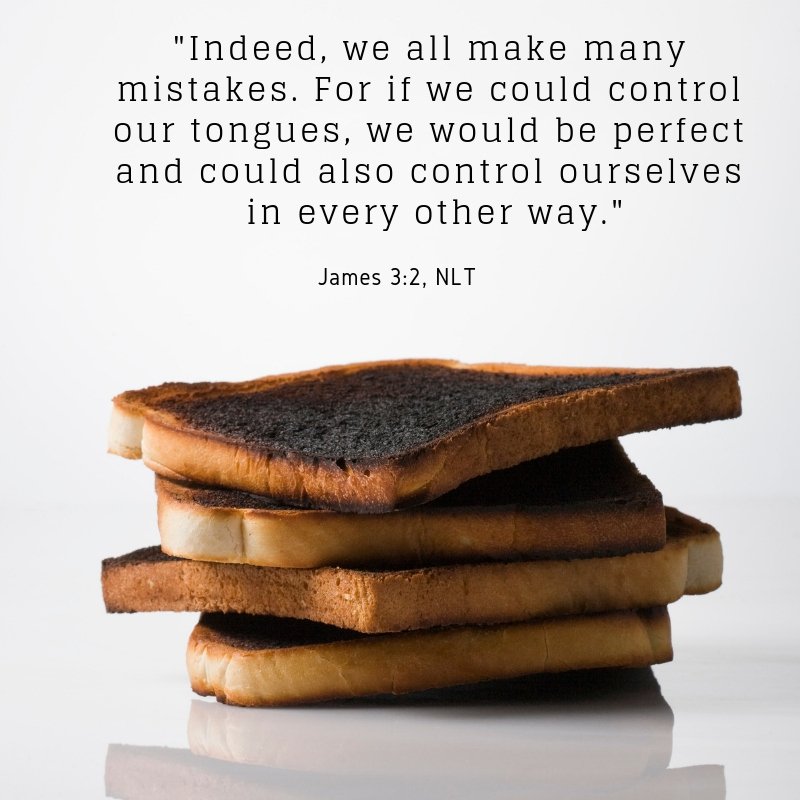
Think of the most resilient brands in history. They have all survived scandals, market shifts, and failures of judgment. They were “refined” by these processes. Just as heat purifies gold, the pressure of a public error can purify a brand, stripping away the inauthentic and leaving behind a clearer, more focused identity.
Do not fear the mistake. In your brand strategy, the goal is not to never make a mistake; the goal is to develop the character, systems, and grace to handle them in a way that serves your mission. When you view mistakes as a necessary part of the journey toward excellence, you remove the paralyzing fear of failure. You stop protecting your reputation and start building your legacy. And in that shift, you find the freedom to create, the courage to lead, and the wisdom to turn every setback into the foundation of your next great success.
aViewFromTheCave is a participant in the Amazon Services LLC Associates Program, an affiliate advertising program designed to provide a means for sites to earn advertising fees by advertising and linking to Amazon.com. Amazon, the Amazon logo, AmazonSupply, and the AmazonSupply logo are trademarks of Amazon.com, Inc. or its affiliates. As an Amazon Associate we earn affiliate commissions from qualifying purchases.