
The Nicene Creed, a foundational statement of Christian belief, holds immense significance for millions worldwide. While its core message has remained consistent for centuries, understanding its words and their implications can be approached through various modern lenses. This article will explore the text of the Nicene Creed, dissect its key declarations, and then, drawing inspiration from the thematic pillars of our website – Tech, Brand, and Money – we will examine how these ancient words resonate and can be understood in the context of our contemporary world.

The Nicene Creed: A Declaration of Core Christian Beliefs
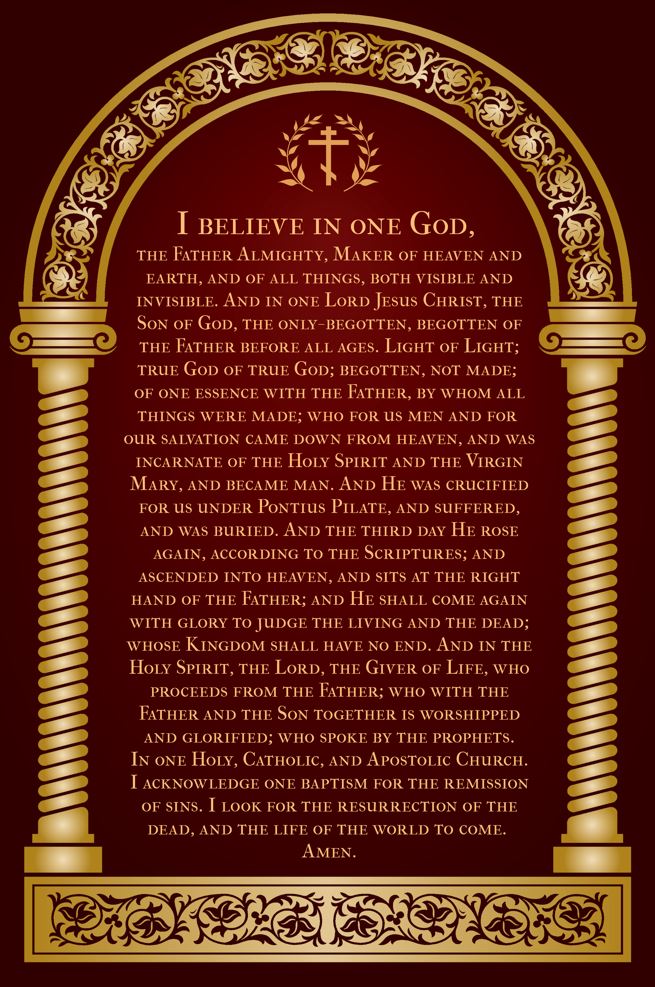
The Nicene Creed, officially the Nicene-Constantinopolitan Creed, is a declaration of faith originally formulated by the First Council of Nicaea in 325 AD and later revised by the First Council of Constantinople in 381 AD. It emerged from a period of intense theological debate within Christianity, specifically addressing the nature of Jesus Christ in relation to God the Father. The Council of Nicaea was convened to address the Arian controversy, which questioned the divinity of Christ. The Creed aimed to establish a clear and unified understanding of Christian doctrine, particularly concerning the Trinity – the belief in one God existing in three co-equal persons: Father, Son, and Holy Spirit.
Let’s delve into the actual words of the Nicene Creed, examining its key affirmations:
We Believe in One God, the Father Almighty
This opening statement sets the stage for monotheism, the belief in a single, all-powerful God. It establishes God as the ultimate creator and sustainer of the universe. The term “almighty” signifies God’s infinite power and sovereignty. This foundational declaration underscores the singularity and absolute authority of the divine.
Maker of Heaven and Earth, and of All Things Visible and Invisible
This phrase elaborates on God’s role as the creator. It emphasizes that God is not just the creator of the physical, observable world (“heaven and earth,” “visible”) but also of the unseen realm (“all things invisible”), which can be interpreted to include spiritual beings, abstract concepts, and the very fabric of existence beyond our immediate perception. This speaks to a comprehensive and all-encompassing act of creation.
And in One Lord Jesus Christ, the Only-Begotten Son of God
Here, the Creed shifts its focus to Jesus Christ. He is identified as “one Lord,” a title that signifies his authority and dominion, placing him on par with God the Father. The phrase “only-begotten Son of God” is crucial. It signifies a unique, eternal relationship between Jesus and the Father, not a created relationship, but one of divine essence. This declaration directly counters the Arian view that Jesus was a created being, subordinate to the Father.
Begotten of the Father Before All Ages
This further clarifies the eternal nature of Jesus’ sonship. He was not created at a specific point in time but existed alongside the Father “before all ages.” This emphasizes his divinity and pre-existence, meaning he is as eternal as God the Father.
God from God, Light from Light, True God from True God
These parallel phrases meticulously articulate the consubstantiality of the Son with the Father. Jesus is not a lesser god or a divine emanation, but “God from God,” sharing the same divine essence. He is “Light from Light,” implying purity and divine illumination, and “True God from True God,” reaffirming his full divinity, identical to that of the Father.
Begotten, Not Made, Consubstantial with the Father
This is arguably the most critical and debated statement of the Creed. “Begotten, not made” directly distinguishes Jesus from all created things. He is of the same divine substance or essence (“consubstantial”) as the Father. This concept, known as homoousios in Greek, was central to the theological debates of the 4th century and remains a cornerstone of orthodox Christian theology.
By Whom All Things Were Made
Echoing the earlier creation statement, this reaffirms Jesus’ integral role in the act of creation. He was not merely an observer or a facilitator, but an active participant in bringing the universe into existence. This further elevates his status and divinity.
Who for Us Men and for Our Salvation Came Down from Heaven
This section marks a pivotal turn from Christ’s eternal divinity to his earthly mission. “For us men” signifies his redemptive purpose, and “for our salvation” clearly states the ultimate goal of his incarnation. The phrase “came down from heaven” underscores his divine origin and his voluntary descent into the human realm.
And Was Incarnate by the Holy Spirit of the Virgin Mary, and Was Made Man
This is the declaration of the Incarnation. Jesus, the divine Son of God, took on human flesh through the miraculous conception by the Holy Spirit in the Virgin Mary. “Was made man” signifies his full humanity, experiencing the limitations and realities of human life. This union of divine and human natures in one person is a central mystery of Christian faith.
And Was Crucified for Us Under Pontius Pilate
This acknowledges the historical reality of Jesus’ crucifixion, specifying the Roman governor under whom it occurred. The phrase “for us” reiterates his atoning sacrifice for humanity’s sins.
He Suffered and Was Buried
These words describe the full extent of Jesus’ earthly suffering and death, culminating in his burial. This demonstrates the reality of his human experience and the completion of his sacrifice.
And Rose Again on the Third Day in Accordance with the Scriptures
This is the cornerstone of Christian hope: the resurrection of Jesus. It affirms his victory over death and sin, occurring “on the third day” and fulfilled “in accordance with the Scriptures,” indicating its prophetic significance and divine plan.
And Ascended into Heaven and Sits at the Right Hand of the Father
Following his resurrection, Jesus ascended back into heaven, taking his glorified human body to the presence of God the Father. Sitting “at the right hand of the Father” signifies his exalted position of authority and intercession.
And He Shall Come Again in Glory to Judge the Living and the Dead
This statement looks forward to Christ’s second coming. He will return “in glory,” not as a suffering servant but as a triumphant king, to “judge the living and the dead.” This judgment implies accountability and the ultimate establishment of God’s kingdom.
Of His Kingdom There Shall Be No End
This declaration affirms the eternal nature of Christ’s reign. His kingdom is not temporary but everlasting, a testament to his ultimate victory and divine authority.
And We Believe in the Holy Spirit, the Lord, the Giver of Life
The Creed concludes with a clear statement of belief in the Holy Spirit, the third person of the Trinity. He is identified as “the Lord,” signifying his divinity, and “the Giver of Life,” highlighting his role in spiritual renewal and sustenance, both for individuals and for the created order.
Who Proceeds from the Father [and the Son]

This phrase, particularly the added bracketed clause in Western traditions (“and the Son,” known as the Filioque clause), describes the procession of the Holy Spirit from both the Father and the Son. This addition, while accepted in most Western churches, has been a point of theological divergence with some Eastern Orthodox churches.
Who with the Father and the Son Together is Worshipped and Glorified
This statement emphasizes the equality and unity of the Holy Spirit with the Father and the Son. All three persons of the Trinity are to be equally worshipped and glorified.
Who Spoke Through the Prophets
This highlights the Holy Spirit’s role in inspiring the prophets of old, revealing God’s will and word throughout history.
And We Believe in One Holy Catholic and Apostolic Church
The Creed concludes with a declaration of belief in the Church. It is seen as “one” (unified), “holy” (set apart by God), “catholic” (universal), and “apostolic” (founded upon the teachings and authority of the apostles).
One Baptism for the Forgiveness of Sins
This affirms the sacrament of baptism as a singular act signifying repentance and the forgiveness of sins, uniting believers into the Church.
We Look for the Resurrection of the Dead
This reiterates the Christian hope in the future resurrection of all people, both believers and non-believers, though with different ultimate destinies.
And the Life of the World to Come. Amen.
The Creed ends with the confident expectation of eternal life in the presence of God, sealed with the word “Amen,” meaning “so be it” or “truly.”
Tech: Decoding Digital Truths and Building Digital Brands
While the Nicene Creed is a theological document, its core principles of truth, identity, and purpose can be surprisingly relevant to the world of technology.
AI, Algorithms, and the Quest for Truth
The Creed’s meticulous definition of God and Christ can be seen as an ancient attempt to define and safeguard truth in a world rife with competing ideas. Today, in the age of AI and sophisticated algorithms, the challenge of discerning truth has become even more complex.
Authenticity in a Synthetic World
The Creed’s emphasis on “True God from True God” speaks to an inherent value of authenticity. In the tech landscape, we grapple with deepfakes, AI-generated content, and the blurring lines between human and artificial creation. How do we establish authenticity in a world where anything can be simulated? This requires robust digital security measures, verification protocols, and a critical mindset when consuming information. Think of the rigorous theological debates that led to the Creed; similarly, we need rigorous processes to verify digital information and protect against malicious manipulation.
Brand Identity in the Digital Age
The Creed is, in essence, a powerful brand statement for early Christianity. It defines its core beliefs, its unique selling proposition (salvation through Christ), and its target audience (all humanity). In the realm of Brand strategy, this is a masterclass. Companies and individuals today strive to craft strong brand identities. The Creed’s clarity and conviction in defining “who we are” and “what we believe” are lessons for modern branding.
Personal Branding and the Nicene Creed’s Declaration of Identity
The Creed is a profound declaration of identity for Christians. It answers fundamental questions: “Who is God?” and “Who are we in relation to God?” This mirrors the modern concept of Personal Branding. What is your core identity? What are your fundamental values? The Creed provides a framework for understanding one’s place in the cosmic order. Similarly, individuals must define their personal brand – their unique value proposition, their authentic self, and their guiding principles. This requires introspection and clear articulation, much like the Creed’s precise theological language.
Building Trust Through Consistent Messaging
The Creed’s consistency over centuries has contributed to its enduring power. For businesses and individuals building a Corporate Identity or personal brand, consistency in messaging and action is paramount. If your declared values (your “Creed”) do not align with your actions, your brand will erode. Technology can aid this through CRM systems, consistent online presence, and robust communication strategies, but the foundational principle remains an authentic alignment between belief and behavior.
Money: Eternal Values in a World of Transaction
The Nicene Creed, while not directly about finance, touches upon themes that have profound implications for our understanding of wealth, purpose, and the eternal perspective.
The Ultimate Value: Beyond Temporal Riches
The Creed declares an eternal kingdom and a life in the world to come, placing ultimate value on spiritual realities rather than temporal possessions. This offers a powerful counterpoint to the relentless pursuit of material wealth that often characterizes modern society.
Investing in the Eternal: A Different ROI
For those interested in Personal Finance and Investing, the Creed prompts a reevaluation of what constitutes a true return on investment. If “His kingdom there shall be no end,” then investments in eternal truths and spiritual well-being might offer a more profound and lasting ROI than solely focusing on financial accumulation. This doesn’t negate the importance of financial planning or Online Income generation, but it offers a framework for prioritizing what truly matters in the long run.
Financial Integrity and the Integrity of Belief
The Creed’s emphasis on truth, righteousness, and the judgment of the living and the dead can be seen as a call for Financial Integrity. Just as theological integrity is vital to the Creed, financial integrity is vital to sound Business Finance and personal financial health. Deception, dishonesty, and unethical practices in finance, like theological error, can have devastating consequences. The pursuit of Side Hustles and Online Income should always be grounded in ethical principles, reflecting a commitment to truth and fairness, mirroring the Creed’s pronouncements on righteous living.
Stewardship and Divine Provision
The Creed’s acknowledgment of God as “the Father Almighty, Maker of Heaven and Earth” implies a sense of stewardship. If God is the ultimate provider, then our financial resources are not solely ours to hoard but are to be managed responsibly. This concept of Stewardship is crucial in Money management, encouraging generosity, responsible giving, and a reliance on divine provision rather than solely on our own efforts.
Conclusion: Enduring Relevance in a Changing World
The Nicene Creed, born from ancient theological discourse, offers a robust framework for understanding core Christian beliefs. When viewed through the lenses of Tech, Brand, and Money, its enduring relevance becomes even more apparent.
In the realm of Tech, it challenges us to define and safeguard truth in a digital age, and to build authentic digital brands. In Brand strategy, it provides a timeless example of clear identity formation and consistent messaging. And in Money, it urges us to consider eternal values, pursue financial integrity, and embrace the concept of stewardship.
The words of the Nicene Creed, therefore, are not merely historical relics but dynamic declarations that continue to inform, challenge, and inspire believers and non-believers alike, offering timeless wisdom for navigating the complexities of our modern world.
aViewFromTheCave is a participant in the Amazon Services LLC Associates Program, an affiliate advertising program designed to provide a means for sites to earn advertising fees by advertising and linking to Amazon.com. Amazon, the Amazon logo, AmazonSupply, and the AmazonSupply logo are trademarks of Amazon.com, Inc. or its affiliates. As an Amazon Associate we earn affiliate commissions from qualifying purchases.