
For many business owners, real estate developers, and homeowners, the term “tax abatement” sounds like a golden ticket—a way to slash overhead costs and improve cash flow. However, navigating the world of tax incentives requires a nuanced understanding of how local governments use these tools to drive economic development. A tax abatement is, fundamentally, a temporary reduction or elimination of real estate or business taxes granted by a government entity. It is a strategic tool designed to incentivize specific activities, such as building in an underdeveloped area, rehabilitating historic structures, or bringing new jobs to a municipality.

While the concept seems straightforward—pay less in taxes—the execution involves complex legal agreements, sunset clauses, and specific performance requirements. Understanding the mechanics of these programs is essential for anyone looking to optimize their financial strategy and leverage government policy to their advantage.
How Tax Abatements Work in Practice
At its core, a tax abatement is an economic development tool. Municipalities, counties, and sometimes states offer these incentives to entice private investment that might not otherwise occur. When a developer builds in a high-risk area or a corporation moves its headquarters to a specific city, they are taking actions that benefit the public interest. In exchange, the government agrees to reduce the tax burden on that property for a set period.
The Mechanism of Reduction
Tax abatements do not usually wipe out your tax bill entirely. Instead, they often freeze the assessed value of a property at its pre-development level for a specific number of years. If you purchase an empty lot for $100,000 and invest $5 million to build a state-of-the-art office complex, your taxes would normally skyrocket due to the increased property value. Under an abatement, the city might agree to tax you based on the original $100,000 valuation for the next 10 years, allowing you to reap the benefits of the improved asset without the crushing immediate tax liability.
Eligibility and Application
You cannot simply ask for an abatement and expect it to be granted. Most programs are codified in local statutes and are tied to specific geographical “Enterprise Zones” or “Revitalization Districts.” To qualify, applicants must typically submit a formal proposal detailing the scope of their investment, the projected number of jobs created, and the anticipated community impact. Local authorities review these proposals to ensure they align with the city’s master plan.
The Strategic Benefits of Abatements
From a business finance perspective, a tax abatement is a powerful lever for capital management. It is not merely a cost-saving measure; it is a tool that shifts the internal rate of return (IRR) on a project, making otherwise marginal investments viable.
Improving Cash Flow and ROI
The immediate impact of a tax abatement is an improvement in net operating income (NOI). By lowering fixed operating costs during the critical “stabilization” phase of a new project, developers and business owners can allocate those funds toward debt service, reinvestment in technology, or scaling their workforce. This liquidity is especially vital during the first few years of a business venture, when capital expenditures are high and revenue streams are still maturing.
Mitigating Development Risk
Large-scale real estate projects carry significant risks, including market volatility, construction delays, and interest rate fluctuations. By locking in a predictable, lower tax liability, investors can hedge against some of the uncertainties inherent in long-term development. This predictability makes projects more attractive to lenders and equity partners, who view the abatement as a sign of government support and a de-risking mechanism.

The Multiplier Effect
For a city, the abatement is an investment. Even if the city collects less revenue today, it is gambling on a higher tax base tomorrow. Once the abatement expires, the property is returned to the tax rolls at its full, improved market value. In many cases, the growth in the tax base after the abatement expires far exceeds what the city would have collected had the property remained undeveloped or dilapidated.
Risks, Pitfalls, and Compliance
While tax abatements offer significant financial advantages, they are not without peril. Engaging in an abatement agreement creates a contractual obligation between the private party and the public sector, and failure to meet the terms of that contract can have severe consequences.
Clawback Provisions
The most significant risk associated with tax abatements is the “clawback.” If a business receives an abatement based on the promise of creating 50 new jobs but only creates 20, or if it abandons the project before the expiration date, the city may demand the repayment of all previously forgiven taxes. These clawback provisions are strictly enforced, and they can leave a business in a precarious financial position if not properly accounted for in financial modeling.
The Administrative Burden
Compliance is rarely a “set it and forget it” task. Most abatement programs require annual or biannual reporting to verify that the taxpayer is still meeting the conditions set forth in the initial agreement. This requires diligent record-keeping and often necessitates the involvement of legal counsel or specialized tax advisors to ensure that every metric—whether it be headcount, payroll, or property maintenance—is reported accurately.
Political and Public Perception
Tax abatements are occasionally met with public resistance, particularly if they are perceived as “handouts” to large corporations at the expense of public schools or infrastructure funding. Businesses must be prepared for the scrutiny that comes with receiving public subsidies. Maintaining transparent communication and emphasizing the tangible benefits provided to the community—such as infrastructure improvements or job training programs—is a necessary part of the modern corporate strategy.
Evaluating Whether an Abatement is Right for You
Deciding to pursue a tax abatement is a decision that requires a sophisticated cost-benefit analysis. Before entering into a long-term agreement with a municipality, consider the following factors:
The “But-For” Test
Ask yourself: “Would I move forward with this project if the abatement were not available?” If the answer is no, the abatement is the cornerstone of your project’s viability. If the answer is yes, you must then calculate whether the administrative costs and potential risks of the abatement outweigh the financial benefits.
Analyzing the Timeline
Consider the duration of the abatement in relation to your exit strategy. If you plan to sell the property or the business in five years, but the abatement period is 15 years, ensure that the incentive is transferable to a new buyer. An abatement that stays with the property can be a massive selling point, potentially increasing your exit valuation. Conversely, if the abatement is tied strictly to your specific business operations, selling the assets could trigger a termination of the agreement.
Long-Term Tax Liability
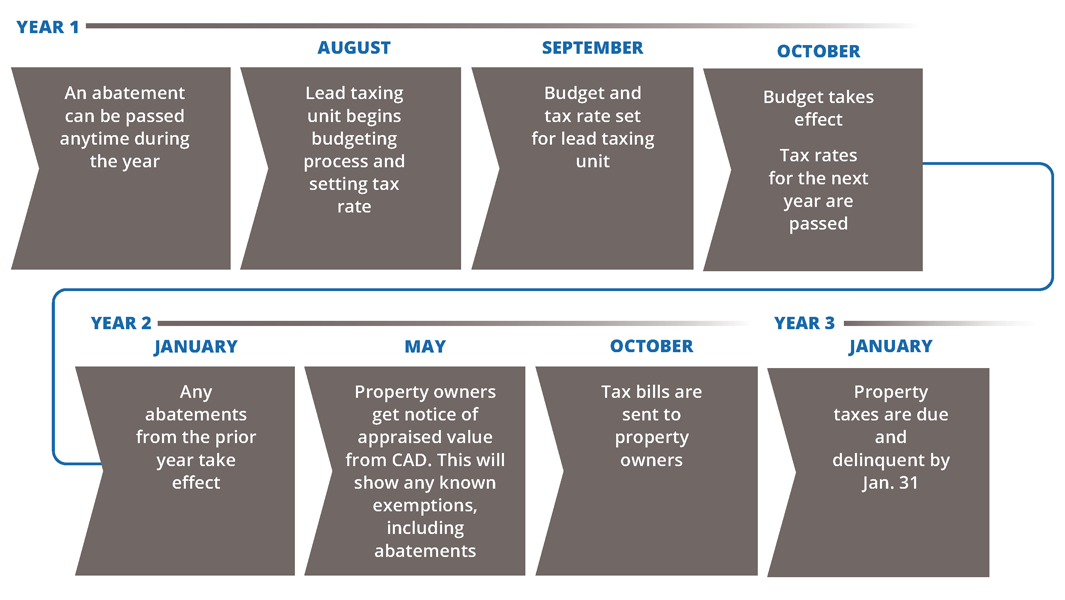
Understand what happens when the “tax holiday” ends. Many businesses make the mistake of failing to plan for the “tax cliff”—the moment when the property is suddenly taxed at its full, market-value rate. Your financial projections must account for this eventual increase in operating expenses. If your business model cannot support the full tax burden once the abatement expires, you may be building a foundation for future financial distress.
Tax abatements serve as a bridge between public policy goals and private sector innovation. They are a sophisticated tool in the arsenal of business finance, capable of turning ambitious visions into profitable realities. However, like any complex financial instrument, they demand rigorous analysis, ironclad compliance, and a strategic view of the long-term economic landscape. By mastering the nuances of these incentives, you can effectively lower your operational costs and position your business for sustained growth.
aViewFromTheCave is a participant in the Amazon Services LLC Associates Program, an affiliate advertising program designed to provide a means for sites to earn advertising fees by advertising and linking to Amazon.com. Amazon, the Amazon logo, AmazonSupply, and the AmazonSupply logo are trademarks of Amazon.com, Inc. or its affiliates. As an Amazon Associate we earn affiliate commissions from qualifying purchases.