
In the fast-paced world of modern technology, where downtime can translate into millions of dollars in lost revenue and catastrophic damage to user trust, the role of the Reliability Engineer has emerged as a cornerstone of digital infrastructure. While the job title sounds administrative or purely mechanical to the uninitiated, it is actually one of the most high-stakes technical positions in the software engineering ecosystem. A Reliability Engineer sits at the intersection of development and operations, tasked with the mission of ensuring that systems remain robust, scalable, and—above all—highly available.
The Core Mandate: Bridging the Gap Between Code and Uptime
At its most fundamental level, a Reliability Engineer is a software engineer who specializes in the “operational health” of a system. The traditional model of software development often saw a divide between developers, who focused on shipping new features, and operations teams, who were responsible for keeping the lights on. This silos-based approach frequently led to friction: developers pushed code that wasn’t optimized for production, and operations teams struggled to patch buggy deployments.
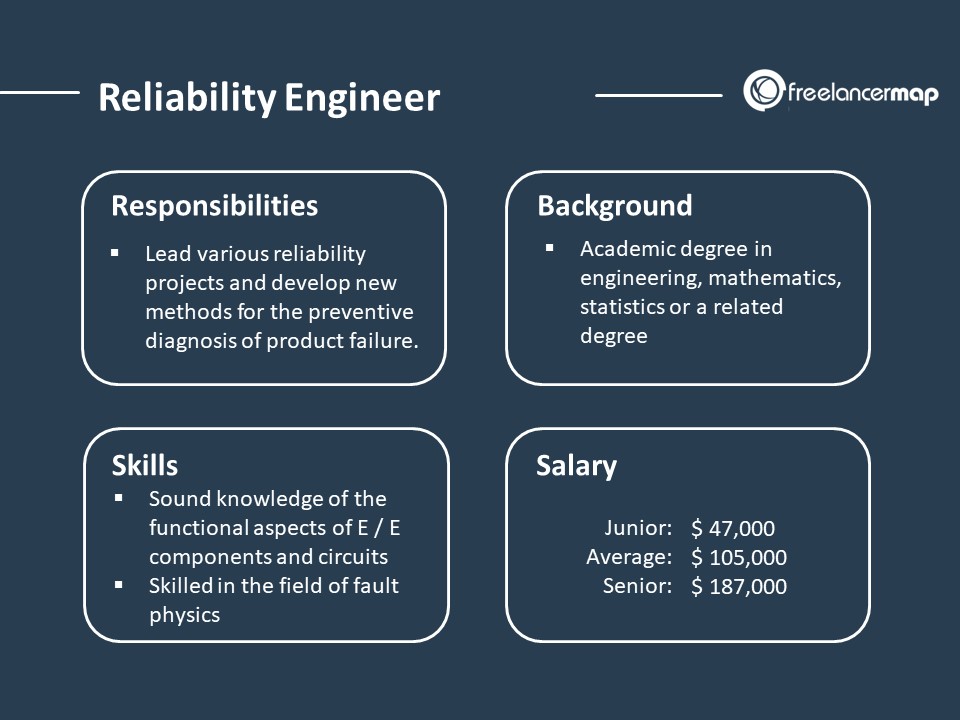
Reliability Engineering (often implemented via Site Reliability Engineering, or SRE) effectively dismantles these silos. The Reliability Engineer applies software engineering principles to infrastructure problems. Instead of manually fixing servers or wrestling with configuration issues, they write code to automate the processes that keep the platform stable.
The Philosophy of “Everything as Code”
Reliability Engineers treat infrastructure as a product. They manage servers, network configurations, and database deployments through version-controlled code. By utilizing Infrastructure as Code (IaC) tools like Terraform, Ansible, or Kubernetes manifests, they ensure that the production environment is reproducible, auditable, and immutable. This removes the “snowflake server” problem, where a machine is so uniquely configured that nobody knows how to fix it when it inevitably breaks.
Managing the Tension Between Speed and Stability
The primary challenge of this role is managing the inherent conflict between the desire for rapid feature deployment and the need for system stability. Developers want to ship code daily; the business wants 99.999% uptime. The Reliability Engineer acts as the arbiter of this tension, often through the use of Error Budgets. An Error Budget is a quantitative measurement of how much downtime or “unreliability” a system can afford within a set period. If a team burns through their budget by pushing unstable code, the Reliability Engineer has the authority to slow down deployments until the stability of the platform is restored.
The Operational Toolkit: Monitoring, Observability, and Incident Response
Reliability Engineers don’t just watch servers; they build complex telemetry systems to observe the “heartbeat” of an application. In modern distributed systems—where a single user request might travel through a dozen microservices, three databases, and a global content delivery network—traditional monitoring is insufficient.
Moving from Monitoring to Observability
Monitoring tells you if the system is broken (e.g., “Is the CPU usage high?”). Observability tells you why it is broken (e.g., “Why is this specific database query hanging in the checkout flow?”). Reliability Engineers implement distributed tracing, structured logging, and high-cardinality metrics. They spend a significant portion of their time refining alerts to ensure that they are actionable. A “noisy” alert system that fires during a false positive is a recipe for developer burnout and “alert fatigue,” which inevitably leads to ignoring genuine production incidents.
The Art of Incident Management
When the worst-case scenario occurs—a full-scale outage—the Reliability Engineer is the first responder. They are experts in incident command, coordinating communication between engineering teams, management, and stakeholders. Their goal is twofold: minimize the Time to Detect (TTD) and the Time to Mitigate (TTM).
Once the fire is extinguished, the Reliability Engineer performs a “Blameless Post-Mortem.” This is a cultural and technical practice where the team analyzes what went wrong without pointing fingers. The focus is strictly on process and technical failure points. By documenting the incident and identifying systemic weaknesses, the Reliability Engineer ensures that the same failure never happens twice, gradually increasing the system’s “fault tolerance.”
Engineering for Scale: The Capacity and Efficiency Frontier
Beyond the immediate fire-fighting, the Reliability Engineer is a long-term strategist. As a tech product grows, the infrastructure that supported 10,000 users will inevitably collapse under 10 million users. Reliability Engineers are responsible for capacity planning and performance optimization to prevent these scaling bottlenecks.
Load Testing and Capacity Forecasting
Reliability Engineers simulate massive traffic surges to identify the breaking points of a system. They work with performance engineers to load-test microservices, identifying memory leaks, locking issues in databases, and network latency bottlenecks. By forecasting growth, they ensure that the necessary resources are provisioned ahead of demand, preventing the infrastructure from becoming the primary constraint on business growth.
Efficiency as an Engineering Metric
In cloud-native environments, inefficiency is expensive. An application that is poorly written or poorly configured might consume twice the necessary cloud compute power. Reliability Engineers analyze cloud spending and resource utilization, optimizing Kubernetes clusters and refactoring inefficient service architectures. In this sense, the role is not just about keeping the site up—it is about keeping the site cost-effective. They act as stewards of the company’s cloud budget, ensuring that performance optimizations directly correlate to reduced operational costs.
Building Resilience: Chaos Engineering and Defensive Design
The ultimate goal of a Reliability Engineer is to build a system that is resilient enough to heal itself. This is where the practice of “Chaos Engineering” comes in—a discipline made famous by companies like Netflix.
Embracing Failure via Chaos Engineering
Reliability Engineers proactively inject faults into their production systems to see how they behave. They might kill a primary database, introduce network latency between data centers, or simulate a region-wide outage in the middle of a workday. The idea is that if the system is going to break, it is better to break it on your own terms during a controlled experiment than during a busy holiday shopping season. By observing how the system fails, they can implement “circuit breakers” and “retry logic” that allow the system to degrade gracefully rather than collapsing entirely.
Designing for Distributed Systems
Reliability Engineers spend their time obsessing over the “fallacies of distributed computing”—the false assumptions that the network is reliable, latency is zero, and bandwidth is infinite. They design systems with the assumption that every component will fail at some point. This leads to the implementation of patterns such as:
- Redundancy: Ensuring no single point of failure exists.
- Auto-scaling: Configuring infrastructure to automatically expand and shrink based on traffic load.
- Failover protocols: Designing automated pathways to redirect traffic if a primary service goes offline.

The Future of Reliability: AI and Autonomous Operations
As the complexity of software systems continues to grow, human operators can no longer keep up with the volume of data generated by modern infrastructures. The next frontier for the Reliability Engineer is the integration of Artificial Intelligence and Machine Learning (often termed AIOps) into the reliability stack.
Reliability Engineers are beginning to leverage AI tools to automate anomaly detection. Instead of manually setting static thresholds for alerts (which are often too rigid), they are deploying machine learning models that learn “normal” behavior and alert only when an deviation occurs that fits a known failure pattern. This reduces the cognitive load on engineers and speeds up incident response times.
However, even with the rise of AI, the human element remains vital. The Reliability Engineer is the architect of these automated systems. They must decide what is worth automating, how to build safe guardrails for AI interventions, and how to maintain the underlying logic of the platform.
In summary, the Reliability Engineer is a high-level software engineer, a data analyst, and a crisis manager rolled into one. They are the invisible force that allows the digital economy to function at scale. By treating infrastructure as a critical software product, they ensure that when a user clicks a button, the system responds—predictably, reliably, and consistently.
aViewFromTheCave is a participant in the Amazon Services LLC Associates Program, an affiliate advertising program designed to provide a means for sites to earn advertising fees by advertising and linking to Amazon.com. Amazon, the Amazon logo, AmazonSupply, and the AmazonSupply logo are trademarks of Amazon.com, Inc. or its affiliates. As an Amazon Associate we earn affiliate commissions from qualifying purchases.