
Inflation is often described as the “silent thief” of the financial world. It represents the gradual decrease in the purchasing power of money, meaning that each dollar, euro, or pound you own buys fewer goods and services today than it did yesterday. For individuals managing personal finances, investors seeking to protect their portfolios, and business owners trying to maintain profit margins, understanding how to calculate the inflation rate is not just an academic exercise—it is a fundamental skill for survival in a modern economy.
By mastering the calculation of inflation, you gain the ability to measure the “real” value of your returns, adjust your budget for rising costs, and make informed decisions about where to allocate your capital. This guide provides a deep dive into the mechanics of inflation, the mathematical formulas required to track it, and the strategic implications for your money.
Understanding the Foundation of Inflation Measurement
Before diving into the mathematics, it is essential to understand what exactly we are measuring. Inflation is not the rise in price of a single item, like a gallon of milk or a liter of gasoline. Instead, it is the broad increase in prices across an entire economy over a specific period. To track this, economists and financial institutions use various indices, the most prominent being the Consumer Price Index (CPI).
The Consumer Price Index (CPI) Explained
The CPI is the most common benchmark used to calculate inflation. It represents a “market basket” of goods and services that a typical urban consumer purchases. This basket includes everything from food and energy to healthcare, transportation, and housing costs. By tracking the price of this collective basket over time, financial analysts can determine the rate at which the general cost of living is increasing.
Nominal vs. Real Value
In the world of personal finance, the distinction between nominal and real value is critical. Nominal value refers to the face value of money—for example, a $5,000 raise at work. However, the “real” value considers how much that $5,000 can actually buy after accounting for inflation. If your salary increases by 3% but inflation is at 5%, your real purchasing power has actually decreased. Understanding how to calculate inflation allows you to bridge the gap between these two figures.
The Step-by-Step Guide to Calculating Inflation Rate
Calculating the inflation rate is a straightforward process once you have the necessary data points. Most calculations are based on comparing the price of a basket of goods at two different points in time: the “base period” and the “current period.”
The Basic Inflation Formula
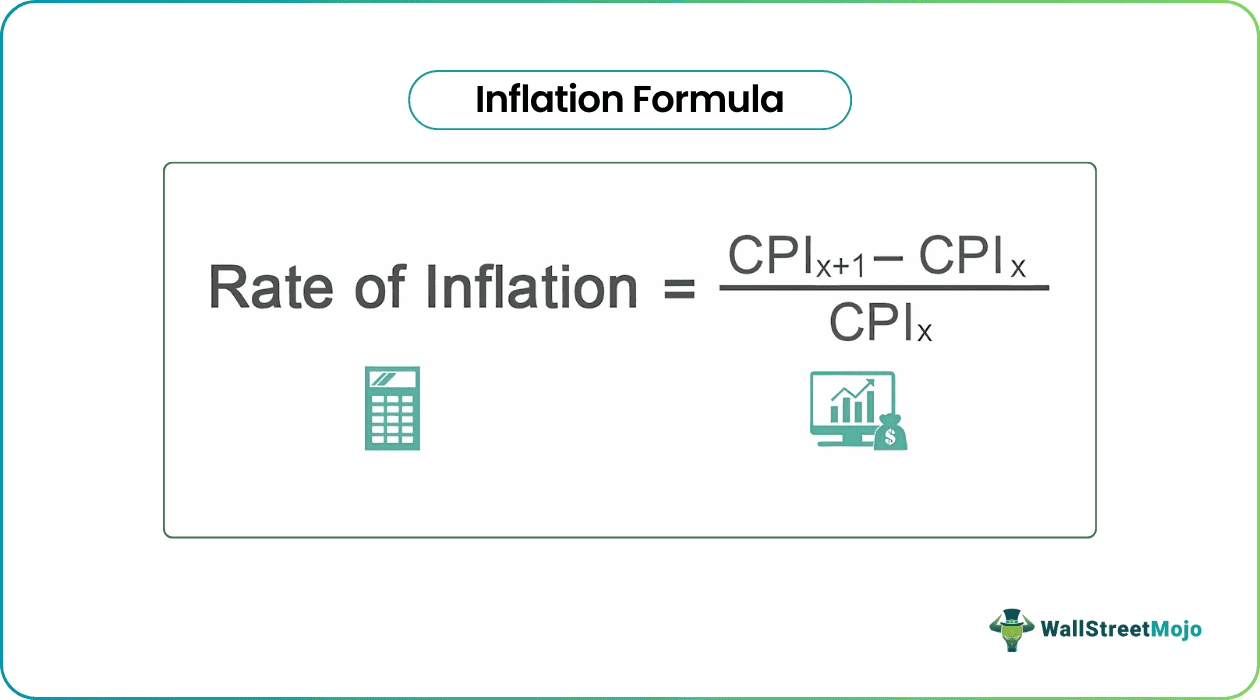
To find the percentage change in the price level, you use the following formula:
Inflation Rate = [(CPI at End Date – CPI at Start Date) / CPI at Start Date] x 100
This formula tells you the percentage increase (or decrease, in the case of deflation) in prices over the specified timeframe.
A Practical Example of the Calculation
Suppose you want to calculate the inflation rate between Year A and Year B.
- Identify the Starting Index: In Year A, the Consumer Price Index was 250.
- Identify the Ending Index: In Year B, the Consumer Price Index rose to 265.
- Subtract the Start from the End: 265 – 250 = 15.
- Divide by the Starting Index: 15 / 250 = 0.06.
- Multiply by 100 to get the Percentage: 0.06 x 100 = 6%.
In this scenario, the inflation rate was 6%. This means that, on average, goods and services cost 6% more in Year B than they did in Year A. If you had $1,000 in a savings account that earned 0% interest during that year, your “real” wealth would have effectively dropped to $940 in terms of purchasing power.
Adjusting for Different Timeframes
While annual inflation is the most commonly cited figure, you can use the same formula for monthly or quarterly data. If you are looking at long-term financial planning, you might use “Cumulative Inflation,” which calculates the total price increase over several decades. This is particularly useful for retirement planning, as it illustrates how much more expensive life might be 20 or 30 years from now.
Different Types of Inflation Measures and Their Financial Significance

Not all inflation is created equal. Depending on your financial goals—whether you are an everyday consumer, a manufacturer, or a stock market investor—different metrics might be more relevant to your situation.
Core Inflation vs. Headline Inflation
When you hear inflation figures in the news, you will often hear two different numbers. “Headline inflation” is the raw figure derived from the entire CPI basket. “Core inflation,” however, excludes volatile categories like food and energy. For long-term financial planning and central bank policy, core inflation is often considered a more reliable indicator of long-term price trends because it filters out the temporary “noise” of fluctuating oil prices or seasonal harvests.
The Producer Price Index (PPI)
While the CPI measures what consumers pay, the Producer Price Index (PPI) measures the change in prices received by domestic producers for their output. For business owners and investors in the manufacturing or retail sectors, the PPI is a “leading indicator.” If the PPI rises, it means it is becoming more expensive for companies to produce goods. Eventually, these companies will likely pass those costs on to consumers, leading to a future rise in the CPI.
The Personal Consumption Expenditures (PCE) Price Index
The Federal Reserve in the United States often prefers the PCE over the CPI. The PCE is broader and accounts for “substitution bias”—the idea that if the price of beef goes up, consumers will naturally buy more chicken. For serious investors, tracking the PCE provides insight into how the government might adjust interest rates, which directly impacts mortgage rates and bond yields.
The Impact of Inflation on Your Financial Strategy
Understanding the math is the first step; applying it to your financial life is the second. Inflation dictates the “hurdle rate” for your investments. If your money isn’t growing faster than the rate of inflation, you are losing wealth.
Protecting Your Savings and Purchasing Power
Standard savings accounts often offer interest rates that fall below the rate of inflation. To protect your purchasing power, you must seek financial tools that offer a “real” return. This might include High-Yield Savings Accounts (HYSAs), but even those may only break even with inflation. For long-term wealth preservation, understanding the inflation rate helps you realize when it is time to move cash into more productive assets.
Inflation-Adjusted Investing (TIPS and Commodities)
For investors, certain assets are specifically designed to hedge against inflation:
- Treasury Inflation-Protected Securities (TIPS): These are government bonds where the principal value increases with inflation (as measured by the CPI).
- Real Estate: Property values and rents often rise in tandem with inflation, making real estate a classic “hard asset” hedge.
- Commodities: Gold, oil, and agricultural products often see price increases during inflationary periods, providing a buffer for a diversified portfolio.
The Impact on Debt and Borrowing
Inflation isn’t always bad news for everyone. For those with fixed-rate debt, such as a 30-year fixed mortgage, high inflation can actually be beneficial. As prices and wages rise due to inflation, the “real” value of the debt stays the same, meaning you are paying back the loan with “cheaper” dollars. Conversely, for those with variable-interest debt, inflation often leads to higher interest rates, increasing the cost of borrowing.
Business Finance: Managing Inflation as an Entrepreneur
For business owners, the ability to calculate and project inflation is vital for maintaining solvency and profitability. Inflation affects every part of the income statement, from the cost of goods sold (COGS) to operating expenses.
Pricing Strategies and Profit Margins
If a business does not account for a 5% inflation rate in its annual pricing review, it essentially takes a 5% hit to its margins. Savvy business owners use inflation calculations to implement “inflation-indexed” pricing or to negotiate long-term contracts with suppliers that lock in current prices before they rise.
Supply Chain and Cost Management
When inflation is high, the “Just-in-Time” inventory model can become risky. If prices are rising rapidly, it may make financial sense to “stock up” on raw materials at current prices to avoid higher costs in the next quarter. By calculating the “Expected Rate of Inflation,” businesses can perform a cost-benefit analysis on inventory storage versus the risk of future price hikes.
Capital Allocation and Budgeting
When planning for future growth, businesses must use an “inflation-adjusted” discount rate for their Net Present Value (NPV) calculations. If a project is expected to return 8% annually, but inflation is at 6%, the project’s real value to the company is significantly lower than it appears on paper. Professional financial management requires looking past the nominal percentages to the real economic value created.
Conclusion: Navigating an Inflationary Environment
Calculating the inflation rate is more than just a mathematical formula; it is a vital lens through which we view the health of our finances. Whether you are calculating the CPI to see how much your household budget needs to increase, or you are an investor adjusting your portfolio to ensure a real rate of return, staying informed is your best defense against the eroding power of inflation.
In a world where economic conditions can shift rapidly, the ability to quantify the rising cost of living allows for proactive rather than reactive financial management. By consistently monitoring inflation metrics and understanding their impact on savings, investments, and business operations, you can ensure that your financial strategy remains robust, no matter which way the economic winds blow.
aViewFromTheCave is a participant in the Amazon Services LLC Associates Program, an affiliate advertising program designed to provide a means for sites to earn advertising fees by advertising and linking to Amazon.com. Amazon, the Amazon logo, AmazonSupply, and the AmazonSupply logo are trademarks of Amazon.com, Inc. or its affiliates. As an Amazon Associate we earn affiliate commissions from qualifying purchases.