
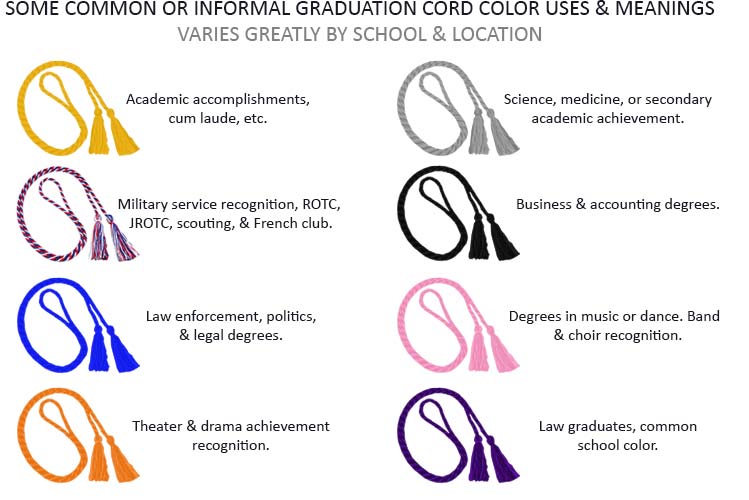
In the meticulously curated world of academic commencement, every color, knot, and tassel serves as a silent language. While the cap and gown establish the baseline of institutional unity, the addition of graduation cords—often referred to as ropes—transforms the graduate into a walking billboard for their personal achievements, honors, and affiliations. Among the vibrant spectrum of colors draped across the shoulders of graduates, the yellow rope, typically representing gold, stands as a symbol of high honors, excellence, and specialized merit.
In the landscape of personal branding, understanding the significance of these regalia elements is not merely an exercise in tradition; it is an analysis of how professional identity is constructed, signaled, and perceived. The yellow cord serves as a powerful visual asset, a tangible mark of distinction that communicates a graduate’s “brand equity” before they even shake the hand of the dean.
The Semiotics of Academic Color: Gold as a Premium Brand Marker
In the realm of strategic design and color psychology, gold—and by extension, the bright yellow often used in graduation cords—is universally associated with prestige, success, and high value. Just as a luxury brand utilizes gold in its logo or packaging to signify a premium tier of service, educational institutions utilize gold cords to differentiate their highest-performing students.
Decoding the Distinction
For most universities, the yellow or gold cord is reserved for students who have achieved a specific Cumulative Grade Point Average (GPA). It is the visual equivalent of a “top-tier” certification. When an employer or a peer looks at a graduate adorned in gold, the color serves as an immediate, non-verbal testimonial to that individual’s discipline, time management, and intellectual consistency.
Consistency in Signaling
Personal branding relies heavily on consistency. By awarding these cords, institutions create a standardized signal that transcends individual majors or departments. Whether a student is graduating with a degree in Engineering, Fine Arts, or Philosophy, the presence of the gold cord creates a cross-disciplinary metric of excellence. This is the academic equivalent of a “blue checkmark” or a “verified” status—a signal that the individual has met a pre-defined standard of excellence that is recognized by the broader professional community.
The Graduation Cord as a Tool for Personal Branding
Graduation is the formal transition from an academic persona to a professional one. For many, it is the first time they must synthesize their collegiate experiences into a narrative that will appeal to future employers, clients, or professional networks. The regalia worn during this transition acts as a prologue to the résumé.
Curating Your Professional Identity
When a graduate chooses to wear their earned cords, they are making a deliberate decision about their professional narrative. They are highlighting a specific facet of their collegiate journey. If you have earned a gold cord through academic excellence, you are essentially “branding” yourself as a high-achiever who excels under rigorous systems.
The Psychology of Visual Proof
In the modern job market, where digital profiles dominate, the physical reality of graduation regalia provides a rare moment of “proof of work.” Unlike a digital badge on LinkedIn, which can be claimed by anyone, the graduation cord is a verified, institutional endorsement. It tells a story of perseverance. The yellow rope serves as an anchor for the graduate’s story, allowing them to frame their transition into the workforce as a continuation of the success they established during their undergraduate years. It bridges the gap between past academic performance and future professional potential.

Leveraging Academic Honors in Career Strategy
The symbolism of the yellow cord should not be left on the stage at the conclusion of the commencement ceremony. Savvy graduates integrate the recognition represented by these cords into their long-term career strategy. Recognizing the value of these symbols is part of managing one’s corporate and personal identity.
Integrating Cords into Your Professional Narrative
While one does not wear graduation cords to a job interview, the meaning behind them is an essential component of the “About Me” section of a CV or professional website. Highlighting that you graduated with honors—represented by the gold or yellow cord—is an exercise in strategic self-promotion. It is a subtle way to validate your credentials without relying solely on the degree itself.
Networking with Symbols of Authority
In networking environments, mentioning your academic accolades serves as a conversational hook. It allows you to pivot from the general “What do you do?” to “My academic background focused on [x], which led to me graduating with honors in [y].” This shifts the focus from your current status to your track record of excellence. The yellow cord, therefore, becomes a shorthand for a deeper conversation about your commitment to excellence, a quality that is highly transferable to any corporate or creative field.
Institutional Design and the Evolution of Academic Pride
The use of colored ropes and cords is a product of deliberate institutional design. Universities and colleges are brands in their own right, and the way they manage their commencement ceremonies says a lot about their identity. The yellow cord is a legacy tool, used to foster a sense of pride among alumni and to reinforce the institution’s commitment to rigor.
The Role of Corporate Identity in Academics
Each institution has a specific “brand voice.” Some universities use yellow cords to signify GPA-based honors, while others might use them to denote membership in specialized academic honor societies (such as Phi Beta Kappa). Understanding why your specific university chose a yellow cord is an exercise in brand literacy. It requires looking at the institution’s handbook or commencement guide to understand the specific criteria required to “earn” that color. By participating in this tradition, you are aligning yourself with the established brand identity of your alma mater.
The Future of Traditional Signaling
As educational models evolve to include more remote learning, micro-credentials, and digital certifications, the value of traditional, physical symbols like the graduation cord remains high. There is a psychological weight to physical artifacts that digital credentials sometimes struggle to replicate. The yellow rope is a physical manifestation of a multi-year investment. It represents the “ROI” (Return on Investment) of the student’s time and effort. As professionals, we should value these symbols not just as remnants of a ceremony, but as artifacts that prove we have successfully navigated the brand standards of our foundational institutions.

Final Reflections on the “Gold Standard”
The yellow ropes at graduation are more than just accessories; they are the visual realization of a personal brand. They signify that the graduate has met a high-level requirement, established their value, and is prepared to enter the workforce with a badge of excellence. Whether you are a student preparing for your own ceremony or a professional reflecting on your own academic journey, recognize that these cords represent the intersection of institutional prestige and individual merit.
By understanding the semiotics of these colors, you gain a clearer perspective on how signals of excellence function in the real world. You are not just wearing a piece of polyester; you are wearing a symbol of your capability. Use that symbol wisely as you transition into your professional life. Build on the excellence that the gold cord represents, and continue to cultivate that same standard of performance throughout your career. In the competitive marketplace of ideas and talent, your brand is the most important asset you own. Treat your achievements—and the symbols that represent them—with the strategic importance they deserve.
aViewFromTheCave is a participant in the Amazon Services LLC Associates Program, an affiliate advertising program designed to provide a means for sites to earn advertising fees by advertising and linking to Amazon.com. Amazon, the Amazon logo, AmazonSupply, and the AmazonSupply logo are trademarks of Amazon.com, Inc. or its affiliates. As an Amazon Associate we earn affiliate commissions from qualifying purchases.