
In the complex ecosystem of software development, the bridge between an idea and a seamless user experience is built by Quality Assurance (QA) Analysts. While developers are tasked with the architecture and construction of applications, the QA Analyst acts as the ultimate gatekeeper, ensuring that the final product is not only functional but resilient, secure, and intuitive. As software becomes increasingly central to global infrastructure, the role of the QA Analyst has evolved from simple “bug hunting” to a sophisticated strategic discipline that integrates directly into the software development lifecycle (SDLC).
The Core Mandate: Beyond Finding Bugs
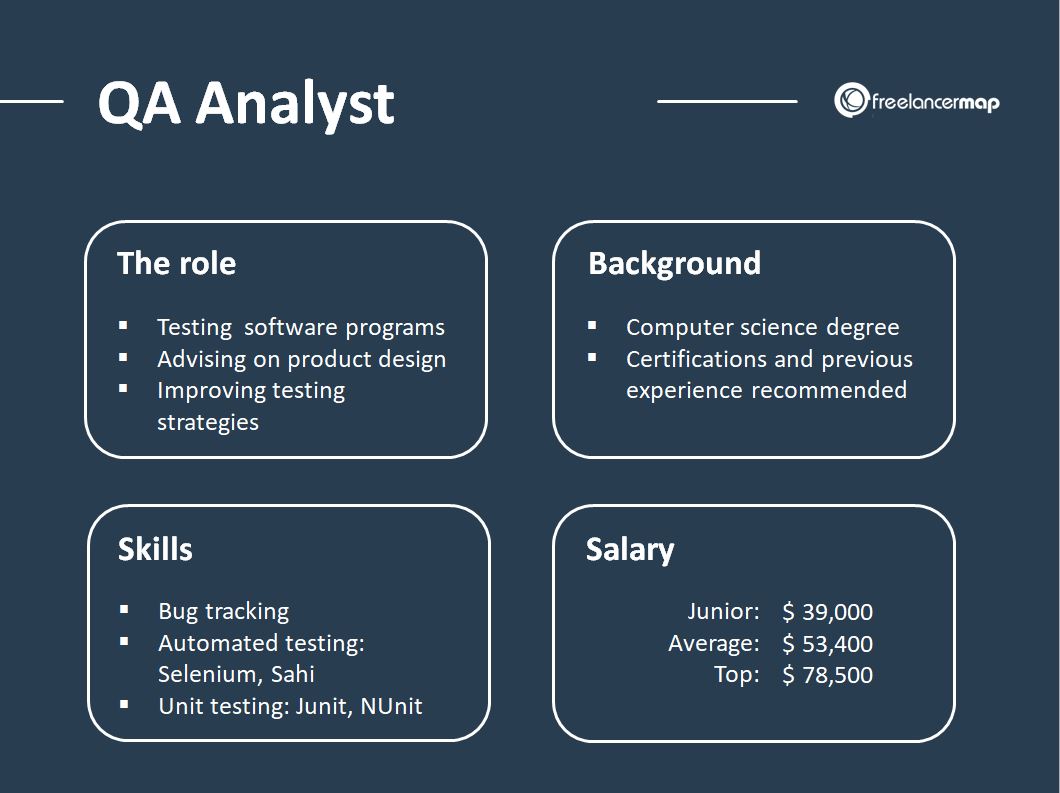
At its most fundamental level, the role of a QA Analyst is to identify discrepancies between expected behavior and actual software performance. However, modern quality assurance is far more proactive than reactive. Rather than simply waiting for a developer to finish a feature and then “breaking” it to find errors, today’s QA professionals are involved from the initial requirements-gathering phase.
Preventing Defects Before They Exist
The most effective QA work happens before a single line of code is written. By participating in design reviews and requirement analysis, QA Analysts identify logical gaps, ambiguous specifications, or potential edge cases that developers might overlook. This “shift-left” approach—moving testing to the earliest stages of development—drastically reduces the cost of fixing defects. Research consistently shows that a bug identified during the requirements phase costs a fraction of what it costs to fix once the software has reached production.
Risk Management and Mitigation
A QA Analyst must act as a risk assessor. They evaluate which parts of an application are most critical to the user’s journey. By identifying high-risk areas—such as payment gateways, authentication modules, or data synchronization processes—they ensure that testing efforts are prioritized where they provide the most value. This analytical mindset allows them to balance the need for a perfect product with the practical constraints of business deadlines.
The Arsenal of a Modern QA Analyst
The day-to-day work of a QA Analyst is a blend of creative problem-solving and rigorous technical execution. They operate across various methodologies, utilizing a diverse toolkit to maintain the integrity of a software ecosystem.
Manual vs. Automated Testing
While automation has become a buzzword in the tech industry, a skilled QA Analyst knows that it is a tool, not a panacea.
- Manual Testing: This is essential for explorative testing, usability analysis, and scenarios where human intuition is required. It is about “feeling” the software as a user would.
- Automated Testing: As projects scale, manual testing becomes a bottleneck. QA Analysts use frameworks like Selenium, Playwright, or Cypress to write scripts that execute repetitive tests automatically. This creates a safety net, allowing developers to refactor code without fear of introducing regressions—unintended breaks in existing functionality.
The Technical Stack
Modern QA roles often require proficiency in several technical domains:
- API Testing: Using tools like Postman or REST Assured to verify the communication between different software services, ensuring data integrity across the backend.
- Performance and Load Testing: Utilizing tools like JMeter or k6 to stress-test applications, ensuring they can handle thousands of concurrent users without crashing.
- SQL and Database Management: Analysts frequently query databases to verify that the information displayed in the front end correctly reflects the data stored in the backend.
The Evolving Role in Agile and DevOps Environments
In the traditional “Waterfall” model, testing was a siloed phase that occurred only after development was complete. Today, the industry operates primarily on Agile and DevOps principles, which have fundamentally altered what QA Analysts do.
Testing in a Continuous Integration/Continuous Deployment (CI/CD) Pipeline
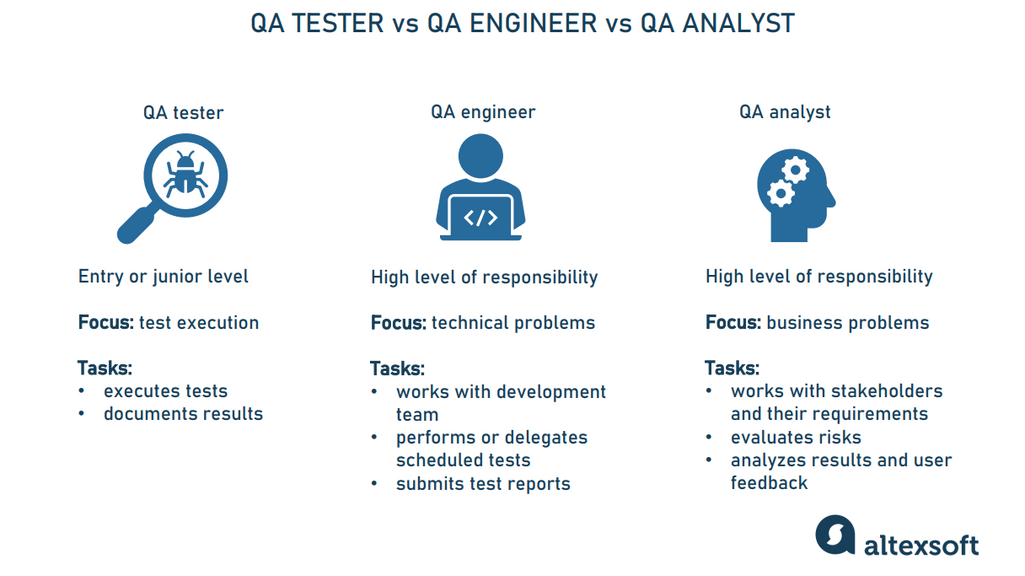
In a DevOps culture, code is updated and deployed frequently—sometimes multiple times a day. QA Analysts are now architects of the CI/CD pipeline. They help set up automated test suites that run every time a developer “commits” code. If a test fails, the pipeline halts immediately, preventing broken code from ever reaching the production environment. This transition has shifted the QA role from being a “tester” to a “Quality Engineer” or “Software Development Engineer in Test (SDET).”
The Human-Centric Perspective
Despite the rise of automation, the human element remains irreplaceable. QA Analysts are the primary advocates for the end-user. They ask the difficult questions: “Is this interface confusing?” “Does this workflow frustrate the user?” “Is the accessibility feature actually usable for someone with visual impairments?” By maintaining this focus, they ensure that the software is not only technically sound but commercially viable.
Essential Skills for the Modern QA Professional
Transitioning into or succeeding in a QA Analyst role requires a specific blend of hard and soft skills. It is a profession that demands both the precision of a scientist and the empathy of a user experience designer.
Analytical Thinking and Detail Orientation
The ability to break down a complex system into its individual components is paramount. A QA Analyst needs to think outside the box—or, more accurately, think about how to break the box. They must be able to hypothesize potential points of failure and design experiments to prove or disprove them.
Communication as a Catalyst
Perhaps the most overlooked skill in QA is communication. A QA Analyst is a mediator between developers, product managers, and stakeholders. When they report a bug, they aren’t just saying something is broken; they are explaining the “why” and “how” of the failure. Their bug reports must be clear, reproducible, and objective. They must be able to navigate the sometimes-tense relationship between those who build the software and those who hold them accountable for quality.
Continuous Learning
The landscape of technology changes at a breakneck speed. From the integration of Artificial Intelligence in automated test generation to the rise of cloud-native infrastructure, the QA Analyst must be a lifelong learner. They must constantly update their knowledge of new frameworks, security protocols, and testing methodologies to remain relevant in an industry that never stops moving.

The Future of Quality Assurance
As we look toward the future, the integration of AI and Machine Learning into the testing process is the next major frontier. We are seeing the emergence of “self-healing” test scripts—automation that can detect when a UI element has moved and adjust itself without requiring a human to rewrite the code.
However, this does not diminish the value of the human QA Analyst. Instead, it elevates it. As mundane, repetitive testing tasks are offloaded to intelligent systems, the QA professional will have more time to focus on complex scenarios, architectural quality, and high-level strategy. They will transition further into the role of a Quality Architect, overseeing the health of the entire software lifecycle.
In conclusion, the QA Analyst is far more than a “bug finder.” They are the silent guardians of software integrity. They ensure that applications are secure, performant, and, most importantly, provide value to the users they serve. Whether working within a small startup or a global enterprise, the QA Analyst is essential to the delivery of reliable technology in an increasingly digital world. Without them, software would be a collection of half-formed ideas; with them, it becomes a polished, dependable, and transformative tool for the modern age.
aViewFromTheCave is a participant in the Amazon Services LLC Associates Program, an affiliate advertising program designed to provide a means for sites to earn advertising fees by advertising and linking to Amazon.com. Amazon, the Amazon logo, AmazonSupply, and the AmazonSupply logo are trademarks of Amazon.com, Inc. or its affiliates. As an Amazon Associate we earn affiliate commissions from qualifying purchases.