
The Smith-Hughes Act of 1917 stands as a foundational milestone in the history of American economic development and workforce preparation. By establishing the first federal grants-in-aid to states for the promotion of vocational education, the Act fundamentally altered the relationship between the federal government and the public school system. From a business and economic perspective, this legislation was not merely an educational reform; it was a strategic investment in human capital designed to standardize the quality of the American labor force during a period of rapid industrialization and agricultural modernization.
The Economic Imperative for Vocational Standardization
At the turn of the 20th century, the United States faced a significant “skills gap.” As the economy transitioned from an agrarian-dominant society to an industrial powerhouse, business leaders and policymakers realized that the traditional liberal arts curriculum was failing to produce workers who possessed the technical proficiency required by modern factories and specialized farming operations.
Scaling Human Capital Development
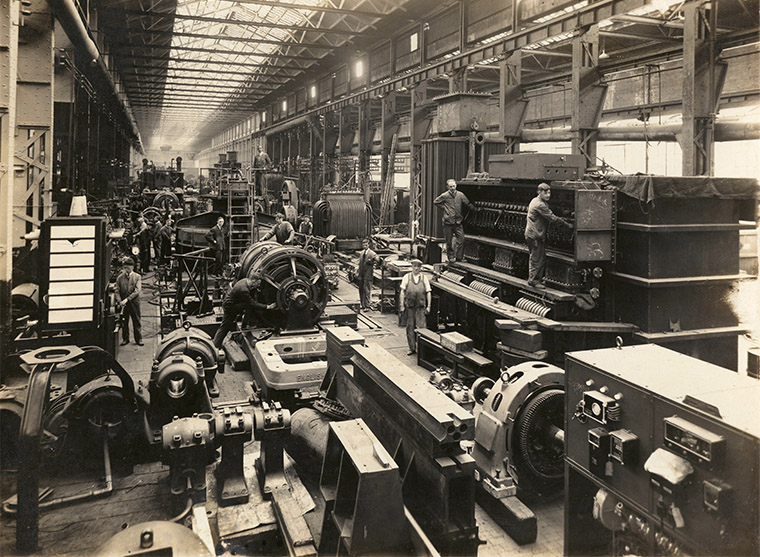
Before 1917, vocational training was largely decentralized, varying wildly from one school district to the next. The Smith-Hughes Act provided the financial leverage necessary to implement national standards. By offering federal matching funds, the government incentivized states to integrate vocational training into the secondary school system. For the business sector, this meant the establishment of a pipeline of workers who were already familiar with machinery, industrial processes, and efficient agricultural techniques, significantly reducing the “onboarding costs” for corporations hiring entry-level staff.
Federal Grants as a Stimulus
The Act mandated that federal funds be used specifically for the salaries of teachers and the training of instructors in agriculture, home economics, and trade and industrial subjects. This created a multiplier effect: by subsidizing the labor cost of specialized education, the Act allowed local school districts to reallocate their limited budgets toward purchasing better machinery and technical equipment. This partnership between the federal treasury and local districts acted as an early form of industrial policy, ensuring that the labor force could keep pace with the capital investments being made by private industry.
Strategic Impacts on Workforce Productivity
The Smith-Hughes Act functioned as a long-term corporate strategy on a national scale. By institutionalizing vocational training, the Act helped stabilize the labor market, ensuring that as new technology entered the workplace, there was a supply of workers capable of operating and maintaining it.
Reducing the Cost of Industrial Training
Prior to this legislation, private companies were forced to bear the full burden of training their workforce from scratch. By shifting the responsibility of foundational vocational instruction to the public education system, the federal government effectively subsidized a portion of the private sector’s human resource development costs. This allowed American firms to focus their internal training budgets on proprietary technologies and company-specific protocols, rather than basic mechanical literacy.

Agricultural Efficiency and Supply Chain Stability
The inclusion of agricultural education was a pivotal financial decision. Agriculture was the bedrock of the American economy in 1917, and the Act aimed to modernize farming practices through the scientific application of technology. By training a generation of farmers in soil management, crop rotation, and mechanized equipment operation, the Act bolstered the stability of the nation’s food supply chain. A more productive agricultural sector meant lower food costs, which in turn increased the discretionary income of urban consumers—a critical factor for the growth of the broader retail and manufacturing economy.
Legacy and Influence on Corporate Training Models
While the Smith-Hughes Act is historical, its influence remains embedded in the structure of modern business-education partnerships. The legislative framework created in 1917 set a precedent for the “talent pipeline” model that many corporations seek to establish with universities and vocational schools today.
The Shift Toward Competency-Based Education
The Act prioritized practical, competency-based learning over purely theoretical study. This remains a core tenet of effective business finance and management strategies. Companies today prioritize “work-ready” skills—digital literacy, data analytics, and operational efficiency—mirroring the original intent of the Smith-Hughes Act to align classroom curricula with the actual requirements of the marketplace. When businesses invest in corporate social responsibility (CSR) programs that support STEM education, they are iterating on the same fundamental principle: that economic growth is inextricably linked to the quality and technical readiness of the future workforce.
Adapting to a Digital Economy
As we move further into a digital-first global economy, the legacy of the Smith-Hughes Act provides a blueprint for how governments and corporations can collaborate to bridge the modern skills gap. Just as the Act focused on industrial machinery and agricultural science, current vocational efforts are focusing on coding, cloud infrastructure, and AI-driven workflow management. The Act proved that when public funds are directed toward the specific skill sets required by the economy, the return on investment (ROI) is substantial, manifesting in higher national productivity and more robust employment figures.
Evaluating the Return on Investment in Human Capital
From the perspective of business finance, the Smith-Hughes Act should be viewed as an early example of “public-private alignment” in investment. It demonstrated that government spending is most effective when it addresses the supply-side constraints of the labor market.
Measuring the Economic Multiplier
The success of the Act can be measured by the rapid scaling of vocational programs in the decades following its passage. Thousands of high schools expanded their offerings to include technical shops and laboratory classrooms. For businesses, this meant that the average high school graduate entering the labor force was no longer an unskilled laborer but a technician with a foundational understanding of modern machinery. This increased the baseline productivity of the American workforce, allowing firms to scale their operations faster than competitors in countries without such centralized vocational infrastructure.

The Modern Application of Vocational Policy
Modern businesses often complain about the lack of specific, job-ready skills in new graduates. The lesson from the Smith-Hughes Act is that sustained, organized financial support for specialized training is the most reliable method for rectifying this issue. By creating a standardized certification and training track, the Act mitigated the risk of labor shortages. Today’s businesses—particularly those in the technology, manufacturing, and healthcare sectors—can learn from this history by advocating for similar investments in modern vocational education. By partnering with educational institutions to define the required skill sets, companies ensure that the public education system functions as a reliable supplier of human capital, rather than a separate, disconnected entity.
In conclusion, the Smith-Hughes Act was a landmark piece of economic policy that treated education as a critical component of the national business infrastructure. It moved vocational training from the fringes to the center of the American educational system, providing the technical competence required for the 20th century’s massive industrial expansion. By institutionalizing the training of workers, it created a predictable, reliable, and skilled labor force that empowered private firms to innovate and grow. For modern leaders, the Act serves as a reminder that the most effective way to secure a competitive advantage in a global market is to ensure that the educational pipeline is perfectly synchronized with the evolving needs of the economy. Whether it is through traditional trade skills or the latest digital competencies, the fundamental economic principle remains unchanged: the investment in specialized, high-demand education is the most direct path to sustainable, long-term financial growth for both the nation and the individual corporation.
aViewFromTheCave is a participant in the Amazon Services LLC Associates Program, an affiliate advertising program designed to provide a means for sites to earn advertising fees by advertising and linking to Amazon.com. Amazon, the Amazon logo, AmazonSupply, and the AmazonSupply logo are trademarks of Amazon.com, Inc. or its affiliates. As an Amazon Associate we earn affiliate commissions from qualifying purchases.