
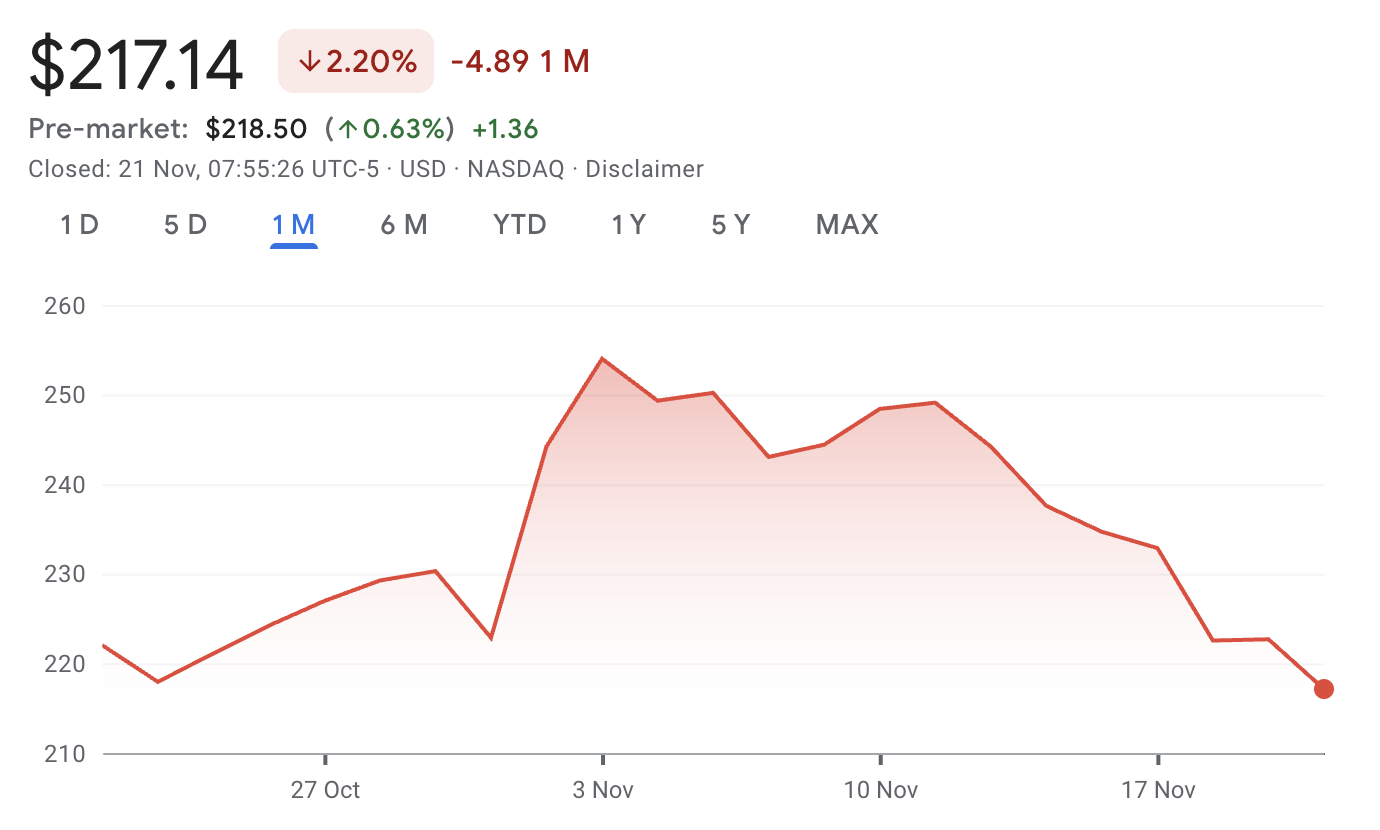
Amazon, once an unstoppable titan of e-commerce and cloud computing, has seen its stock performance fluctuate significantly, particularly over recent periods. For investors accustomed to its meteoric rise, any prolonged downturn prompts critical questions about the company’s fundamentals, the broader economic climate, and its future trajectory. Understanding why a company of Amazon’s stature might face such headwinds requires a deep dive into macroeconomic pressures, company-specific challenges, and evolving market sentiment, all viewed through the lens of financial analysis. This article will explore the multifaceted reasons behind the recent softening of Amazon’s stock price, providing an insightful perspective for investors and financial observers.

I. Macroeconomic Headwinds: A Shifting Economic Landscape
The performance of even the most robust companies is inextricably linked to the broader economic environment. Amazon, with its vast global operations spanning consumer goods, logistics, and digital services, is particularly susceptible to shifts in macroeconomic conditions. Recent years have presented a challenging backdrop, creating a confluence of factors that have impacted Amazon’s stock.
A. Inflationary Pressures and Rising Interest Rates
One of the most significant external forces impacting Amazon has been persistent inflation. Surging costs for labor, transportation, and raw materials directly erode profit margins across its extensive e-commerce and logistics networks. The Federal Reserve, along with other central banks globally, has responded to inflation by aggressively raising interest rates. While necessary to cool the economy, higher interest rates make it more expensive for companies like Amazon to borrow money for expansion and operations. More critically, higher rates increase the “discount rate” used to value future earnings, which disproportionately impacts growth stocks like Amazon, whose valuations often rely heavily on projected long-term cash flows. This re-rating mechanism inherently places downward pressure on stock prices, as future earnings are deemed less valuable in the present.
B. Consumer Spending Pullback and Recession Fears
The specter of a global economic slowdown or recession further complicates Amazon’s outlook. As inflation eats into household budgets and interest rates make credit more expensive, consumers tend to pull back on discretionary spending. Amazon’s core e-commerce business, which thrived during the pandemic-induced surge in online shopping, becomes vulnerable when consumers tighten their belts. Luxury goods, non-essential electronics, and even certain everyday items purchased through Amazon might see reduced demand. Fears of an impending recession also lead investors to de-risk their portfolios, often shifting away from high-growth, high-valuation stocks towards more stable, value-oriented assets, further dampening demand for Amazon shares.
C. Supply Chain Disruptions and Increased Operating Costs
Although some pandemic-era supply chain issues have eased, the residual effects continue to pose challenges. Geopolitical tensions, labor shortages, and unexpected events can still disrupt the flow of goods, leading to increased costs for sourcing, manufacturing, and delivery. Amazon, with its intricate global logistics network, has had to absorb higher costs associated with maintaining inventory, fulfilling orders, and ensuring timely delivery. These operational inefficiencies and elevated expenses directly weigh on profitability, which, in turn, influences investor sentiment and stock performance. The cost of fuel, for instance, remains a significant variable expense for Amazon’s vast shipping operations, directly affecting its bottom line.
II. Company-Specific Challenges and Operational Headwinds
Beyond the macroeconomic environment, Amazon has also contended with a set of internal and industry-specific challenges that have contributed to its stock’s decline. The sheer scale of its operations means that even minor shifts in key business segments can have a profound impact.
A. Normalization of E-commerce Growth Post-Pandemic
The COVID-19 pandemic provided an unprecedented boost to Amazon’s e-commerce segment as lockdowns and social distancing measures forced consumers online. This surge led to record revenues and profits, which were partially priced into the stock. However, as economies reopened, consumer behavior began to normalize. Shoppers returned to physical stores, and the accelerated shift to online retail slowed down. While e-commerce penetration remains higher than pre-pandemic levels, the extraordinary growth rates seen in 2020-2021 became unsustainable. This normalization meant that year-over-year growth figures appeared less impressive, creating a perception of deceleration that pressured the stock, particularly given its high growth valuation.
B. AWS Growth Deceleration and Increased Competition
Amazon Web Services (AWS) has long been the crown jewel of Amazon’s profitability, consistently delivering robust margins and driving a significant portion of the company’s operating income. However, recent periods have shown a deceleration in AWS’s growth rate. This slowdown can be attributed to several factors, including broader enterprise budget tightening due to economic uncertainty, increased optimization of cloud spending by existing customers, and heightened competition. Rivals like Microsoft Azure and Google Cloud have aggressively expanded their offerings and market share, putting pressure on AWS’s dominant position. Any perceived softening in AWS’s growth trajectory is a major concern for investors, as it represents a key pillar of Amazon’s financial strength and future growth prospects.
C. Elevated Operating Expenses and Labor Costs
To meet the pandemic-driven demand and expand its logistical footprint, Amazon made massive investments in its fulfillment and transportation networks, hiring hundreds of thousands of new employees and building numerous new facilities. While necessary at the time, these expansions led to a significant increase in fixed and variable operating expenses. As demand normalized, the company found itself with excess capacity and a higher cost base. The ongoing tight labor market has also pushed up wage costs, further squeezing margins. Amazon has since embarked on cost-cutting initiatives, including layoffs and optimizing its logistics network, but the impact of these elevated expenses has been keenly felt in recent earnings reports, affecting profitability and cash flow.
III. Valuation Concerns and Shifting Market Sentiment
Amazon’s stock has historically traded at a premium valuation, justified by its consistent growth, market dominance, and innovative spirit. However, the current economic climate and changing investor psychology have led to a re-evaluation of these high-multiple growth stocks.

A. Re-rating of Growth Stocks and High P/E Ratios
For years, investors were willing to pay a high price-to-earnings (P/E) multiple for Amazon, banking on its exponential growth. However, with rising interest rates, future earnings are discounted more heavily, making high P/E ratios less palatable. The market has undergone a significant “re-rating” of growth stocks, favoring companies with stronger current free cash flow and more modest valuations. Amazon’s substantial reinvestment into its businesses, while a long-term strength, means its reported earnings per share (EPS) can be volatile, and its P/E ratio has often appeared high relative to traditional metrics. In a risk-off environment, investors become less forgiving of these valuations, leading to price corrections.
B. Investor Risk Aversion and Focus on Profitability
The current market environment is characterized by increased investor risk aversion. Rather than prioritizing top-line revenue growth at all costs, investors are now scrutinizing profitability, free cash flow generation, and capital efficiency. While Amazon has demonstrated profitability, its heavy investment cycle and relatively thin retail margins, when compared to AWS, mean that its overall profit margins can appear less attractive during economic downturns. Investors are increasingly demanding clear paths to sustained, robust profitability across all segments, and any perceived weakness in this area can trigger selling pressure. The shift from a “growth at any cost” mentality to a “profitability now” mindset directly impacts how Amazon’s financial statements are perceived.
C. Future Earnings Projections and Analyst Outlook
Analyst estimates for Amazon’s future earnings and revenue growth are critical drivers of stock performance. Any downward revisions in these projections can lead to immediate stock price depreciation. Factors like decelerating AWS growth, persistent inflationary pressures, and the ongoing costs associated with its vast logistical network have led some analysts to temper their future expectations for Amazon. When the consensus outlook becomes less bullish, institutional investors and funds, who often rely on these projections, may adjust their positions, contributing to selling pressure. The uncertainty surrounding the pace of economic recovery and Amazon’s ability to efficiently manage its cost structure further complicates these forecasts.
IV. Competitive Landscape and Regulatory Scrutiny
Even as Amazon navigates economic and operational challenges, it also faces an increasingly complex external environment shaped by intensified competition and growing regulatory oversight.
A. Heightened Competition Across Key Segments
In e-commerce, Amazon faces stiff competition not only from traditional retailers bolstering their online presence (like Walmart and Target) but also from emerging global players and niche online stores. Platforms like Shein and Temu, with their aggressive pricing and unique supply chain models, are vying for consumer attention and market share, particularly in certain product categories. In cloud computing, AWS, while still dominant, faces formidable and increasingly innovative challenges from Microsoft Azure, Google Cloud Platform, and a host of smaller, specialized cloud providers. This competitive intensity can limit pricing power, necessitate continuous investment in innovation, and potentially slow growth in key segments.
B. Regulatory Challenges and Antitrust Concerns
Amazon’s immense scale and market power have attracted significant regulatory scrutiny across the globe. Governments and antitrust bodies in the U.S., Europe, and elsewhere are investigating various aspects of Amazon’s business practices, including its marketplace dominance, treatment of third-party sellers, use of data, and potential anti-competitive behavior. The threat of regulatory actions, such as forced divestitures, fines, or new operational restrictions, creates an overhang of uncertainty for investors. Such interventions could potentially impact Amazon’s business model, profitability, and ability to innovate, making investors cautious. The costs associated with defending against these challenges and complying with new regulations also add to the company’s expenses.
V. Looking Ahead: Amazon’s Path to Recovery
Despite the current headwinds, Amazon remains a formidable company with strong underlying fundamentals and a history of innovation. Its path to recovery will depend on a combination of internal strategic execution and external market improvements.
A. Cost Optimization and Efficiency Drives
Amazon has already demonstrated a commitment to streamlining its operations and improving efficiency. This includes optimizing its vast fulfillment network, rightsizing its workforce, and carefully managing capital expenditures. Successful execution of these cost-cutting and efficiency drives will be crucial for improving profit margins and free cash flow, which are increasingly prioritized by investors. The company’s ability to extract more value from its existing infrastructure and talent will be key to demonstrating financial discipline.
B. Innovation and New Growth Drivers
Innovation remains at the heart of Amazon’s long-term strategy. Continued investment in cutting-edge technologies, expansion into new markets, and the development of new services—be it in AI, healthcare, advertising, or novel retail formats—can create new growth drivers. Success in these emerging areas could reignite investor enthusiasm and broaden the company’s revenue streams, reducing reliance on its mature e-commerce and cloud segments. The continued strong performance and expansion of its advertising business, for instance, represents a high-margin growth avenue.
C. Market Stabilization and Long-Term Fundamentals
Ultimately, a significant portion of Amazon’s stock recovery will depend on a more favorable macroeconomic environment. As inflation subsides, interest rates stabilize, and consumer confidence improves, the broader market may once again become more receptive to growth stocks. Amazon’s underlying strengths – its unparalleled logistics, loyal customer base, dominant cloud platform, and culture of innovation – position it well for long-term success. For long-term investors, periods of stock decline often represent opportunities to accumulate shares in fundamentally strong companies. While the journey may be volatile, Amazon’s ability to adapt and innovate suggests it will likely remain a significant player in the global economy for years to come.
aViewFromTheCave is a participant in the Amazon Services LLC Associates Program, an affiliate advertising program designed to provide a means for sites to earn advertising fees by advertising and linking to Amazon.com. Amazon, the Amazon logo, AmazonSupply, and the AmazonSupply logo are trademarks of Amazon.com, Inc. or its affiliates. As an Amazon Associate we earn affiliate commissions from qualifying purchases.