
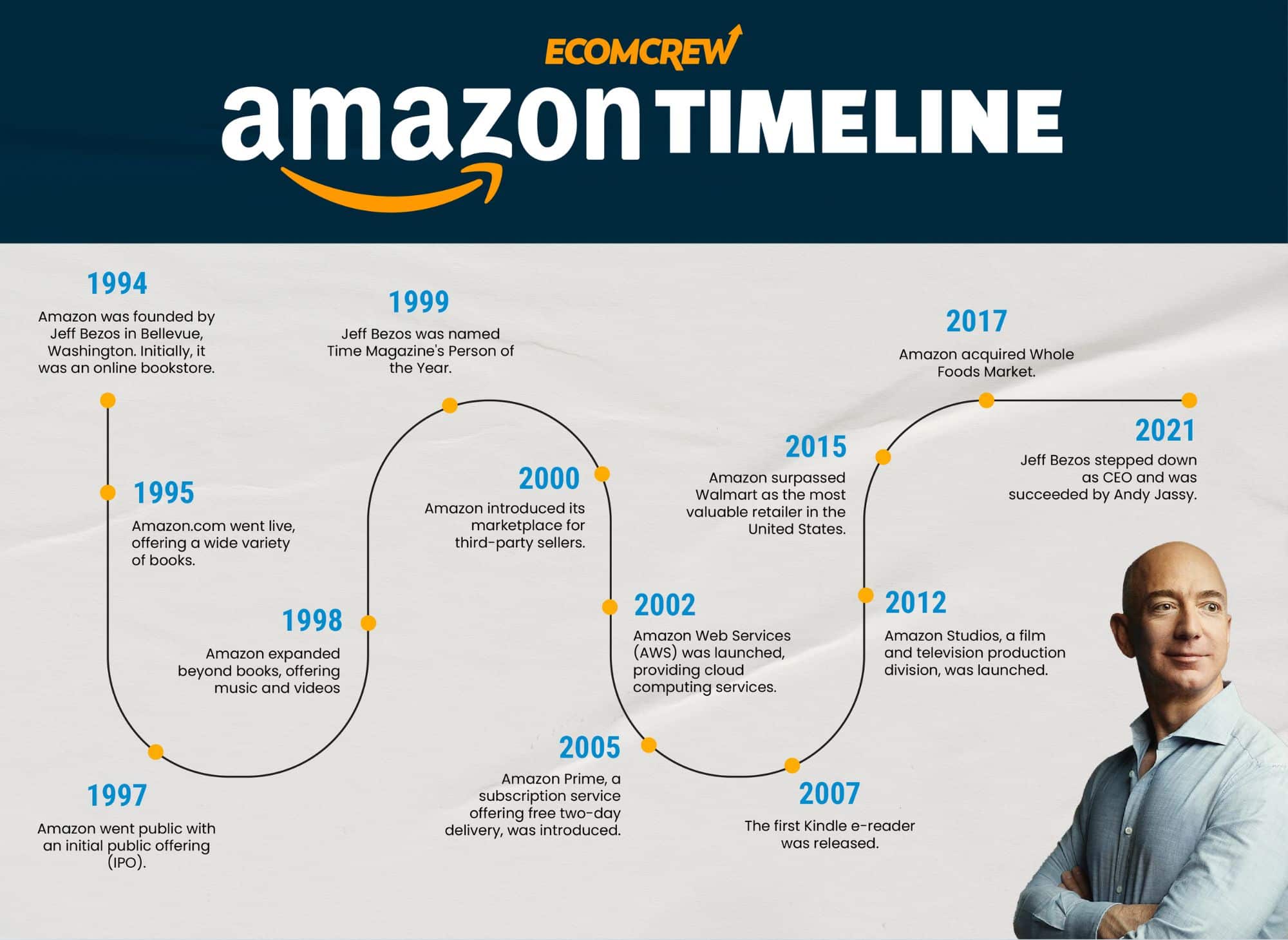
Amazon, a name synonymous with global e-commerce, cloud computing, and digital innovation, has fundamentally reshaped the way we shop, consume media, and utilize technology. But how long has this ubiquitous giant actually been in business, and what does its journey reveal about enduring financial success and strategic expansion? Founded by Jeff Bezos on July 5, 1994, Amazon began its life not as the sprawling marketplace we know today, but as an online bookstore operating out of a garage in Bellevue, Washington. In just under three decades, it has transformed from a humble startup into one of the world’s most valuable companies, boasting a market capitalization that frequently crosses the trillion-dollar threshold.
This remarkable ascent is not merely a tale of technological prowess, but a profound masterclass in business finance, long-term investment, strategic diversification, and relentless customer focus. From its nascent days of prioritizing growth over immediate profit to its current status as a diversified conglomerate influencing numerous sectors, Amazon’s financial trajectory offers invaluable insights into the mechanics of building and sustaining a globally dominant enterprise. This article delves into Amazon’s financial history, exploring the pivotal moments and strategic decisions that have cemented its place in the annals of business finance.
The Genesis of an E-commerce Giant: Laying Financial Foundations
Amazon’s inception was marked by an audacious vision to leverage the nascent internet for retail. Jeff Bezos famously chose books as the initial product due to their universal demand, low unit cost, and high volume potential. This initial strategic choice was underpinned by a calculated financial risk, betting on the internet’s future while many others remained skeptical.
From Garage Startup to IPO: The Early Financial Playbook
The early years of Amazon were characterized by significant capital expenditure and a deliberate strategy of delayed gratification for investors. Bezos famously articulated that “your margin is my opportunity,” signaling a willingness to operate on thin margins, or even at a loss, to capture market share and achieve scale. Initial funding came from friends, family, and early-stage venture capitalists, who bought into Bezos’s long-term vision rather than short-term returns. This early financial discipline was critical. By May 1997, Amazon went public with an initial public offering (IPO) price of $18 per share (pre-split adjusted), raising crucial capital for expansion. This IPO was not just about securing funds; it was a validation of the company’s potential, attracting more institutional investment and providing liquidity for early backers. The capital raised allowed Amazon to invest heavily in technology, warehousing, and supply chain infrastructure, building the backbone for its future growth.
Navigating the Dot-Com Bubble: Financial Resilience Under Pressure
The late 1990s and early 2000s presented a severe test of Amazon’s financial model during the dot-com bubble burst. While many internet companies folded, Amazon, despite being dubbed “Amazon.bomb” by some critics due to its consistent lack of profitability, survived and eventually thrived. Its survival was largely due to its strong underlying business model, strategic cash management, and a persistent focus on customer experience. Unlike many speculative internet ventures, Amazon had tangible assets, growing sales, and a clear path to profitability once it achieved sufficient scale. The company tightened its belts, rationalized expenses, and continued to innovate, proving its financial resilience and long-term viability even amidst widespread market panic. This period underscored the importance of prudent financial management and a sustainable business strategy beyond speculative valuations.
Diversification and Unprecedented Growth: Fueling Financial Expansion
Amazon’s strategic evolution beyond a simple online bookstore was the engine of its unprecedented financial growth. Recognizing the limitations of a single product category, Bezos steered the company towards a vast online marketplace for virtually everything, transforming its revenue model and market reach.
Strategic Acquisitions and Market Penetration: Expanding the Financial Footprint
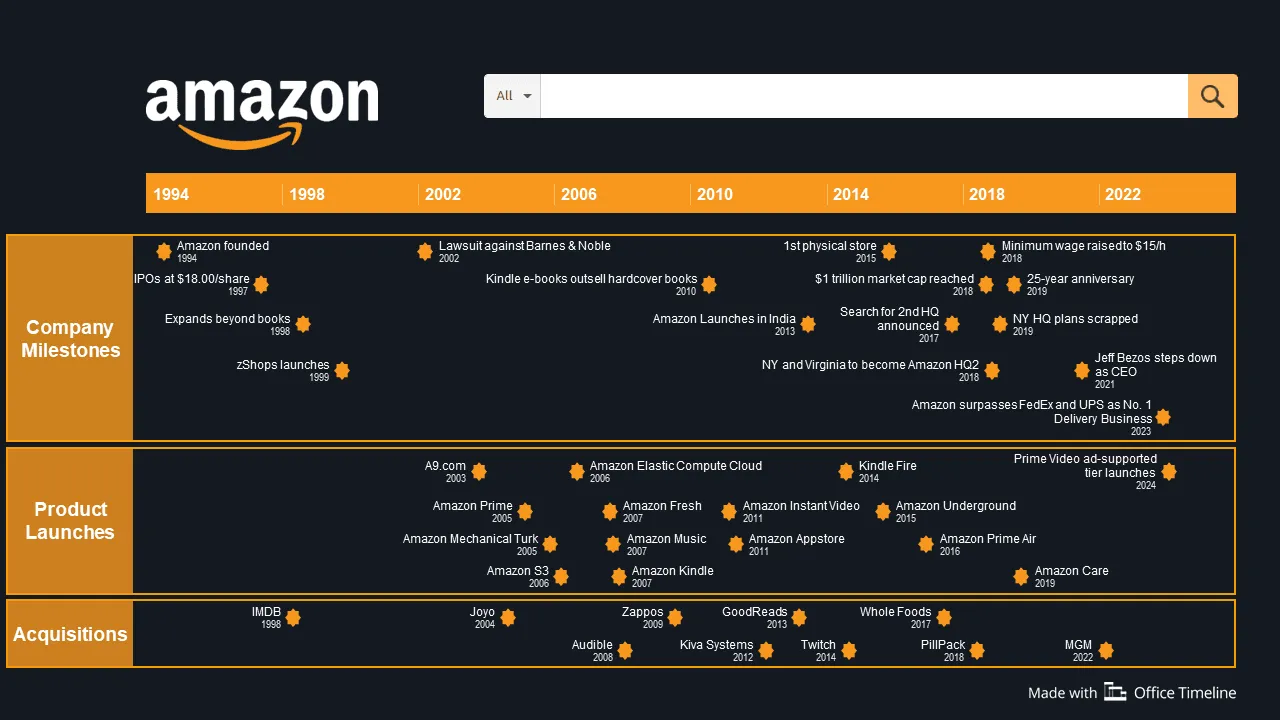
A cornerstone of Amazon’s growth strategy has been its shrewd approach to mergers and acquisitions. Rather than merely acquiring companies for scale, Amazon often targets businesses that complement its existing ecosystem, fill market gaps, or provide access to new technologies and customer segments. Acquisitions like Zappos (2009) for footwear, Whole Foods Market (2017) for groceries, and Ring (2018) for smart home security demonstrate a financial strategy aimed at diversifying revenue streams and capturing market share in lucrative sectors. These acquisitions were not always cheap, but they were financially justified by the strategic value they brought, enhancing Amazon’s network effects and reinforcing its customer loyalty. Each acquisition was a calculated financial move to broaden Amazon’s influence and sustain its growth momentum.
Amazon Web Services (AWS): A Financial Powerhouse Emerges
Perhaps the most significant financial pivot in Amazon’s history was the creation of Amazon Web Services (AWS) in 2006. Initially conceived to manage Amazon’s own vast computing infrastructure, AWS was soon offered as a service to other businesses. This decision proved to be a stroke of financial genius. AWS rapidly grew into the world’s leading cloud computing platform, providing on-demand computing power, storage, and database services. Critically, AWS boasts significantly higher profit margins compared to Amazon’s traditional retail business, becoming the primary driver of Amazon’s overall profitability. Its recurring revenue model and unparalleled scale have provided a stable, highly profitable financial foundation, enabling Amazon to continue investing heavily in its lower-margin retail operations and experimental ventures. AWS’s financial contribution fundamentally changed Amazon’s valuation and solidified its position as a tech giant rather than just a retailer.
Beyond Retail: Media, Logistics, and Devices – A Holistic Financial Strategy
Amazon’s financial strategy extended beyond its core retail and cloud services into a wide array of ventures. The introduction of the Kindle e-reader (2007) and the subsequent development of Prime Video and Amazon Music represented significant investments in digital content and media, aimed at creating a sticky ecosystem for Prime subscribers. The financial rationale was clear: offer compelling value to encourage subscriptions, which in turn drives more purchases and customer loyalty. Similarly, massive investments in its logistics network, including fulfillment centers, transportation fleets, and last-mile delivery innovations, were financially motivated to reduce shipping costs, speed up delivery, and enhance the customer experience, ultimately bolstering the profitability of its retail arm. The Echo smart speaker and Alexa AI platform further exemplified this financial strategy, creating a new category of devices that integrate seamlessly with Amazon’s services, reinforcing its consumer tech dominance.
Financial Impact and Market Valuation: A Trillion-Dollar Legacy
Amazon’s journey from a bookstore to a global behemoth has culminated in an unparalleled financial impact, making it one of the most closely watched companies on Wall Street. Its sustained growth and strategic financial decisions have cemented its place as a corporate titan.
A Trillion-Dollar Enterprise: Benchmarking Financial Success
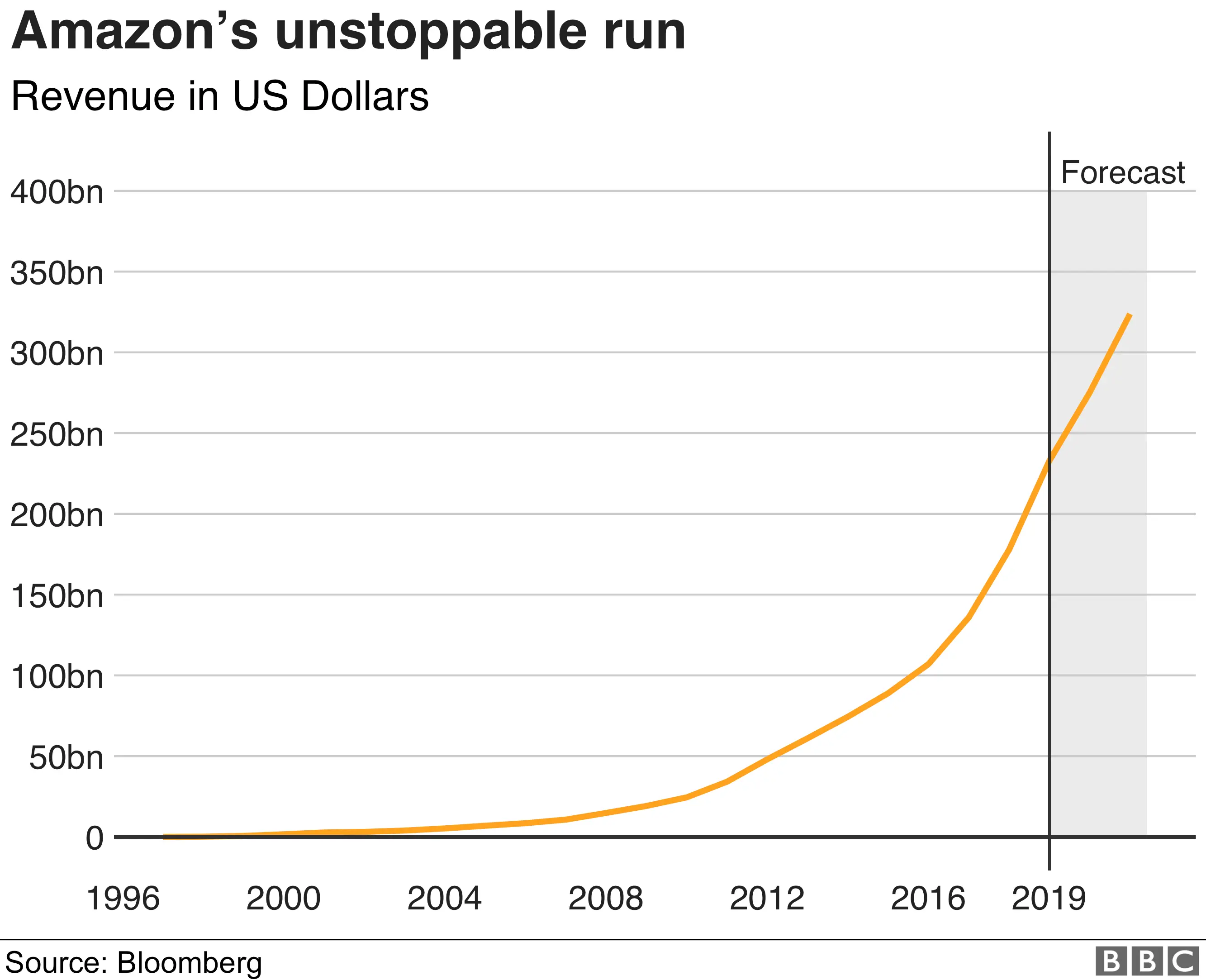
Achieving a market capitalization of over a trillion dollars is a testament to Amazon’s financial might and investor confidence in its future growth. This valuation reflects not just its current revenues and profits, but also the perceived value of its diversified business segments, its technological leadership, and its vast global reach. It underscores the financial markets’ belief in Amazon’s ability to continue innovating, dominating existing markets, and entering new ones. This status places Amazon among an elite group of companies, wielding significant influence over global economic trends and investment flows.
Shareholder Value and Investor Returns: A Model for Long-Term Growth
For early investors, Amazon has delivered staggering returns, making it one of the most successful investments of the modern era. Its stock performance has outpaced most major indices, rewarding long-term shareholders who believed in Bezos’s vision despite years of minimal profits. This phenomenal growth is a powerful case study in the financial markets for investing in companies with strong leadership, a clear long-term strategy, and the capacity to disrupt multiple industries. Amazon’s ability to consistently generate value for shareholders, even through periods of massive reinvestment, speaks volumes about its financial management and strategic foresight.
Economic Influence and Job Creation: Amazon’s Financial Ecosystem
Beyond its direct financial metrics, Amazon exerts a massive economic influence. It is one of the largest employers globally, creating millions of jobs across its fulfillment centers, corporate offices, and cloud services divisions. Its marketplace also supports millions of third-party sellers, who rely on Amazon’s platform for their livelihoods, creating a vast economic ecosystem. This job creation, coupled with its immense supply chain and logistics investments, contributes significantly to local economies worldwide, demonstrating the ripple effect of its financial scale.
Navigating Modern Financial Challenges: Sustaining Future Growth
While Amazon’s financial success is undeniable, its continued growth is not without challenges. The company constantly navigates regulatory scrutiny, rising operational costs, and intense competition, all of which have financial implications.
Antitrust Scrutiny and Regulatory Headwinds: Financial Implications of Dominance
Amazon’s sheer size and market dominance have attracted significant attention from antitrust regulators globally. Concerns about its marketplace practices, data usage, and competitive advantages could lead to substantial fines, forced business model changes, or even potential breakups. These regulatory headwinds pose significant financial risks, potentially impacting future growth strategies, acquisition targets, and operational flexibility. Amazon allocates substantial financial resources to legal defense and lobbying efforts to mitigate these risks.
Labor Costs and Sustainable Practices: Balancing Profit with Responsibility
As one of the world’s largest employers, Amazon faces increasing pressure regarding labor practices and wages. Rising labor costs, investments in employee benefits, and unionization efforts represent significant and growing expenses that directly impact its profitability. Furthermore, growing societal demand for corporate social responsibility and sustainable practices requires Amazon to invest heavily in eco-friendly logistics, renewable energy for its data centers, and ethical supply chain management. These investments, while crucial for long-term brand equity and regulatory compliance, also represent substantial financial outlays that must be balanced against shareholder expectations.
Competition and Innovation Spending: The Cost of Staying Ahead
Despite its dominant position, Amazon operates in highly competitive markets. From retail and cloud computing to digital advertising and streaming, it faces formidable rivals. To maintain its edge, Amazon continuously invests billions in research and development, new technologies, and market expansion. This aggressive spending on innovation is a financial necessity to stay relevant, attract talent, and fend off competitors. The financial commitment to R&D and new ventures is a constant balancing act, requiring significant capital allocation while maintaining healthy profit margins.
Conclusion
Since its founding in 1994, Amazon’s journey of nearly three decades has been a masterclass in business finance, strategic vision, and relentless execution. From a bootstrapped online bookseller, it has evolved into a multi-faceted conglomerate that has redefined e-commerce, cloud computing, and digital entertainment. Its financial history is marked by a long-term investment philosophy, audacious diversification, and an unwavering focus on customer value, even at the expense of short-term profits.
Amazon’s ability to navigate financial crises, identify new growth avenues like AWS, and continually reinvent itself has not only created immense shareholder value but has also profoundly influenced the global economy. As it faces new challenges in regulatory oversight, labor relations, and competition, Amazon’s continued financial success will depend on its ability to adapt, innovate, and maintain its strategic foresight, proving that even at the pinnacle of business, the journey of financial evolution never truly ends.
aViewFromTheCave is a participant in the Amazon Services LLC Associates Program, an affiliate advertising program designed to provide a means for sites to earn advertising fees by advertising and linking to Amazon.com. Amazon, the Amazon logo, AmazonSupply, and the AmazonSupply logo are trademarks of Amazon.com, Inc. or its affiliates. As an Amazon Associate we earn affiliate commissions from qualifying purchases.