
The question “how many shareholders does Amazon have?” might seem straightforward, yet its answer is far more complex and dynamic than a simple numerical figure. Amazon, a titan in e-commerce, cloud computing, digital streaming, and artificial intelligence, is one of the world’s most valuable publicly traded companies. As such, its ownership is distributed among millions of entities, ranging from individual retail investors to some of the largest institutional investment firms globally. Understanding Amazon’s shareholder base is crucial for grasping its corporate governance, market dynamics, and the very essence of its financial structure.
Unlike a privately held company where ownership might be concentrated among a few founders or a small group of private equity investors, a publicly traded company like Amazon (NASDAQ: AMZN) offers its shares to the general public. This broad distribution of ownership is a cornerstone of modern capitalism, allowing individuals and institutions to participate in the growth and profitability of leading enterprises. However, the precise number of shareholders is a moving target, influenced by daily trading activities, stock splits, mergers, acquisitions, and the ever-shifting landscape of investor sentiment. This article delves into the intricacies of Amazon’s ownership, exploring the different types of shareholders, the mechanisms by which we can estimate their numbers, and the broader implications for the company and the financial markets.
Understanding Amazon’s Shareholder Base
At its core, Amazon’s shareholder base is a diverse ecosystem comprising millions of participants. These participants hold a stake in the company, either directly or indirectly, and their collective decisions and actions shape Amazon’s trajectory. The sheer scale of Amazon’s market capitalization, often fluctuating around the trillion-dollar mark, necessitates an incredibly broad distribution of its equity.
Publicly Traded vs. Privately Held Shares
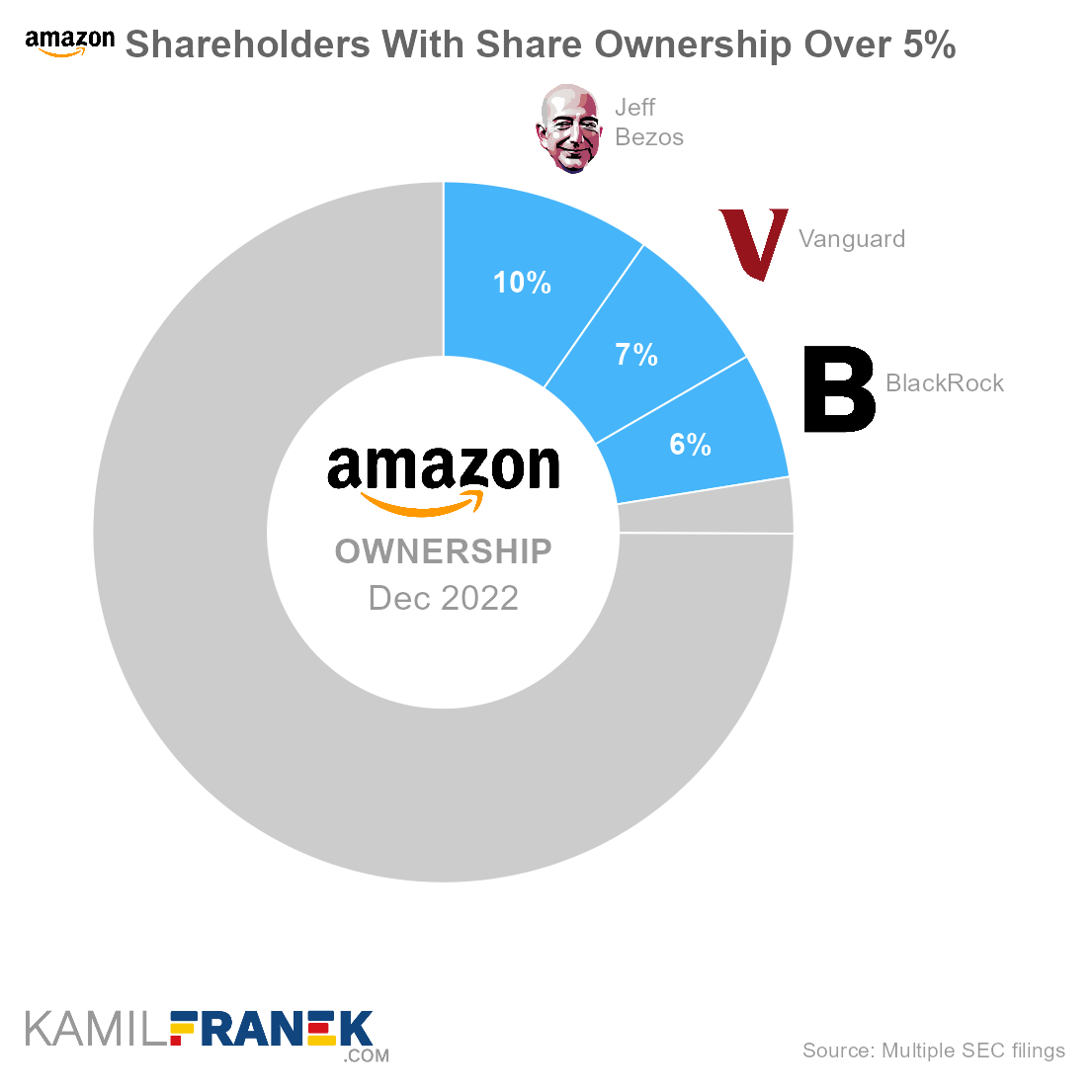
While Amazon is predominantly known as a publicly traded company, it’s important to distinguish between shares that are actively traded on stock exchanges and those that might be held by insiders or in private trusts. All of Amazon’s common stock (AMZN) is publicly traded on the NASDAQ exchange, meaning anyone with a brokerage account can buy or sell its shares. There isn’t a separate class of privately held shares in the traditional sense for general investors, though significant portions are held by insiders like Jeff Bezos and other executives, often through various trusts or holding entities. These insider holdings, while not “private” in the sense of being untradable, are often held with a long-term perspective and may not frequently enter the open market. The vast majority of Amazon’s outstanding shares are thus available for public ownership, forming the basis of its extensive shareholder community.
The Role of Retail vs. Institutional Investors
The distinction between retail and institutional investors is fundamental to understanding Amazon’s shareholder makeup.
- Retail investors are individual investors who buy and sell securities for their personal accounts. They might be everyday people investing for retirement, a child’s education, or simply for capital appreciation. While individually they might hold smaller stakes, their collective numbers are vast, representing millions of unique accounts. Their investment decisions are often influenced by personal financial goals, market news, and public sentiment.
- Institutional investors, on the other hand, are large organizations that invest on behalf of their clients or members. This category includes mutual funds, hedge funds, pension funds, endowments, and sovereign wealth funds. These entities manage trillions of dollars in assets and often hold significant blocks of shares in major companies like Amazon. Due to their immense capital, institutional investors often exert considerable influence on a company’s stock price and, in some cases, its corporate governance. They typically employ sophisticated research and investment strategies, making long-term strategic decisions rather than day-to-day trading. For Amazon, institutional ownership typically accounts for a majority of its outstanding shares, reflecting their trust in the company’s long-term growth prospects.
Key Categories of Amazon Shareholders
Dissecting Amazon’s shareholder base reveals distinct categories, each playing a unique role in the company’s ownership structure and market valuation. While the exact number of shareholders varies by the second, these categories provide a stable framework for understanding who owns Amazon.
Institutional Investors: The Giants Behind the Holdings
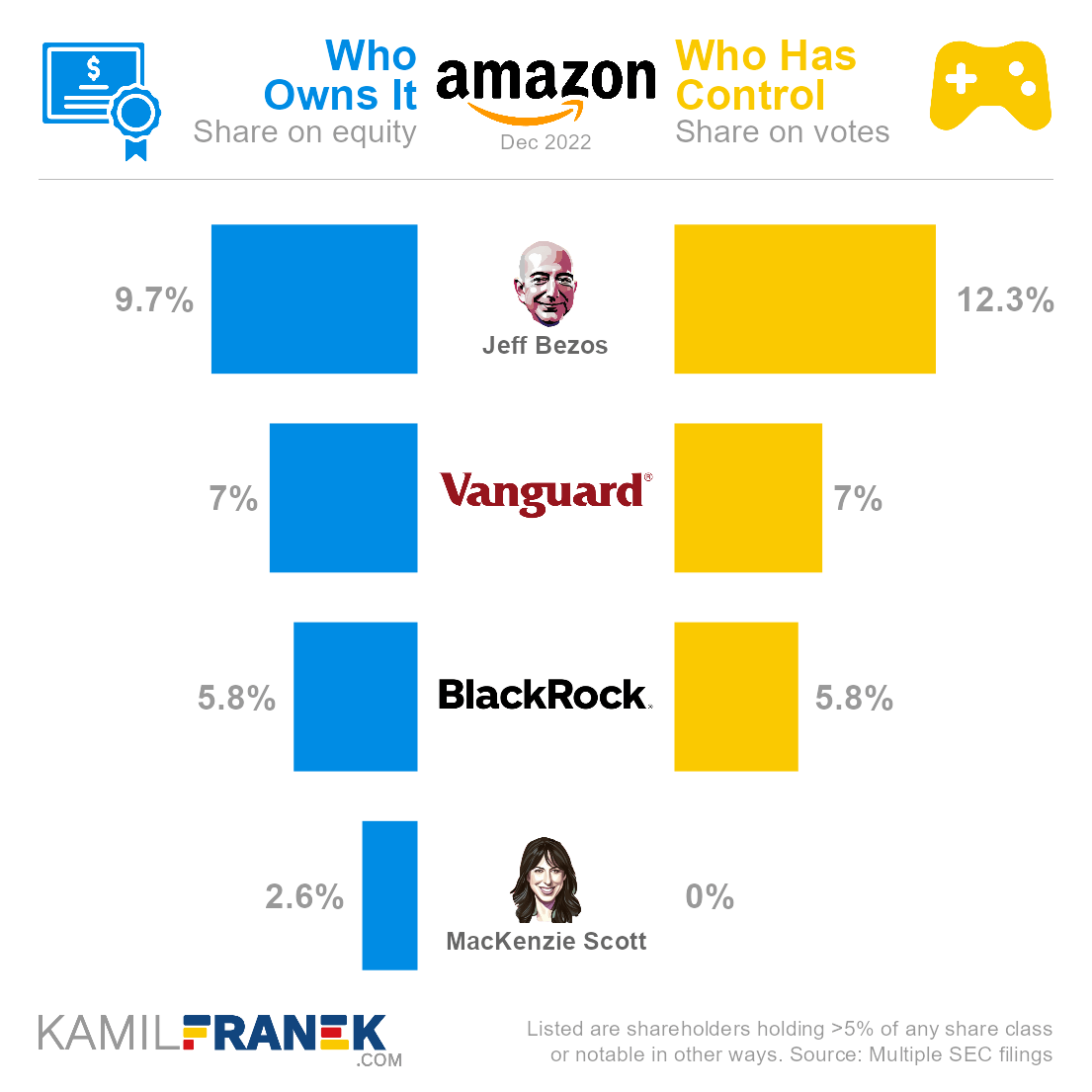
Institutional investors are the behemoths of the investment world, collectively owning the largest share of Amazon’s stock. Firms like Vanguard Group, BlackRock, State Street Global Advisors, and Fidelity Investments are consistently among Amazon’s top shareholders. These firms manage vast portfolios of stocks, including Amazon, on behalf of millions of clients through various funds (e.g., index funds, actively managed mutual funds, ETFs). Their holdings are often passive, particularly for index funds that aim to replicate the performance of a market index like the S&P 500, in which Amazon is a prominent component. Active institutional investors, conversely, make specific decisions to buy or sell Amazon shares based on their research and outlook for the company’s performance. The sheer volume of shares held by these institutions means their buying or selling activities can significantly impact Amazon’s stock price and market liquidity. Their long-term investment horizon often provides a stabilizing force for the company’s valuation.
Retail Investors: The Everyday Shareholder
While institutional investors might dominate in terms of percentage ownership, retail investors represent the highest number of individual shareholders. Millions of people around the globe own Amazon stock, either directly through a brokerage account or indirectly through pooled investment vehicles like mutual funds or ETFs where they are clients. The accessibility of investing through online platforms has significantly broadened the reach for retail investors, allowing them to easily buy fractional shares or full shares of high-priced stocks like Amazon. These investors contribute to market liquidity and bring diverse perspectives to the market. Although their individual stakes are generally smaller, their collective participation is vital for a robust and vibrant stock market. For many, owning a piece of Amazon represents an investment in a company whose products and services they use daily, making it a tangible connection to their investment portfolio.
Insider Ownership: The Founders and Executives
A critical component of Amazon’s shareholder structure is insider ownership, which primarily includes the company’s founders, executives, and board members. Jeff Bezos, as the founder, holds a substantial personal stake in Amazon, making him one of the largest individual shareholders. While his ownership percentage has decreased over time as he has diversified his wealth and funded other ventures, his remaining shares still represent a significant vote of confidence and alignment with the company’s long-term success. Other executives and directors also hold Amazon shares, often as part of their compensation packages, which incentivizes them to perform well and align their interests with those of other shareholders. Insider holdings, while typically a smaller percentage than institutional ownership, are closely watched by the market as they can signal confidence (or lack thereof) in the company’s future direction. These shares are often subject to specific reporting requirements and lock-up periods, highlighting their strategic importance.
The Dynamic Nature of Shareholder Count
Determining an exact, static number of Amazon shareholders is an impossible task. The count is fluid, changing minute by minute with every trade executed on the stock exchange. However, regulatory filings and market data provide insights into the approximate scale and composition of this investor base.
Factors Influencing Shareholder Numbers
Several factors contribute to the constant fluctuation in Amazon’s shareholder count:
- Trading Activity: Every time a share is bought or sold, it potentially changes hands, affecting who owns the company. If an individual sells shares to another individual, the number of shareholders might remain constant, but if an individual sells to an institution that already holds shares (or vice versa), the net count of unique shareholder accounts could change.
- Stock Splits: While a stock split (like Amazon’s 20-for-1 split in 2022) increases the number of outstanding shares, it generally doesn’t dramatically change the number of shareholders initially. Existing shareholders simply receive more shares for each one they owned. However, by making shares more affordable, splits can attract new retail investors who might have previously found the share price prohibitive, potentially increasing the total shareholder count over time.
- Mergers and Acquisitions: When companies merge or acquire others, the shareholder base of the acquired company often converts into shares of the acquiring company, thus changing the shareholder dynamics of the acquiring entity. While Amazon has made numerous acquisitions, few have significantly altered its overall shareholder base in a broad sense, compared to organic growth.
- Market Movements and Sentiment: Periods of high market volatility or strong positive/negative sentiment can lead to increased buying or selling activity, attracting new investors or prompting existing ones to exit, thereby influencing the shareholder count.

Tracking Shareholder Data: Public Filings and Proxy Statements
The most authoritative sources for understanding Amazon’s shareholder landscape are its public filings with the U.S. Securities and Exchange Commission (SEC). Specifically, the Form 10-K (annual report), Form 10-Q (quarterly report), and proxy statements (DEF 14A) provide detailed information on outstanding shares, significant shareholders (those holding 5% or more of the stock), and insider ownership. Institutional ownership is often aggregated and reported by financial data providers based on quarterly 13F filings by institutional money managers. These filings provide snapshots of ownership at specific points in time, allowing analysts and investors to track trends in institutional and insider holdings. While these reports don’t provide an exact “total number of retail investors,” they offer insights into the distribution of ownership and the relative proportions held by different investor types.
Why an Exact Number is Elusive
The primary reason an exact shareholder count for Amazon (or any large public company) is elusive is the existence of “street name” ownership. Most individual investors do not hold physical stock certificates. Instead, their shares are held electronically in a “street name” by their brokerage firm (e.g., Fidelity, Schwab, E-Trade). These brokerage firms, in turn, hold these shares in omnibus accounts with depositories like the Depository Trust & Clearing Corporation (DTCC). This means that, to Amazon’s transfer agent, a single brokerage firm might appear as one large shareholder, even though it represents thousands or millions of individual clients. Therefore, while Amazon can report the number of “record holders” (those directly registered on its books, typically institutions and insiders), this number significantly undercounts the actual number of beneficial owners. The true figure, encompassing all direct and beneficial owners, is almost impossible to quantify precisely due to the layered nature of modern shareholding.
The Significance of a Diverse Shareholder Base
A company like Amazon benefits immensely from a diverse and broad shareholder base. This diversity extends beyond just the number of shareholders to encompass varying investment horizons, risk appetites, and strategic interests.
Impact on Corporate Governance and Decision-Making
A diverse shareholder base, particularly one with a significant institutional component, plays a crucial role in corporate governance. Large institutional investors often engage with company management on issues ranging from executive compensation and environmental policies to social responsibility and corporate strategy. Their ability to vote on proxy proposals and engage in dialogue with the board of directors means they can influence decision-making and hold management accountable. While retail investors’ individual votes might be smaller, their collective voice can also be influential, particularly on hot-button issues. The widespread ownership ensures that Amazon’s leadership is answerable to a broad constituency of capital providers, fostering a more transparent and responsibly managed company.
Market Stability and Liquidity
A large and diverse shareholder base contributes significantly to market stability and liquidity for Amazon’s stock.
- Liquidity: With millions of shareholders and billions of shares available for trade, there is always a robust market for AMZN stock. This high liquidity means investors can buy or sell shares relatively easily without causing drastic price fluctuations, which is attractive to all types of investors.
- Stability: The mix of long-term institutional holders, short-term traders, and retail investors with varying investment horizons helps absorb buying and selling pressures. While individual investors might react quickly to news, long-term institutions often maintain their positions through market volatility, providing a stabilizing effect. This balance prevents the stock from being overly influenced by the actions of a small group of investors.
Investor Relations and Transparency
For a company with such a vast and varied ownership base, effective investor relations are paramount. Amazon’s investor relations team must communicate clearly and consistently with a wide audience, from sophisticated institutional analysts to individual retail investors. This involves publishing detailed financial reports, holding earnings calls, participating in investor conferences, and responding to inquiries. Transparency in these communications builds trust, informs investment decisions, and helps maintain a fair valuation of the company’s stock. It ensures that all shareholders, regardless of their size, have access to the information necessary to understand Amazon’s performance and prospects.
Investing in Amazon: What Potential Shareholders Should Know
For those considering becoming one of Amazon’s many shareholders, it’s essential to approach the investment with a clear understanding of its financial profile and market dynamics.
Analyzing Amazon’s Financial Performance
Before investing, potential shareholders should conduct thorough due diligence on Amazon’s financial performance. This involves examining its revenue growth across various segments (e-commerce, AWS, advertising), profitability margins, cash flow generation, and balance sheet strength. Understanding key financial metrics, trends, and the competitive landscape is crucial. Amazon’s investments in future growth areas, R&D expenditures, and capital allocation strategies also provide insights into its long-term potential. While past performance is not indicative of future results, a strong financial track record and a clear growth strategy often attract and retain a broad shareholder base.
Risks and Rewards of Investing in AMZN
Investing in Amazon, like any stock, comes with both risks and rewards. The rewards can include capital appreciation driven by continued business growth, innovation, and market dominance. Amazon’s diversification across multiple high-growth industries provides significant upside potential. However, risks include intense competition, regulatory scrutiny, macroeconomic downturns impacting consumer spending and cloud demand, and potential operational challenges. Investors must assess their risk tolerance and consider how Amazon fits within their diversified portfolio. Understanding these factors is critical for making informed investment decisions.
Long-Term vs. Short-Term Investment Perspectives
Amazon has historically been a strong long-term growth stock, rewarding patient investors who have held shares through various market cycles. Many institutional investors and a significant portion of retail investors hold AMZN with a multi-year to multi-decade horizon, focusing on the company’s fundamental business expansion. Short-term traders, on the other hand, might look to profit from daily or weekly price fluctuations. While short-term trading is possible, Amazon’s inherent volatility and the long-term nature of its strategic initiatives often make it more appealing to those with a long-term investment perspective. Potential shareholders should align their investment horizon with their personal financial goals and the intrinsic characteristics of Amazon’s business model.
In conclusion, while the exact number of Amazon shareholders remains an ever-shifting figure, it is undeniably in the millions. This vast and diverse ownership base, encompassing individual retail investors, powerful institutional funds, and company insiders, reflects Amazon’s global reach and its status as a cornerstone of the modern economy. This intricate web of ownership is not just a numerical curiosity; it is a fundamental aspect of Amazon’s market valuation, corporate governance, and its enduring appeal as a leading investment opportunity.
aViewFromTheCave is a participant in the Amazon Services LLC Associates Program, an affiliate advertising program designed to provide a means for sites to earn advertising fees by advertising and linking to Amazon.com. Amazon, the Amazon logo, AmazonSupply, and the AmazonSupply logo are trademarks of Amazon.com, Inc. or its affiliates. As an Amazon Associate we earn affiliate commissions from qualifying purchases.