
The question “what is the value of American Express points” is not as straightforward as asking about the value of a dollar. Unlike a fixed currency, the worth of American Express Membership Rewards (MR) points is highly dynamic, fluctuating based on how they are redeemed. For astute financial planners and savvy consumers, understanding this variability is crucial to extracting maximum monetary benefit from their point balances. At their core, Amex points represent a form of alternative currency, and like any investment or financial asset, their true value is realized through strategic management and informed decision-making. Their utility extends from offsetting everyday expenses to unlocking premium travel experiences that would otherwise demand substantial cash outlays, positioning them as a significant component in personal and business finance strategies.
The Dynamic Landscape of American Express Membership Rewards
American Express Membership Rewards points are a loyalty currency issued by American Express for spending on their eligible credit cards. They are a cornerstone of many individuals’ personal finance strategies, serving as a powerful tool for optimizing expenditures and enhancing financial flexibility. However, their value is inherently variable, distinguishing them from traditional monetary assets like cash or savings accounts. This variability is not a drawback but rather an opportunity for those who understand the system to unlock outsized returns.
Earning Mechanisms and Multipliers
The foundation of Amex points’ value lies in their accumulation. Points are typically earned through spending on eligible American Express cards, with various cards offering different earning rates and category bonuses. For instance, some cards might offer 1x point per dollar on general spending, while others provide 3x, 4x, or even 5x points on specific categories such as travel, dining, or purchases at U.S. supermarkets. Business-focused Amex cards often provide enhanced earning rates on business-related expenses like advertising or shipping. Effectively, these multipliers translate into a higher “return” on spending within those categories, analogous to a higher interest rate on certain savings or investment accounts. A strategic approach to credit card usage, aligning spending with bonus categories, becomes a fundamental aspect of maximizing the financial yield from Amex points, effectively reducing the net cost of goods and services over time.
The Variable Nature of Point Valuation
The most critical financial aspect of Amex points is their non-fixed value. Unlike one dollar always equaling one dollar, one Amex point can be worth anywhere from half a cent to several cents, depending on the redemption method. This variability means that a balance of 100,000 Amex points could be worth as little as $500 or as much as $2,000 (or even more in exceptional cases). This wide range necessitates a thoughtful and deliberate approach to redemption. Treating points as a liquid asset requires understanding the market — in this case, the various redemption options and their associated cents per point (CPP) value. Without this understanding, cardholders risk significantly devaluing their accumulated rewards, missing out on substantial potential financial benefits.
Optimizing Redemption for Maximum Financial Return
The true financial worth of your Amex points is determined at the point of redemption. Different redemption methods offer vastly different returns, and selecting the most advantageous option is key to maximizing the monetary value derived from your points. This requires a strategic mindset, much like choosing the right investment vehicle for a given financial goal.
High-Value Travel Transfers
For most financial experts and points enthusiasts, transferring Amex Membership Rewards points to airline or hotel loyalty programs represents the pinnacle of value. This strategy often yields significantly higher cents per point (CPP) values, frequently ranging from 1.5 to 2.5 cents per point, and occasionally even higher for premium cabin international travel. For example, 100,000 points transferred to an airline partner could cover an international business class flight that might otherwise cost $3,000-$5,000 or more, effectively granting a 3-5 CPP valuation. This translates directly into substantial cash savings on significant travel expenses, freeing up disposable income for other financial priorities or investments. The key here is flexibility and research; finding “sweet spots” within partner loyalty programs can dramatically amplify the purchasing power of your points.
Lower-Value Cash Alternatives
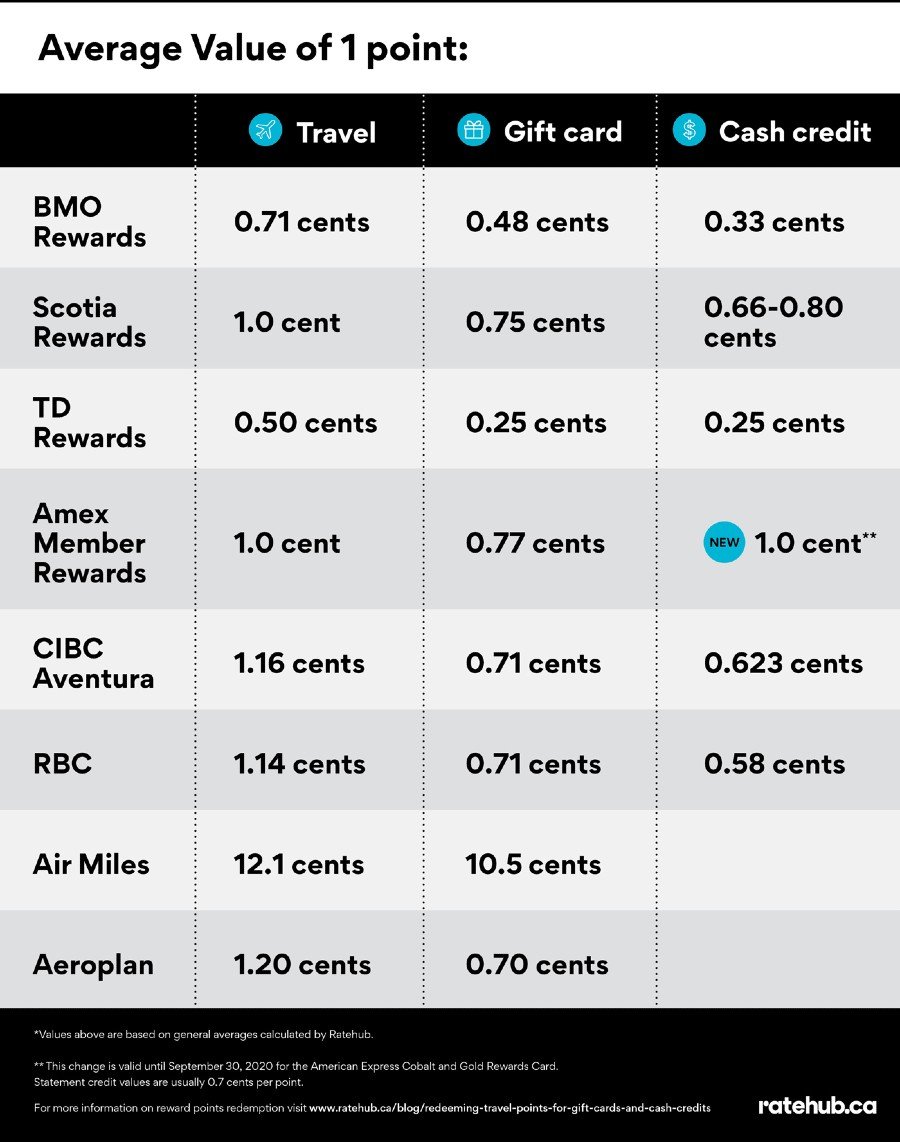
While convenient, certain redemption options offer a considerably lower return on your points. Cashing out points for a statement credit typically yields a value of 0.6 cents per point, meaning 100,000 points would only be worth $600. Similarly, using points to pay for charges directly, or redeeming them for gift cards or merchandise, generally falls into this lower-value category, often providing between 0.5 to 1.0 CPP. From a pure financial perspective, these options represent a suboptimal use of a valuable asset. While they offer immediate liquidity or convenience, they come at a significant opportunity cost, effectively throwing away a large portion of the potential value your points could otherwise generate. For those focused on maximizing financial benefit, these redemption paths should generally be avoided unless absolute necessity dictates.
Amex Travel Portal vs. Partner Transfers
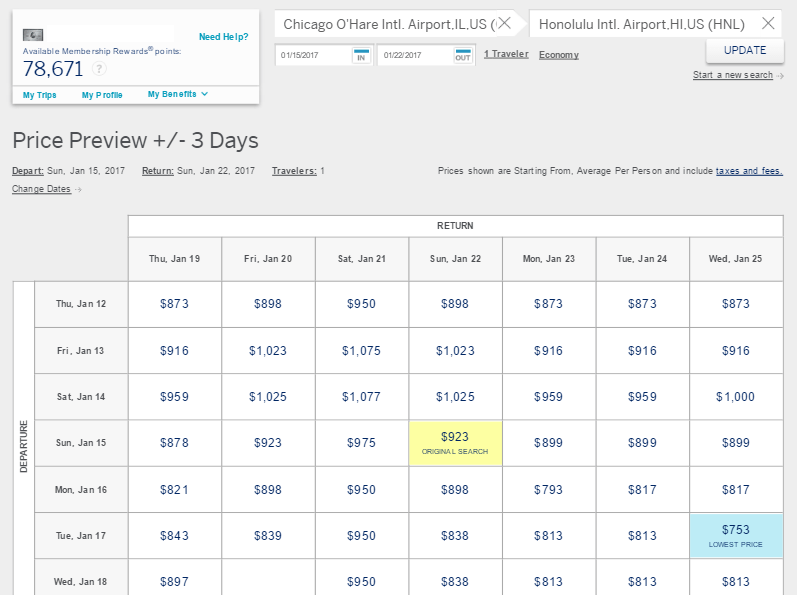
Another common redemption method is booking travel directly through the American Express Travel portal. The value here can vary. For flights, points generally yield 1 cent per point, which is a decent, but not outstanding, return. For prepaid hotels, cruises, or rental cars, the value can be slightly lower, often around 0.7 to 0.8 cents per point. While straightforward, booking through the Amex Travel portal often falls short of the immense value achievable through direct transfers to airline and hotel loyalty programs, especially for premium travel. The decision to use the portal versus transferring depends on the specific travel needs, availability, and the desired financial outcome. For economy flights, 1 CPP might be acceptable, but for luxury travel experiences, transferring points almost invariably offers superior financial leverage.
Quantifying Value: The Cents Per Point (CPP) Metric
To truly understand the monetary value of American Express points, it’s essential to employ a consistent financial metric: Cents Per Point (CPP). This metric allows cardholders to objectively compare different redemption options and make financially sound decisions.
Calculating Your Effective CPP
The formula for calculating CPP is straightforward:
$$ text{CPP} = left( frac{text{Cash Value of Redemption}}{text{Number of Points Used}} right) times 100 $$
For example, if you use 50,000 points to book a flight that would otherwise cost $1,000, your calculation would be: ($1,000 / 50,000 points) * 100 = 2 CPP. This means each point was effectively worth 2 cents. By consistently applying this formula, you can evaluate whether a particular redemption offers a “good” or “poor” return on your points. Financial discipline dictates seeking the highest CPP possible for your redemption goals, just as an investor seeks the highest return on their capital.

Factors Influencing CPP
Several factors can influence the CPP you achieve. Peak travel seasons or last-minute bookings can increase the cash price of flights or hotels, potentially increasing your CPP if you redeem points for them. Conversely, off-peak travel might offer lower cash prices but still require the same number of points, leading to a lower CPP. Elite status with airline or hotel programs can also play a role; for example, free upgrades or waived fees that come with elite status can enhance the perceived value of an award booking without using additional points, thereby increasing the effective CPP. Additionally, promotional transfer bonuses, where Amex offers an extra percentage of points when transferring to a specific partner, can significantly boost your CPP. These promotions are akin to a temporary increase in the “exchange rate” for your points, offering an opportune moment to secure higher value.
Illustrative Examples of High-Value Redemptions
Consider an example: a round-trip business class ticket from the U.S. to Europe could cost $5,000 in cash. Through strategic transfer to an airline partner during a promotional bonus, this ticket might only require 100,000 Amex points. In this scenario, the CPP is ($5,000 / 100,000 points) * 100 = 5 CPP. Compare this to redeeming those same 100,000 points for a $600 statement credit (0.6 CPP). The financial disparity is immense. Another example might involve a luxury hotel stay costing $800 per night. Redeeming 40,000 points per night at a transfer partner could yield 2 CPP, significantly reducing an otherwise large expenditure. These examples underscore the financial power of Amex points when leveraged strategically, allowing individuals to access experiences far beyond what simple cash back could provide.
Integrating Amex Points into a Holistic Personal Finance Strategy
For American Express points to truly contribute to one’s financial well-being, they must be viewed not just as a perk, but as an integral component of a broader personal finance strategy. This includes how points are earned, managed, and ultimately deployed to achieve specific financial objectives.
Strategic Spending and Budgeting
Maximizing point accumulation goes hand-in-hand with responsible budgeting. The goal is to funnel necessary expenses through Amex cards that offer the highest multiplier for those specific categories, without incurring debt or spending beyond one’s means. This involves conscious financial planning: identifying recurring expenses like groceries, utilities, or business supplies, and then selecting the Amex card that yields the greatest point return for those expenditures. Treating points as a form of “rebate” or “discount” on spending ensures that the pursuit of points aligns with, rather than detracts from, overall financial health. For instance, if a household spends $1,000 monthly on groceries, using a card that earns 4x points on supermarkets instead of 1x yields an extra 3,000 points per month, significantly boosting annual accumulation without increasing spending.
Annual Fees as an Investment
Many premium American Express cards, which offer the highest earning rates and most valuable benefits, come with substantial annual fees. From a financial perspective, these fees should be evaluated as an investment. The question becomes: do the value of the points earned, along with other card benefits (like travel credits, lounge access, insurance, or elite status perks), outweigh the cost of the annual fee? A thorough cost-benefit analysis is essential. For example, a card with a $695 annual fee might offer $400 in airline credits and $200 in hotel credits, effectively reducing the net fee to $95 before even considering the points earned or other soft benefits. If the points accumulated through typical spending, coupled with these credits, provide a value significantly exceeding the net fee, then the card is a financially prudent choice. Otherwise, a lower-fee or no-fee card might be more appropriate for one’s financial profile.
The Opportunity Cost of Not Maximizing Value
Like any financial asset, Amex points have an opportunity cost. Holding points and redeeming them at a low CPP means foregoing the potential for much greater value. It’s akin to having cash in a checking account earning 0.01% interest when it could be earning 5% in a high-yield savings account or appreciating in an investment. While points don’t directly earn interest, their “growth” comes from strategic redemption. Neglecting to optimize redemptions or allowing points to expire without being used efficiently represents a tangible loss of potential financial value. Therefore, actively managing one’s point balance and having a redemption strategy in place is a crucial aspect of responsible financial management. This might include periodically reviewing one’s balance, understanding redemption deadlines, and staying informed about transfer bonuses or other special offers that could enhance value.
Leveraging Amex for Business and Lifestyle Financial Advantages
Beyond personal travel and everyday savings, American Express points and the associated card benefits can play a significant role in broader financial planning, especially for business owners and those seeking to optimize lifestyle expenditures.
Business Spending and Expense Management
For entrepreneurs and small business owners, American Express business cards offer a dual advantage: streamlined expense management and substantial point accumulation. Business expenses, which can be considerable, can be channeled through Amex cards to earn large quantities of Membership Rewards points. These points can then be leveraged to reduce business travel costs, purchase necessary equipment through partner portals, or even offset operational expenses via statement credits, albeit at a lower CPP. This integration of payment processing with a robust rewards program can turn essential business outlays into a source of tangible financial savings, impacting the company’s bottom line. The detailed expense tracking provided by Amex further assists in financial reporting and tax preparation, streamlining the overall financial management process for businesses.
The “Soft Benefits” and Their Monetary Equivalent
Many premium Amex cards come with an array of “soft benefits” that, while not directly points-related, carry significant monetary value. These include airport lounge access, comprehensive travel insurance (trip delay, baggage, rental car), purchase protection, extended warranties, and concierge services. While these don’t directly add to your points balance, they contribute to your overall financial well-being by mitigating risks and reducing out-of-pocket expenses. For example, travel insurance benefits can save hundreds or thousands of dollars in the event of unforeseen disruptions, effectively acting as a form of cost avoidance. Lounge access eliminates the need to purchase expensive airport food and drinks, resulting in direct savings. Quantifying the monetary equivalent of these soft benefits is a crucial step in justifying annual fees and truly understanding the full financial value proposition of an Amex card portfolio.
Monitoring and Adapting Your Points Strategy
The financial landscape, including credit card rewards programs, is constantly evolving. Point values with transfer partners can change, new cards are introduced, and personal financial goals shift. Therefore, an effective Amex points strategy is not static; it requires continuous monitoring and adaptation. Regularly reviewing one’s spending patterns, re-evaluating the value proposition of current cards, and staying informed about program changes or limited-time offers are essential. This proactive approach ensures that your Amex points strategy remains aligned with your overarching financial objectives, whether that’s minimizing travel costs, saving for a large purchase, or simply optimizing your everyday spending for maximum financial return. Just as one adjusts an investment portfolio, a points portfolio benefits from regular review and rebalancing to ensure optimal performance.
aViewFromTheCave is a participant in the Amazon Services LLC Associates Program, an affiliate advertising program designed to provide a means for sites to earn advertising fees by advertising and linking to Amazon.com. Amazon, the Amazon logo, AmazonSupply, and the AmazonSupply logo are trademarks of Amazon.com, Inc. or its affiliates. As an Amazon Associate we earn affiliate commissions from qualifying purchases.