
MicroStrategy, a business intelligence, mobile software, and cloud-based services company, has become synonymous with Bitcoin in the corporate world. Under the leadership of its co-founder and former CEO, Michael Saylor, the company initiated an unprecedented strategy to adopt Bitcoin as its primary treasury reserve asset. This move has not only reshaped MicroStrategy’s financial identity but has also sparked widespread debate and discussion among investors, analysts, and corporate boards regarding the role of digital assets in modern business finance.
MicroStrategy’s Bold Bitcoin Bet
In August 2020, MicroStrategy announced its decision to adopt Bitcoin as its primary treasury reserve asset, a move that sent ripples through traditional finance. This wasn’t merely an allocation of a small percentage of cash; it was a fundamental shift in the company’s financial strategy, pivoting away from holding cash and short-term investments that were perceived to be eroding in value due to inflation. The company’s management articulated a belief that Bitcoin, as a decentralized, scarce digital asset, offered a superior long-term store of value compared to fiat currencies.

The Rationale Behind the Strategy
MicroStrategy’s decision was rooted in a deeply considered macroeconomic analysis. Michael Saylor and his team expressed concerns about the depreciating purchasing power of fiat currencies, exacerbated by expansive monetary policies globally. They viewed Bitcoin as “digital gold,” a hedge against inflation, and a non-sovereign safe-haven asset with a finite supply. This strategic pivot was presented not as speculation, but as a long-term investment strategy designed to protect shareholder value and capitalize on the perceived future appreciation of Bitcoin. The goal was to preserve the capital and enhance the long-term value of its balance sheet rather than letting cash holdings diminish.
Initial Acquisitions and Market Impact
The initial acquisition in August 2020 saw MicroStrategy purchase 21,454 Bitcoins for a total price of $250 million, inclusive of fees and expenses. This was followed swiftly by another purchase of 16,796 Bitcoins in September 2020, bringing their total to over 38,000 BTC. These early moves instantly made MicroStrategy the largest publicly traded corporate holder of Bitcoin and signaled a profound conviction in the cryptocurrency’s future. The market reacted with a mixture of awe and skepticism. While Bitcoin enthusiasts lauded the move as visionary, traditional investors questioned the volatility exposure and the inherent risks of such a concentrated bet. Nevertheless, MicroStrategy’s early adoption acted as a catalyst, encouraging other institutions and corporations to seriously consider Bitcoin.
Tracking MicroStrategy’s Accumulation
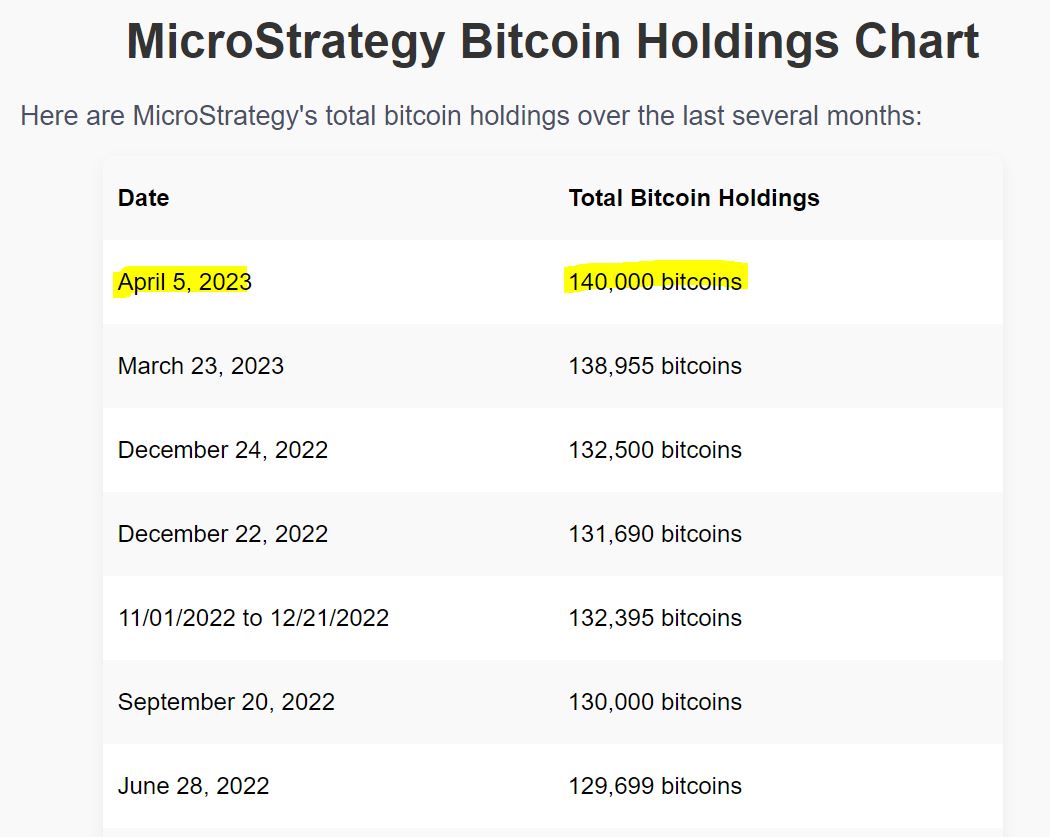
Since its initial purchases, MicroStrategy has consistently added to its Bitcoin reserves. The company has made numerous public announcements regarding its acquisitions, often detailing the amount of Bitcoin bought, the average price paid, and the total holdings. This transparency has allowed the public and investors to closely monitor the growth of its Bitcoin treasury.
Public Filings and Transparency
A key aspect of MicroStrategy’s Bitcoin strategy has been its commitment to transparency. The company regularly updates its investors through SEC filings (such as 8-Ks), earnings calls, and press releases, detailing its latest Bitcoin purchases. These disclosures provide a running tally of their total Bitcoin holdings, the aggregate cost basis, and the average purchase price per Bitcoin. This level of detail offers a clear picture of their accumulating position, distinguishing them from other companies that might hold smaller, less frequently updated Bitcoin reserves. As of early 2024, MicroStrategy’s Bitcoin holdings have consistently grown, surpassing significant milestones, and currently stand well over 200,000 BTC, making them by far the largest publicly traded corporate holder. This massive accumulation demonstrates an unwavering commitment to their long-term strategy.
Funding Mechanisms for Bitcoin Purchases
MicroStrategy has employed a diversified strategy to fund its Bitcoin acquisitions, moving beyond simply using excess cash flows. This aggressive accumulation has been financed through several innovative mechanisms:
- Excess Cash Flow: Initially, the company utilized its existing cash reserves generated from its core business operations.
- Convertible Senior Notes: A significant portion of their Bitcoin accumulation has been funded through offerings of convertible senior notes. These are essentially debt instruments that can be converted into company stock under certain conditions. This strategy allowed MicroStrategy to raise capital at relatively low interest rates while deferring potential dilution of equity.
- At-the-Market (ATM) Stock Offerings: MicroStrategy has also leveraged its stock by issuing and selling new shares (ATM offerings) to raise capital specifically earmarked for Bitcoin purchases. This method capitalizes on investor interest in MSTR stock, often driven by its Bitcoin exposure, to fund further Bitcoin acquisitions.
- Senior Secured Notes: In some instances, the company has also issued senior secured notes, a form of debt backed by the company’s assets, to raise capital for Bitcoin.
These funding strategies highlight MicroStrategy’s aggressive approach to accumulating Bitcoin, utilizing various financial tools to maximize its holdings.
The Financial Implications for Shareholders
MicroStrategy’s Bitcoin strategy has profound implications for its shareholders, transforming the company’s financial profile and risk characteristics. Its stock (MSTR) has largely become a proxy for Bitcoin exposure, often trading in tandem with the cryptocurrency’s price movements, but sometimes at a premium or discount.
Volatility and Valuation Swings
By anchoring its balance sheet to Bitcoin, MicroStrategy has embraced significant volatility. Bitcoin’s price swings directly impact the company’s balance sheet valuation and, consequently, its stock price. During bull markets for Bitcoin, MSTR has seen parabolic gains, outperforming its traditional tech peers. Conversely, during bear markets, the stock has experienced sharp declines, leading to substantial paper losses on its Bitcoin holdings. This heightened volatility means that MSTR shares are not suitable for all investors, particularly those with a low-risk tolerance. Shareholders are essentially taking a direct, leveraged bet on Bitcoin’s future performance.

Debt Financing and Risk Assessment
The use of debt instruments, particularly convertible notes, to finance Bitcoin purchases introduces additional layers of financial risk. While these notes generally carry lower interest rates than traditional debt, they can create significant pressure if the value of Bitcoin drops below certain thresholds or if the company’s ability to service the debt is compromised.
- Liquidation Risk: Although MicroStrategy has structured its debt to minimize immediate liquidation risk (e.g., through strategic collateralization and refinancing), a prolonged and severe downturn in Bitcoin’s price could theoretically impact its ability to meet margin calls on secured loans or necessitate selling Bitcoin at a loss.
- Interest Expense: The interest payments on its debt contribute to operational costs. While these are manageable given current market conditions and the company’s cash flow, they represent a fixed obligation regardless of Bitcoin’s performance.
- Dilution Risk: Convertible notes, if converted into equity, could dilute existing shareholder ownership, particularly if the conversion price is met during a period of high MSTR stock valuation.
Investors must carefully assess these leverage-related risks alongside the inherent volatility of Bitcoin itself when evaluating an investment in MicroStrategy.
Bitcoin as a Corporate Treasury Asset
MicroStrategy’s pioneering approach has sparked a broader debate about the suitability of Bitcoin as a corporate treasury asset. While traditional corporate treasuries prioritize liquidity, safety, and yield, MicroStrategy has shifted the paradigm to long-term value preservation and potential capital appreciation.
Diversification vs. Concentration
Traditionally, corporate treasuries maintain highly diversified portfolios, typically consisting of cash, money market funds, and short-term government bonds. This strategy prioritizes stability and immediate liquidity. MicroStrategy, however, has opted for extreme concentration, with Bitcoin dominating its treasury assets. This strategy offers unparalleled upside potential if Bitcoin appreciates significantly but also exposes the company to substantial downside risk from its price fluctuations. This stark contrast highlights a fundamental divergence in risk appetite and investment philosophy compared to most public companies.
A Precedent for Other Corporations?
MicroStrategy’s success (or struggles, depending on market cycles) serves as a critical case study for other corporations considering Bitcoin for their treasuries. While a few companies, like Tesla, have dabbled in Bitcoin holdings, none have committed to the same extent as MicroStrategy.
- Adoption Barriers: Many corporations face regulatory hurdles, accounting complexities, and board-level apprehension regarding Bitcoin’s volatility and nascent regulatory framework.
- Competitive Advantage: For MicroStrategy, being the first and most prominent corporate Bitcoin holder has provided a unique market identity and attracted a specific type of investor.
- Risk vs. Reward: The decision to allocate a significant portion of a company’s treasury to Bitcoin is a high-stakes gamble that requires strong conviction and a robust understanding of the digital asset landscape. Most companies are likely to adopt a more conservative approach, if at all, limiting Bitcoin exposure to a small percentage of their reserves.
MicroStrategy has undoubtedly set a precedent, but whether it becomes a widespread corporate trend or remains an outlier remains to be seen.
The Future of MicroStrategy’s Bitcoin Strategy
MicroStrategy’s journey with Bitcoin is far from over. The company continues to operate its core business intelligence software segment, but its financial performance and investor sentiment are inextricably linked to the price of Bitcoin.
Market Outlook and Long-Term Vision
The long-term vision articulated by MicroStrategy remains consistent: Bitcoin is a superior store of value destined for significant appreciation over time. This conviction drives their continued accumulation strategy. They view market dips as opportunities to buy more, effectively dollar-cost averaging into their position. Their outlook is highly bullish on Bitcoin’s future, anticipating continued adoption, increasing institutional interest, and its eventual role as a global reserve asset. Their strategy is built on the belief that holding Bitcoin for the long term will ultimately deliver greater value to shareholders than traditional cash management.
Potential Strategic Shifts
While the current strategy is deeply embedded in the company’s identity, external factors or significant shifts in the Bitcoin market could necessitate adjustments. These might include:
- Regulatory Changes: Evolving regulations surrounding digital assets could influence how corporations manage their Bitcoin holdings.
- Core Business Performance: A downturn in MicroStrategy’s core software business could impact its ability to generate cash flow for further Bitcoin purchases or service its debt.
- Extreme Market Conditions: While unlikely given their long-term stance, unprecedented or sustained market conditions could theoretically force a re-evaluation of their concentration strategy.
However, given the steadfastness demonstrated by MicroStrategy’s leadership, any significant deviation from their Bitcoin-centric treasury strategy would likely be a monumental decision, reflecting profound changes in their underlying investment thesis or the broader financial landscape. For now, MicroStrategy remains committed to its mission of accumulating and holding Bitcoin as a cornerstone of its corporate finance.
aViewFromTheCave is a participant in the Amazon Services LLC Associates Program, an affiliate advertising program designed to provide a means for sites to earn advertising fees by advertising and linking to Amazon.com. Amazon, the Amazon logo, AmazonSupply, and the AmazonSupply logo are trademarks of Amazon.com, Inc. or its affiliates. As an Amazon Associate we earn affiliate commissions from qualifying purchases.