
In the intricate world of corporate finance, the decision to issue stock stands as a pivotal moment for many companies, marking a significant strategic step with profound implications for their future trajectory. While often perceived by the public simply as an opportunity for investment, the underlying motivations for a company to issue shares are multifaceted, driven primarily by the strategic imperative to fuel growth, enhance financial stability, attract talent, and establish a formidable market presence. Understanding these motivations is crucial not only for investors looking to make informed decisions but also for entrepreneurs and business leaders navigating the complexities of capital acquisition. This article will explore the primary reasons behind stock issuance, detailing how this fundamental financial maneuver underpins corporate development and long-term success within the Money category of business finance and investing.

Primary Motivations: Capital Generation for Growth
At its core, issuing stock is a powerful mechanism for a company to raise capital. Unlike debt financing, which involves borrowing money that must be repaid with interest, equity financing through stock issuance sells ownership stakes in the company. This capital is then strategically deployed to propel various growth initiatives.
Funding Expansion and Operations
One of the most straightforward and compelling reasons for a company to issue stocks is to secure the necessary funds for expansion and to support ongoing operations. Growing a business demands significant capital expenditure. This can include investing in new production facilities, upgrading existing infrastructure, purchasing advanced machinery, expanding into new geographical markets, or significantly scaling up research and development (R&D) efforts. For a startup or a rapidly expanding company, internal cash flow might be insufficient to support such aggressive growth plans.
For instance, a technology company aiming to launch a new product line or a retail chain planning to open dozens of new stores will require substantial upfront investment. Stock issuance provides a lump sum of capital that can be immediately deployed for these purposes, circumventing the limitations of retained earnings or the interest burden associated with debt. Furthermore, general working capital — the funds needed for day-to-day operations such as payroll, inventory, and marketing — can also be bolstered through stock sales, ensuring liquidity and operational stability during periods of rapid growth or unforeseen challenges.
Strategic Investments and Acquisitions
Beyond organic growth, companies often look to expand through strategic investments or by acquiring other businesses. Mergers and acquisitions (M&A) can be transformative, allowing a company to gain market share, acquire new technologies, diversify product offerings, or eliminate competition. Such transactions frequently require enormous sums of capital that are beyond the reach of most companies through internal financing alone.
Issuing stock, particularly in a secondary offering for an already public company, can provide the significant war chest needed to fund these large-scale strategic moves. In some cases, companies might even use their own stock as currency to purchase another company, offering shares of the acquiring company to the target company’s shareholders instead of cash. This approach can be particularly attractive as it preserves the acquiring company’s cash reserves while still facilitating a high-value transaction, aligning the interests of both parties under the umbrella of the combined entity.
Research and Development (R&D)
Innovation is the lifeblood of many industries, and sustained investment in research and development (R&D) is critical for long-term competitiveness. However, R&D can be a costly, time-consuming, and often risky endeavor with no guarantee of immediate returns. Developing groundbreaking products, improving existing technologies, or exploring new scientific frontiers requires patient capital that can endure long gestation periods.
Equity financing is often ideally suited for funding R&D because it doesn’t carry the immediate repayment obligations of debt. This allows companies to pursue ambitious projects without the constant pressure of meeting interest payments while experimental results are still uncertain. Biotech firms, pharmaceutical companies, and cutting-edge tech startups frequently rely on multiple rounds of stock issuance to fund their extensive R&D pipelines, recognizing that successful innovation can lead to exponential future growth and market dominance.
Enhancing Financial Health and Flexibility
While capital generation is the headline reason, issuing stocks also serves crucial functions in optimizing a company’s financial structure, reducing risk, and enhancing overall financial health.
Debt Reduction and Deleveraging
Companies often accumulate debt over time to finance various initiatives. While debt can be an efficient way to leverage growth, excessive debt can become a burden, leading to high interest expenses and increased financial risk, especially during economic downturns. One strategic reason for issuing stock is to use the proceeds to pay down existing debt.
This process, known as deleveraging, significantly strengthens a company’s balance sheet. By reducing its debt-to-equity ratio, the company lowers its financial risk, reduces its fixed interest obligations, and frees up cash flow that can be reinvested in the business or returned to shareholders. A less leveraged company is typically more resilient to market fluctuations and better positioned to seize new opportunities without the shadow of heavy debt repayments looming.
Avoiding or Reducing Interest Expenses
A fundamental difference between equity and debt financing lies in the cost structure. Debt incurs fixed interest payments, a contractual obligation that must be met regardless of the company’s profitability. In contrast, equity financing does not involve interest payments. While shareholders expect returns in the form of capital appreciation and/or dividends, these are typically contingent on the company’s performance and are not fixed liabilities.
By choosing equity over debt, a company can significantly reduce its ongoing fixed costs. This provides greater financial flexibility, especially for young companies with unpredictable revenue streams or established companies navigating volatile economic climates. The absence of mandatory interest payments can be a lifeline during lean periods, preventing default and allowing the company to retain more of its earnings for reinvestment or to weather storms.
Improving Creditworthiness
A company’s creditworthiness is a critical determinant of its ability to secure future financing and the terms on which it can borrow. A strong balance sheet characterized by a healthy equity base and manageable debt levels is highly attractive to lenders. When a company issues stock and uses the proceeds to reduce debt, it directly improves key financial ratios that credit rating agencies and banks scrutinize.
Enhanced creditworthiness translates into several benefits: lower interest rates on future loans, access to larger credit lines, and more favorable borrowing terms. This improved financial standing not only makes future debt financing cheaper and easier but also signals stability and prudence to suppliers, customers, and partners, enhancing the company’s overall reputation and operational efficiency.
Attracting Talent and Aligning Interests
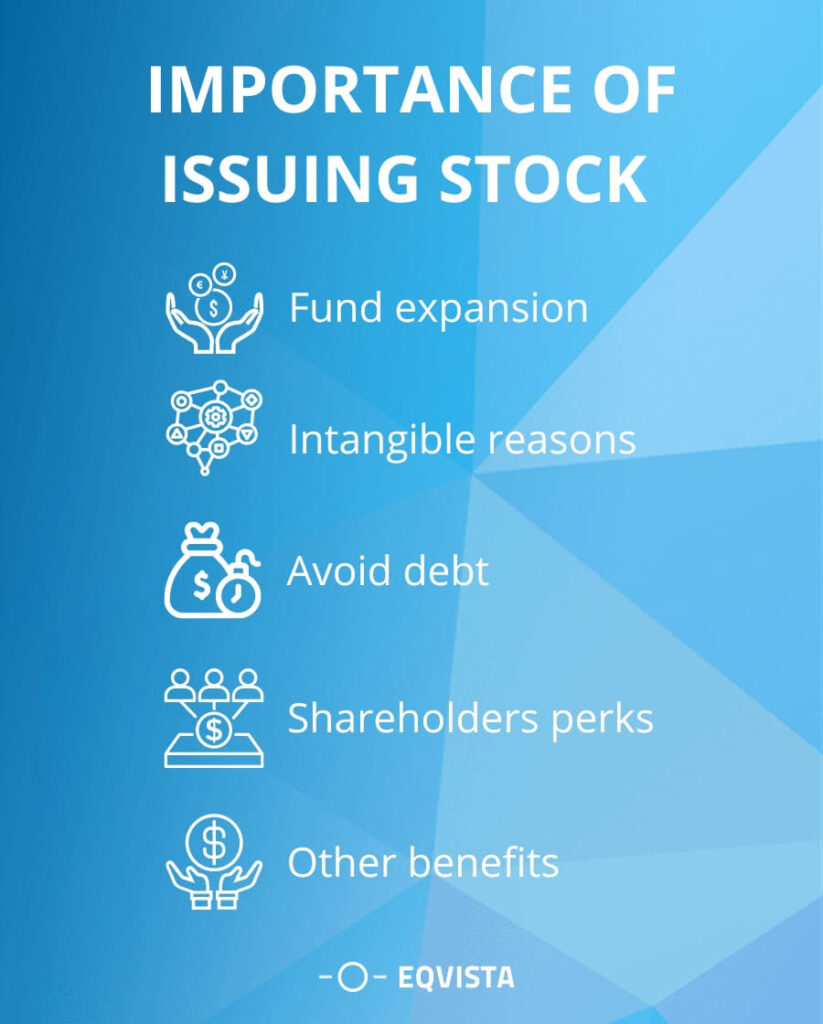
Beyond pure financial considerations, stock issuance plays a vital role in human capital management, a critical component of any successful enterprise.
Employee Stock Ownership Plans (ESOPs) and Stock Options
In today’s competitive job market, particularly in high-growth sectors like technology, attracting and retaining top talent is paramount. Companies frequently use stock-based compensation, such as Employee Stock Ownership Plans (ESOPs) and stock options, as powerful incentives. ESOPs allow employees to own shares in the company, while stock options give them the right to purchase company shares at a pre-determined price in the future.
These plans transform employees into stakeholders, directly aligning their personal financial success with the company’s performance. When employees own a piece of the company, they are more motivated to contribute to its success, work harder, and innovate, knowing that their efforts can lead to an increase in the value of their shares. This fosters a stronger sense of ownership, loyalty, and commitment, which can be invaluable for long-term organizational health and productivity.
Aligning Management and Shareholder Goals
Just as with general employees, stock-based compensation is a cornerstone of executive pay packages. Granting stock options, restricted stock units (RSUs), or performance shares to executives ensures that their interests are directly aligned with those of the company’s shareholders. When a significant portion of an executive’s compensation is tied to the company’s stock performance, they are incentivized to make decisions that enhance long-term shareholder value.
This alignment minimizes potential agency problems, where management might act in ways that benefit themselves but not necessarily the shareholders. By making executives significant owners, companies encourage a strategic focus on sustainable growth, profitability, and prudent financial management, ultimately benefiting all shareholders.
Achieving Market Presence and Liquidity
For many private companies, the ultimate goal is to “go public,” a process intricately linked with stock issuance that opens new avenues for growth and visibility.
Going Public (Initial Public Offering – IPO)
An Initial Public Offering (IPO) is arguably the most recognized form of stock issuance. When a privately held company decides to go public, it offers its shares to institutional investors and the general public for the first time. The primary purpose of an IPO is to raise substantial capital, often billions, to fund ambitious growth strategies that were previously impossible as a private entity.
Beyond capital, an IPO provides significant benefits:
- Liquidity for Early Investors and Founders: It allows early investors (venture capitalists, angel investors) and company founders to cash out their investments, realizing substantial returns.
- Enhanced Visibility and Prestige: Being publicly traded significantly raises a company’s profile, boosting its brand recognition and perceived credibility, which can attract new customers, partners, and talent.
- Access to Future Capital: Once public, a company has ongoing access to capital markets through secondary offerings, making it easier to raise funds for future needs.
Secondary Offerings and Follow-on Public Offerings (FPOs)
Even after an IPO, public companies may decide to issue additional shares through secondary offerings or Follow-on Public Offerings (FPOs). These are typically conducted to raise further capital for specific strategic initiatives, such as funding a major acquisition, reducing existing debt, or investing in a large-scale expansion project that emerged after the initial public listing.
FPOs demonstrate a company’s continued growth aspirations and its confidence in its future prospects. They allow existing public companies to tap into the market’s appetite for their stock to finance ongoing development without incurring new debt.
Valuation and Market Perception
Being publicly traded means a company’s shares are continuously valued by the market. This market valuation, reflected in its stock price, provides a clear, transparent benchmark of the company’s worth. This public valuation is crucial for several reasons: it guides potential M&A activities, influences investor confidence, and provides a tangible measure of success and performance. A strong stock price can enhance a company’s reputation, making it easier to secure partnerships, attract top-tier talent, and command respect within its industry.
Strategic and Operational Advantages
Finally, issuing stock offers several strategic and operational benefits that extend beyond mere capital accumulation.
Creating a Currency for Mergers & Acquisitions
As mentioned earlier, stock can serve as an invaluable currency for mergers and acquisitions. Instead of depleting cash reserves, an acquiring company can offer its shares to the target company’s shareholders. This “stock-for-stock” transaction is particularly useful for growth-oriented companies that prefer to preserve cash for other operational needs or for companies whose stock is highly valued, making it an attractive form of payment. It also allows the acquired entity’s shareholders to potentially participate in the future upside of the combined company.
Diversifying Ownership Base
By issuing shares to the public, a company diversifies its ownership base significantly. Instead of being owned by a few private investors or a small group of founders, ownership is spread across thousands or even millions of individual and institutional shareholders. This diversification can enhance market stability by reducing the impact of any single large shareholder’s decisions. It also broadens the company’s appeal, potentially attracting a wider range of investors and creating a more robust and liquid market for its shares.

Conclusion
The decision for a company to issue stocks is a multifaceted strategic maneuver rooted deeply in corporate finance, aiming to achieve a complex array of objectives. From the fundamental need to generate capital for expansion and R&D, to the critical function of enhancing financial health by reducing debt and improving creditworthiness, stock issuance serves as a powerful engine for growth. Furthermore, it plays an indispensable role in attracting and retaining top talent through ownership plans and aligning management’s interests with those of shareholders.
Beyond these internal benefits, going public through stock issuance elevates a company’s market presence, provides liquidity for early investors, and creates a valuable currency for strategic mergers and acquisitions. While dilution of existing ownership is a key consideration, the profound benefits of accessing public capital markets, optimizing financial structure, and fostering a culture of shared ownership often outweigh the perceived costs, making stock issuance a cornerstone strategy for companies aspiring for substantial growth, sustained innovation, and enduring success in the global economy.
aViewFromTheCave is a participant in the Amazon Services LLC Associates Program, an affiliate advertising program designed to provide a means for sites to earn advertising fees by advertising and linking to Amazon.com. Amazon, the Amazon logo, AmazonSupply, and the AmazonSupply logo are trademarks of Amazon.com, Inc. or its affiliates. As an Amazon Associate we earn affiliate commissions from qualifying purchases.