
The seemingly simple question of “what time do markets open?” unveils a complex, interconnected world of global finance. For investors, understanding market hours isn’t just about knowing when to place a trade; it’s about grasping the rhythm of capital, anticipating movements, and optimizing investment strategies. Whether you’re a seasoned day trader, a long-term investor, or simply curious about the mechanics of global economics, the timing of market operations holds profound implications. This comprehensive guide delves into the intricacies of market opening times worldwide, exploring why these hours matter, and how savvy investors can leverage this knowledge to their advantage.
The financial markets are not a singular entity operating on one universal clock. Instead, they comprise a vast network of exchanges scattered across different continents and time zones, each adhering to its own unique schedule. This global tapestry of market hours creates a continuous, albeit fragmented, flow of trading activity that influences asset prices and investor sentiment around the clock. Understanding these diverse schedules is the first step toward developing a holistic view of the financial landscape and making informed decisions.
The Core Rhythms: Major Stock Exchanges and Their Schedules
The backbone of traditional investing lies in the major stock exchanges, each with its defined operational hours. These schedules are influenced by local business customs, national holidays, and the regulatory frameworks of their respective countries. Knowing the timings of these key players is crucial for anyone engaging with public equities.
North American Powerhouses: NYSE and NASDAQ
In the United States, the New York Stock Exchange (NYSE) and the NASDAQ are arguably the most influential stock markets globally. Both exchanges operate on a synchronized schedule for their regular trading sessions:
- Regular Trading Hours: 9:30 AM to 4:00 PM Eastern Time (ET), Monday through Friday.
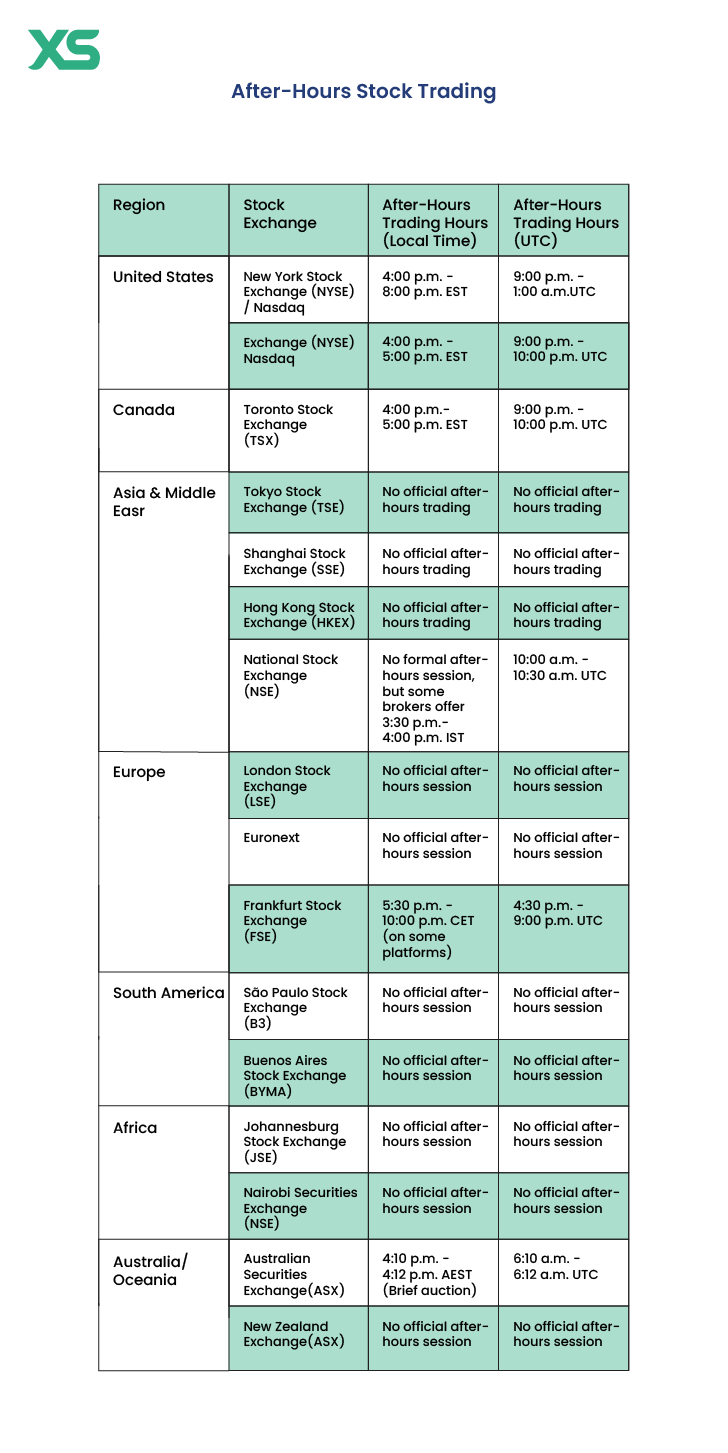
These hours represent the period of highest liquidity and price discovery, when the vast majority of retail and institutional trades occur. However, the trading day for serious investors often extends beyond these core hours. Both NYSE and NASDAQ facilitate “pre-market” and “after-hours” trading sessions, allowing participants to react to news events or execute trades outside the standard window. Pre-market trading typically runs from 4:00 AM to 9:30 AM ET, while after-hours trading extends from 4:00 PM to 8:00 PM ET. While these extended sessions offer flexibility, they often come with lower liquidity and increased volatility, which can lead to wider bid-ask spreads and greater price swings.
European Giants: London, Frankfurt, Paris
As the North American markets close, European markets are typically entering their late trading hours or have already concluded their day. The major European exchanges set the tone for the trading day in their respective regions and play a significant role in global financial flows:
- London Stock Exchange (LSE): 8:00 AM to 4:30 PM Greenwich Mean Time (GMT), Monday through Friday. The LSE is a critical hub, often serving as a bridge between Asian and American trading sessions.
- Deutsche Börse (Xetra): 9:00 AM to 5:30 PM Central European Time (CET), Monday through Friday. Located in Frankfurt, Xetra is Germany’s primary stock trading system.
- Euronext (Paris, Amsterdam, Brussels, Lisbon): 9:00 AM to 5:30 PM CET, Monday through Friday. Euronext is a pan-European exchange group, consolidating several national markets.
The staggered opening and closing times across Europe, combined with their time zone differences, create a dynamic environment where news from one market can influence others. For instance, strong economic data from Germany released during Xetra’s trading hours can immediately impact sentiment across the broader European market and even foreshadow movements in the upcoming US trading session.
Asian Anchors: Tokyo, Shanghai, Hong Kong
As the sun rises in the East, Asian markets kick off the global trading day. These markets are crucial for understanding global sentiment, especially concerning manufacturing, technology, and emerging economies:
- Tokyo Stock Exchange (TSE): 9:00 AM to 11:30 AM JST (morning session) and 12:30 PM to 3:00 PM JST (afternoon session), Monday through Friday. The TSE is known for its two-part trading day, with a mandatory lunch break.
- Shanghai Stock Exchange (SSE) & Shenzhen Stock Exchange (SZSE): 9:30 AM to 11:30 AM CST (morning session) and 1:00 PM to 3:00 PM CST (afternoon session), Monday through Friday. These exchanges are vital for insights into the Chinese economy.
- Hong Kong Stock Exchange (HKEX): 9:30 AM to 12:00 PM HKT (morning session) and 1:00 PM to 4:00 PM HKT (afternoon session), Monday through Friday. HKEX serves as a gateway to mainland China and a significant international financial center.
The opening of Asian markets often sets the initial tone for the subsequent European and American trading sessions, reacting to overnight news from the West and releasing their own key economic data. The “lunch break” observed in many Asian markets is a distinct feature that can create a temporary lull in trading activity and then renewed momentum upon reopening.
Beyond Standard Hours: Pre-Market, After-Hours, and Global Overlaps
While the standard trading hours define the most active periods, the reality of modern finance extends far beyond these fixed windows. Understanding extended trading sessions and how global markets interact across time zones is essential for a comprehensive investment strategy.
Extending the Trading Day: Pre-Market and After-Hours Sessions
As mentioned, major exchanges like the NYSE and NASDAQ offer pre-market and after-hours trading. These sessions, facilitated by electronic communication networks (ECNs), allow investors to trade before the official open and after the official close.
- Purpose and Dynamics: These sessions are primarily used by institutional investors, high-frequency traders, and individuals reacting swiftly to breaking news, earnings reports, or economic data released outside regular hours.
- Characteristics: Trades placed during these times typically have lower liquidity compared to regular hours, meaning fewer buyers and sellers. This can lead to wider bid-ask spreads, making it more expensive to execute trades, and increased volatility, as a smaller number of trades can have a disproportionate impact on price. While they offer flexibility, retail investors should approach these sessions with caution due to the heightened risks.
The Interconnected Web: Understanding Global Market Overlaps
The continuous nature of global financial news means that markets are rarely truly “closed.” The close of one major market often overlaps with the open of another, creating a ripple effect that transmits information and sentiment across continents.
- Seamless Transition: For example, the latter part of the European trading day often overlaps with the early hours of the North American session. This period can be particularly active as investors in both regions react to the same information or leverage arbitrage opportunities. Similarly, the end of the US trading day precedes the opening of Asian markets, allowing Asian investors to react to developments from the US.
- “Domino Effect”: A major economic announcement in Europe can immediately impact trading in London and Frankfurt, then influence futures markets that trade virtually 24/7, and finally manifest in the opening prices of US stocks. This interconnectedness underscores the importance of a global perspective, as events in seemingly distant markets can directly affect your portfolio.

Why Market Hours are a Cornerstone of Investment Strategy
Market hours are not merely a timetable; they are a fundamental aspect of market mechanics that directly influences liquidity, volatility, and the efficacy of various trading strategies. Understanding these dynamics is critical for optimizing performance and managing risk.
Liquidity, Volatility, and Price Discovery
The opening and closing hours of a market are typically the most active and volatile periods:
- Opening Bell: The market open is often characterized by a rush of orders accumulated overnight, leading to significant price movements and high volatility as investors react to news and events that occurred while the market was closed. This period is crucial for “price discovery” as the market attempts to find an equilibrium value.
- Mid-Day Lull: The middle of the trading day usually sees lower volatility and liquidity as most participants have absorbed the initial news and are awaiting further catalysts.
- Closing Bell: The end of the trading day often experiences another surge in activity and volatility, as traders close positions, institutions rebalance portfolios, and investors make last-minute adjustments. This “power hour” can be as dynamic as the opening.
- Impact on Execution: High liquidity during core hours typically means tighter bid-ask spreads and better execution prices. Conversely, during low-liquidity periods (like extended hours or mid-day lulls in some markets), trades can be executed at less favorable prices, leading to slippage.
Tailoring Strategies: Day Trading, Swing Trading, and Long-Term Investing
Different investment strategies inherently interact with market hours in distinct ways:
- Day Traders: These traders live and breathe by market hours. Their entire strategy revolves around exploiting intraday price movements, often focusing on the high volatility and liquidity at the open and close. Knowing exact market times, including pre-market and after-hours, is paramount for their entry and exit points.
- Swing Traders: Swing traders hold positions for several days or weeks. While they are less concerned with minute-by-minute fluctuations, they often use after-hours or pre-market movements to identify potential entry or exit points based on overnight news, aiming to capture larger price swings over a short to medium term.
- Long-Term Investors: For those with a buy-and-hold philosophy, the precise opening and closing times might seem less critical. However, even long-term investors need to be aware of major market shifts that often occur at the open in response to significant economic data or geopolitical events. Understanding these times helps them gauge market sentiment and potentially decide when to rebalance their portfolios or make new long-term allocations.
Navigating Information Flow and News Catalysts
Key financial information, such as company earnings reports, central bank announcements, and economic indicators (e.g., inflation data, job reports), is frequently released outside of regular trading hours or just before market open.
- Anticipation and Reaction: This strategic timing allows market participants to digest the information and formulate their responses, which then often manifest as immediate and significant price movements at the opening bell. Investors who are aware of these scheduled releases and their potential impact can better prepare for volatility and position themselves accordingly. The interconnectedness of global markets also means that a company’s earnings reported in Tokyo might affect related sectors in New York later that day.
Practical Considerations and Tools for the Modern Investor
Navigating the complex landscape of global market hours requires more than just memorizing schedules; it demands adaptability, access to reliable information, and the effective use of modern financial tools.
Adapting to Public Holidays and Unexpected Closures
Market schedules are not static. Public holidays are a regular occurrence that leads to market closures or reduced trading hours. These vary significantly by country (e.g., Thanksgiving in the US, Christmas globally, Lunar New Year in Asia). It’s crucial for investors, especially those with international portfolios, to consult a financial calendar to avoid surprises.
- Staying Informed: Major stock exchanges publish their holiday schedules well in advance on their official websites. Financial news outlets and trading platforms also integrate these calendars.
- Rare Events: Beyond scheduled holidays, markets can also experience unexpected closures or suspensions due to extreme events, such as natural disasters, major power outages, or severe geopolitical crises. While rare, these events underscore the need for vigilance and access to real-time news.
Leveraging Technology: Trading Platforms and Financial Data Providers
Modern technology has made it easier than ever to track global market hours and stay informed:
- Trading Platforms: Most reputable online brokerage platforms and trading software integrate global market hours directly into their interfaces. They often display the current status of various exchanges (open, closed, pre-market, after-hours) and provide customizable alerts for market openings, closures, or specific news events.
- Financial News Websites and Apps: Services like Bloomberg, Reuters, The Wall Street Journal, and CNBC offer comprehensive financial calendars, real-time market data, and breaking news that can impact market openings. Many also feature dedicated sections for global market hours and time zone converters.
- Specialized Apps: Numerous mobile applications are designed specifically for tracking market hours across different time zones, offering at-a-glance views and personalized notifications.
The 24/7 Frontier: Forex and Cryptocurrency Markets
While traditional stock markets adhere to fixed hours, a significant portion of the global financial landscape operates almost continuously:
- Foreign Exchange (Forex): The forex market, where currencies are traded, operates 24 hours a day, five days a week (from Sunday evening ET to Friday evening ET). This continuous operation is due to the sequential opening of major financial centers around the world (Sydney, Tokyo, London, New York). For forex traders, “market open” is a rolling concept, though liquidity peaks during the overlaps of major sessions.
- Cryptocurrency: Cryptocurrency markets are truly 24/7, 365 days a year. There are no official opening or closing times, as trading occurs on decentralized exchanges globally without traditional market holidays. This always-on nature introduces unique challenges and opportunities, including constant price discovery and the need for continuous monitoring for active traders.
These always-on markets highlight the broader trend towards a truly globalized and interconnected financial system, where information and capital flow ceaselessly, transcending traditional market boundaries.

Conclusion
The question “what time do markets open?” is far more nuanced than it appears on the surface. It serves as a gateway to understanding the intricate choreography of global finance, revealing how different time zones, regulatory frameworks, and cultural practices converge to create a dynamic marketplace. For any investor, from the novice to the expert, a deep appreciation of market hours is indispensable. It informs strategic decisions about when to buy or sell, how to manage risk during volatile periods, and where to seek out opportunities presented by the continuous flow of global information.
While the clock dictates when formal trading begins and ends for traditional assets, the global financial conversation is ceaseless. By embracing the complexity of diverse market schedules and leveraging the power of modern financial tools, investors can gain a significant edge, transforming a simple question about time into a powerful framework for smarter, more informed participation in the world’s capital markets.
aViewFromTheCave is a participant in the Amazon Services LLC Associates Program, an affiliate advertising program designed to provide a means for sites to earn advertising fees by advertising and linking to Amazon.com. Amazon, the Amazon logo, AmazonSupply, and the AmazonSupply logo are trademarks of Amazon.com, Inc. or its affiliates. As an Amazon Associate we earn affiliate commissions from qualifying purchases.