
For anyone engaged in the world of finance, from seasoned institutional traders to budding retail investors, knowing the exact operating hours of the New York Stock Exchange (NYSE) is fundamental. Often referred to as “The Big Board,” the NYSE is not just a marketplace; it’s a global financial barometer, influencing markets and investment decisions worldwide. Understanding its daily rhythm is crucial for strategic planning, risk management, and capitalizing on market opportunities. Today, like most trading days, the NYSE adheres to a structured schedule, designed to facilitate fair and orderly trading while accommodating the global nature of modern finance.

The primary function of the NYSE is to provide a platform for buying and selling publicly traded securities, primarily stocks. Its operational hours dictate when these transactions can occur, affecting everything from price discovery to liquidity. Missing a critical market move by being unaware of opening or closing times can have significant financial implications. This guide delves into the standard NYSE trading schedule, explores exceptions, and discusses why these timings are more than just numbers on a clock—they are critical elements of a robust financial strategy.
The Core Schedule: NYSE Trading Hours Explained
The New York Stock Exchange operates on a consistent daily schedule, a testament to the structured environment required for efficient financial markets. While the concept of a “today” implies a specific date, the regular operational framework remains largely unchanged, providing predictability for market participants.
Regular Trading Session
The backbone of the NYSE’s operations is its regular trading session. This is the period when the vast majority of trading volume occurs, characterized by high liquidity and tight bid-ask spreads. For most market participants, this is when their orders are filled under normal market conditions.
The NYSE opens for its regular trading session at 9:30 AM Eastern Time (ET). This moment, often heralded by a symbolic opening bell ceremony, marks the official start of the trading day. From this point until the closing bell, orders are matched, prices fluctuate based on supply and demand, and market news is rapidly absorbed and reflected in asset valuations. The market remains open throughout the day, without any scheduled breaks for lunch or other intervals, maintaining continuous price discovery.
The regular trading session concludes at 4:00 PM Eastern Time (ET). This closing bell signifies the end of the standard trading day, at which point the primary market for executing trades on the exchange floor and through electronic systems closes. While the physical exchange floor operations might cease, the ripple effects of the day’s trading continue to be analyzed, and preparation for the next session immediately begins for many. This six-and-a-half-hour window is critical, shaping portfolios and influencing global economic sentiment daily.
Pre-Market and After-Hours Trading: Expanding Your Opportunities
While the regular trading session is the primary focus, the NYSE also facilitates trading activity outside these core hours through electronic communication networks (ECNs). These extended hours offer both opportunities and unique challenges for investors.
Pre-Market Trading typically begins as early as 4:00 AM ET and runs until the regular market opens at 9:30 AM ET. This period allows investors to react to news that breaks overnight or before the official market opening, such as earnings reports, economic data releases, or geopolitical events. While offering flexibility, pre-market trading is generally characterized by lower liquidity and wider bid-ask spreads compared to the regular session. This can lead to increased price volatility and a higher risk of not having orders filled at desired prices.
After-Hours Trading commences immediately after the regular session closes at 4:00 PM ET and can extend as late as 8:00 PM ET. Similar to pre-market trading, after-hours sessions enable investors to respond to late-breaking news or make adjustments to their portfolios after the main market closes. Companies often release quarterly earnings reports just after the market closes, making after-hours trading particularly active for affected stocks. Like pre-market trading, after-hours liquidity tends to be thinner, and price swings can be more pronounced, necessitating careful consideration and risk management. For international traders, these extended hours can sometimes align more conveniently with their local time zones, offering a window into the U.S. market that would otherwise be difficult to access during their normal business day.
Key Considerations for International Traders
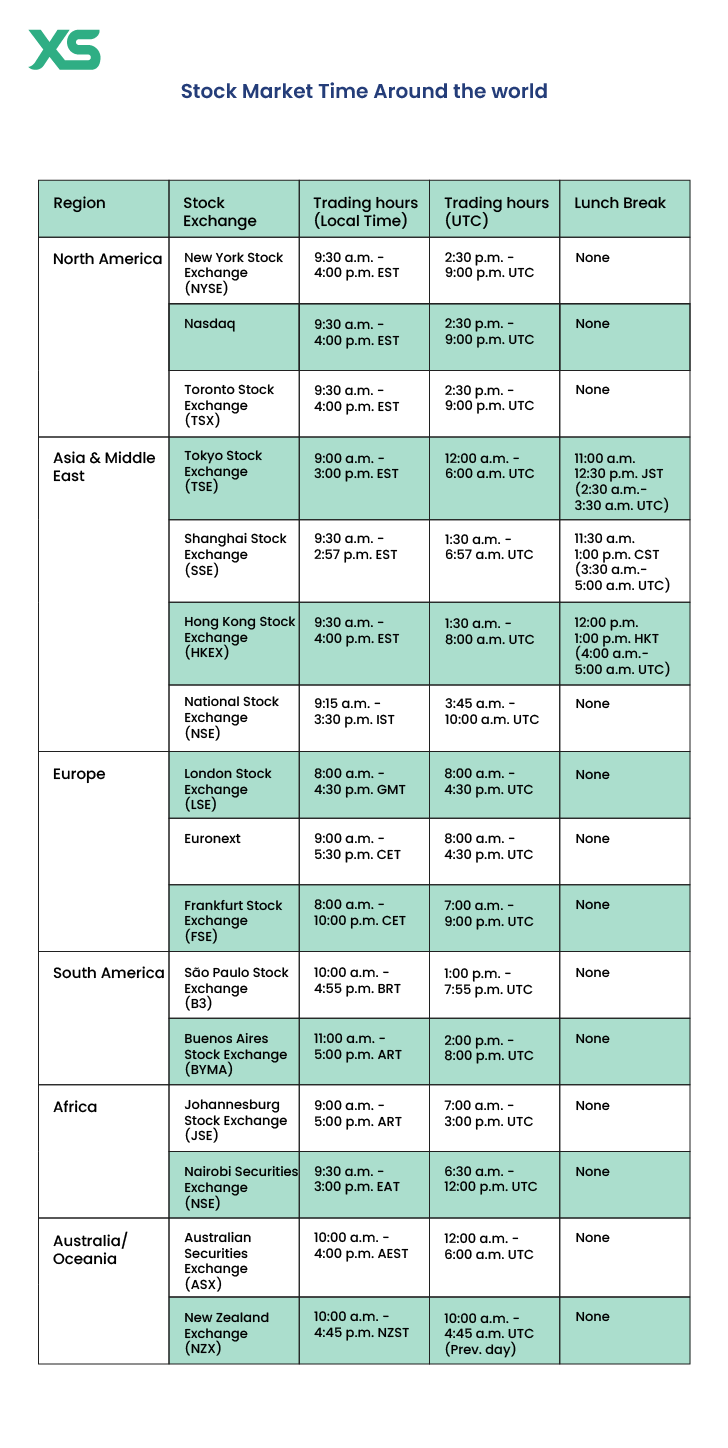
For investors operating outside the Eastern Time Zone, understanding the NYSE’s schedule in relation to their local time is paramount. A trader in London (GMT), for instance, would see the market open at 2:30 PM GMT and close at 9:00 PM GMT. An investor in Tokyo (JST) would have to adjust to an even greater time difference, with the market opening late at night local time and closing in the early morning. This time difference often requires international traders to adapt their schedules, utilize automated trading systems, or rely heavily on after-hours and pre-market sessions, understanding the associated risks of reduced liquidity and increased volatility. It also highlights the “follow the sun” nature of global finance, where financial news and market activity constantly shift across different time zones.
Beyond the Clock: Why Trading Hours Matter for Investors
The specific timing of the NYSE’s operations is not merely an administrative detail; it profoundly impacts market dynamics, investment strategies, and potential returns. Understanding the implications of these hours can give investors a significant edge.
Market Volatility and Opening Bells
The opening and closing bells of the NYSE are often periods of heightened activity and increased volatility. At 9:30 AM ET, a rush of orders that have accumulated overnight (from pre-market activity, news, or investor decisions) hits the market simultaneously. This concentrated demand and supply can lead to significant price movements, especially for stocks that have been subject to major news. Day traders often look to capitalize on these initial surges or dips, but the increased volatility also carries higher risk. Similarly, the final minutes leading up to the 4:00 PM ET close can see a flurry of activity as institutional investors rebalance portfolios, settle positions, or attempt to execute large orders before the close, sometimes leading to “power hour” price swings. These periods require vigilance and a clear understanding of one’s risk tolerance.
Liquidity and Spreads
Liquidity, the ease with which an asset can be converted into cash without affecting its market price, is directly tied to trading hours. During the regular session (9:30 AM – 4:00 PM ET), the NYSE experiences its highest liquidity, meaning there are usually many buyers and sellers active in the market. This high volume allows for efficient order execution with minimal impact on prices. Conversely, during pre-market and after-hours sessions, liquidity is significantly lower. With fewer participants, larger orders can have a more substantial impact on stock prices, and the bid-ask spread (the difference between the highest price a buyer is willing to pay and the lowest price a seller is willing to accept) tends to widen. A wider spread means higher transaction costs for investors, making it more expensive to enter or exit positions. Strategic investors recognize that trading when liquidity is highest typically results in better execution prices and reduced market impact.
Impact on Day Trading vs. Long-Term Investing
The relevance of NYSE trading hours varies significantly depending on an investor’s strategy. For day traders, who aim to profit from short-term price fluctuations and close all positions before the market closes, the precise timing of the opening and closing bells, along with intraday volatility, is paramount. They often focus on the most active and liquid periods to maximize their opportunities, sometimes avoiding the less predictable extended hours. Their success hinges on rapid execution and real-time market monitoring within the core trading window.
For long-term investors, who typically buy and hold assets for months or years, the minute-to-minute fluctuations around opening and closing times are less critical. Their focus is on fundamental analysis, economic trends, and long-term growth prospects rather than short-term price movements. While they still need to be aware of when they can place orders, the immediate impact of market open/close volatility on their long-term strategy is often minimal. However, major news released outside of regular hours can still influence their portfolio’s value at the next day’s open, requiring them to stay informed regardless of their investment horizon.
Navigating Market Holidays and Special Closures
While the regular 9:30 AM to 4:00 PM ET schedule is standard, the NYSE does observe a number of holidays and can, on rare occasions, implement special closures or shortened trading days. Being aware of these exceptions is crucial to avoid missed opportunities or unexpected delays in executing trades.
Federal Holidays Observed by the NYSE
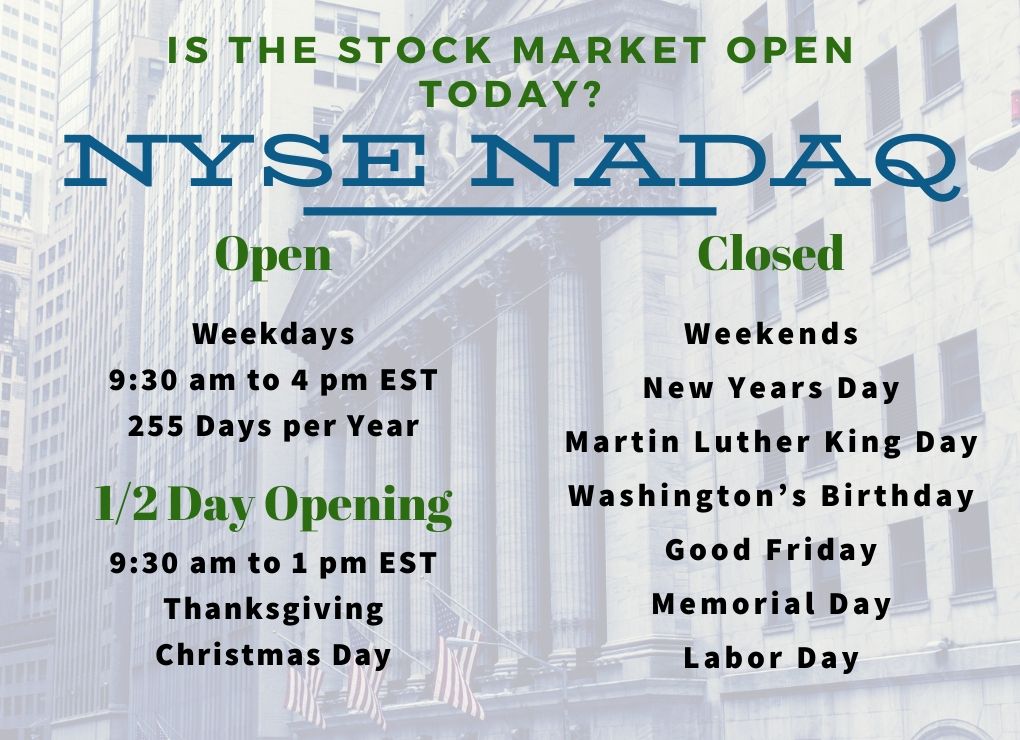
The NYSE generally closes in observance of most U.S. federal holidays. These closures are typically announced well in advance and are consistent from year to year. Common holidays when the NYSE is closed include:
- New Year’s Day
- Martin Luther King, Jr. Day
- Washington’s Birthday (Presidents’ Day)
- Good Friday (though not a federal holiday, it’s widely observed by financial markets)
- Memorial Day
- Juneteenth National Independence Day
- Independence Day (July 4th)
- Labor Day
- Thanksgiving Day
- Christmas Day
It’s important to note that if a holiday falls on a weekend, the market closure may be observed on the preceding Friday or the following Monday. For example, if Christmas Day falls on a Saturday, the NYSE would typically be closed on Friday, December 24th. These closures mean no trading activity on the exchange, and any orders placed would be queued for the next trading day.
Early Closures and Market Interruptions
Beyond full-day holidays, the NYSE occasionally operates on a shortened schedule, particularly the day before or after certain holidays. For instance, the market often closes early at 1:00 PM ET on the day after Thanksgiving (Black Friday) and sometimes on Christmas Eve, if it falls on a weekday. These shortened days still have pre-market and after-hours trading, but the core session is significantly reduced.
Rarely, the NYSE might implement unscheduled closures or trading halts due to extreme circumstances such as severe weather, technical glitches, or significant national emergencies. While infrequent, these events can disrupt trading and impact market operations. Historically, such closures have been exceptional, demonstrating the exchange’s commitment to continuous operation. Information regarding such unusual events is usually disseminated rapidly through financial news outlets and the NYSE’s official channels.
Staying Informed: Reliable Sources for Schedule Changes
Given the critical nature of trading hours, investors must rely on accurate and timely information regarding any changes to the NYSE’s schedule. The most reliable sources include:
- Official NYSE Website: The New York Stock Exchange’s official website provides a comprehensive calendar of observed holidays and any special hours.
- Reputable Financial News Outlets: Major financial news organizations (e.g., Bloomberg, Wall Street Journal, Reuters, CNBC) consistently report on market closures and schedule changes.
- Brokerage Platforms: Most online brokerage platforms will clearly display upcoming market holidays and adjusted trading hours to their clients.
- Financial Market Data Providers: Services like Google Finance or Yahoo Finance often include market status updates.
Making it a habit to check these sources, especially around major holiday periods, can prevent misunderstandings and ensure that investment strategies are aligned with actual market availability.
The Strategic Edge: Maximizing Your Trading Around NYSE Hours
Understanding NYSE operating hours isn’t just about knowing when to place a trade; it’s about developing a strategic approach that leverages these timings to one’s advantage. Smart investors and traders craft their strategies around the market’s pulse, rather than simply reacting to it.
Pre-Open Analysis and Strategy Formulation
The time leading up to the 9:30 AM ET open is a critical period for strategy formulation. Smart traders don’t just wait for the bell; they use the pre-market hours (4:00 AM – 9:30 AM ET) to analyze overnight news, earnings reports released after the previous close, and any significant global market movements. By observing pre-market trading activity, they can gauge potential opening gaps, identify stocks with unusual volume, and anticipate the initial direction of the market. This analytical period allows for adjustments to watchlists, refinement of entry and exit points, and preparation of orders to be executed once the regular session begins. A well-informed pre-open strategy can significantly reduce emotional decision-making once the fast-paced trading day commences.
Managing Risk in Volatile Periods
As discussed, the opening and closing hours of the NYSE are often the most volatile. A key aspect of maximizing trading around these times is effective risk management. For those trading during these periods, it’s crucial to:
- Use Stop-Loss Orders: These automatic orders help limit potential losses by selling a security if it drops to a specified price, protecting capital during rapid price swings.
- Manage Position Sizes: Reducing the size of trades during highly volatile periods can limit potential losses if the market moves unfavorably.
- Monitor News Flow Closely: Sudden announcements can trigger significant volatility. Staying abreast of real-time news during these hours is essential.
- Understand Spreads: Be aware that wider bid-ask spreads during pre-market and after-hours can impact the effective price of your trades, requiring larger price movements to turn a profit.
Risk management isn’t about avoiding risk entirely, but about understanding and controlling exposure, especially when market conditions are less predictable.
After-Hours Trading: Opportunities and Pitfalls
After-hours trading (4:00 PM – 8:00 PM ET) presents a unique set of opportunities, especially for those reacting to corporate earnings or other significant disclosures made post-market close. A company releasing better-than-expected earnings might see its stock price surge in after-hours trading, offering early movers a chance to capitalize. Conversely, negative news can lead to rapid declines.
However, these opportunities come with notable pitfalls. The most significant is reduced liquidity, which can lead to larger price movements on smaller volumes. This can make it difficult to enter or exit positions at desired prices, and large orders can significantly impact the stock’s quote. Wider spreads also mean that even small trades incur higher relative costs. Consequently, after-hours trading is generally best suited for experienced investors who have a high tolerance for risk, a keen understanding of market mechanics, and access to sophisticated tools for monitoring and executing trades efficiently. For many, simply observing after-hours activity to inform the next day’s regular session strategy is a more prudent approach.
The Global Context: How NYSE Hours Intersect with World Markets
The New York Stock Exchange does not operate in a vacuum. Its trading hours are intrinsically linked to a global network of financial markets, creating a continuous flow of capital and information across different time zones. Understanding this global interplay is vital for a comprehensive view of investment.
Arbitrage Opportunities and Overnight News
The staggered opening and closing times of major global exchanges (e.g., Asian markets, European markets, then North American markets) create a sequence of activity that can give rise to arbitrage opportunities or influence prices in subsequent markets. News breaking in Asia overnight, for example, can impact European markets, which in turn influences the NYSE’s opening sentiment. Investors who monitor these preceding markets can often anticipate how the NYSE might react, positioning themselves accordingly. Arbitrageurs, specifically, look for temporary price differences for the same asset across different exchanges or time zones, exploiting these discrepancies before they normalize. This requires a deep understanding of market hours and rapid execution capabilities, often relying on algorithmic trading.
The 24/7 Global Economy
While the NYSE itself has defined hours, the underlying economic forces and corporate activities never truly cease. Businesses operate globally, news is reported instantaneously, and economic indicators are released around the clock. This creates a “24/7 global economy” where events occurring outside NYSE hours can significantly impact U.S. markets upon opening. For instance, a major political development in Europe or a critical economic data release from China overnight can set the tone for the NYSE’s opening session, influencing pre-market trading and the initial regular session movements. Astute investors track global news streams continuously, understanding that the market’s response isn’t confined to a 9-to-5 schedule, but rather a reflection of ongoing worldwide events.
Syncing Your Portfolio with Global Events
For investors with diversified portfolios that include international assets, or those simply looking to manage their exposure to global risks, syncing their investment strategy with global events and market hours is essential. This could involve adjusting U.S. equity positions based on European market trends, or hedging against currency fluctuations influenced by Asian trading sessions. Understanding when major economic reports from different countries are released, and how those releases might impact the NYSE, allows for more proactive and informed decision-making. In an increasingly interconnected world, the NYSE’s schedule is just one piece of a much larger, always-moving puzzle, and a truly insightful investor views it within this broader, global context.
In conclusion, knowing what time the NYSE opens today, and every trading day, is the baseline for anyone involved in the financial markets. However, the true value lies in understanding the nuanced implications of these hours: from managing volatility and liquidity to leveraging pre- and after-hours trading, navigating holidays, and situating the NYSE within the context of a 24/7 global financial landscape. Armed with this comprehensive understanding, investors can develop more robust strategies, manage risk more effectively, and ultimately make more informed decisions to navigate the dynamic world of finance.
aViewFromTheCave is a participant in the Amazon Services LLC Associates Program, an affiliate advertising program designed to provide a means for sites to earn advertising fees by advertising and linking to Amazon.com. Amazon, the Amazon logo, AmazonSupply, and the AmazonSupply logo are trademarks of Amazon.com, Inc. or its affiliates. As an Amazon Associate we earn affiliate commissions from qualifying purchases.