
Understanding when stock markets open and close is fundamental for any investor, from day traders to long-term strategists. While the question seems straightforward, the answer encompasses a complex ecosystem of standard trading hours, extended sessions, and global market variations, all of which significantly impact investment decisions and risk management. For those navigating the financial markets, a precise grasp of these timings is not just about convenience; it’s about strategic advantage, managing liquidity, and reacting effectively to market-moving news.
The Standard Operating Hours of Major U.S. Stock Exchanges
For most individual investors, the primary concern revolves around the U.S. stock markets, specifically the New York Stock Exchange (NYSE) and the Nasdaq Stock Market. These two exchanges represent the backbone of American equity trading, hosting thousands of publicly traded companies and facilitating trillions of dollars in transactions annually.
Core Trading Session: NYSE and Nasdaq
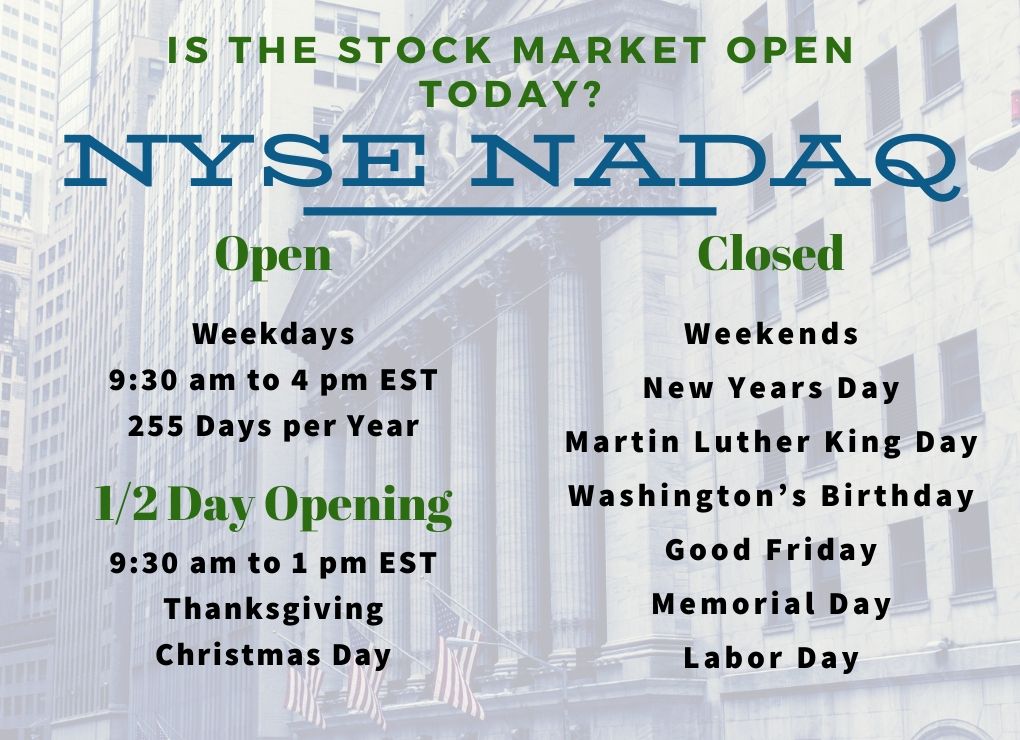
The standard trading hours for both the NYSE and Nasdaq are remarkably consistent and widely recognized. They operate from 9:30 AM Eastern Time (ET) to 4:00 PM ET, Monday through Friday. This six-and-a-half-hour window is often referred to as the “regular trading session” or “core market hours.” During this period, liquidity is typically at its highest, bid-ask spreads are generally narrowest, and the vast majority of trading volume occurs. These hours are designed to accommodate a broad range of market participants, from institutional investors to retail traders, ensuring robust price discovery and efficient market operations.
The opening and closing bells of these exchanges are symbolic events, often accompanied by heightened trading activity. The opening bell, at 9:30 AM ET, signals the commencement of the trading day and often sees a flurry of activity as orders accumulated overnight are executed. Similarly, the closing bell at 4:00 PM ET marks the end of the official trading day, often leading to a spike in volume as investors adjust positions or execute trades based on end-of-day strategies.
Understanding Pre-Market and After-Hours Trading
While 9:30 AM to 4:00 PM ET defines the core session, the reality of modern stock trading extends well beyond these hours. Electronic trading platforms and communication networks have enabled significant trading activity to occur both before the market officially opens and after it closes.
Pre-market trading typically begins as early as 4:00 AM ET and runs until the market opens at 9:30 AM ET. After-hours trading commences immediately after the 4:00 PM ET closing bell and can extend until 8:00 PM ET. These extended sessions allow investors to react quickly to news that breaks outside of regular market hours, such as corporate earnings announcements, macroeconomic data releases, or geopolitical developments.
However, trading during these extended hours comes with its own set of characteristics and risks. Liquidity is generally much lower compared to regular hours, meaning there are fewer buyers and sellers for a given stock. This reduced liquidity can lead to wider bid-ask spreads and increased price volatility, making it more challenging to execute trades at desired prices. Investors participating in pre-market or after-hours trading often need to use limit orders to control the price at which their trades are executed, rather than relying on market orders which can be filled at less favorable prices due to the lower liquidity.
Market Holidays and Early Closures
Stock markets, like most businesses, observe a number of holidays throughout the year. On these designated market holidays, the exchanges remain closed for the entire day. Common U.S. market holidays include New Year’s Day, Martin Luther King, Jr. Day, Presidents’ Day, Good Friday, Memorial Day, Juneteenth National Independence Day, Independence Day, Labor Day, Thanksgiving Day, and Christmas Day. It’s crucial for investors to be aware of these dates to avoid unexpected disruptions to their trading plans.
In addition to full-day closures, the U.S. stock markets occasionally have early closures, particularly on days preceding or following certain holidays. For instance, the market might close early (e.g., at 1:00 PM ET) on the day before Independence Day or Christmas Eve. These early closures are typically announced well in advance by the exchanges and should be factored into an investor’s trading schedule, as liquidity and trading dynamics can shift significantly during shortened sessions.
Global Perspectives: A World of Trading Windows
The financial world operates 24/7 across various time zones, meaning that while U.S. markets are closed, major exchanges in other parts of the world are actively trading. For investors with international holdings or those seeking diversified exposure, understanding global market hours is indispensable.
Key Asian Markets and Their Closing Rituals
Asian markets are typically the first to open and close in a new trading day, following the international date line. Key exchanges include:
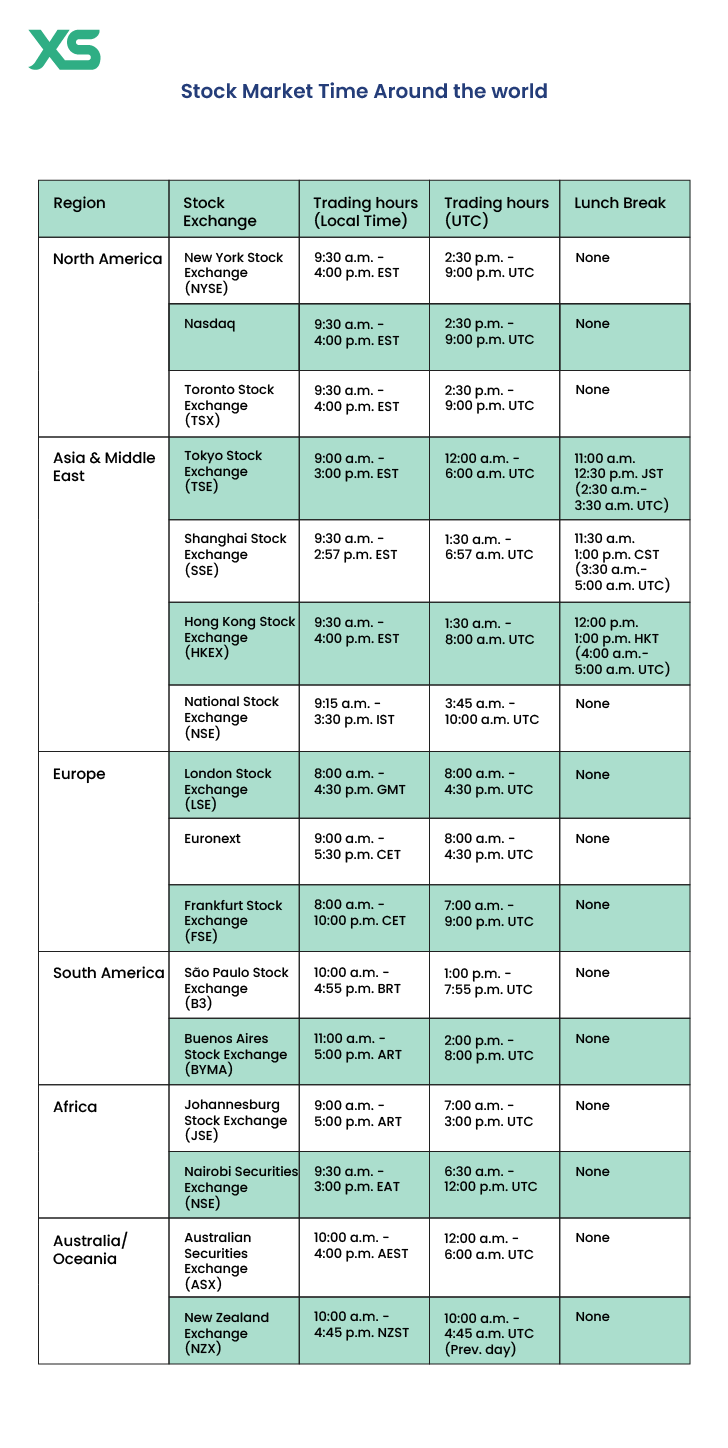
- Tokyo Stock Exchange (TSE): Generally operates from 9:00 AM to 11:30 AM JST (Japan Standard Time) and then 12:30 PM to 3:00 PM JST, with an hour lunch break.
- Hong Kong Stock Exchange (HKEX): Trading hours are usually 9:30 AM to 12:00 PM HKT (Hong Kong Time) and 1:00 PM to 4:00 PM HKT, also with a lunch break.
- Shanghai Stock Exchange (SSE) and Shenzhen Stock Exchange (SZSE): Similar to Hong Kong, these operate from 9:30 AM to 11:30 AM CST (China Standard Time) and 1:00 PM to 3:00 PM CST.
- Australian Securities Exchange (ASX): Trading runs from 10:00 AM to 4:00 PM AEST (Australian Eastern Standard Time).
These markets play a critical role in global price discovery, especially for commodities and companies with significant operations or revenues tied to the Asian economy. News released during these hours can have ripple effects that influence European and U.S. markets when they open.
European Exchanges: From London to Frankfurt
As Asian markets wind down, European markets begin their trading day, often overlapping with the later hours of Asian trading and the early hours of U.S. pre-market trading. Key European exchanges include:
- London Stock Exchange (LSE): Operates from 8:00 AM to 4:30 PM GMT/BST (Greenwich Mean Time/British Summer Time), making it one of the longest trading days in Europe.
- Euronext (Paris, Amsterdam, Brussels, Lisbon): Generally runs from 9:00 AM to 5:30 PM CET (Central European Time).
- Frankfurt Stock Exchange (XTRA): Also operates from 9:00 AM to 5:30 PM CET.
European markets are crucial for investors interested in multinational corporations, luxury goods, banking, and industrials. Economic data, central bank announcements, and political developments from Europe can significantly influence global sentiment and market direction, often impacting U.S. markets upon their open.
Navigating Time Zones for International Investing
For investors trading across multiple markets, managing different time zones is a significant challenge. A trade executed in London might need to consider its impact on an asset trading simultaneously in New York or anticipate its effect on Tokyo when it opens hours later. Financial news and corporate announcements often come out according to local market schedules, requiring investors to adjust their monitoring and reaction times. Many financial platforms offer integrated world clock features or market session overlays to help investors visualize when different markets are active, mitigating the risk of missing critical windows or news events.
Why Knowing Closing Times is Crucial for Investors
The simple act of a market closing has profound implications for investment strategy, risk management, and overall portfolio performance. It’s far more than just the end of trading for the day; it’s a critical juncture that shapes market dynamics.

Impact on Liquidity and Price Spreads
As a market approaches its closing bell, liquidity often experiences fluctuations. The immediate minutes leading up to 4:00 PM ET on U.S. exchanges can see a surge in trading volume as institutional investors execute large orders, rebalance portfolios, or attempt to ‘mark the close’ – influencing a stock’s closing price. This increased activity can provide opportunities but also brings volatility.
Conversely, in after-hours or pre-market trading, liquidity is significantly diminished. Fewer participants mean that even small orders can move prices disproportionately. This reduced depth of market leads to wider bid-ask spreads, meaning the difference between the highest price a buyer is willing to pay and the lowest price a seller is willing to accept becomes larger. For investors, wider spreads translate to higher transaction costs and greater difficulty in getting trades filled at favorable prices, particularly for less liquid stocks.
Strategic Implications for Order Placement
Understanding closing times is vital for deciding when and how to place orders. A market order placed just before the close might be filled at a price significantly different from what was anticipated due to end-of-day volatility or order imbalances. Many traders opt for limit orders when placing trades around market closing times or during extended hours, specifying the maximum price they are willing to pay (for buys) or the minimum price they are willing to accept (for sells). This approach provides control over execution price, albeit with the risk that the order might not be filled if the market doesn’t reach the specified limit.
Furthermore, some investors might use “market-on-close” (MOC) or “limit-on-close” (LOC) orders, which are special order types designed to be executed at or near the closing price. These are particularly popular with institutional investors who need to ensure their portfolio valuations accurately reflect end-of-day prices or those who trade based on closing benchmark indexes.
End-of-Day Volatility and News Reactions
The period around the market close is often a hotbed of activity and volatility. Traders might rush to close out positions to avoid overnight risk, or institutions might execute large block trades. This can lead to rapid price swings in the final minutes of trading.
Critically, many companies choose to release significant news, such as quarterly earnings reports, mergers and acquisitions announcements, or major product updates, after the market closes. This strategy is often employed to allow investors time to digest the information before the next trading session begins, theoretically reducing immediate panic or irrational reactions. However, this also fuels after-hours trading activity, where prices can react sharply and dramatically to such news, often setting the tone for the next day’s opening. Savvy investors pay close attention to scheduled news releases and earnings calls, positioning themselves to react accordingly during extended hours or at the next market open.
The Mechanics and Considerations of Extended Hours Trading
While the regular market close signals the end of conventional trading, the financial markets truly pause for very few hours each day. Extended hours trading has become an integral part of modern investing, facilitated by technology and catering to a more globally integrated market.
How Extended Hours Trading Works
Extended hours trading is conducted primarily through Electronic Communication Networks (ECNs) rather than the traditional exchange floor. ECNs are automated systems that match buy and sell orders electronically, allowing for trading outside of regular market hours. These platforms pool orders from various market participants, including institutional investors, professional traders, and retail investors who have access through their brokers.
When an investor places an order during pre-market or after-hours, it’s typically routed through an ECN. The mechanics are similar to regular trading, but with specific limitations. For instance, not all order types might be available, and brokers often require extended hours orders to be limit orders to protect clients from adverse price movements due to low liquidity.
Risks and Opportunities for After-Hours Participants
Participating in extended hours trading presents both distinct risks and unique opportunities.
Risks include:
- Lower Liquidity: As discussed, fewer participants mean fewer bids and offers, leading to difficulty in executing large orders without significant price impact.
- Wider Spreads: The gap between bid and ask prices is usually larger, increasing transaction costs.
- Increased Volatility: Prices can fluctuate wildly on thin volume, making it challenging to predict short-term movements.
- Uncertainty and News Gaps: News released during extended hours might be incomplete or subject to rapid interpretation, leading to swift and sometimes irrational price movements that can reverse the next day.
- Professional Competition: A higher proportion of institutional traders and professionals often dominate extended hours, potentially disadvantaging retail investors.
Opportunities include:
- Immediate Reaction to News: Investors can react instantly to earnings reports or breaking news without waiting for the next regular session.
- Flexibility: It offers flexibility for investors who cannot monitor the market during standard hours due to work or other commitments.
- Arbitrage Potential: Savvy traders might identify temporary mispricings between extended hours and the expectations for the next day’s open.
- Convenience for Global Investors: For investors in different time zones, extended hours can align better with their local working day.
The Role of Electronic Communication Networks (ECNs)
ECNs are pivotal to extended hours trading. They are essentially digital marketplaces that facilitate anonymous trading by matching buy and sell orders automatically. Major ECNs include Arca, Nasdaq, and BATS. When you place an extended hours trade through your broker, it’s likely routed to one of these ECNs. They operate 24 hours a day, providing continuous price discovery and liquidity aggregation, albeit at varying levels depending on the time of day and the specific securities traded. The rise of ECNs has democratized access to trading outside traditional hours, allowing a broader range of investors to participate in the financial markets around the clock.
Best Practices for Investors Navigating Market Hours
A comprehensive understanding of market closing times and the broader trading landscape is a cornerstone of effective financial planning and successful investing. Integrating this knowledge into your strategy can protect your capital and unlock new opportunities.
Integrating Market Schedules into Your Trading Strategy
Whether you’re a long-term investor or an active trader, market hours should influence your strategy. For long-term investors, being aware of market holidays and early closures helps in planning when to execute large block trades or rebalance portfolios. It also informs when to expect dividend payouts or corporate actions to take effect. For active traders, knowing the precise rhythm of the market – the opening surge, mid-day lull, and closing volatility – can dictate trade entry and exit points, the types of orders used, and risk exposure. Always consider the market’s liquidity profile during the specific hours you plan to trade. If you are prone to emotional decisions, avoiding highly volatile periods like after-hours trading or the final minutes of a session might be a prudent strategy.
Leveraging Financial Tools for Real-Time Information
Modern financial technology offers an array of tools to help investors keep track of market hours and related information. Most online brokerage platforms provide real-time market data, including current trading hours, upcoming holidays, and extended hours trading availability. Financial news websites, dedicated market data providers, and even many smartphone apps offer customizable alerts for market open/close, significant news events, and earnings announcements. Setting up a diversified suite of these tools can provide a crucial edge, ensuring you’re always informed about when and where trading is taking place. Furthermore, many platforms offer detailed pre-market and after-hours quotes, allowing investors to gauge sentiment and potential price movements before the regular session begins.
The Importance of Due Diligence Beyond Regular Hours
The market’s close does not signal an end to due diligence. Economic reports, corporate press releases, and geopolitical developments frequently occur outside regular trading hours. Smart investors use this time for research, analysis, and strategic planning. Reviewing company filings, analyst reports, and news headlines that break overnight or after the market closes allows for thoughtful, rather than reactive, decision-making. By staying informed and doing your homework when the market is quiet, you position yourself to make well-considered moves when trading resumes, mitigating the risks associated with rushed decisions during active market hours. This proactive approach to information gathering is a key differentiator for successful long-term financial health and astute short-term trading.
aViewFromTheCave is a participant in the Amazon Services LLC Associates Program, an affiliate advertising program designed to provide a means for sites to earn advertising fees by advertising and linking to Amazon.com. Amazon, the Amazon logo, AmazonSupply, and the AmazonSupply logo are trademarks of Amazon.com, Inc. or its affiliates. As an Amazon Associate we earn affiliate commissions from qualifying purchases.