
For millions of Americans, Social Security represents the bedrock of retirement planning. Yet, despite its importance, the system remains a “black box” for many. The question “How much Social Security will I get?” is not just about a single number; it is about understanding a complex formula that factors in your lifetime earnings, the age at which you choose to stop working, and the economic conditions at the time of your retirement.
In the realm of personal finance, Social Security should be viewed as a guaranteed, inflation-indexed annuity. Whether you are decades away from retirement or just a few years out, understanding the mechanics of these payments is essential for building a robust financial plan. This guide breaks down the calculation process, the impact of timing, and the strategies you can use to ensure you receive the maximum benefit possible.
Understanding the Foundation: How the Social Security Administration Calculates Your Benefit
To estimate your future check, you must first understand how the Social Security Administration (SSA) arrives at that figure. Unlike a private pension that might be based on your final five years of salary, Social Security looks at a much broader horizon.
The 35-Year Average (AIME)
The calculation begins with your “Average Indexed Monthly Earnings” (AIME). The SSA looks at your entire work history and selects the 35 years in which you earned the most money. These earnings are “indexed” to account for changes in average wages over time, ensuring that $20,000 earned in 1985 is weighted appropriately against $20,000 earned in 2023.
A critical takeaway for financial planning is the “35-year rule.” If you have only worked for 30 years, the SSA will fill the remaining five years with zeros. This significantly lowers your average and, consequently, your monthly check. For those looking to boost their income, working even a few extra years in your 60s to replace low-earning years from your youth can have a measurable impact on your benefit.
Primary Insurance Amount (PIA) and “Bend Points”
Once your AIME is calculated, the SSA applies a formula to determine your Primary Insurance Amount (PIA). This is the monthly amount you would receive if you retired exactly at your Full Retirement Age (FRA). The formula is progressive, meaning it is designed to replace a higher percentage of income for lower-wage earners than for higher-wage earners.
The formula uses “bend points”—specific dollar thresholds that change annually. For example, the SSA might replace 90% of your first $1,100 of monthly earnings, but only 32% of earnings between $1,100 and $6,700, and only 15% of earnings above that. This progressive structure is why high earners often feel their Social Security check is small relative to their previous salary, whereas lower-income retirees find it covers a larger portion of their needs.
Inflation and Cost-of-Living Adjustments (COLA)
One of the most valuable features of Social Security is the Cost-of-Living Adjustment (COLA). Every year, the SSA evaluates the Consumer Price Index for Urban Wage Earners and Clerical Workers (CPI-W). If inflation has risen, your benefit increases accordingly. This protection is rare in the world of private finance and serves as a vital hedge against the eroding purchasing power of the dollar during a long retirement.
The Timing Pivot: How Your Claiming Age Impacts the Final Number
While your earnings history sets the baseline, the single most important decision you will make regarding Social Security is when to claim. You can start as early as age 62 or as late as age 70.
Full Retirement Age (FRA) Explained
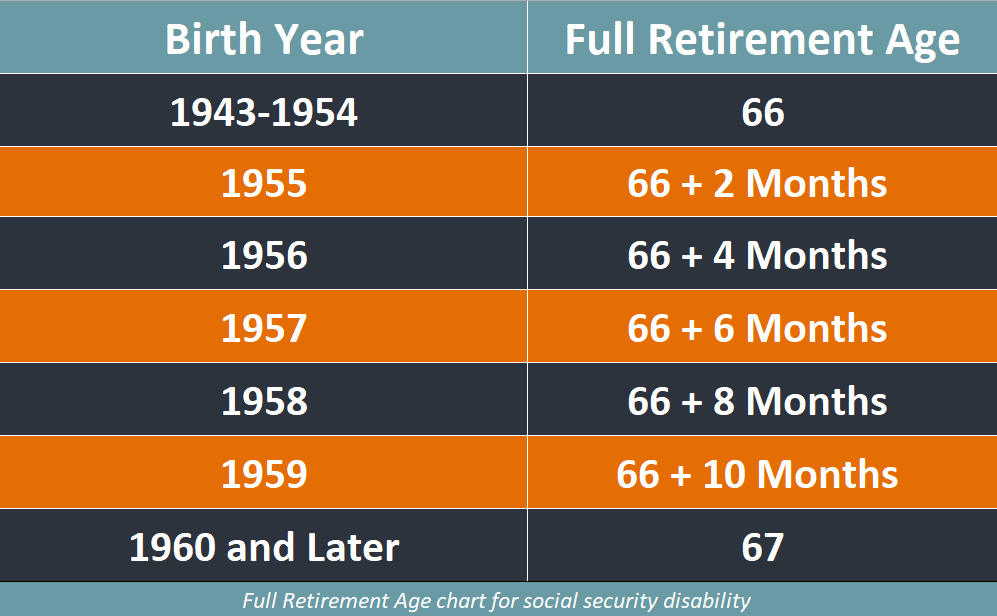
Your Full Retirement Age is the point at which you receive 100% of your calculated PIA. For anyone born in 1960 or later, the FRA is 67. If you were born earlier, it may be 66 and a few months. Knowing your FRA is the “north star” of your retirement strategy, as all adjustments for early or late filing are calculated relative to this age.
The Cost of Filing Early (Age 62)
You can choose to take “early retirement” at age 62, but there is a permanent financial penalty for doing so. If your FRA is 67 and you claim at 62, your monthly benefit is reduced by 30%. This reduction is prorated monthly; the earlier you claim, the less you get.
From a personal finance perspective, claiming early is often a necessity for those with health issues or those who have been forced out of the workforce. However, if you have the means to wait, claiming at 62 is generally considered a suboptimal move for long-term wealth, as it locks in a lower “floor” for your lifetime income.
The Reward for Patience: Delayed Retirement Credits (Age 70)
For every year you delay claiming past your FRA, your benefit increases by approximately 8% per year through “delayed retirement credits.” This stops at age 70, so there is no benefit to waiting past that point.

If your FRA is 67 and you wait until 70, you will receive 124% of your PIA. In today’s low-yield environment, finding a guaranteed 8% annual return is nearly impossible in the private market. For this reason, many financial advisors recommend that the higher-earning spouse in a household delay claiming until 70 to maximize the guaranteed monthly income for the couple’s later years.
Beyond Earnings: Other Factors That Influence Your Monthly Check
Your benefit isn’t just a reflection of your own work; it is also influenced by your marital status, your tax bracket, and even your previous career choices.
Spousal and Survivor Benefits
Social Security provides a safety net for households, not just individuals. A lower-earning spouse is eligible for a spousal benefit that can be up to 50% of the higher-earning spouse’s PIA. If you are divorced but were married for at least 10 years, you may still be eligible for benefits based on your ex-spouse’s record, provided you are currently unmarried.
Survivor benefits are even more significant. When a spouse passes away, the survivor can typically switch to the deceased spouse’s higher monthly payment, discarding their own lower payment. This is why maximizing the “primary” earner’s benefit is so crucial; it essentially sets the standard of living for the surviving spouse for the rest of their life.
Tax Implications on Your Social Security Income
Many retirees are surprised to find that their Social Security benefits are taxable. If your “combined income” (your adjusted gross income + tax-exempt interest + half of your Social Security benefits) exceeds a certain threshold, you will owe federal income tax on your benefits.
- For individuals: If income is between $25,000 and $34,000, you may pay tax on 50% of your benefits. Above $34,000, up to 85% of benefits may be taxable.
- For couples: If income is between $32,000 and $44,000, you may pay tax on 50%. Above $44,000, up to 85% is taxable.
Managing your withdrawals from 401(k)s and IRAs alongside Social Security is a key component of “tax-efficient retirement withdrawal” strategies.
The Windfall Elimination Provision (WEP) and GPO
If you worked in a job where you did not pay Social Security taxes (such as some government or teacher positions with a separate pension) and also worked in a job that did pay into Social Security, your benefits may be reduced. The Windfall Elimination Provision (WEP) and the Government Pension Offset (GPO) are complex rules that prevent “double dipping.” If you have a public pension, it is vital to use an online calculator specifically designed for WEP to avoid an unpleasant surprise when you file.
Strategic Planning: Steps to Maximize Your Future Payout
Knowing “how much” is the first step; the second is taking action to influence that number. While you cannot change the past, you can optimize your future.
Increasing Your Income During Peak Years
Since the SSA uses your top 35 years of earnings, increasing your income now has a direct correlation to your future check. This might involve negotiating a raise, taking on a side hustle, or pursuing professional certifications. Because earnings are indexed to inflation, a high-earning year in your 50s or 60s can effectively “bump out” a low-earning year from your 20s in the calculation.
Auditing Your Social Security Statement
You should regularly log into the “my Social Security” portal on the SSA website to review your earnings record. Mistakes happen—an employer might fail to report income, or a clerical error could result in a missing year. If you find a discrepancy, you can provide W-2s or tax returns to have it corrected. An uncorrected error could cost you thousands of dollars over the course of a 30-year retirement.

Coordinating with Other Retirement Accounts
Social Security should not be viewed in a vacuum. It is one part of a “three-legged stool” that includes personal savings and employer-sponsored plans.
If you have a healthy 401(k) or IRA, it may make sense to “spend down” those accounts in your mid-60s to allow your Social Security benefit to grow to its maximum at age 70. This effectively uses your private savings to “buy” a higher, inflation-protected government annuity. Conversely, if you lack significant savings, you may be forced to claim Social Security earlier to cover basic living expenses.
In conclusion, the amount of Social Security you receive is a variable that you can, to a large extent, control through informed decision-making. By understanding the 35-year calculation, strategically choosing your claiming age, and accounting for taxes and spousal benefits, you can turn Social Security into a powerful engine for financial security in your later years. Professional financial planning often starts with this simple question, but the answer is the key to a dignified and stable retirement.
aViewFromTheCave is a participant in the Amazon Services LLC Associates Program, an affiliate advertising program designed to provide a means for sites to earn advertising fees by advertising and linking to Amazon.com. Amazon, the Amazon logo, AmazonSupply, and the AmazonSupply logo are trademarks of Amazon.com, Inc. or its affiliates. As an Amazon Associate we earn affiliate commissions from qualifying purchases.