
The Great Depression, a defining economic catastrophe of the 20th century, did not commence with a single, isolated event, but its most dramatic and universally recognized trigger was Tuesday, October 29, 1929, infamously known as Black Tuesday. This day marked the most devastating stock market crash in U.S. history, a cataclysm that erased billions in wealth, shattered investor confidence, and signaled the end of the “Roaring Twenties” era of unprecedented prosperity. While the market crash was a critical turning point, understanding the full scope of the Depression requires examining the underlying financial fragilities and the cascading economic failures that preceded and followed this momentous day.
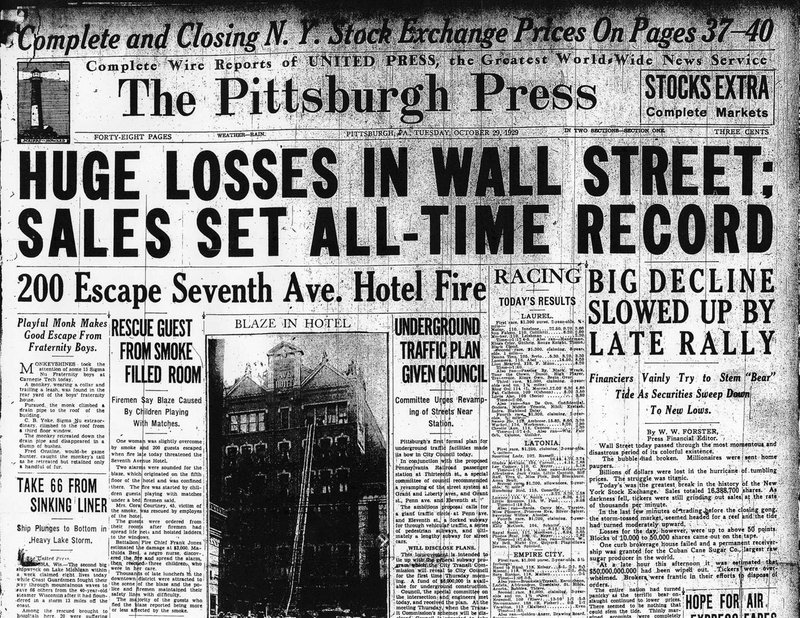
The Black Tuesday Cataclysm: October 29, 1929
Black Tuesday stands as a stark reminder of market volatility and the profound impact of investor psychology on financial systems. It wasn’t merely a stock market correction; it was a wholesale capitulation that initiated a decade of economic hardship.
The Roaring Twenties’ Reckoning
The decade leading up to 1929 was characterized by an exuberant stock market, fueled by rapid industrial growth, new technologies, and a pervasive belief in sustained prosperity. Individual investors, often with limited understanding of financial risks, poured their savings into stocks, many borrowing heavily on margin to amplify their potential returns. Brokerage firms readily extended credit, enabling individuals to purchase stocks with as little as 10% down. This speculative fever created a massive bubble, where stock prices far outpaced the underlying corporate earnings and economic fundamentals. Companies like RCA, with little actual profit, saw their shares soar purely on speculative interest. This environment fostered a dangerous illusion of effortless wealth generation, drawing in even those who traditionally avoided the stock market, convinced that stocks were a foolproof path to riches. The lack of robust financial regulation allowed this speculative frenzy to build unchecked, setting the stage for an inevitable and brutal correction.
The Unraveling of Confidence
While Black Tuesday is the iconic date, the market’s decline began subtly in early September and intensified in mid-October. On October 24, 1929, known as Black Thursday, the market experienced a massive sell-off, prompting leading bankers to pool resources in an attempt to stabilize prices. Their efforts provided a temporary reprieve, but it was short-lived. The real panic set in on Monday, October 28 (Black Monday), when the market plummeted further. However, it was Black Tuesday, October 29, that saw the bottom fall out. On this single day, approximately 16 million shares were traded—a record at the time—as investors scrambled to liquidate their holdings at any price. The Dow Jones Industrial Average fell by an astonishing 12%, equivalent to a loss of approximately $14 billion in market value. The cumulative losses from the few preceding weeks totaled over $30 billion, more than the entire cost of World War I. This rapid and dramatic destruction of wealth created a palpable sense of fear and desperation among investors, signaling the end of an era of speculative optimism. The ticker tape ran hours behind, creating immense confusion and exacerbating the panic as investors couldn’t keep up with the precipitous declines.
Beyond the Ticker: Immediate Financial Fallout
The impact of Black Tuesday extended far beyond the brokerage houses. Individual investors, many of whom had invested their life savings or borrowed heavily, faced immediate and catastrophic losses. Margin calls—demands for additional collateral from brokers—became commonplace, leading to forced sales and further downward pressure on prices. For those who couldn’t meet these calls, their entire investments were wiped out. The ripple effect was devastating: individuals lost their savings, businesses saw their capital evaporate, and confidence in the financial system plummeted. Banks, heavily invested in the market themselves or having lent extensively to speculators, faced mounting defaults and withdrawals. This financial contagion quickly spread, leading to bank failures across the country, further eroding trust and freezing the flow of credit essential for business operations. The immediate aftermath was characterized by widespread personal bankruptcies, business closures, and a rapid increase in unemployment, all stemming from the sudden and severe contraction of capital and confidence.
The Financial Earthquake: More Than a Single Day
While Black Tuesday provided the shock, the Great Depression’s true onset and deepening were a consequence of a complex interplay of systemic vulnerabilities and a cascading series of economic failures that unfolded over several years. The market crash was a powerful symptom, not the sole disease.
Systemic Vulnerabilities Unmasked
The crash of 1929 exposed severe weaknesses in the U.S. financial and economic structure. A major contributing factor was the rampant speculative lending practices; banks had provided vast amounts of credit to brokerage houses, which then lent to individual investors on margin. When the market crashed, these loans became uncollectible, severely weakening bank balance sheets. There was also a significant unequal distribution of wealth, meaning a large portion of the population lacked the purchasing power to sustain economic growth, leading to overproduction in industries that outstripped consumer demand. The agricultural sector had been in depression for much of the 1920s, burdened by overproduction from wartime expansion, falling prices, and heavy debt, which reduced farmers’ ability to consume industrial goods. Crucially, the regulatory framework was woefully inadequate. There was no Securities and Exchange Commission (SEC) to oversee stock market practices, nor was there the Federal Deposit Insurance Corporation (FDIC) to protect bank depositors. The prevailing monetary policy, constrained by the gold standard, limited the Federal Reserve’s ability to inject liquidity into the banking system effectively or stimulate the economy, often leading to a contraction of the money supply when it was most needed.
The Domino Effect on Global Economies
The U.S. economy was not an isolated island. Its financial health was deeply intertwined with global markets. European nations, particularly Germany and Britain, were still recovering from World War I and relied heavily on U.S. loans and investment (e.g., through the Dawes Plan for German reparations payments). When American capital dried up after the crash, these economies faced their own financial crises, leading to a global contraction of trade and finance. Protectionist policies, such as the infamous Smoot-Hawley Tariff Act of 1930, exacerbated the problem by significantly raising tariffs on imported goods. While intended to protect American industries, it provoked retaliatory tariffs from other countries, stifling international trade and deepening the global economic downturn, further choking off crucial markets for American businesses.
Erosion of Personal and Business Capital
The crash led to a sustained period of deflation, where prices for goods and services fell, but so did wages and asset values. For businesses, falling prices meant lower revenues and profits, leading to production cutbacks and layoffs. For individuals, deflation made existing debts (like mortgages) harder to pay off as their income decreased. The ensuing bank runs, often triggered by rumors of insolvency, led to thousands of bank failures between 1929 and 1933, wiping out the life savings of millions who had no deposit insurance. This widespread loss of capital, combined with a lack of credit availability, brought both personal consumption and business investment to a grinding halt, trapping the economy in a vicious cycle of decline. Unemployment soared, reaching a peak of around 25% by 1933, creating immense social and economic distress.
Enduring Lessons for Modern Investors and Financial Stability
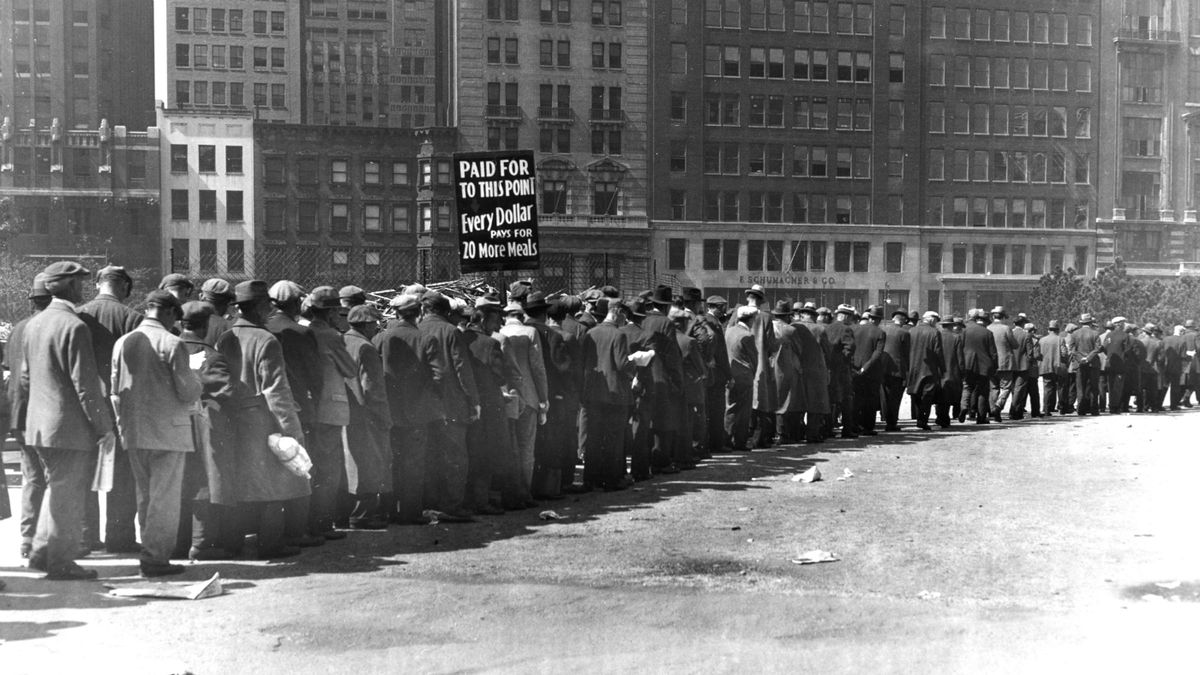
The Great Depression, originating with the market crash of 1929, offers invaluable lessons for contemporary financial planning, investing, and economic policy, emphasizing prudence, diversification, and robust regulatory oversight.
The Imperative of Diversification
One of the clearest takeaways from the 1929 crash is the danger of an undiversified portfolio. Many investors had concentrated their wealth heavily, often solely, in common stocks, particularly those of speculative companies. When the market collapsed, they lost everything. Today, financial advisors consistently emphasize diversification across various asset classes—stocks, bonds, real estate, commodities, and international investments—as a fundamental strategy to mitigate risk. While no portfolio is immune to market downturns, diversification helps cushion the blow by ensuring that not all your investments are subject to the same risks or market cycles. It’s a timeless principle to protect personal capital and promote long-term financial resilience.
Understanding Market Psychology and Panic
The events of 1929 powerfully illustrate the critical role of behavioral finance. Irrational exuberance, driven by a “fear of missing out” (FOMO), fueled the speculative bubble of the 1920s. Conversely, widespread panic and fear triggered the dramatic sell-off that characterized Black Tuesday and its aftermath. Modern investors must recognize that markets are not always rational; they are often swayed by collective human emotion. Cultivating a disciplined, long-term investment strategy that resists the urge to buy into fads or sell in a panic is crucial. Understanding cycles of greed and fear allows investors to make more informed decisions, potentially even finding opportunities during downturns when others are fleeing the market.
The Power of Regulation and Financial Safeguards
The lack of effective financial regulation was a primary facilitator of the 1929 crash and the subsequent Depression. In response, a raft of reforms was enacted during the 1930s, fundamentally reshaping the financial landscape. The establishment of the Securities and Exchange Commission (SEC) in 1934 brought transparency and regulation to the stock market, protecting investors from fraud and manipulation. The Federal Deposit Insurance Corporation (FDIC), also created in 1933, provided insurance for bank deposits, preventing the devastating bank runs that characterized the early Depression. The Federal Reserve’s mandate was expanded, giving it more tools to manage the money supply and act as a lender of last resort. These and other reforms underscore the vital role of government oversight in maintaining financial stability, protecting personal savings, and preventing systemic collapses, providing a robust framework that continues to safeguard modern economies.
Debt Management and Economic Resilience
The rampant use of margin debt played a significant role in exacerbating the 1929 crash. When prices fell, investors were forced to sell, creating a downward spiral. This highlights the inherent dangers of excessive leverage for both individuals and businesses. Prudent debt management, including avoiding high-interest consumer debt, maintaining a healthy debt-to-income ratio, and understanding the risks of borrowing for investments, is paramount. Building an emergency fund and maintaining liquidity are also critical components of personal financial resilience, allowing individuals to weather economic shocks without resorting to desperate measures or being forced to liquidate assets at unfavorable times.
Building Financial Fortitude in Any Economic Climate
The lessons from the Great Depression transcend history, offering timeless principles for building strong financial foundations, whether for personal wealth or business stability, in an unpredictable economic world.
Proactive Financial Planning
A key defense against economic uncertainty is proactive financial planning. This involves developing a comprehensive budget, setting clear financial goals (e.g., retirement, homeownership, education), and consistently saving. Automating savings and investments, regular review of financial plans, and adjusting strategies as life circumstances or economic conditions change, are essential. Rather than reacting to crises, a well-thought-out financial plan provides a roadmap and the discipline needed to navigate market cycles and personal financial challenges, ensuring long-term security.
Informed Investing and Risk Assessment
Today’s investors have access to vast amounts of information and sophisticated financial tools. This abundance necessitates a commitment to informed decision-making. Thorough research into investment opportunities, understanding the risks associated with different asset classes, and aligning investments with personal risk tolerance are critical. Moving beyond speculative trends and focusing on fundamental analysis, historical performance, and a clear investment thesis can help investors avoid the pitfalls of market euphoria and panic. Long-term investing, often utilizing dollar-cost averaging, can smooth out market volatility and capitalize on the power of compounding.
Multiple Income Streams and Entrepreneurship
A singular reliance on one income source proved devastating for many during the Depression. In the modern economy, cultivating multiple income streams or exploring entrepreneurship offers a significant buffer against economic shocks. Side hustles, freelancing, online businesses, or passive income streams provide diversification for personal income, reducing vulnerability to job loss or industry downturns. This approach not only boosts overall income but also fosters financial independence and resilience, mirroring the adaptability required in times of economic uncertainty.

Continuous Learning and Adaptation
The global economy is constantly evolving, with new technologies, geopolitical shifts, and market dynamics emerging regularly. For both individuals and businesses, continuous learning and adaptation are non-negotiable. Staying informed about economic trends, understanding the implications of monetary policy changes, and adapting financial strategies accordingly are vital. This might involve rebalancing portfolios, exploring new investment vehicles, or even reskilling for new career opportunities. The ability to learn, adapt, and innovate remains a powerful tool in navigating the complexities of any economic climate, ensuring that the lessons of the Great Depression continue to inform and fortify our financial futures.
aViewFromTheCave is a participant in the Amazon Services LLC Associates Program, an affiliate advertising program designed to provide a means for sites to earn advertising fees by advertising and linking to Amazon.com. Amazon, the Amazon logo, AmazonSupply, and the AmazonSupply logo are trademarks of Amazon.com, Inc. or its affiliates. As an Amazon Associate we earn affiliate commissions from qualifying purchases.